“AS LONG AS IT IS PASTA”
Elena Spisni and the handmade pasta as a homecoming
12/22/25
“AS LONG AS IT IS PASTA”
Elena Spisni and the handmade pasta as a homecoming
12/22/25
“AS LONG AS IT IS PASTA”
Elena Spisni and the handmade pasta as a homecoming
12/22/25
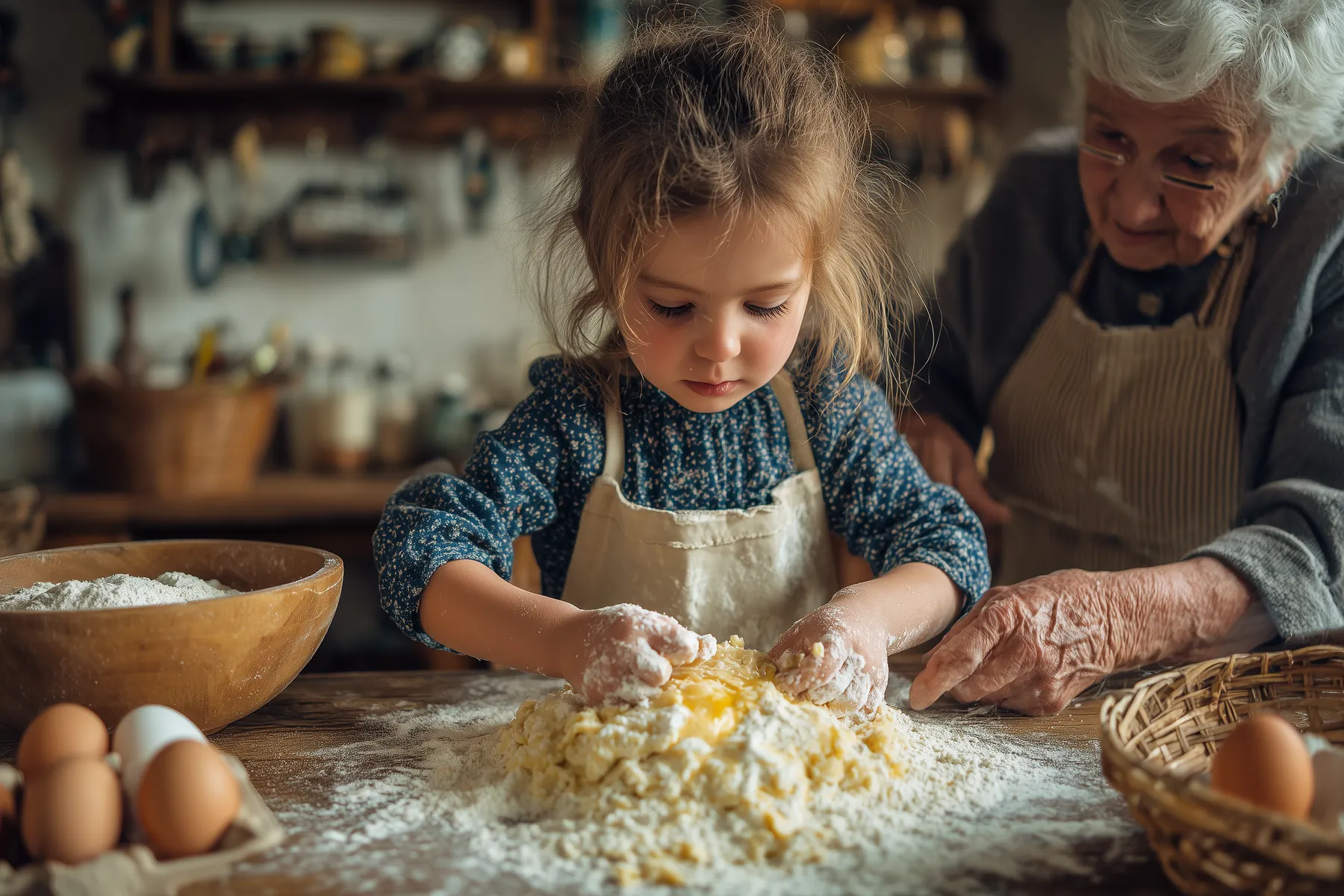
There is profound emotion, tenacity, and nostalgia in the journey of this journalist of Emilia-Romagna heritage who, since 2016u2014the year of her grandmother's passingu2014has chosen to dedicate herself to the art of fresh pasta. That year, at Christmas, an abyssal void opened upon the festive table: absent were the very cappelletti that she prepared with immense love during the holidays, keepers of a domestic wisdom passed down through gestures, of an intimacy that time had suddenly suspended.
It was then that Elena, driven by an ardent quest for those flavors, chose to return to the roots of her soul. She set to work with eager devotion and curiosity, learning from the finest sfogline of her native soil: women of expert hands and strict yet affectionate gaze, who bestowed upon her the hidden grace of the craft. Praise, counsel, and precise observations: cappelletto after cappelletto, Elena refined her touch, and in the "closing fold" rediscovered that lost embraceu2014the breath of her grandmother, her scent, the echo of a childhood sculpted in mid-air flour, in chatter, and in silences that smelled of home.
From that experience, Basta che sia Pasta was born: a blog that is at once a diary, an atelier, and a sanctuary of memory. Within its pages, recipes and reflections intertwine with culinary notes and confessions of life. Hers is a candid, luminous prose, capable of blending technique and sentiment: for pasta, in truth, is far more than sustenance. It is an act of devotion, a nearly sacred ritual that endures. It is the gentlest response to the immediacy of our digital erau2014a time that flows swiftly, but which she manages to slow with the cadence of the rolling pin, with the quietude necessary to roll out a flawless sheet of dough.
Elena portrays pasta as a language of the soul, a form of poetic resistance. In every cappelletto lies a hidden caress; in every tagliatella, a redeeming gesture. Basta che sia Pasta thus becomes a manifesto of identity and belonging, an invitation to rediscover the virtue of hands, the power of traditions, and the sweetness of the small things that unite generations.
It is the common threadu2014woven of eggs and flouru2014of an indissoluble bond. A return to one's origins that speaks not of things past, but of continuity. For in the sfoglia, as in life, perfection lies not in the form, but in the memory it enshrines.


There is profound emotion, tenacity, and nostalgia in the journey of this journalist of Emilia-Romagna heritage who, since 2016u2014the year of her grandmother's passingu2014has chosen to dedicate herself to the art of fresh pasta. That year, at Christmas, an abyssal void opened upon the festive table: absent were the very cappelletti that she prepared with immense love during the holidays, keepers of a domestic wisdom passed down through gestures, of an intimacy that time had suddenly suspended.
It was then that Elena, driven by an ardent quest for those flavors, chose to return to the roots of her soul. She set to work with eager devotion and curiosity, learning from the finest sfogline of her native soil: women of expert hands and strict yet affectionate gaze, who bestowed upon her the hidden grace of the craft. Praise, counsel, and precise observations: cappelletto after cappelletto, Elena refined her touch, and in the "closing fold" rediscovered that lost embraceu2014the breath of her grandmother, her scent, the echo of a childhood sculpted in mid-air flour, in chatter, and in silences that smelled of home.
From that experience, Basta che sia Pasta was born: a blog that is at once a diary, an atelier, and a sanctuary of memory. Within its pages, recipes and reflections intertwine with culinary notes and confessions of life. Hers is a candid, luminous prose, capable of blending technique and sentiment: for pasta, in truth, is far more than sustenance. It is an act of devotion, a nearly sacred ritual that endures. It is the gentlest response to the immediacy of our digital erau2014a time that flows swiftly, but which she manages to slow with the cadence of the rolling pin, with the quietude necessary to roll out a flawless sheet of dough.
Elena portrays pasta as a language of the soul, a form of poetic resistance. In every cappelletto lies a hidden caress; in every tagliatella, a redeeming gesture. Basta che sia Pasta thus becomes a manifesto of identity and belonging, an invitation to rediscover the virtue of hands, the power of traditions, and the sweetness of the small things that unite generations.
It is the common threadu2014woven of eggs and flouru2014of an indissoluble bond. A return to one's origins that speaks not of things past, but of continuity. For in the sfoglia, as in life, perfection lies not in the form, but in the memory it enshrines.
There is profound emotion, tenacity, and nostalgia in the journey of this journalist of Emilia-Romagna heritage who, since 2016u2014the year of her grandmother's passingu2014has chosen to dedicate herself to the art of fresh pasta. That year, at Christmas, an abyssal void opened upon the festive table: absent were the very cappelletti that she prepared with immense love during the holidays, keepers of a domestic wisdom passed down through gestures, of an intimacy that time had suddenly suspended.
It was then that Elena, driven by an ardent quest for those flavors, chose to return to the roots of her soul. She set to work with eager devotion and curiosity, learning from the finest sfogline of her native soil: women of expert hands and strict yet affectionate gaze, who bestowed upon her the hidden grace of the craft. Praise, counsel, and precise observations: cappelletto after cappelletto, Elena refined her touch, and in the "closing fold" rediscovered that lost embraceu2014the breath of her grandmother, her scent, the echo of a childhood sculpted in mid-air flour, in chatter, and in silences that smelled of home.
From that experience, Basta che sia Pasta was born: a blog that is at once a diary, an atelier, and a sanctuary of memory. Within its pages, recipes and reflections intertwine with culinary notes and confessions of life. Hers is a candid, luminous prose, capable of blending technique and sentiment: for pasta, in truth, is far more than sustenance. It is an act of devotion, a nearly sacred ritual that endures. It is the gentlest response to the immediacy of our digital erau2014a time that flows swiftly, but which she manages to slow with the cadence of the rolling pin, with the quietude necessary to roll out a flawless sheet of dough.
Elena portrays pasta as a language of the soul, a form of poetic resistance. In every cappelletto lies a hidden caress; in every tagliatella, a redeeming gesture. Basta che sia Pasta thus becomes a manifesto of identity and belonging, an invitation to rediscover the virtue of hands, the power of traditions, and the sweetness of the small things that unite generations.
It is the common threadu2014woven of eggs and flouru2014of an indissoluble bond. A return to one's origins that speaks not of things past, but of continuity. For in the sfoglia, as in life, perfection lies not in the form, but in the memory it enshrines.