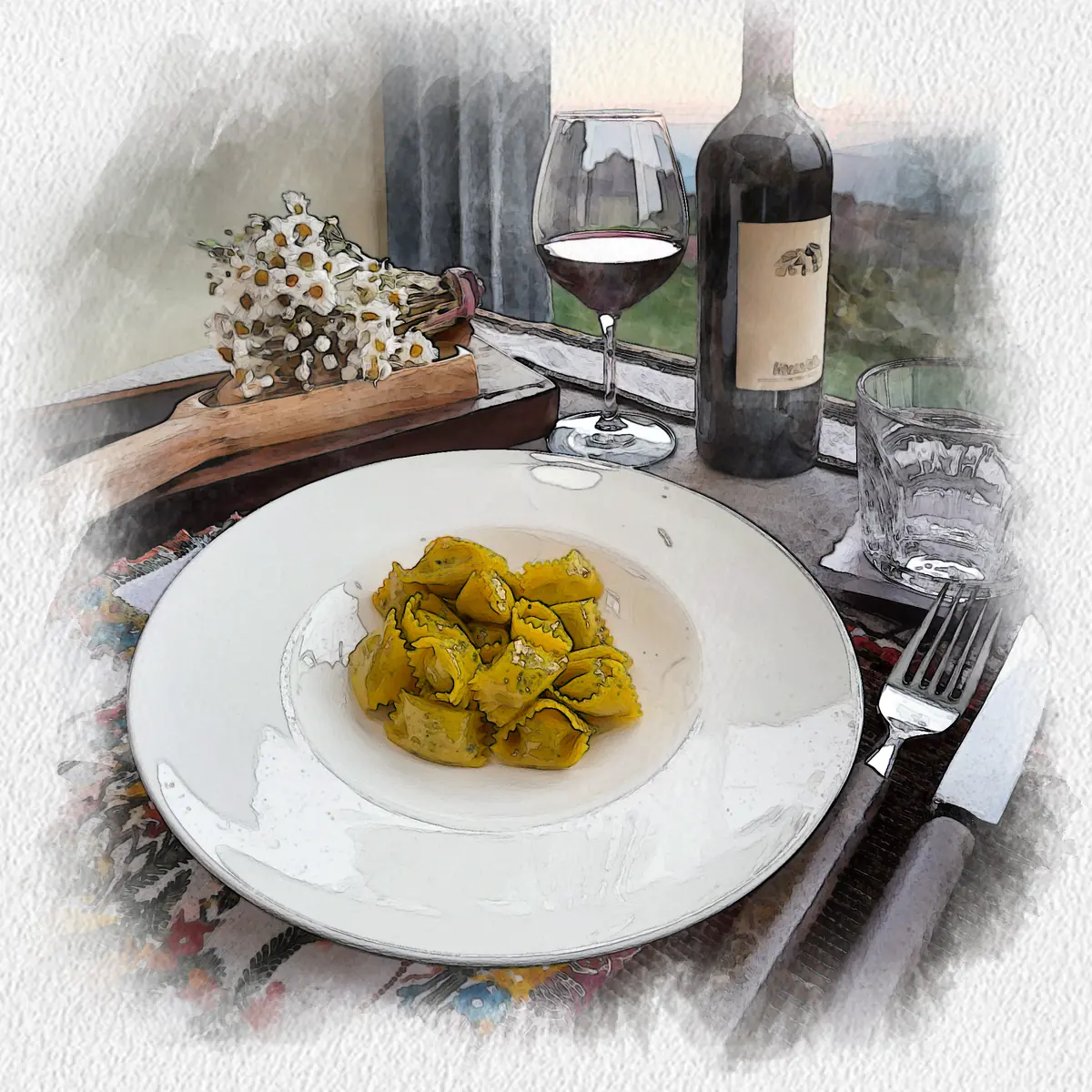
AGNOLOTTI DEL PLIN
Flour, Eggs, Beef, Veal, Pork, Sausage, Parmigiano Reggiano.
Moderate
Piedmont
One hundred minutes
520 Calories
AGNOLOTTI DEL PLIN
Flour, Eggs, Beef, Veal, Pork, Sausage, Parmigiano Reggiano.
Moderate
Piedmont
One hundred minutes
520 Calories
AGNOLOTTI DEL PLIN
Flour, Eggs, Beef, Veal, Pork, Sausage, Parmigiano Reggiano.
Moderate
Piedmont
One hundred minutes
520 Calories
GENESIS
Agnolotti del Plin are a jewel of Piedmontese gastronomic tradition, originating in particular from the regions of the Langhe and Monferrato. Their name derives from the Piedmontese dialect term "plin", which translates to "pinch"—referring to the precise manual gesture with which these petite ravioli are sealed, joining the edges of the filled pasta dough.
Historically, Agnolotti del Plin trace their ancestry to peasant cuisine, born from the necessity to breathe new life into the remnants of roasted or boiled meats, harmonized with vegetables and enveloped in a delicate sheet of egg pasta. This practice stands as a testament to ancient frugality and the ingenuity of honoring every available ingredient.
Their diminutive size and shape, often resembling a small purse, render them unique. Traditionally, they are presented in several guises: bathed in a classic meat broth, dressed with the rich juices of the roast (the precious pan drippings from the meats prepared for the filling), or simply adorned with melted butter and sage, to fully appreciate the delicate flavor of the stuffing. Agnolotti del Plin are recognized as a Traditional Italian Agri-Food Product (PAT) and represent an emblem of identity for Piedmont and its rich culinary heritage.
PORTIONS (FOR 4 PERSONS)
FOR THE PASTA
Flour 00
Eggs
Salt
300 g
3
a pinch
FOR THE CADENCE OF THE STUFFING
Roasted meats:
(beef, veal, or pork)
Fresh sausage
Savoy cabbage, boiled and finely minced
Parmigiano Reggiano
Egg
Clove of garlic
Nutmeg
Salt and pepper
150 g
100 g
50 g
50 g
1
1
to taste
to taste
FOR THE EMBELLISHMENT
Butter
Sage
Parmigiano Reggiano
80 g
6-8 leaves
to taste
CURATION
The Dough:
Arrange the flour in a sacred well upon the wooden board, welcoming the eggs and a touch of salt.
Knead with vigor and devotion until a smooth, supple dough unfolds.
Envelop this precious medium in film and allow it to rest in quietude for at least 30 minutes.
Roll out the pasta into a gossamer sheet and carve rectangular ribbons roughly 5 cm in width.The Filling:
Finely mince the roasted meats and the rustic sausage.
Within a vessel, marry these hand-carved elements with the shredded savoy cabbage, the noble Parmigiano, the egg, bruised garlic, a whisper of nutmeg, salt, and pepper.
Harmonize all elements until they unite into a sublime, cohesive filling.Agnolotti del Plin:
Deposit dollops of the filling along a ribbon of pasta, spacing them at intervals of 2 cm.
Fold the dough upon itself and press gently between each treasure to seal them within.
With a fluted pastry wheel, sever the parcels, pinching them lightly with your fingertips to bestow the legendary "Plin."The Cooking:
Sustain the agnolotti in a rolling simmer of salted water for 5 to 7 minutes, until they gracefully ascend to the surface.The Dressing:
Within a pan, gently coax the butter to melt alongside the fragrant sage leaves.
Drain the agnolotti and toss them with reverence in the golden, liquid butter.
Present the dish crowned with a dusting of Parmigiano Reggiano.
aspiration
For a more rustic rendition, one may serve the agnolotti bathed in the rich pan juices of the roast, or even submerged within a goblet of Barbera, in accordance with the venerable Piedmontese tradition.


GENESIS
Agnolotti del Plin are a jewel of Piedmontese gastronomic tradition, originating in particular from the regions of the Langhe and Monferrato. Their name derives from the Piedmontese dialect term "plin", which translates to "pinch"—referring to the precise manual gesture with which these petite ravioli are sealed, joining the edges of the filled pasta dough.
Historically, Agnolotti del Plin trace their ancestry to peasant cuisine, born from the necessity to breathe new life into the remnants of roasted or boiled meats, harmonized with vegetables and enveloped in a delicate sheet of egg pasta. This practice stands as a testament to ancient frugality and the ingenuity of honoring every available ingredient.
Their diminutive size and shape, often resembling a small purse, render them unique. Traditionally, they are presented in several guises: bathed in a classic meat broth, dressed with the rich juices of the roast (the precious pan drippings from the meats prepared for the filling), or simply adorned with melted butter and sage, to fully appreciate the delicate flavor of the stuffing. Agnolotti del Plin are recognized as a Traditional Italian Agri-Food Product (PAT) and represent an emblem of identity for Piedmont and its rich culinary heritage.
PORTIONS (FOR 4 PERSONS)
FOR THE PASTA
Flour 00
Eggs
Salt
300 g
3
a pinch
FOR THE CADENCE OF THE STUFFING
Roasted meats:
(beef, veal, or pork)
Fresh sausage
Savoy cabbage, boiled and finely minced
Parmigiano Reggiano
Egg
Clove of garlic
Nutmeg
Salt and pepper
150 g
100 g
50 g
50 g
1
1
to taste
to taste
FOR THE EMBELLISHMENT
Butter
Sage
Parmigiano Reggiano
80 g
6-8 leaves
to taste
CURATION
The Dough:
Arrange the flour in a sacred well upon the wooden board, welcoming the eggs and a touch of salt.
Knead with vigor and devotion until a smooth, supple dough unfolds.
Envelop this precious medium in film and allow it to rest in quietude for at least 30 minutes.
Roll out the pasta into a gossamer sheet and carve rectangular ribbons roughly 5 cm in width.The Filling:
Finely mince the roasted meats and the rustic sausage.
Within a vessel, marry these hand-carved elements with the shredded savoy cabbage, the noble Parmigiano, the egg, bruised garlic, a whisper of nutmeg, salt, and pepper.
Harmonize all elements until they unite into a sublime, cohesive filling.Agnolotti del Plin:
Deposit dollops of the filling along a ribbon of pasta, spacing them at intervals of 2 cm.
Fold the dough upon itself and press gently between each treasure to seal them within.
With a fluted pastry wheel, sever the parcels, pinching them lightly with your fingertips to bestow the legendary "Plin."The Cooking:
Sustain the agnolotti in a rolling simmer of salted water for 5 to 7 minutes, until they gracefully ascend to the surface.The Dressing:
Within a pan, gently coax the butter to melt alongside the fragrant sage leaves.
Drain the agnolotti and toss them with reverence in the golden, liquid butter.
Present the dish crowned with a dusting of Parmigiano Reggiano.
aspiration
For a more rustic rendition, one may serve the agnolotti bathed in the rich pan juices of the roast, or even submerged within a goblet of Barbera, in accordance with the venerable Piedmontese tradition.
latest culinary creations
GENESIS
Agnolotti del Plin are a jewel of Piedmontese gastronomic tradition, originating in particular from the regions of the Langhe and Monferrato. Their name derives from the Piedmontese dialect term "plin", which translates to "pinch"—referring to the precise manual gesture with which these petite ravioli are sealed, joining the edges of the filled pasta dough.
Historically, Agnolotti del Plin trace their ancestry to peasant cuisine, born from the necessity to breathe new life into the remnants of roasted or boiled meats, harmonized with vegetables and enveloped in a delicate sheet of egg pasta. This practice stands as a testament to ancient frugality and the ingenuity of honoring every available ingredient.
Their diminutive size and shape, often resembling a small purse, render them unique. Traditionally, they are presented in several guises: bathed in a classic meat broth, dressed with the rich juices of the roast (the precious pan drippings from the meats prepared for the filling), or simply adorned with melted butter and sage, to fully appreciate the delicate flavor of the stuffing. Agnolotti del Plin are recognized as a Traditional Italian Agri-Food Product (PAT) and represent an emblem of identity for Piedmont and its rich culinary heritage.
PORTIONS (FOR 4 PERSONS)
FOR THE PASTA
Flour 00
Eggs
Salt
300 g
3
a pinch
FOR THE CADENCE OF THE STUFFING
Roasted meats:
(beef, veal, or pork)
Fresh sausage
Savoy cabbage, boiled and finely minced
Parmigiano Reggiano
Egg
Clove of garlic
Nutmeg
Salt and pepper
150 g
100 g
50 g
50 g
1
1
to taste
to taste
FOR THE EMBELLISHMENT
Butter
Sage
Parmigiano Reggiano
80 g
6-8 leaves
to taste
CURATION
The Dough:
Arrange the flour in a sacred well upon the wooden board, welcoming the eggs and a touch of salt.
Knead with vigor and devotion until a smooth, supple dough unfolds.
Envelop this precious medium in film and allow it to rest in quietude for at least 30 minutes.
Roll out the pasta into a gossamer sheet and carve rectangular ribbons roughly 5 cm in width.The Filling:
Finely mince the roasted meats and the rustic sausage.
Within a vessel, marry these hand-carved elements with the shredded savoy cabbage, the noble Parmigiano, the egg, bruised garlic, a whisper of nutmeg, salt, and pepper.
Harmonize all elements until they unite into a sublime, cohesive filling.Agnolotti del Plin:
Deposit dollops of the filling along a ribbon of pasta, spacing them at intervals of 2 cm.
Fold the dough upon itself and press gently between each treasure to seal them within.
With a fluted pastry wheel, sever the parcels, pinching them lightly with your fingertips to bestow the legendary "Plin."The Cooking:
Sustain the agnolotti in a rolling simmer of salted water for 5 to 7 minutes, until they gracefully ascend to the surface.The Dressing:
Within a pan, gently coax the butter to melt alongside the fragrant sage leaves.
Drain the agnolotti and toss them with reverence in the golden, liquid butter.
Present the dish crowned with a dusting of Parmigiano Reggiano.
aspiration
For a more rustic rendition, one may serve the agnolotti bathed in the rich pan juices of the roast, or even submerged within a goblet of Barbera, in accordance with the venerable Piedmontese tradition.