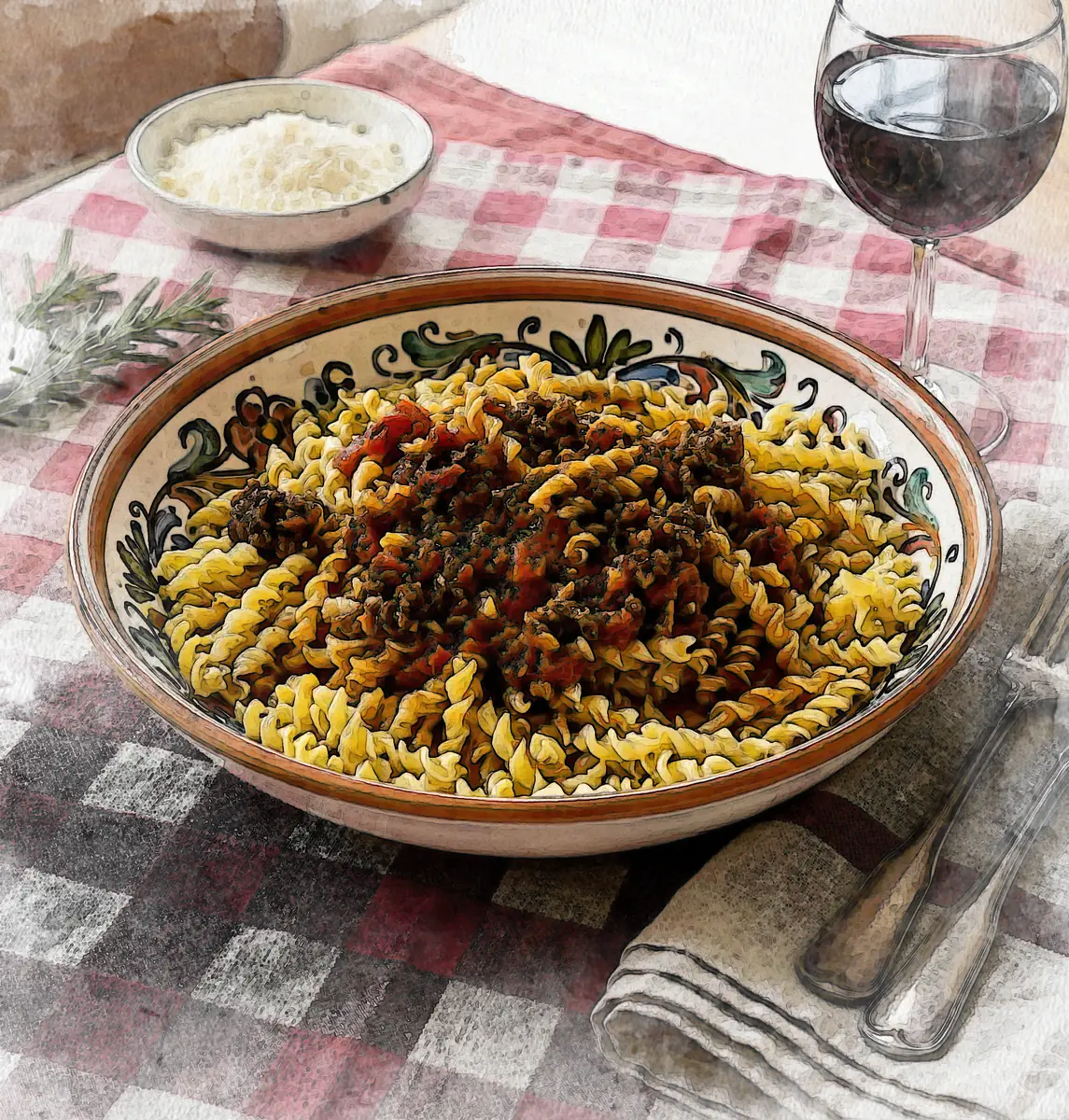
ANDARINOS OF USINI
A demanding pursuit
Sardinia
Three hours of culinary contemplation
650 Kcal
ANDARINOS OF USINI
A demanding pursuit
Sardinia
Three hours of culinary contemplation
650 Kcal
ANDARINOS OF USINI
A demanding pursuit
Sardinia
Three hours of culinary contemplation
650 Kcal
GENESIS
The Andarinos of Usini represent one of the most ancient and complex forms of fresh pasta within the gastronomic tradition of Sardinia, originating from the small hamlet of Usini, nestled in the province of Sassari, in the island's north. Historical sources document the existence of this culinary creation since the seventeenth century, describing a ritual and festive pasta, crafted almost exclusively on the occasion of weddings, baptisms, and, most notably, for the patronal celebrations of the village, such as the feasts of Santa Maria and San Giorgio.
The singularity of Andarinos lies in their intricate manual elaboration, an ancient art handed down with devotion from mother to daughter. The form, reminiscent of a small spindle or a helical spiral, is achieved by sliding and pressing a small piece of dough upon a ribbed surface or, more traditionally, across the convex bottom of a glass tumbler, with a swift and expert motion that demands immense technical skill and a noteworthy investment of time.
The foundational dough is composed of the humble ingredients typical of the Mediterranean basin: durum wheat semolina of the highest quality, tepid water, and a pinch of salt. This composition ensures a resilient texture upon cooking and a striated outer surface, ideal for embracing and retaining the rich, full-bodied sauces characteristic of the local cuisine. Traditionally, this pasta is dressed with "su ghisau", a slow-braised meat ragù. In times past, sheep or wild boar meat was predominantly used, cut into small morsels and simmered at length with peeled tomatoes, onion, and garlic, until a dense, dark, and deeply flavorful sauce was attained. The dish is finally completed by an abundant dusting of aged Pecorino Sardo. The preservation of this recipe is today entrusted to the women of Usini, who continue to champion the original technique, safeguarding an invaluable fragment of the territory's cultural history.
PORTIONS (FOR 4 PERSONS)
FOR THE FRESHLY KNEADED PASTA
Durum wheat semolina
Tepid water
Salt
400 g
to taste
as needed
FOR THE EMBELLISHMENT
Mutton
Peeled plum tomatoes
Golden onion
Clove of garlic
Red wine
Pecorino Sardo
Extra virgin olive oil
Salt
500 g
600 g
1
1
1 glass
to taste
to taste
to taste
CURATION
For the fresh pasta:
Arrange the durum wheat semolina in a classic well upon a wooden pastry board. Introduce a whisper of salt and gradually pour lukewarm water into the center. Knead with vigorous hands until you fashion a smooth, firm, and harmonious dough. Envelop the dough in a pristine linen cloth and allow it to rest for some thirty minutes at room temperature. Once this period of repose has elapsed, take small portions of the dough and roll them into slender cylinders, no thicker than a breadstick. Cut these cylinders into segments measuring some two to three centimeters. Take each individual piece of pasta and, with the press of your thumb, glide it diagonally across a ridged board or the patterned base of a crystal glass, coaxing it to curl upon itself into an elegant spiral. Repeat this ritual until all the dough is spent, and arrange the Andarinos upon wicker baskets or trays to dry in the gentle air.For the condiment:
Finely mince the golden onion and the clove of garlic. In a spacious pot, ideally of terracotta, pour a generous libation of extra virgin olive oil and introduce the minced aromatics. Allow them to soften over a gentle flame until the onion becomes translucent. Cut the mutton into very delicate cubes and add it to the pot. Raise the flame and sear the meat evenly, sealing in its precious juices. Deglaze with a glass of red wine, letting the alcohol evaporate completely into the air. At this juncture, introduce the peeled tomatoes, previously crushed with a fork or passed through a sieve, and season with salt. Lower the flame to its absolute minimum, cover, and let the ragù simmer in quiet contemplation for at least two hours, stirring occasionally. Should the sauce dry too much, nourish it with a ladle of hot water or broth.For the cooking and composition of the dish:
Bring a generous pot of salted water to a rolling boil. Plunge the Andarinos into the water and cook them for some ten to fifteen minutes; the duration may vary depending on the dryness of the pasta and the delicate thickness of the spindles you have sculpted. Drain the pasta al dente and transfer it directly into the pot of warm, fragrant condiment. Gently toss the whole to marry the pasta beautifully with the rich flavors of the ragù. Extinguish the flame and serve the pasta piping hot, crowning each plate with an abundant grating of Pecorino Sardo.
aspiration
Should the robust essence of mutton prove too intense for your palate, you may fashion the ragù utilizing an equal harmony of minced pork and beef.
Allow the fresh pasta to dry for several hours in a well-ventilated sanctuary before cooking; this ancestral wisdom ensures the elegant spiral form remains pristine during the boil.
To coax forth an even more profound depth of flavor, you may grace the initial soffritto of the ragù with a few fresh bay leaves or a sprig of rosemary, to be gently removed upon the completion of its slow simmer.


GENESIS
The Andarinos of Usini represent one of the most ancient and complex forms of fresh pasta within the gastronomic tradition of Sardinia, originating from the small hamlet of Usini, nestled in the province of Sassari, in the island's north. Historical sources document the existence of this culinary creation since the seventeenth century, describing a ritual and festive pasta, crafted almost exclusively on the occasion of weddings, baptisms, and, most notably, for the patronal celebrations of the village, such as the feasts of Santa Maria and San Giorgio.
The singularity of Andarinos lies in their intricate manual elaboration, an ancient art handed down with devotion from mother to daughter. The form, reminiscent of a small spindle or a helical spiral, is achieved by sliding and pressing a small piece of dough upon a ribbed surface or, more traditionally, across the convex bottom of a glass tumbler, with a swift and expert motion that demands immense technical skill and a noteworthy investment of time.
The foundational dough is composed of the humble ingredients typical of the Mediterranean basin: durum wheat semolina of the highest quality, tepid water, and a pinch of salt. This composition ensures a resilient texture upon cooking and a striated outer surface, ideal for embracing and retaining the rich, full-bodied sauces characteristic of the local cuisine. Traditionally, this pasta is dressed with "su ghisau", a slow-braised meat ragù. In times past, sheep or wild boar meat was predominantly used, cut into small morsels and simmered at length with peeled tomatoes, onion, and garlic, until a dense, dark, and deeply flavorful sauce was attained. The dish is finally completed by an abundant dusting of aged Pecorino Sardo. The preservation of this recipe is today entrusted to the women of Usini, who continue to champion the original technique, safeguarding an invaluable fragment of the territory's cultural history.
PORTIONS (FOR 4 PERSONS)
FOR THE FRESHLY KNEADED PASTA
Durum wheat semolina
Tepid water
Salt
400 g
to taste
as needed
FOR THE EMBELLISHMENT
Mutton
Peeled plum tomatoes
Golden onion
Clove of garlic
Red wine
Pecorino Sardo
Extra virgin olive oil
Salt
500 g
600 g
1
1
1 glass
to taste
to taste
to taste
CURATION
For the fresh pasta:
Arrange the durum wheat semolina in a classic well upon a wooden pastry board. Introduce a whisper of salt and gradually pour lukewarm water into the center. Knead with vigorous hands until you fashion a smooth, firm, and harmonious dough. Envelop the dough in a pristine linen cloth and allow it to rest for some thirty minutes at room temperature. Once this period of repose has elapsed, take small portions of the dough and roll them into slender cylinders, no thicker than a breadstick. Cut these cylinders into segments measuring some two to three centimeters. Take each individual piece of pasta and, with the press of your thumb, glide it diagonally across a ridged board or the patterned base of a crystal glass, coaxing it to curl upon itself into an elegant spiral. Repeat this ritual until all the dough is spent, and arrange the Andarinos upon wicker baskets or trays to dry in the gentle air.For the condiment:
Finely mince the golden onion and the clove of garlic. In a spacious pot, ideally of terracotta, pour a generous libation of extra virgin olive oil and introduce the minced aromatics. Allow them to soften over a gentle flame until the onion becomes translucent. Cut the mutton into very delicate cubes and add it to the pot. Raise the flame and sear the meat evenly, sealing in its precious juices. Deglaze with a glass of red wine, letting the alcohol evaporate completely into the air. At this juncture, introduce the peeled tomatoes, previously crushed with a fork or passed through a sieve, and season with salt. Lower the flame to its absolute minimum, cover, and let the ragù simmer in quiet contemplation for at least two hours, stirring occasionally. Should the sauce dry too much, nourish it with a ladle of hot water or broth.For the cooking and composition of the dish:
Bring a generous pot of salted water to a rolling boil. Plunge the Andarinos into the water and cook them for some ten to fifteen minutes; the duration may vary depending on the dryness of the pasta and the delicate thickness of the spindles you have sculpted. Drain the pasta al dente and transfer it directly into the pot of warm, fragrant condiment. Gently toss the whole to marry the pasta beautifully with the rich flavors of the ragù. Extinguish the flame and serve the pasta piping hot, crowning each plate with an abundant grating of Pecorino Sardo.
aspiration
Should the robust essence of mutton prove too intense for your palate, you may fashion the ragù utilizing an equal harmony of minced pork and beef.
Allow the fresh pasta to dry for several hours in a well-ventilated sanctuary before cooking; this ancestral wisdom ensures the elegant spiral form remains pristine during the boil.
To coax forth an even more profound depth of flavor, you may grace the initial soffritto of the ragù with a few fresh bay leaves or a sprig of rosemary, to be gently removed upon the completion of its slow simmer.
latest culinary creations
GENESIS
The Andarinos of Usini represent one of the most ancient and complex forms of fresh pasta within the gastronomic tradition of Sardinia, originating from the small hamlet of Usini, nestled in the province of Sassari, in the island's north. Historical sources document the existence of this culinary creation since the seventeenth century, describing a ritual and festive pasta, crafted almost exclusively on the occasion of weddings, baptisms, and, most notably, for the patronal celebrations of the village, such as the feasts of Santa Maria and San Giorgio.
The singularity of Andarinos lies in their intricate manual elaboration, an ancient art handed down with devotion from mother to daughter. The form, reminiscent of a small spindle or a helical spiral, is achieved by sliding and pressing a small piece of dough upon a ribbed surface or, more traditionally, across the convex bottom of a glass tumbler, with a swift and expert motion that demands immense technical skill and a noteworthy investment of time.
The foundational dough is composed of the humble ingredients typical of the Mediterranean basin: durum wheat semolina of the highest quality, tepid water, and a pinch of salt. This composition ensures a resilient texture upon cooking and a striated outer surface, ideal for embracing and retaining the rich, full-bodied sauces characteristic of the local cuisine. Traditionally, this pasta is dressed with "su ghisau", a slow-braised meat ragù. In times past, sheep or wild boar meat was predominantly used, cut into small morsels and simmered at length with peeled tomatoes, onion, and garlic, until a dense, dark, and deeply flavorful sauce was attained. The dish is finally completed by an abundant dusting of aged Pecorino Sardo. The preservation of this recipe is today entrusted to the women of Usini, who continue to champion the original technique, safeguarding an invaluable fragment of the territory's cultural history.
PORTIONS (FOR 4 PERSONS)
FOR THE FRESHLY KNEADED PASTA
Durum wheat semolina
Tepid water
Salt
400 g
to taste
as needed
FOR THE EMBELLISHMENT
Mutton
Peeled plum tomatoes
Golden onion
Clove of garlic
Red wine
Pecorino Sardo
Extra virgin olive oil
Salt
500 g
600 g
1
1
1 glass
to taste
to taste
to taste
CURATION
For the fresh pasta:
Arrange the durum wheat semolina in a classic well upon a wooden pastry board. Introduce a whisper of salt and gradually pour lukewarm water into the center. Knead with vigorous hands until you fashion a smooth, firm, and harmonious dough. Envelop the dough in a pristine linen cloth and allow it to rest for some thirty minutes at room temperature. Once this period of repose has elapsed, take small portions of the dough and roll them into slender cylinders, no thicker than a breadstick. Cut these cylinders into segments measuring some two to three centimeters. Take each individual piece of pasta and, with the press of your thumb, glide it diagonally across a ridged board or the patterned base of a crystal glass, coaxing it to curl upon itself into an elegant spiral. Repeat this ritual until all the dough is spent, and arrange the Andarinos upon wicker baskets or trays to dry in the gentle air.For the condiment:
Finely mince the golden onion and the clove of garlic. In a spacious pot, ideally of terracotta, pour a generous libation of extra virgin olive oil and introduce the minced aromatics. Allow them to soften over a gentle flame until the onion becomes translucent. Cut the mutton into very delicate cubes and add it to the pot. Raise the flame and sear the meat evenly, sealing in its precious juices. Deglaze with a glass of red wine, letting the alcohol evaporate completely into the air. At this juncture, introduce the peeled tomatoes, previously crushed with a fork or passed through a sieve, and season with salt. Lower the flame to its absolute minimum, cover, and let the ragù simmer in quiet contemplation for at least two hours, stirring occasionally. Should the sauce dry too much, nourish it with a ladle of hot water or broth.For the cooking and composition of the dish:
Bring a generous pot of salted water to a rolling boil. Plunge the Andarinos into the water and cook them for some ten to fifteen minutes; the duration may vary depending on the dryness of the pasta and the delicate thickness of the spindles you have sculpted. Drain the pasta al dente and transfer it directly into the pot of warm, fragrant condiment. Gently toss the whole to marry the pasta beautifully with the rich flavors of the ragù. Extinguish the flame and serve the pasta piping hot, crowning each plate with an abundant grating of Pecorino Sardo.
aspiration
Should the robust essence of mutton prove too intense for your palate, you may fashion the ragù utilizing an equal harmony of minced pork and beef.
Allow the fresh pasta to dry for several hours in a well-ventilated sanctuary before cooking; this ancestral wisdom ensures the elegant spiral form remains pristine during the boil.
To coax forth an even more profound depth of flavor, you may grace the initial soffritto of the ragù with a few fresh bay leaves or a sprig of rosemary, to be gently removed upon the completion of its slow simmer.