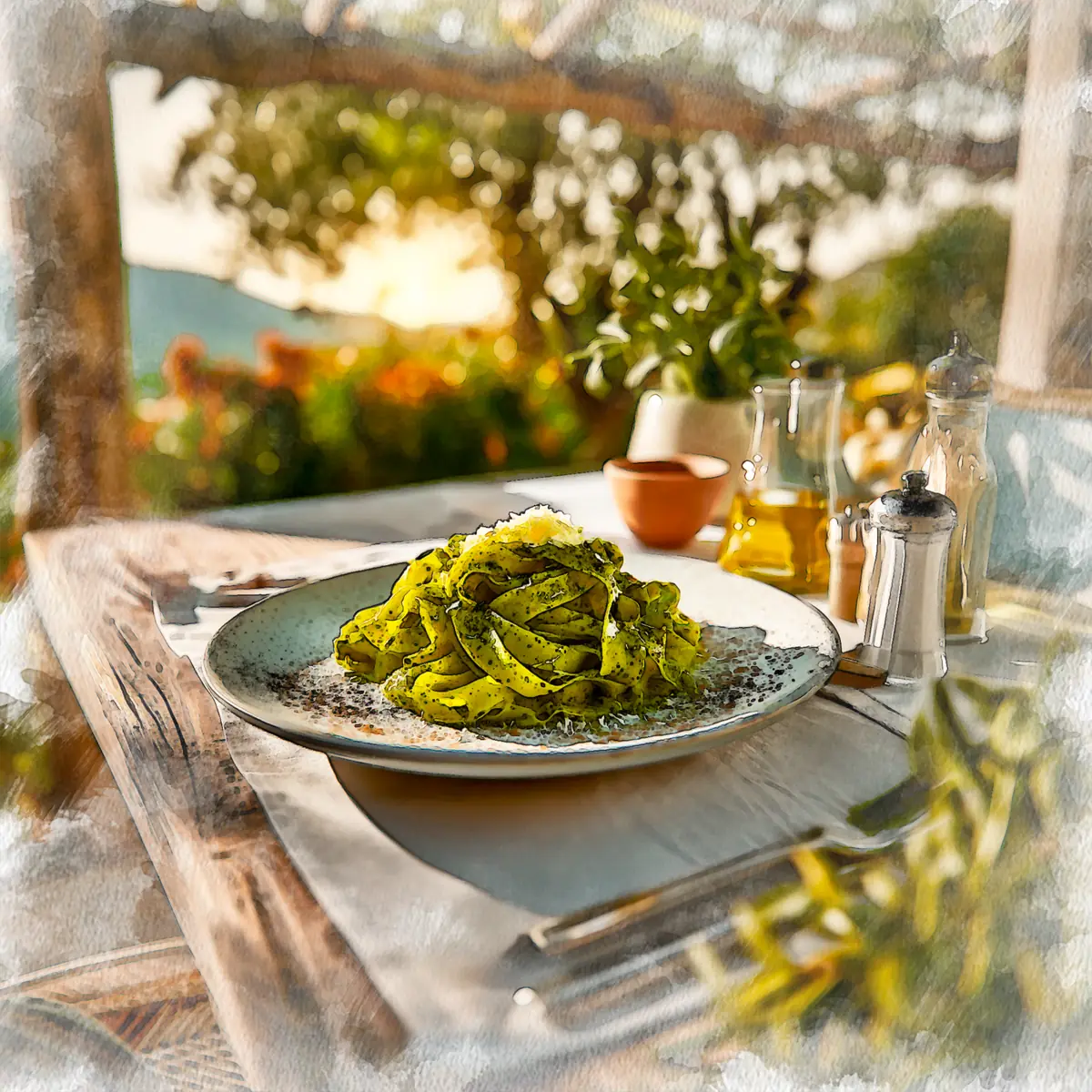
Bardele with Marai: Ribbon Pasta with Wild Herbs of the Lagoon
Flour, Eggs, Borage, Butter, Cinnamon, Parmigiano Reggiano
Effortless
Lombardy
An hour's passage
550 Kcal
Bardele with Marai: Ribbon Pasta with Wild Herbs of the Lagoon
Flour, Eggs, Borage, Butter, Cinnamon, Parmigiano Reggiano
Effortless
Lombardy
An hour's passage
550 Kcal
Bardele with Marai: Ribbon Pasta with Wild Herbs of the Lagoon
Flour, Eggs, Borage, Butter, Cinnamon, Parmigiano Reggiano
Effortless
Lombardy
An hour's passage
550 Kcal
GENESIS
Bardele coi Marai represents a quintessential culinary masterpiece of Lombard tradition, originating particularly from the province of Como and its surrounding fields. This recipe traces its ancestry to the rustic kitchens of the peasantry, where ingenuity and necessity converged to elevate the spontaneous bounty of the earth into nourishment. In this exquisite variation, the term "marai" designates borage, a wild botanical treasure endowed with myriad beneficial virtues and a delicate taste that whispers of fresh cucumber. The harvest of borage was, and remains for many to this day, a vernal sacrament marking the awakening of nature and the arrival of vibrant ingredients after the austere silence of winter. The "bardele" themselves are ribbons of fresh egg pasta, akin to broad tagliatelle or beautifully irregular maltagliati, crafted by hand through wise gestures inherited across generations. By infusing the borage directly into the dough, the bardele acquire a verdant, lively hue and a harmonious, spring-like essence. The unexpected, poetic pairing of melted butter with aromatic cinnamon and Parmigiano Reggiano creates a sublime and enveloping harmony, elevating the botanical flavor of the herb without eclipsing its subtle grace.
PORTIONS (FOR 4 PERSONS)
FOR THE PASTA
Flour of type 00
Medium, farm-fresh eggs
Freshly gathered borage, pristine and prepared
400 g
4
200 g
FOR THE EMBELLISHMENT
Butter
Powdered cinnamon
Parmigiano Reggiano
Salt
160 g
2 teaspoons
to taste
to taste
CURATION
For the fresh pasta:
Wash the borage with meticulous care, removing any withered leaves and the more robust stems. Simmer it gently in lightly salted boiling water for about 5 to 7 minutes, or until it renders tender to the touch. Drain thoroughly, pressing it with your hands to coax out every drop of excess moisture. Let it cool completely, then mince it finely or pass it through a mixer to obtain a seamless, homogeneous paste.
Upon a wooden work surface, shape the flour into a noble mound, fashioning a well at its center. Crack the eggs into this hollow and introduce the minced borage. With a fork, begin to whisk the eggs and borage together, gradually incorporating the flour from the inner borders. As the dough gains substance, begin to knead by hand, with vigor, for approximately 10 to 15 minutes, until it surrenders into a smooth, elastic boule of an intense green hue. Envelop it in cling wrap and allow it to rest at room temperature for at least 30 minutes. Once this repose is complete, lightly dust the board with flour and roll out the dough with a rolling pin, striving for a thin, harmonious sheet. Let the pasta sheet dry slightly in the air for 10 to 15 minutes. Once gently dried, roll it upon itself and cut the "bardele" to your desired width, traditionally about 1.5 to 2 cm. Unfurl them with delicate care and arrange them upon a floured tray to prevent them from clinging to one another.For the condiment:
In a spacious pan, allow the butter to dissolve over a gentle, whispering flame. As soon as the butter is melted and begins to sizzle softly, introduce the powdered cinnamon. Stir gracefully and allow the flavors to infuse for a minute, taking care not to scorch the precious spice.For the cooking and assembly:
Bring an abundance of salted water to a majestic boil in a large pot. Plunge the bardele into the water and cook them for a scant few minutes—just long enough for them to rise triumphantly to the surface and remain al dente (for fresh pasta cooks with swift grace). With a skimmer, lift them directly into the pan holding the cinnamon-infused butter. Add a few spoonfuls of the starchy cooking water, if necessary, to create a delicate emulsion and bind the sauce. Toss them gently in the condiment for a minute, stirring well to marry the flavors. Extinguish the flame, shower with an abundant grating of Parmigiano Reggiano, stir once more, and present upon the plate without delay.
aspiration
For an elevated aromatic touch, you may grace the dressing with a grating of organic lemon zest, which harmonizes exquisitely with the borage and cinnamon.
Should you desire a contrast of textures, you may gently toast crushed walnuts and bestow them upon the dish as a final embellishment.
A mere whisper of freshly cracked black pepper at the moment of serving will further exalt the symphony of flavors.


GENESIS
Bardele coi Marai represents a quintessential culinary masterpiece of Lombard tradition, originating particularly from the province of Como and its surrounding fields. This recipe traces its ancestry to the rustic kitchens of the peasantry, where ingenuity and necessity converged to elevate the spontaneous bounty of the earth into nourishment. In this exquisite variation, the term "marai" designates borage, a wild botanical treasure endowed with myriad beneficial virtues and a delicate taste that whispers of fresh cucumber. The harvest of borage was, and remains for many to this day, a vernal sacrament marking the awakening of nature and the arrival of vibrant ingredients after the austere silence of winter. The "bardele" themselves are ribbons of fresh egg pasta, akin to broad tagliatelle or beautifully irregular maltagliati, crafted by hand through wise gestures inherited across generations. By infusing the borage directly into the dough, the bardele acquire a verdant, lively hue and a harmonious, spring-like essence. The unexpected, poetic pairing of melted butter with aromatic cinnamon and Parmigiano Reggiano creates a sublime and enveloping harmony, elevating the botanical flavor of the herb without eclipsing its subtle grace.
PORTIONS (FOR 4 PERSONS)
FOR THE PASTA
Flour of type 00
Medium, farm-fresh eggs
Freshly gathered borage, pristine and prepared
400 g
4
200 g
FOR THE EMBELLISHMENT
Butter
Powdered cinnamon
Parmigiano Reggiano
Salt
160 g
2 teaspoons
to taste
to taste
CURATION
For the fresh pasta:
Wash the borage with meticulous care, removing any withered leaves and the more robust stems. Simmer it gently in lightly salted boiling water for about 5 to 7 minutes, or until it renders tender to the touch. Drain thoroughly, pressing it with your hands to coax out every drop of excess moisture. Let it cool completely, then mince it finely or pass it through a mixer to obtain a seamless, homogeneous paste.
Upon a wooden work surface, shape the flour into a noble mound, fashioning a well at its center. Crack the eggs into this hollow and introduce the minced borage. With a fork, begin to whisk the eggs and borage together, gradually incorporating the flour from the inner borders. As the dough gains substance, begin to knead by hand, with vigor, for approximately 10 to 15 minutes, until it surrenders into a smooth, elastic boule of an intense green hue. Envelop it in cling wrap and allow it to rest at room temperature for at least 30 minutes. Once this repose is complete, lightly dust the board with flour and roll out the dough with a rolling pin, striving for a thin, harmonious sheet. Let the pasta sheet dry slightly in the air for 10 to 15 minutes. Once gently dried, roll it upon itself and cut the "bardele" to your desired width, traditionally about 1.5 to 2 cm. Unfurl them with delicate care and arrange them upon a floured tray to prevent them from clinging to one another.For the condiment:
In a spacious pan, allow the butter to dissolve over a gentle, whispering flame. As soon as the butter is melted and begins to sizzle softly, introduce the powdered cinnamon. Stir gracefully and allow the flavors to infuse for a minute, taking care not to scorch the precious spice.For the cooking and assembly:
Bring an abundance of salted water to a majestic boil in a large pot. Plunge the bardele into the water and cook them for a scant few minutes—just long enough for them to rise triumphantly to the surface and remain al dente (for fresh pasta cooks with swift grace). With a skimmer, lift them directly into the pan holding the cinnamon-infused butter. Add a few spoonfuls of the starchy cooking water, if necessary, to create a delicate emulsion and bind the sauce. Toss them gently in the condiment for a minute, stirring well to marry the flavors. Extinguish the flame, shower with an abundant grating of Parmigiano Reggiano, stir once more, and present upon the plate without delay.
aspiration
For an elevated aromatic touch, you may grace the dressing with a grating of organic lemon zest, which harmonizes exquisitely with the borage and cinnamon.
Should you desire a contrast of textures, you may gently toast crushed walnuts and bestow them upon the dish as a final embellishment.
A mere whisper of freshly cracked black pepper at the moment of serving will further exalt the symphony of flavors.
latest culinary creations
GENESIS
Bardele coi Marai represents a quintessential culinary masterpiece of Lombard tradition, originating particularly from the province of Como and its surrounding fields. This recipe traces its ancestry to the rustic kitchens of the peasantry, where ingenuity and necessity converged to elevate the spontaneous bounty of the earth into nourishment. In this exquisite variation, the term "marai" designates borage, a wild botanical treasure endowed with myriad beneficial virtues and a delicate taste that whispers of fresh cucumber. The harvest of borage was, and remains for many to this day, a vernal sacrament marking the awakening of nature and the arrival of vibrant ingredients after the austere silence of winter. The "bardele" themselves are ribbons of fresh egg pasta, akin to broad tagliatelle or beautifully irregular maltagliati, crafted by hand through wise gestures inherited across generations. By infusing the borage directly into the dough, the bardele acquire a verdant, lively hue and a harmonious, spring-like essence. The unexpected, poetic pairing of melted butter with aromatic cinnamon and Parmigiano Reggiano creates a sublime and enveloping harmony, elevating the botanical flavor of the herb without eclipsing its subtle grace.
PORTIONS (FOR 4 PERSONS)
FOR THE PASTA
Flour of type 00
Medium, farm-fresh eggs
Freshly gathered borage, pristine and prepared
400 g
4
200 g
FOR THE EMBELLISHMENT
Butter
Powdered cinnamon
Parmigiano Reggiano
Salt
160 g
2 teaspoons
to taste
to taste
CURATION
For the fresh pasta:
Wash the borage with meticulous care, removing any withered leaves and the more robust stems. Simmer it gently in lightly salted boiling water for about 5 to 7 minutes, or until it renders tender to the touch. Drain thoroughly, pressing it with your hands to coax out every drop of excess moisture. Let it cool completely, then mince it finely or pass it through a mixer to obtain a seamless, homogeneous paste.
Upon a wooden work surface, shape the flour into a noble mound, fashioning a well at its center. Crack the eggs into this hollow and introduce the minced borage. With a fork, begin to whisk the eggs and borage together, gradually incorporating the flour from the inner borders. As the dough gains substance, begin to knead by hand, with vigor, for approximately 10 to 15 minutes, until it surrenders into a smooth, elastic boule of an intense green hue. Envelop it in cling wrap and allow it to rest at room temperature for at least 30 minutes. Once this repose is complete, lightly dust the board with flour and roll out the dough with a rolling pin, striving for a thin, harmonious sheet. Let the pasta sheet dry slightly in the air for 10 to 15 minutes. Once gently dried, roll it upon itself and cut the "bardele" to your desired width, traditionally about 1.5 to 2 cm. Unfurl them with delicate care and arrange them upon a floured tray to prevent them from clinging to one another.For the condiment:
In a spacious pan, allow the butter to dissolve over a gentle, whispering flame. As soon as the butter is melted and begins to sizzle softly, introduce the powdered cinnamon. Stir gracefully and allow the flavors to infuse for a minute, taking care not to scorch the precious spice.For the cooking and assembly:
Bring an abundance of salted water to a majestic boil in a large pot. Plunge the bardele into the water and cook them for a scant few minutes—just long enough for them to rise triumphantly to the surface and remain al dente (for fresh pasta cooks with swift grace). With a skimmer, lift them directly into the pan holding the cinnamon-infused butter. Add a few spoonfuls of the starchy cooking water, if necessary, to create a delicate emulsion and bind the sauce. Toss them gently in the condiment for a minute, stirring well to marry the flavors. Extinguish the flame, shower with an abundant grating of Parmigiano Reggiano, stir once more, and present upon the plate without delay.
aspiration
For an elevated aromatic touch, you may grace the dressing with a grating of organic lemon zest, which harmonizes exquisitely with the borage and cinnamon.
Should you desire a contrast of textures, you may gently toast crushed walnuts and bestow them upon the dish as a final embellishment.
A mere whisper of freshly cracked black pepper at the moment of serving will further exalt the symphony of flavors.