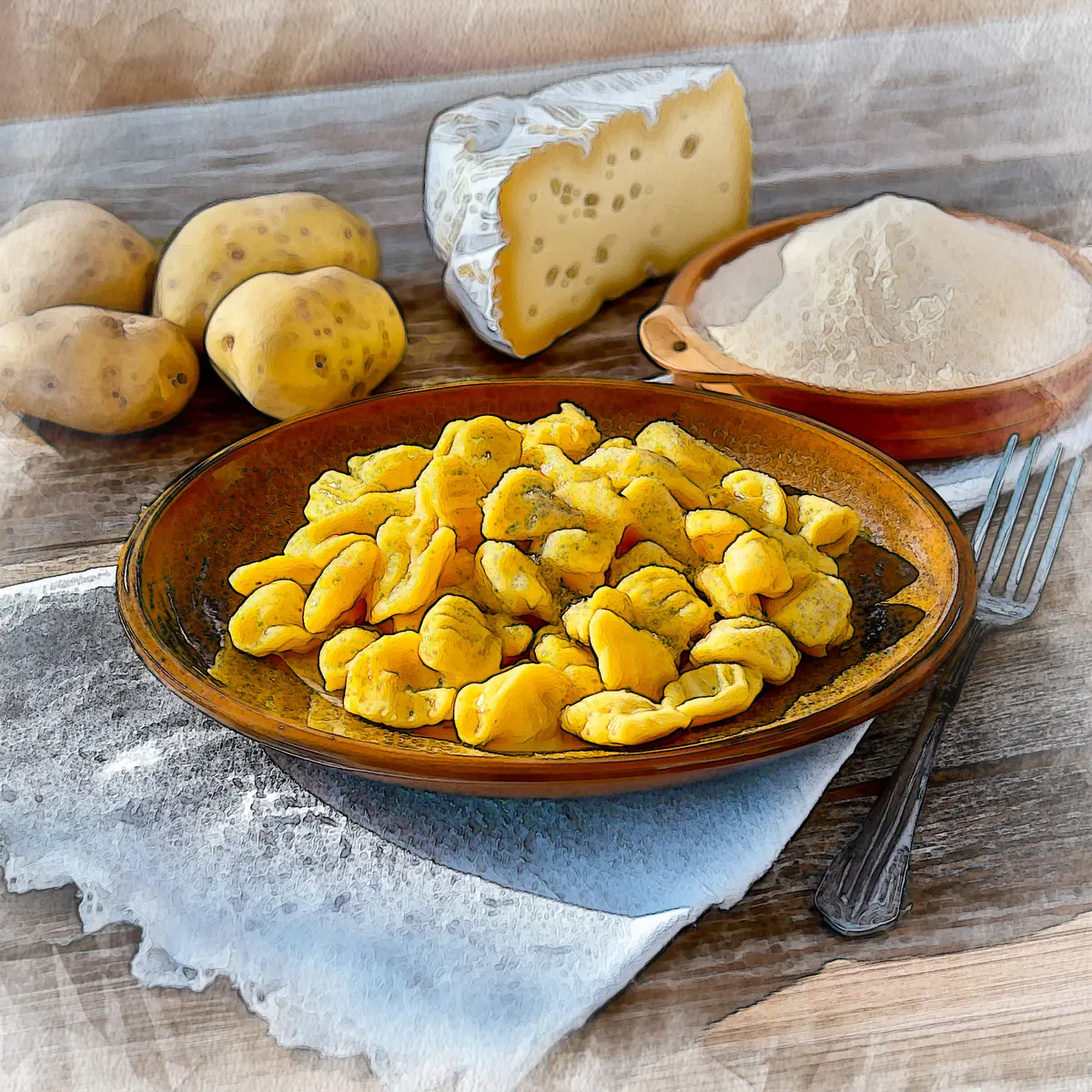
POTATO CROUZET PASTA WITH ARTIANAL TOMA CHEESE
Potatoes, Piedmontese Toma, hand-milled flours, and heirloom leeks
A demanding pursuit
Piedmont
120 minutes
750 Kcal
POTATO CROUZET PASTA WITH ARTIANAL TOMA CHEESE
Potatoes, Piedmontese Toma, hand-milled flours, and heirloom leeks
A demanding pursuit
Piedmont
120 minutes
750 Kcal
POTATO CROUZET PASTA WITH ARTIANAL TOMA CHEESE
Potatoes, Piedmontese Toma, hand-milled flours, and heirloom leeks
A demanding pursuit
Piedmont
120 minutes
750 Kcal
GENESIS
The Crouzet, or cruset, represent a variety of fresh pasta that traces its lineage to the most authentic and rural traditions of Piedmont’s Occitan Valleys, particularly those of Val Germanasca and Valle Stura.
Their appellation, which in dialect whispers of a "little cross," evokes the artisanal touch and the pure simplicity of a gastronomy intimately bound to the earth and the passage of the seasons. This pasta, akin in silhouette to the more renowned orecchiette of Puglia, was born of the necessity to fashion a nourishing sustenance from humble offerings readily gathered in the mountains: flour, water, and occasionally potatoes woven directly into the dough. The tapestry of the Crouzet’s history is intertwined with that of cultural exchanges and encounters across the Alps.
Various legends speak of Provençal influences, bearing testament to an essential historical bridge between these valleys and the south of France. Crafted traditionally by hand, one by one, shaped tenderly by the pressure of the thumb, the crouzet were the centerpiece of festive gatherings and familial conviviality. Their adornment—the sauce—itself a child of the terroir, shifted according to what the land bestowed.
The rendition showcasing mountain potatoes and Toma Piemontese stands as one of the most sublime expressions of this art, marrying the subtle sweetness of the earth with the intense, characterful resonance of the local cheese. This dish is far more than a mere recipe; it is a profound narrative of mountain life, of lyrical resilience, and of culinary wisdom, jealously guarded and passed down from generation to generation.
PORTIONS (FOR 4 PERSONS)
FOR THE PASTA
Soft wheat flour type "00"
Buckwheat flour
Lukewarm water
Extra virgin olive oil
Salt
400 g
100 g
250 ml
1 tablespoon
1 pinch
FOR THE EMBELLISHMENT
Yellow-fleshed potatoes
Leeks
Toma Piemontese DOP
Butter
Fresh whole milk
Salt
Black pepper
400 g
2
300 g
80 g
200 ml
to taste
to taste
CURATION
For the fresh pasta:
Begin by preparing the dough for the Crouzet. Upon a wooden board, or within a spacious vessel, sift the two flours and form a well.
Into the center, pour the extra virgin olive oil, a pinch of salt, and gradually introduce the tepid water. Begin to combine with a fork, incorporating the flour from the inner walls by degrees.
As the dough begins to coalesce, transfer it onto the lightly floured board and knead it with vigor for about ten minutes, until you obtain a smooth, elastic, and harmonious dough.
Cover it with a clean, damp cloth or food-safe film and let it rest at room temperature for at least thirty minutes. Once the resting time has elapsed, return to the dough. Take a small portion and fashion long, slender cylinders, approximately one centimeter in diameter.
With a knife or pastry scraper, cut the cylinders into small pieces of about one centimeter. Now, shape the Crouzet: take one piece at a time and, with the tip of your thumb, drag it across the board in a swift motion, so as to sculpt a small, hollowed shell. Alternatively, you may press the center with your finger. Arrange the Crouzet as they are formed upon a lightly floured tray, taking care not to overlap them.For the condiment:
While the pasta rests, dedicate yourself to the alchemy of the sauce. Peel the potatoes, wash them, and cut them into dice of about one centimeter. Clean the leeks, discarding the fibrous green tops and the roots, then slice them finely. In a generous skillet, melt the butter over a gentle flame. Add the sliced leeks and allow them to soften slowly for about ten minutes, stirring occasionally. Join the potato cubes to the pan, with a pinch of salt and a grinding of pepper. Cover and cook for about fifteen to twenty minutes, adding a ladle of hot water if necessary, until the potatoes are tender yet intact. In the meantime, cut the Toma Piemontese into small cubes, having first removed the rind. When the potatoes are cooked, lower the heat to a whisper, pour the milk into the pan, and immediately follow with the cubed Toma. Stir gently and continuously with a wooden spoon until the cheese has completely surrendered into a smooth, enveloping cream. Take care not to let the sauce boil. Adjust the seasoning with salt and pepper as needed.Cooking and finishing:
Bring a generous pot of salted water to a spirited boil. Plunge the Crouzet into the water and cook them for about four to five minutes, or until they rise to the surface. Retrieve them with a slotted spoon directly into the skillet containing the creamy emulsion of potatoes and Toma. Raise the flame slightly and toss everything for a minute, stirring delicately to weave the pasta and sauce into harmony. Serve your Crouzet immediately, warm and inviting, completing each plate with a final, generous flourish of freshly ground black pepper.
aspiration
For a more rustic, earthbound soul, one may infuse the Crouzet dough with a portion of whole wheat flour.
Should you desire a note of textural contrast, you may adorn the final composition with smoked pancetta or matchsticks of speck, gently rendered apart until they achieve a crisp, golden resonance.
To invoke a more opulent and velvety embrace, you may substitute a portion of the milk with fresh liquid cream during the creation of the Toma fondue.


GENESIS
The Crouzet, or cruset, represent a variety of fresh pasta that traces its lineage to the most authentic and rural traditions of Piedmont’s Occitan Valleys, particularly those of Val Germanasca and Valle Stura.
Their appellation, which in dialect whispers of a "little cross," evokes the artisanal touch and the pure simplicity of a gastronomy intimately bound to the earth and the passage of the seasons. This pasta, akin in silhouette to the more renowned orecchiette of Puglia, was born of the necessity to fashion a nourishing sustenance from humble offerings readily gathered in the mountains: flour, water, and occasionally potatoes woven directly into the dough. The tapestry of the Crouzet’s history is intertwined with that of cultural exchanges and encounters across the Alps.
Various legends speak of Provençal influences, bearing testament to an essential historical bridge between these valleys and the south of France. Crafted traditionally by hand, one by one, shaped tenderly by the pressure of the thumb, the crouzet were the centerpiece of festive gatherings and familial conviviality. Their adornment—the sauce—itself a child of the terroir, shifted according to what the land bestowed.
The rendition showcasing mountain potatoes and Toma Piemontese stands as one of the most sublime expressions of this art, marrying the subtle sweetness of the earth with the intense, characterful resonance of the local cheese. This dish is far more than a mere recipe; it is a profound narrative of mountain life, of lyrical resilience, and of culinary wisdom, jealously guarded and passed down from generation to generation.
PORTIONS (FOR 4 PERSONS)
FOR THE PASTA
Soft wheat flour type "00"
Buckwheat flour
Lukewarm water
Extra virgin olive oil
Salt
400 g
100 g
250 ml
1 tablespoon
1 pinch
FOR THE EMBELLISHMENT
Yellow-fleshed potatoes
Leeks
Toma Piemontese DOP
Butter
Fresh whole milk
Salt
Black pepper
400 g
2
300 g
80 g
200 ml
to taste
to taste
CURATION
For the fresh pasta:
Begin by preparing the dough for the Crouzet. Upon a wooden board, or within a spacious vessel, sift the two flours and form a well.
Into the center, pour the extra virgin olive oil, a pinch of salt, and gradually introduce the tepid water. Begin to combine with a fork, incorporating the flour from the inner walls by degrees.
As the dough begins to coalesce, transfer it onto the lightly floured board and knead it with vigor for about ten minutes, until you obtain a smooth, elastic, and harmonious dough.
Cover it with a clean, damp cloth or food-safe film and let it rest at room temperature for at least thirty minutes. Once the resting time has elapsed, return to the dough. Take a small portion and fashion long, slender cylinders, approximately one centimeter in diameter.
With a knife or pastry scraper, cut the cylinders into small pieces of about one centimeter. Now, shape the Crouzet: take one piece at a time and, with the tip of your thumb, drag it across the board in a swift motion, so as to sculpt a small, hollowed shell. Alternatively, you may press the center with your finger. Arrange the Crouzet as they are formed upon a lightly floured tray, taking care not to overlap them.For the condiment:
While the pasta rests, dedicate yourself to the alchemy of the sauce. Peel the potatoes, wash them, and cut them into dice of about one centimeter. Clean the leeks, discarding the fibrous green tops and the roots, then slice them finely. In a generous skillet, melt the butter over a gentle flame. Add the sliced leeks and allow them to soften slowly for about ten minutes, stirring occasionally. Join the potato cubes to the pan, with a pinch of salt and a grinding of pepper. Cover and cook for about fifteen to twenty minutes, adding a ladle of hot water if necessary, until the potatoes are tender yet intact. In the meantime, cut the Toma Piemontese into small cubes, having first removed the rind. When the potatoes are cooked, lower the heat to a whisper, pour the milk into the pan, and immediately follow with the cubed Toma. Stir gently and continuously with a wooden spoon until the cheese has completely surrendered into a smooth, enveloping cream. Take care not to let the sauce boil. Adjust the seasoning with salt and pepper as needed.Cooking and finishing:
Bring a generous pot of salted water to a spirited boil. Plunge the Crouzet into the water and cook them for about four to five minutes, or until they rise to the surface. Retrieve them with a slotted spoon directly into the skillet containing the creamy emulsion of potatoes and Toma. Raise the flame slightly and toss everything for a minute, stirring delicately to weave the pasta and sauce into harmony. Serve your Crouzet immediately, warm and inviting, completing each plate with a final, generous flourish of freshly ground black pepper.
aspiration
For a more rustic, earthbound soul, one may infuse the Crouzet dough with a portion of whole wheat flour.
Should you desire a note of textural contrast, you may adorn the final composition with smoked pancetta or matchsticks of speck, gently rendered apart until they achieve a crisp, golden resonance.
To invoke a more opulent and velvety embrace, you may substitute a portion of the milk with fresh liquid cream during the creation of the Toma fondue.
latest culinary creations
GENESIS
The Crouzet, or cruset, represent a variety of fresh pasta that traces its lineage to the most authentic and rural traditions of Piedmont’s Occitan Valleys, particularly those of Val Germanasca and Valle Stura.
Their appellation, which in dialect whispers of a "little cross," evokes the artisanal touch and the pure simplicity of a gastronomy intimately bound to the earth and the passage of the seasons. This pasta, akin in silhouette to the more renowned orecchiette of Puglia, was born of the necessity to fashion a nourishing sustenance from humble offerings readily gathered in the mountains: flour, water, and occasionally potatoes woven directly into the dough. The tapestry of the Crouzet’s history is intertwined with that of cultural exchanges and encounters across the Alps.
Various legends speak of Provençal influences, bearing testament to an essential historical bridge between these valleys and the south of France. Crafted traditionally by hand, one by one, shaped tenderly by the pressure of the thumb, the crouzet were the centerpiece of festive gatherings and familial conviviality. Their adornment—the sauce—itself a child of the terroir, shifted according to what the land bestowed.
The rendition showcasing mountain potatoes and Toma Piemontese stands as one of the most sublime expressions of this art, marrying the subtle sweetness of the earth with the intense, characterful resonance of the local cheese. This dish is far more than a mere recipe; it is a profound narrative of mountain life, of lyrical resilience, and of culinary wisdom, jealously guarded and passed down from generation to generation.
PORTIONS (FOR 4 PERSONS)
FOR THE PASTA
Soft wheat flour type "00"
Buckwheat flour
Lukewarm water
Extra virgin olive oil
Salt
400 g
100 g
250 ml
1 tablespoon
1 pinch
FOR THE EMBELLISHMENT
Yellow-fleshed potatoes
Leeks
Toma Piemontese DOP
Butter
Fresh whole milk
Salt
Black pepper
400 g
2
300 g
80 g
200 ml
to taste
to taste
CURATION
For the fresh pasta:
Begin by preparing the dough for the Crouzet. Upon a wooden board, or within a spacious vessel, sift the two flours and form a well.
Into the center, pour the extra virgin olive oil, a pinch of salt, and gradually introduce the tepid water. Begin to combine with a fork, incorporating the flour from the inner walls by degrees.
As the dough begins to coalesce, transfer it onto the lightly floured board and knead it with vigor for about ten minutes, until you obtain a smooth, elastic, and harmonious dough.
Cover it with a clean, damp cloth or food-safe film and let it rest at room temperature for at least thirty minutes. Once the resting time has elapsed, return to the dough. Take a small portion and fashion long, slender cylinders, approximately one centimeter in diameter.
With a knife or pastry scraper, cut the cylinders into small pieces of about one centimeter. Now, shape the Crouzet: take one piece at a time and, with the tip of your thumb, drag it across the board in a swift motion, so as to sculpt a small, hollowed shell. Alternatively, you may press the center with your finger. Arrange the Crouzet as they are formed upon a lightly floured tray, taking care not to overlap them.For the condiment:
While the pasta rests, dedicate yourself to the alchemy of the sauce. Peel the potatoes, wash them, and cut them into dice of about one centimeter. Clean the leeks, discarding the fibrous green tops and the roots, then slice them finely. In a generous skillet, melt the butter over a gentle flame. Add the sliced leeks and allow them to soften slowly for about ten minutes, stirring occasionally. Join the potato cubes to the pan, with a pinch of salt and a grinding of pepper. Cover and cook for about fifteen to twenty minutes, adding a ladle of hot water if necessary, until the potatoes are tender yet intact. In the meantime, cut the Toma Piemontese into small cubes, having first removed the rind. When the potatoes are cooked, lower the heat to a whisper, pour the milk into the pan, and immediately follow with the cubed Toma. Stir gently and continuously with a wooden spoon until the cheese has completely surrendered into a smooth, enveloping cream. Take care not to let the sauce boil. Adjust the seasoning with salt and pepper as needed.Cooking and finishing:
Bring a generous pot of salted water to a spirited boil. Plunge the Crouzet into the water and cook them for about four to five minutes, or until they rise to the surface. Retrieve them with a slotted spoon directly into the skillet containing the creamy emulsion of potatoes and Toma. Raise the flame slightly and toss everything for a minute, stirring delicately to weave the pasta and sauce into harmony. Serve your Crouzet immediately, warm and inviting, completing each plate with a final, generous flourish of freshly ground black pepper.
aspiration
For a more rustic, earthbound soul, one may infuse the Crouzet dough with a portion of whole wheat flour.
Should you desire a note of textural contrast, you may adorn the final composition with smoked pancetta or matchsticks of speck, gently rendered apart until they achieve a crisp, golden resonance.
To invoke a more opulent and velvety embrace, you may substitute a portion of the milk with fresh liquid cream during the creation of the Toma fondue.