EDOARDO TIZZANINI
The poetics of rebirth
1995
Florence
Innovative - Mediterranean
EDOARDO TIZZANINI
The poetics of rebirth
1995
Florence
Innovative - Mediterranean
EDOARDO TIZZANINI
The poetics of rebirth
1995
Florence
Innovative - Mediterranean
CURRICULUM VITAE
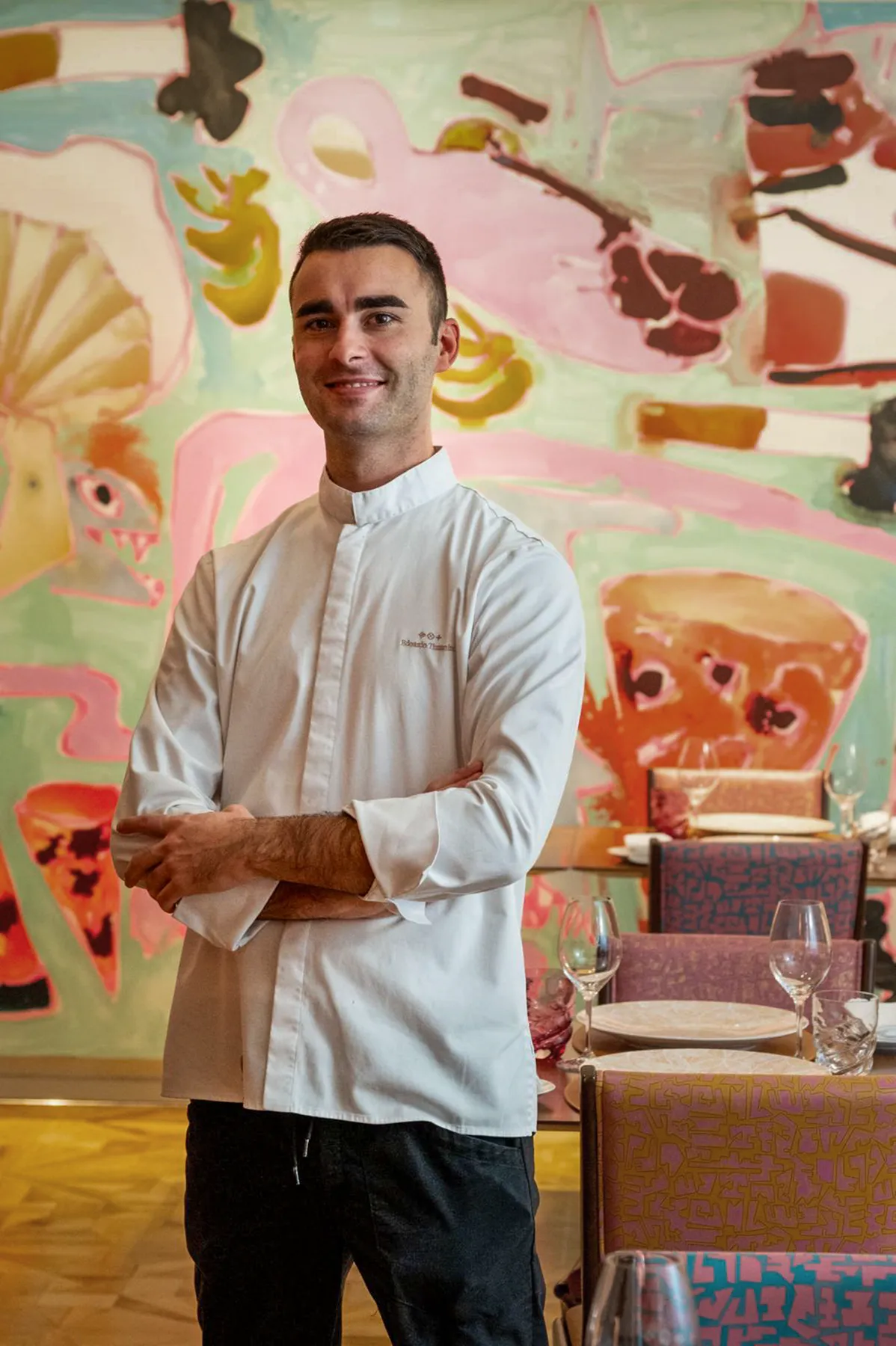
Edoardo Tizzani (born in Florence, class of 1995) forged his professional identity within kitchens where gesture carries the weight of rhythm: precision, the sacred discipline of the brigade, and a profound reverence for the raw ingredient.
Initially destined for the study of accountancy, he answered an urgent calling for tangible creation and embraced the culinary arts, entering the realm of haute hospitality at the Four Seasons under Vito Mollica, between Florence and Milan. There, he mastered the subtle codes of service and that devotion to detail which, far from mere ornament, becomes a guiding philosophy.
The definitive turning point arrived with his passage to Da Vittorio in Brusaporto: years of endurance and daily devotion, wherein technique transformed into unwavering reliability and cooking was measured by the enduring truth of flavor. Here he ascended to the role of sous chef, while simultaneously expanding his horizon through sojourns in Spain — among El Celler de Can Roca, Disfrutar, and Lasarte — absorbing a contemporary language that eschews theatrical display in pursuit of absolute clarity.
In 2025, he triumphed in the Italian final of the S.Pellegrino Young Chef Academy Competition with “An Artichoke Heart,” a manifesto-dish where the botanical world commands the center of the stage and animal protein serves as a mere contrapuntal note, governed by a philosophy of conscious utilization and minimized waste. Today, he helms DaV by Da Vittorio Louis Vuitton in Milan: a kitchen more agile in its form, yet demanding in its substance, where the concept of luxury aligns not with ostentation, but with structural purity.
dialogues
Chef, to labor under the aegis of the Cerea family is to engage in a daily dialogue with the legendary "Pacchero alla Vittorio." On the menu at DaV you offer "Mezzi Paccheri": is this a choice dictated by the swift tempos of "luxury snacking," or does it also represent a symbolic endeavor to carve out your own personal measure within so imposing an inheritance?
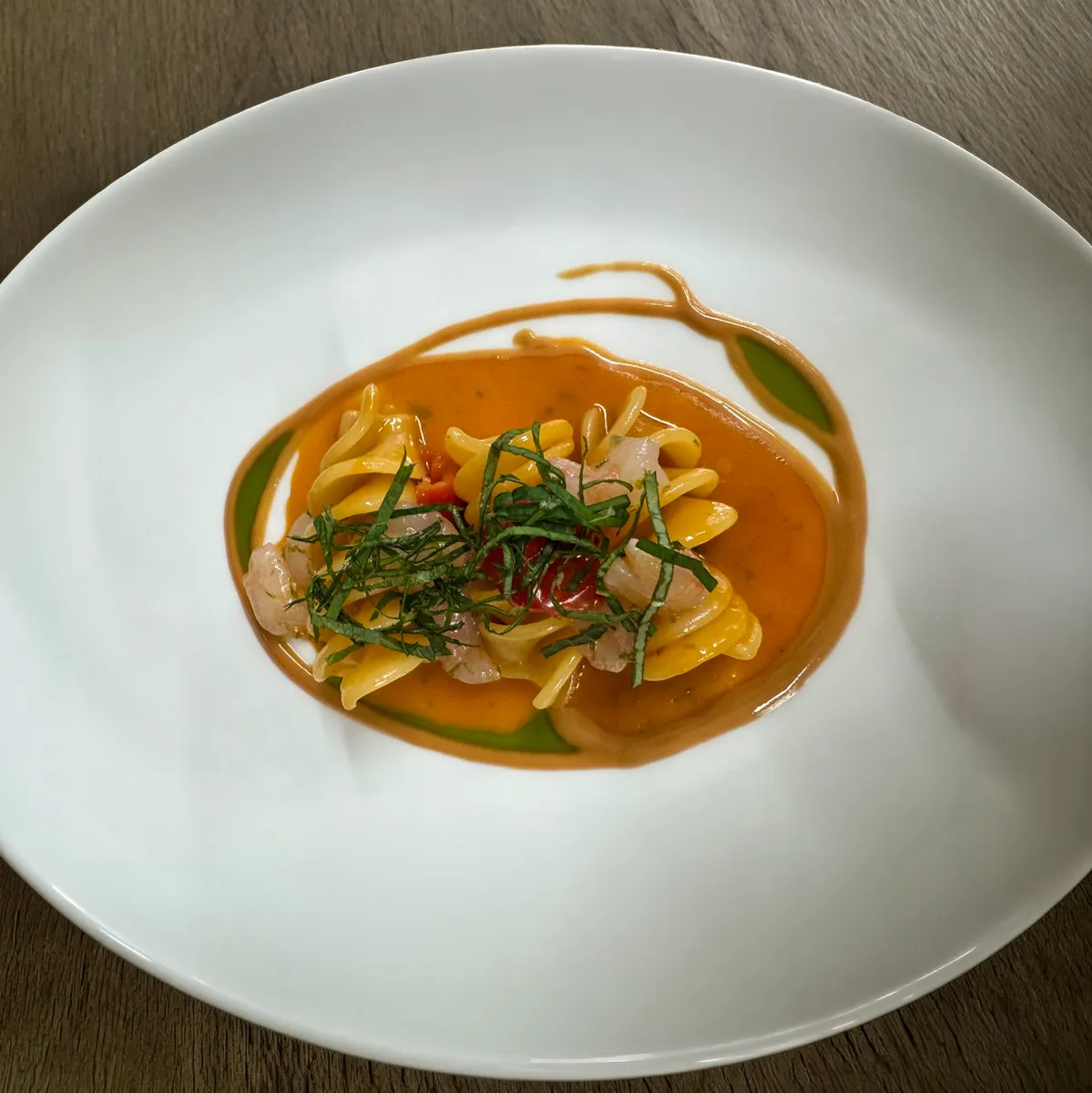
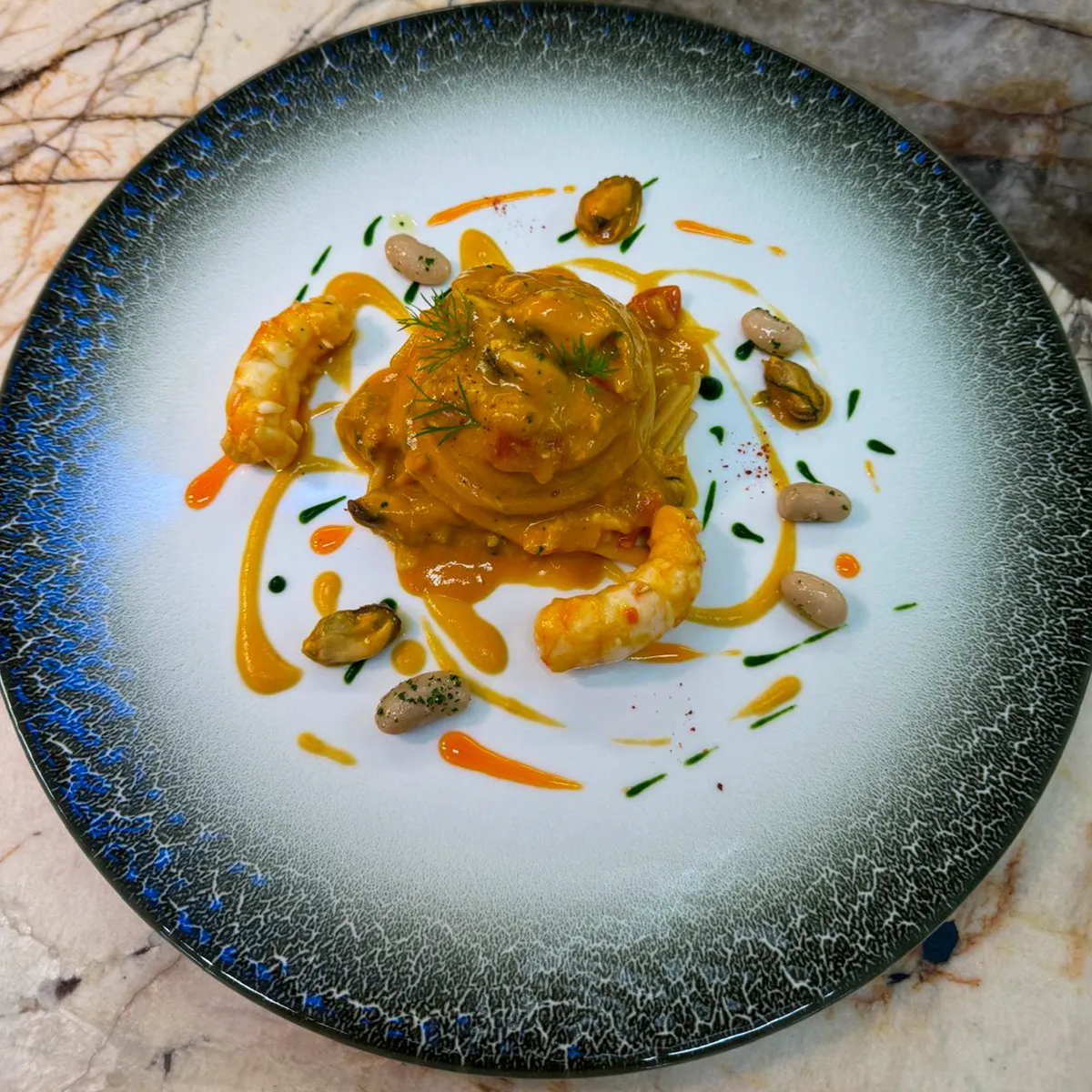
The choice of the mezzi paccheri stems from a desire to distinguish ourselves from the Da Vittorio restaurant and its iconic pacchero. At DaV we wished to offer a more casual format, swifter in its enjoyment.
Dried pasta and fresh pasta are two distinct worlds, each possessing its own sovereign dignity. You have worked extensively with dried pasta (I think of the "Stelle" project with Garofalo), yet the Cerea tradition and your Tuscan upbringing also draw you toward the egg-rich sfoglia. What is your philosophy in choosing between them? Is there a creation on your current menu where dried pasta triumphs technically over fresh, or vice versa, and why?
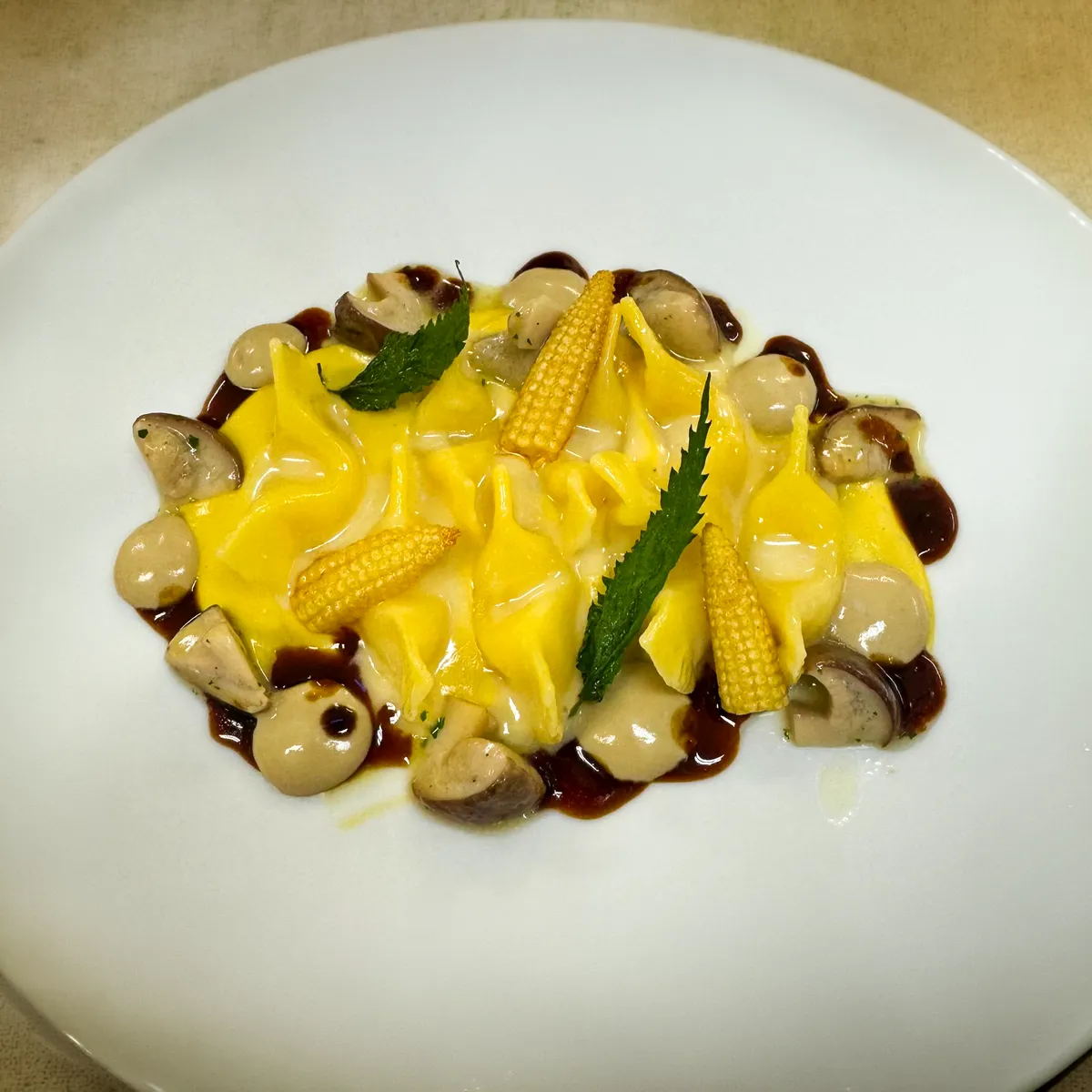
My personal palate is profoundly tied to dried pasta, which I love to cook and elevate, but as a culinary artist I feel the necessity to work with both genres. Dried and fresh pasta possess different characteristics, varieties, and potentials; the choice is always dictated by the dish I wish to compose and the ultimate sensory journey I desire to offer.
Dishes of apparent simplicity, such as a classic pasta al pomodoro, are often the most demanding to render extraordinary. In your celebrated Toast you employ three distinct preparations of the tomato (confit, dried, fresh) to achieve depth. Do you apply this same orchestration of flavors and obsessive precision in selection even when preparing a simple pacchero al pomodoro, to elevate it to the peaks of culinary expression?
Most assuredly. I always strive to extract the absolute essence of flavor from every ingredient, even in the most uncomplicated creations. In the case of the tomato, for instance, I await the zenith of its ripeness, for only then can it fully express its vast aromatic complexity and bestow a truly sublime flavor upon the dish.
Turning to the "duel" between the two Italian giants: pasta and pizza. In a landscape of "Luxury Snacking," how do you perceive the role of both? Is there a perceived rivalry, or are they two artistic expressions that coexist to elevate one another?
I believe that any creation, when crafted to the pinnacle of its potential, can transcend the notion of mere snacking to become something of "luxury." Pasta and pizza are not in competition: they are two distinct languages that can harmoniously coexist and elevate each other, both achieving the status of exceptional culinary masterpieces.
Your heritage includes time in the temples of the Spanish avant-garde, such as Disfrutar and Can Roca. Is there a specific technique—perhaps related to gelling agents or temperature control—that you imported from those experiences and now secretly employ in Milan to refine the emulsification or texture of your pasta sauces?
In Spain, I mastered a wealth of technical skills and encountered profound innovations. To this day, when composing a new dish, I seek to weave in this heritage of knowledge. That being said, regarding first courses, I never employ artificial thickeners in my emulsifications; I prefer to work directly with the raw ingredient, temperature control, and natural emulsions.
Many share an intense emotional bond with pasta, viewing it as the quintessential "comfort food." How do you transform and elevate this almost domestic, consoling concept within the refined and polished realm of fine dining? What is the nuance that makes the guest feel instantly "at home"?
In my view, the detail that makes a guest feel "at home" is the purity and simplicity of flavor. I do not favor excessively convoluted tastes; I seek legible, balanced dishes that can be cherished alike by the youth, the connoisseur, and the elder.
How do you view the relationship between pasta and new culinary technologies? As a young chef oriented toward the future, do you believe innovations like culinary 3D printing for unprecedented shapes can find a place in your vision, or will pasta remain for you an sacred bastion of manual craftsmanship and heritage?
To date, all the pasta models crafted through 3D printing that I have tasted have failed to convince me, and I have found no place for them on my menu. However, I do not rule out interesting developments in the future; I remain curious, yet deeply devoted to the quality of the final culinary creation.
You were born in Florence and trained under Vito Mollica. Tuscany boasts a highly specific culture of pasta, defined by robust textures (pici, pappardelle) and rustic meat sauces. How much of this Tuscan DNA survives in your Milanese dishes? Is there a gesture in preparing the soffritto or rolling out the dough that remains unequivocally Tuscan?
Absolutely, my origins are an integral part of my culinary tapestry. Even today, particularly in our select specials or off-menu creations, I introduce preparations that evoke my childhood and Tuscan gastronomy. It is a bond that remains vibrant and continues to inspire my culinary hand.
During your S.Pellegrino Young Chef journey, you worked side-by-side with Giancarlo Perbellini, a master of concrete precision. Was there a specific piece of advice regarding the balance of flavor he imparted during tastings that has since altered the way you balance acidity or savoriness in a pasta dish?
During my journey alongside Chef Giancarlo Perbellini, I refined my palate immensely, particularly in the mastery of acidity. Chef Giancarlo is exceedingly rigorous on this matter; he helped reshape my approach to the harmony of taste, marking a true turning point in how I conceptualize and compose my dishes.
CURRICULUM VITAE
Edoardo Tizzani (born in Florence, class of 1995) forged his professional identity within kitchens where gesture carries the weight of rhythm: precision, the sacred discipline of the brigade, and a profound reverence for the raw ingredient.
Initially destined for the study of accountancy, he answered an urgent calling for tangible creation and embraced the culinary arts, entering the realm of haute hospitality at the Four Seasons under Vito Mollica, between Florence and Milan. There, he mastered the subtle codes of service and that devotion to detail which, far from mere ornament, becomes a guiding philosophy.
The definitive turning point arrived with his passage to Da Vittorio in Brusaporto: years of endurance and daily devotion, wherein technique transformed into unwavering reliability and cooking was measured by the enduring truth of flavor. Here he ascended to the role of sous chef, while simultaneously expanding his horizon through sojourns in Spain — among El Celler de Can Roca, Disfrutar, and Lasarte — absorbing a contemporary language that eschews theatrical display in pursuit of absolute clarity.
In 2025, he triumphed in the Italian final of the S.Pellegrino Young Chef Academy Competition with “An Artichoke Heart,” a manifesto-dish where the botanical world commands the center of the stage and animal protein serves as a mere contrapuntal note, governed by a philosophy of conscious utilization and minimized waste. Today, he helms DaV by Da Vittorio Louis Vuitton in Milan: a kitchen more agile in its form, yet demanding in its substance, where the concept of luxury aligns not with ostentation, but with structural purity.
dialogues
Chef, to labor under the aegis of the Cerea family is to engage in a daily dialogue with the legendary "Pacchero alla Vittorio." On the menu at DaV you offer "Mezzi Paccheri": is this a choice dictated by the swift tempos of "luxury snacking," or does it also represent a symbolic endeavor to carve out your own personal measure within so imposing an inheritance?
The choice of the mezzi paccheri stems from a desire to distinguish ourselves from the Da Vittorio restaurant and its iconic pacchero. At DaV we wished to offer a more casual format, swifter in its enjoyment.
Dried pasta and fresh pasta are two distinct worlds, each possessing its own sovereign dignity. You have worked extensively with dried pasta (I think of the "Stelle" project with Garofalo), yet the Cerea tradition and your Tuscan upbringing also draw you toward the egg-rich sfoglia. What is your philosophy in choosing between them? Is there a creation on your current menu where dried pasta triumphs technically over fresh, or vice versa, and why?
My personal palate is profoundly tied to dried pasta, which I love to cook and elevate, but as a culinary artist I feel the necessity to work with both genres. Dried and fresh pasta possess different characteristics, varieties, and potentials; the choice is always dictated by the dish I wish to compose and the ultimate sensory journey I desire to offer.
Dishes of apparent simplicity, such as a classic pasta al pomodoro, are often the most demanding to render extraordinary. In your celebrated Toast you employ three distinct preparations of the tomato (confit, dried, fresh) to achieve depth. Do you apply this same orchestration of flavors and obsessive precision in selection even when preparing a simple pacchero al pomodoro, to elevate it to the peaks of culinary expression?
Most assuredly. I always strive to extract the absolute essence of flavor from every ingredient, even in the most uncomplicated creations. In the case of the tomato, for instance, I await the zenith of its ripeness, for only then can it fully express its vast aromatic complexity and bestow a truly sublime flavor upon the dish.
Turning to the "duel" between the two Italian giants: pasta and pizza. In a landscape of "Luxury Snacking," how do you perceive the role of both? Is there a perceived rivalry, or are they two artistic expressions that coexist to elevate one another?
I believe that any creation, when crafted to the pinnacle of its potential, can transcend the notion of mere snacking to become something of "luxury." Pasta and pizza are not in competition: they are two distinct languages that can harmoniously coexist and elevate each other, both achieving the status of exceptional culinary masterpieces.
Your heritage includes time in the temples of the Spanish avant-garde, such as Disfrutar and Can Roca. Is there a specific technique—perhaps related to gelling agents or temperature control—that you imported from those experiences and now secretly employ in Milan to refine the emulsification or texture of your pasta sauces?
In Spain, I mastered a wealth of technical skills and encountered profound innovations. To this day, when composing a new dish, I seek to weave in this heritage of knowledge. That being said, regarding first courses, I never employ artificial thickeners in my emulsifications; I prefer to work directly with the raw ingredient, temperature control, and natural emulsions.
Many share an intense emotional bond with pasta, viewing it as the quintessential "comfort food." How do you transform and elevate this almost domestic, consoling concept within the refined and polished realm of fine dining? What is the nuance that makes the guest feel instantly "at home"?
In my view, the detail that makes a guest feel "at home" is the purity and simplicity of flavor. I do not favor excessively convoluted tastes; I seek legible, balanced dishes that can be cherished alike by the youth, the connoisseur, and the elder.
How do you view the relationship between pasta and new culinary technologies? As a young chef oriented toward the future, do you believe innovations like culinary 3D printing for unprecedented shapes can find a place in your vision, or will pasta remain for you an sacred bastion of manual craftsmanship and heritage?
To date, all the pasta models crafted through 3D printing that I have tasted have failed to convince me, and I have found no place for them on my menu. However, I do not rule out interesting developments in the future; I remain curious, yet deeply devoted to the quality of the final culinary creation.
You were born in Florence and trained under Vito Mollica. Tuscany boasts a highly specific culture of pasta, defined by robust textures (pici, pappardelle) and rustic meat sauces. How much of this Tuscan DNA survives in your Milanese dishes? Is there a gesture in preparing the soffritto or rolling out the dough that remains unequivocally Tuscan?
Absolutely, my origins are an integral part of my culinary tapestry. Even today, particularly in our select specials or off-menu creations, I introduce preparations that evoke my childhood and Tuscan gastronomy. It is a bond that remains vibrant and continues to inspire my culinary hand.
During your S.Pellegrino Young Chef journey, you worked side-by-side with Giancarlo Perbellini, a master of concrete precision. Was there a specific piece of advice regarding the balance of flavor he imparted during tastings that has since altered the way you balance acidity or savoriness in a pasta dish?
During my journey alongside Chef Giancarlo Perbellini, I refined my palate immensely, particularly in the mastery of acidity. Chef Giancarlo is exceedingly rigorous on this matter; he helped reshape my approach to the harmony of taste, marking a true turning point in how I conceptualize and compose my dishes.
CURRICULUM VITAE
Edoardo Tizzani (born in Florence, class of 1995) forged his professional identity within kitchens where gesture carries the weight of rhythm: precision, the sacred discipline of the brigade, and a profound reverence for the raw ingredient.
Initially destined for the study of accountancy, he answered an urgent calling for tangible creation and embraced the culinary arts, entering the realm of haute hospitality at the Four Seasons under Vito Mollica, between Florence and Milan. There, he mastered the subtle codes of service and that devotion to detail which, far from mere ornament, becomes a guiding philosophy.
The definitive turning point arrived with his passage to Da Vittorio in Brusaporto: years of endurance and daily devotion, wherein technique transformed into unwavering reliability and cooking was measured by the enduring truth of flavor. Here he ascended to the role of sous chef, while simultaneously expanding his horizon through sojourns in Spain — among El Celler de Can Roca, Disfrutar, and Lasarte — absorbing a contemporary language that eschews theatrical display in pursuit of absolute clarity.
In 2025, he triumphed in the Italian final of the S.Pellegrino Young Chef Academy Competition with “An Artichoke Heart,” a manifesto-dish where the botanical world commands the center of the stage and animal protein serves as a mere contrapuntal note, governed by a philosophy of conscious utilization and minimized waste. Today, he helms DaV by Da Vittorio Louis Vuitton in Milan: a kitchen more agile in its form, yet demanding in its substance, where the concept of luxury aligns not with ostentation, but with structural purity.
dialogues
Chef, to labor under the aegis of the Cerea family is to engage in a daily dialogue with the legendary "Pacchero alla Vittorio." On the menu at DaV you offer "Mezzi Paccheri": is this a choice dictated by the swift tempos of "luxury snacking," or does it also represent a symbolic endeavor to carve out your own personal measure within so imposing an inheritance?
The choice of the mezzi paccheri stems from a desire to distinguish ourselves from the Da Vittorio restaurant and its iconic pacchero. At DaV we wished to offer a more casual format, swifter in its enjoyment.
Dried pasta and fresh pasta are two distinct worlds, each possessing its own sovereign dignity. You have worked extensively with dried pasta (I think of the "Stelle" project with Garofalo), yet the Cerea tradition and your Tuscan upbringing also draw you toward the egg-rich sfoglia. What is your philosophy in choosing between them? Is there a creation on your current menu where dried pasta triumphs technically over fresh, or vice versa, and why?
My personal palate is profoundly tied to dried pasta, which I love to cook and elevate, but as a culinary artist I feel the necessity to work with both genres. Dried and fresh pasta possess different characteristics, varieties, and potentials; the choice is always dictated by the dish I wish to compose and the ultimate sensory journey I desire to offer.
Dishes of apparent simplicity, such as a classic pasta al pomodoro, are often the most demanding to render extraordinary. In your celebrated Toast you employ three distinct preparations of the tomato (confit, dried, fresh) to achieve depth. Do you apply this same orchestration of flavors and obsessive precision in selection even when preparing a simple pacchero al pomodoro, to elevate it to the peaks of culinary expression?
Most assuredly. I always strive to extract the absolute essence of flavor from every ingredient, even in the most uncomplicated creations. In the case of the tomato, for instance, I await the zenith of its ripeness, for only then can it fully express its vast aromatic complexity and bestow a truly sublime flavor upon the dish.
Turning to the "duel" between the two Italian giants: pasta and pizza. In a landscape of "Luxury Snacking," how do you perceive the role of both? Is there a perceived rivalry, or are they two artistic expressions that coexist to elevate one another?
I believe that any creation, when crafted to the pinnacle of its potential, can transcend the notion of mere snacking to become something of "luxury." Pasta and pizza are not in competition: they are two distinct languages that can harmoniously coexist and elevate each other, both achieving the status of exceptional culinary masterpieces.
Your heritage includes time in the temples of the Spanish avant-garde, such as Disfrutar and Can Roca. Is there a specific technique—perhaps related to gelling agents or temperature control—that you imported from those experiences and now secretly employ in Milan to refine the emulsification or texture of your pasta sauces?
In Spain, I mastered a wealth of technical skills and encountered profound innovations. To this day, when composing a new dish, I seek to weave in this heritage of knowledge. That being said, regarding first courses, I never employ artificial thickeners in my emulsifications; I prefer to work directly with the raw ingredient, temperature control, and natural emulsions.
Many share an intense emotional bond with pasta, viewing it as the quintessential "comfort food." How do you transform and elevate this almost domestic, consoling concept within the refined and polished realm of fine dining? What is the nuance that makes the guest feel instantly "at home"?
In my view, the detail that makes a guest feel "at home" is the purity and simplicity of flavor. I do not favor excessively convoluted tastes; I seek legible, balanced dishes that can be cherished alike by the youth, the connoisseur, and the elder.
How do you view the relationship between pasta and new culinary technologies? As a young chef oriented toward the future, do you believe innovations like culinary 3D printing for unprecedented shapes can find a place in your vision, or will pasta remain for you an sacred bastion of manual craftsmanship and heritage?
To date, all the pasta models crafted through 3D printing that I have tasted have failed to convince me, and I have found no place for them on my menu. However, I do not rule out interesting developments in the future; I remain curious, yet deeply devoted to the quality of the final culinary creation.
You were born in Florence and trained under Vito Mollica. Tuscany boasts a highly specific culture of pasta, defined by robust textures (pici, pappardelle) and rustic meat sauces. How much of this Tuscan DNA survives in your Milanese dishes? Is there a gesture in preparing the soffritto or rolling out the dough that remains unequivocally Tuscan?
Absolutely, my origins are an integral part of my culinary tapestry. Even today, particularly in our select specials or off-menu creations, I introduce preparations that evoke my childhood and Tuscan gastronomy. It is a bond that remains vibrant and continues to inspire my culinary hand.
During your S.Pellegrino Young Chef journey, you worked side-by-side with Giancarlo Perbellini, a master of concrete precision. Was there a specific piece of advice regarding the balance of flavor he imparted during tastings that has since altered the way you balance acidity or savoriness in a pasta dish?
During my journey alongside Chef Giancarlo Perbellini, I refined my palate immensely, particularly in the mastery of acidity. Chef Giancarlo is exceedingly rigorous on this matter; he helped reshape my approach to the harmony of taste, marking a true turning point in how I conceptualize and compose my dishes.