
ON OCCASION, ETIQUETTE MAY STAND IN WAITING
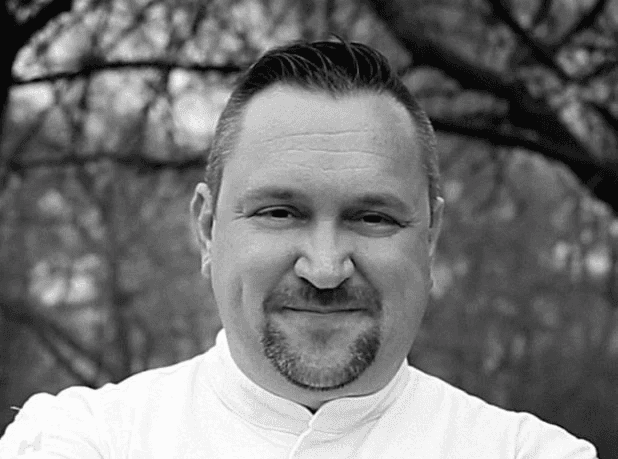
Matteo Morandi chronicles the storied legacy of Modena's Salumeria and Hosteria Giusti
ON OCCASION, ETIQUETTE MAY STAND IN WAITING
Matteo Morandi chronicles the storied legacy of Modena's Salumeria and Hosteria Giusti
ON OCCASION, ETIQUETTE MAY STAND IN WAITING
Matteo Morandi chronicles the storied legacy of Modena's Salumeria and Hosteria Giusti
The story of Salumeria Giusti has its genesis in 1605. In 1980, Giuseppe Giusti entrusted the heritage of the business to Adriano Morandi, known as “Nano,” who was nurtured within the shop itself. Nine years hence, within the antique slaughterhouse at the rear, the Hosteria came into being: a poetic gathering of tables and a Modenese kitchen placed into the hands of Laura, who until that day had worked as a bank employee.
Matteo stepped into the family craft in 1993, bearing a surveyor’s diploma and an awakening passion for wine and hospitality. Today he works alongside his sister Cecilia, while his son Daniele carries into the kitchen the treasured teachings of Grandmother Laura. Within the family, all have learned the sacred craft of rolling sfoglia: a shared knowledge that allows one to stand beside another whenever the labor demands.
Between the counter, the hearth, and the table, Matteo recounts to MILLEUNAPASTA the genesis of a tortellino’s filling, why a simple butter tagliolino can pose the ultimate test for dining room service, and the solemn duty shops bear in safeguarding a legacy of wisdom that so many households no longer practice today.
Matteo, your father Adriano, “Nano,” was raised in Giuseppe Giusti’s workshop and took the mantle in 1980. Which of his teachings do you still perceive today in your craft and hospitality?
“He taught us to receive each guest as if they themselves were the master of the house. Today, the world is consumed by haste, inundated with obligations: to offer them the grace to pause, even for a mere ten minutes, is of priceless worth. One might converse of nourishment, of wine, or other musings; what truly matters is that they dwell in perpetual comfort.
It is what remains most deeply etched within my soul, entwined with a reverence for our labor and the purity of raw ingredients, which I now seek to bestow upon my son, the third generation. The voracious curiosity of his twenty-eight years has rekindled in us the longing to wander, to meet humble artisans and growers, to discover the extraordinary. After endless years of devotion to the craft, from time to time, one needs precisely this.”
Between the Salumeria’s marble counter and the Hosteria’s kitchen, how is the profile of your pasta composed? What measure of importance do cured meats and cheeses hold in your fillings, and which shapes narrate your identity beyond the tortellino?
“For our tortellino, we begin with the recipe of Grandmother Azzurra, my father’s mother. She possessed an ethereal touch: when she raised those grand veils of pasta without tearing them, she brought to mind a flag-waver at the Palio of Siena. Even now, we strive to honor that very craft.
The pesto, as we in Modena call the filling, is the soul of our family. Each hearth maintains its own secret, its own memory of a grandmother’s tortellino. Yet, to achieve greatness on the palate, one requires ingredients of sublime nobility: the prosciutto, the mortadella, the freshly harvested meats. The same truth governs our rosette—the baked pasta cradling béchamel, Emmental, and prosciutto cotto: the elements are few, and the excellence of the cooked ham makes all the difference.
We also craft tagliatelle and tagliolini. Returning to our Salumeria are the passatelli, a soul-warming alternative to tortellini in brodo, and tender potato gnocchetti. Those dressed in Grandmother Azzurra’s ragù remain a sensory memory that, for me, none has ever surpassed. In the restaurant, we introduced maccheroni al pettine with duck ragù, which our patrons are rediscovering with reverence. And we aspire to present on the à la carte menu the tagliolino with butter and Parmigiano Reggiano: to my grandfather Renzo, it was the quintessential dish of a lifetime.”
Would you recount for us the tagliolini prepared for the Antinori lineage? On what occasion were they requested, and what unfolded that evening?
“It was an evening of many years ago at Palazzo Antinori, graced by luminaries of fashion, fine art, photography, and the literary world. They requested our tagliolino with butter and Parmigiano Reggiano. My father answered instantly: ‘Without question, yes.’ My mother gave him a swift kick beneath the table: we were accustomed to twenty-four, at most twenty-five covers; that evening, ninety guests awaited!
Her trepidation concerned the ritual of service. It is a dish deceptive in its simplicity of thought, yet perilous to bring to the table: should it linger, it knits together and congeals. The servers would plate the pasta, and if the guests waited politely until every soul was served, the first diner would face an unyielding, unified block. We therefore implored each guest to partake immediately as their plate arrived.
A catering team stood alongside us, offering invaluable support. In the end, one of the marquis’s daughters stepped into the kitchen and told me: ‘The models seated at my table asked for seconds!’ For us, no sweeter triumph could exist. From that night forward, for grand gatherings and winemakers’ soirees, that tagliolino was indispensable.
Here too, the raw substance transfigures the dish. We use butter from Normandy when we can obtain it, or fresh, artisanal butter from small Italian dairies: the pristine perfume of milk and churned cream must sing. The Parmigiano Reggiano is aged between twenty-four and thirty months to achieve absolute harmony. The tagliolino is gently cooked, tossed in an abundance of luscious butter, and crowned with the cheese only at the very end.”
Let us enter the heart of your tortellino: what decisions prove decisive in balancing the sheet of pasta and its filling? Could you speak to the manual artistry and the capon broth in which it is served?
“When Daniele arrived in the kitchen, the first truth I imparted to him was: ‘You must learn the sfoglia crafted entirely by hand.’ We roll it with the long rolling pin, which in our vernacular is called the “cannella”. The pasta assumes a distinct, porous rusticity, and its thickness alters according to its destiny: for lasagne, rosette, and cannelloni, we keep it slightly more substantial, so it may endure an initial poaching and the subsequent assembly of the dish. These are sensibilities mastered solely through daily devotion.
The intimate scale of our establishment still permits us to craft every ribbon of pasta in this ancestral way. Yet we impose a sacred boundary: as Christmas approaches, once we attain the quantity of tortellini we can physically fold in a single day, we defer further orders to the day before. To weave everything by hand demands vast stretches of time.
Regarding the harmony between sheet and filling, I hold a personal conviction. The miniscule tortellino, the kind that nestles five upon a single spoon, risks suffocating the senses with too much dough. I prefer to shape it slightly larger, granting the pesto space to breathe and bloom. If we have sought out exquisite meats and salumi, we wish their essence to be fully savored! Even the nutmeg, to my mind, should be but a faint, ghostly whisper.
In our dining room, we serve exclusively capon broth. As a boy, I was accustomed to the deeper, robust beef and hen broths of my grandmothers; capon seemed almost overly sweet and rich. Yet the palate evolves. Today, to my senses, when the tortellino meets capon broth, it is a celestial marriage: it possesses a refined poise, a balance of sweetness and savory depth that we pursue in every creation.”
Laura, your mother, and Daniele, your son: what gestures and ancestral recipes do you long to see pass unblemished to those who will follow? And what horizon do you envision for pasta within shops such as yours?
“I wish for my son to carry forth, for as long as he draws breath, the heritage of the mothers and grandmothers. When we opened the restaurant, my mother was working at the bank. She prepared the financial feasibility plan for my father; when she asked, ‘Who will you place in the kitchen?’, he replied simply: ‘You!’ Yet she carried within her a profound lineage—the unspoken academy of our mothers and grandmothers.
When Daniele entered the fold, she dedicated two years to imparting this sacred art to him, with an awe-inspiring energy. Now, seeing him master of his craft, she says: ‘I will take my place on the bench, savor the moment, and watch you carry the flame forward.’ For my son, Grandmother’s blessing is a glorious triumph. I never tire of telling him that he is free to compose new dishes, yet he must always remember where his roots are anchored and where his compass points. Certain pure, simple flavors are in peril of being lost to time. A gentleman who came to celebrate his eightieth birthday, upon tasting our minestrone fritters, took me by the arm and said: ‘Today, you have returned me to my childhood.’ Through our cuisine, we can awaken emotions as profound as these.
When guests ask for our recipes, we bestow them precisely as we prepare them. Had my grandmother guarded her secrets in silence, these culinary treasures would no longer exist.
As for our heritage shops, pasta is our vital breath: within a salumeria, there must always be a sanctuary for fresh pasta. Many households no longer roll their own pasta, or have lost the sacred knowledge of doing so; for this reason, honoring and sustaining this craft is paramount. It is an arduous path, for traditional salumerie fight daily to keep their doors open. Yet rigorous devotion bears its fruit. I remain convinced that the palate must be cultivated: people perceive the difference instinctively, if you offer them a taste and unveil why you chose that particular artisan or that singular ingredient.”


The story of Salumeria Giusti has its genesis in 1605. In 1980, Giuseppe Giusti entrusted the heritage of the business to Adriano Morandi, known as “Nano,” who was nurtured within the shop itself. Nine years hence, within the antique slaughterhouse at the rear, the Hosteria came into being: a poetic gathering of tables and a Modenese kitchen placed into the hands of Laura, who until that day had worked as a bank employee.
Matteo stepped into the family craft in 1993, bearing a surveyor’s diploma and an awakening passion for wine and hospitality. Today he works alongside his sister Cecilia, while his son Daniele carries into the kitchen the treasured teachings of Grandmother Laura. Within the family, all have learned the sacred craft of rolling sfoglia: a shared knowledge that allows one to stand beside another whenever the labor demands.
Between the counter, the hearth, and the table, Matteo recounts to MILLEUNAPASTA the genesis of a tortellino’s filling, why a simple butter tagliolino can pose the ultimate test for dining room service, and the solemn duty shops bear in safeguarding a legacy of wisdom that so many households no longer practice today.
Matteo, your father Adriano, “Nano,” was raised in Giuseppe Giusti’s workshop and took the mantle in 1980. Which of his teachings do you still perceive today in your craft and hospitality?
“He taught us to receive each guest as if they themselves were the master of the house. Today, the world is consumed by haste, inundated with obligations: to offer them the grace to pause, even for a mere ten minutes, is of priceless worth. One might converse of nourishment, of wine, or other musings; what truly matters is that they dwell in perpetual comfort.
It is what remains most deeply etched within my soul, entwined with a reverence for our labor and the purity of raw ingredients, which I now seek to bestow upon my son, the third generation. The voracious curiosity of his twenty-eight years has rekindled in us the longing to wander, to meet humble artisans and growers, to discover the extraordinary. After endless years of devotion to the craft, from time to time, one needs precisely this.”
Between the Salumeria’s marble counter and the Hosteria’s kitchen, how is the profile of your pasta composed? What measure of importance do cured meats and cheeses hold in your fillings, and which shapes narrate your identity beyond the tortellino?
“For our tortellino, we begin with the recipe of Grandmother Azzurra, my father’s mother. She possessed an ethereal touch: when she raised those grand veils of pasta without tearing them, she brought to mind a flag-waver at the Palio of Siena. Even now, we strive to honor that very craft.
The pesto, as we in Modena call the filling, is the soul of our family. Each hearth maintains its own secret, its own memory of a grandmother’s tortellino. Yet, to achieve greatness on the palate, one requires ingredients of sublime nobility: the prosciutto, the mortadella, the freshly harvested meats. The same truth governs our rosette—the baked pasta cradling béchamel, Emmental, and prosciutto cotto: the elements are few, and the excellence of the cooked ham makes all the difference.
We also craft tagliatelle and tagliolini. Returning to our Salumeria are the passatelli, a soul-warming alternative to tortellini in brodo, and tender potato gnocchetti. Those dressed in Grandmother Azzurra’s ragù remain a sensory memory that, for me, none has ever surpassed. In the restaurant, we introduced maccheroni al pettine with duck ragù, which our patrons are rediscovering with reverence. And we aspire to present on the à la carte menu the tagliolino with butter and Parmigiano Reggiano: to my grandfather Renzo, it was the quintessential dish of a lifetime.”
Would you recount for us the tagliolini prepared for the Antinori lineage? On what occasion were they requested, and what unfolded that evening?
“It was an evening of many years ago at Palazzo Antinori, graced by luminaries of fashion, fine art, photography, and the literary world. They requested our tagliolino with butter and Parmigiano Reggiano. My father answered instantly: ‘Without question, yes.’ My mother gave him a swift kick beneath the table: we were accustomed to twenty-four, at most twenty-five covers; that evening, ninety guests awaited!
Her trepidation concerned the ritual of service. It is a dish deceptive in its simplicity of thought, yet perilous to bring to the table: should it linger, it knits together and congeals. The servers would plate the pasta, and if the guests waited politely until every soul was served, the first diner would face an unyielding, unified block. We therefore implored each guest to partake immediately as their plate arrived.
A catering team stood alongside us, offering invaluable support. In the end, one of the marquis’s daughters stepped into the kitchen and told me: ‘The models seated at my table asked for seconds!’ For us, no sweeter triumph could exist. From that night forward, for grand gatherings and winemakers’ soirees, that tagliolino was indispensable.
Here too, the raw substance transfigures the dish. We use butter from Normandy when we can obtain it, or fresh, artisanal butter from small Italian dairies: the pristine perfume of milk and churned cream must sing. The Parmigiano Reggiano is aged between twenty-four and thirty months to achieve absolute harmony. The tagliolino is gently cooked, tossed in an abundance of luscious butter, and crowned with the cheese only at the very end.”
Let us enter the heart of your tortellino: what decisions prove decisive in balancing the sheet of pasta and its filling? Could you speak to the manual artistry and the capon broth in which it is served?
“When Daniele arrived in the kitchen, the first truth I imparted to him was: ‘You must learn the sfoglia crafted entirely by hand.’ We roll it with the long rolling pin, which in our vernacular is called the “cannella”. The pasta assumes a distinct, porous rusticity, and its thickness alters according to its destiny: for lasagne, rosette, and cannelloni, we keep it slightly more substantial, so it may endure an initial poaching and the subsequent assembly of the dish. These are sensibilities mastered solely through daily devotion.
The intimate scale of our establishment still permits us to craft every ribbon of pasta in this ancestral way. Yet we impose a sacred boundary: as Christmas approaches, once we attain the quantity of tortellini we can physically fold in a single day, we defer further orders to the day before. To weave everything by hand demands vast stretches of time.
Regarding the harmony between sheet and filling, I hold a personal conviction. The miniscule tortellino, the kind that nestles five upon a single spoon, risks suffocating the senses with too much dough. I prefer to shape it slightly larger, granting the pesto space to breathe and bloom. If we have sought out exquisite meats and salumi, we wish their essence to be fully savored! Even the nutmeg, to my mind, should be but a faint, ghostly whisper.
In our dining room, we serve exclusively capon broth. As a boy, I was accustomed to the deeper, robust beef and hen broths of my grandmothers; capon seemed almost overly sweet and rich. Yet the palate evolves. Today, to my senses, when the tortellino meets capon broth, it is a celestial marriage: it possesses a refined poise, a balance of sweetness and savory depth that we pursue in every creation.”
Laura, your mother, and Daniele, your son: what gestures and ancestral recipes do you long to see pass unblemished to those who will follow? And what horizon do you envision for pasta within shops such as yours?
“I wish for my son to carry forth, for as long as he draws breath, the heritage of the mothers and grandmothers. When we opened the restaurant, my mother was working at the bank. She prepared the financial feasibility plan for my father; when she asked, ‘Who will you place in the kitchen?’, he replied simply: ‘You!’ Yet she carried within her a profound lineage—the unspoken academy of our mothers and grandmothers.
When Daniele entered the fold, she dedicated two years to imparting this sacred art to him, with an awe-inspiring energy. Now, seeing him master of his craft, she says: ‘I will take my place on the bench, savor the moment, and watch you carry the flame forward.’ For my son, Grandmother’s blessing is a glorious triumph. I never tire of telling him that he is free to compose new dishes, yet he must always remember where his roots are anchored and where his compass points. Certain pure, simple flavors are in peril of being lost to time. A gentleman who came to celebrate his eightieth birthday, upon tasting our minestrone fritters, took me by the arm and said: ‘Today, you have returned me to my childhood.’ Through our cuisine, we can awaken emotions as profound as these.
When guests ask for our recipes, we bestow them precisely as we prepare them. Had my grandmother guarded her secrets in silence, these culinary treasures would no longer exist.
As for our heritage shops, pasta is our vital breath: within a salumeria, there must always be a sanctuary for fresh pasta. Many households no longer roll their own pasta, or have lost the sacred knowledge of doing so; for this reason, honoring and sustaining this craft is paramount. It is an arduous path, for traditional salumerie fight daily to keep their doors open. Yet rigorous devotion bears its fruit. I remain convinced that the palate must be cultivated: people perceive the difference instinctively, if you offer them a taste and unveil why you chose that particular artisan or that singular ingredient.”
FINAL CHARACTERS
The story of Salumeria Giusti has its genesis in 1605. In 1980, Giuseppe Giusti entrusted the heritage of the business to Adriano Morandi, known as “Nano,” who was nurtured within the shop itself. Nine years hence, within the antique slaughterhouse at the rear, the Hosteria came into being: a poetic gathering of tables and a Modenese kitchen placed into the hands of Laura, who until that day had worked as a bank employee.
Matteo stepped into the family craft in 1993, bearing a surveyor’s diploma and an awakening passion for wine and hospitality. Today he works alongside his sister Cecilia, while his son Daniele carries into the kitchen the treasured teachings of Grandmother Laura. Within the family, all have learned the sacred craft of rolling sfoglia: a shared knowledge that allows one to stand beside another whenever the labor demands.
Between the counter, the hearth, and the table, Matteo recounts to MILLEUNAPASTA the genesis of a tortellino’s filling, why a simple butter tagliolino can pose the ultimate test for dining room service, and the solemn duty shops bear in safeguarding a legacy of wisdom that so many households no longer practice today.
Matteo, your father Adriano, “Nano,” was raised in Giuseppe Giusti’s workshop and took the mantle in 1980. Which of his teachings do you still perceive today in your craft and hospitality?
“He taught us to receive each guest as if they themselves were the master of the house. Today, the world is consumed by haste, inundated with obligations: to offer them the grace to pause, even for a mere ten minutes, is of priceless worth. One might converse of nourishment, of wine, or other musings; what truly matters is that they dwell in perpetual comfort.
It is what remains most deeply etched within my soul, entwined with a reverence for our labor and the purity of raw ingredients, which I now seek to bestow upon my son, the third generation. The voracious curiosity of his twenty-eight years has rekindled in us the longing to wander, to meet humble artisans and growers, to discover the extraordinary. After endless years of devotion to the craft, from time to time, one needs precisely this.”
Between the Salumeria’s marble counter and the Hosteria’s kitchen, how is the profile of your pasta composed? What measure of importance do cured meats and cheeses hold in your fillings, and which shapes narrate your identity beyond the tortellino?
“For our tortellino, we begin with the recipe of Grandmother Azzurra, my father’s mother. She possessed an ethereal touch: when she raised those grand veils of pasta without tearing them, she brought to mind a flag-waver at the Palio of Siena. Even now, we strive to honor that very craft.
The pesto, as we in Modena call the filling, is the soul of our family. Each hearth maintains its own secret, its own memory of a grandmother’s tortellino. Yet, to achieve greatness on the palate, one requires ingredients of sublime nobility: the prosciutto, the mortadella, the freshly harvested meats. The same truth governs our rosette—the baked pasta cradling béchamel, Emmental, and prosciutto cotto: the elements are few, and the excellence of the cooked ham makes all the difference.
We also craft tagliatelle and tagliolini. Returning to our Salumeria are the passatelli, a soul-warming alternative to tortellini in brodo, and tender potato gnocchetti. Those dressed in Grandmother Azzurra’s ragù remain a sensory memory that, for me, none has ever surpassed. In the restaurant, we introduced maccheroni al pettine with duck ragù, which our patrons are rediscovering with reverence. And we aspire to present on the à la carte menu the tagliolino with butter and Parmigiano Reggiano: to my grandfather Renzo, it was the quintessential dish of a lifetime.”
Would you recount for us the tagliolini prepared for the Antinori lineage? On what occasion were they requested, and what unfolded that evening?
“It was an evening of many years ago at Palazzo Antinori, graced by luminaries of fashion, fine art, photography, and the literary world. They requested our tagliolino with butter and Parmigiano Reggiano. My father answered instantly: ‘Without question, yes.’ My mother gave him a swift kick beneath the table: we were accustomed to twenty-four, at most twenty-five covers; that evening, ninety guests awaited!
Her trepidation concerned the ritual of service. It is a dish deceptive in its simplicity of thought, yet perilous to bring to the table: should it linger, it knits together and congeals. The servers would plate the pasta, and if the guests waited politely until every soul was served, the first diner would face an unyielding, unified block. We therefore implored each guest to partake immediately as their plate arrived.
A catering team stood alongside us, offering invaluable support. In the end, one of the marquis’s daughters stepped into the kitchen and told me: ‘The models seated at my table asked for seconds!’ For us, no sweeter triumph could exist. From that night forward, for grand gatherings and winemakers’ soirees, that tagliolino was indispensable.
Here too, the raw substance transfigures the dish. We use butter from Normandy when we can obtain it, or fresh, artisanal butter from small Italian dairies: the pristine perfume of milk and churned cream must sing. The Parmigiano Reggiano is aged between twenty-four and thirty months to achieve absolute harmony. The tagliolino is gently cooked, tossed in an abundance of luscious butter, and crowned with the cheese only at the very end.”
Let us enter the heart of your tortellino: what decisions prove decisive in balancing the sheet of pasta and its filling? Could you speak to the manual artistry and the capon broth in which it is served?
“When Daniele arrived in the kitchen, the first truth I imparted to him was: ‘You must learn the sfoglia crafted entirely by hand.’ We roll it with the long rolling pin, which in our vernacular is called the “cannella”. The pasta assumes a distinct, porous rusticity, and its thickness alters according to its destiny: for lasagne, rosette, and cannelloni, we keep it slightly more substantial, so it may endure an initial poaching and the subsequent assembly of the dish. These are sensibilities mastered solely through daily devotion.
The intimate scale of our establishment still permits us to craft every ribbon of pasta in this ancestral way. Yet we impose a sacred boundary: as Christmas approaches, once we attain the quantity of tortellini we can physically fold in a single day, we defer further orders to the day before. To weave everything by hand demands vast stretches of time.
Regarding the harmony between sheet and filling, I hold a personal conviction. The miniscule tortellino, the kind that nestles five upon a single spoon, risks suffocating the senses with too much dough. I prefer to shape it slightly larger, granting the pesto space to breathe and bloom. If we have sought out exquisite meats and salumi, we wish their essence to be fully savored! Even the nutmeg, to my mind, should be but a faint, ghostly whisper.
In our dining room, we serve exclusively capon broth. As a boy, I was accustomed to the deeper, robust beef and hen broths of my grandmothers; capon seemed almost overly sweet and rich. Yet the palate evolves. Today, to my senses, when the tortellino meets capon broth, it is a celestial marriage: it possesses a refined poise, a balance of sweetness and savory depth that we pursue in every creation.”
Laura, your mother, and Daniele, your son: what gestures and ancestral recipes do you long to see pass unblemished to those who will follow? And what horizon do you envision for pasta within shops such as yours?
“I wish for my son to carry forth, for as long as he draws breath, the heritage of the mothers and grandmothers. When we opened the restaurant, my mother was working at the bank. She prepared the financial feasibility plan for my father; when she asked, ‘Who will you place in the kitchen?’, he replied simply: ‘You!’ Yet she carried within her a profound lineage—the unspoken academy of our mothers and grandmothers.
When Daniele entered the fold, she dedicated two years to imparting this sacred art to him, with an awe-inspiring energy. Now, seeing him master of his craft, she says: ‘I will take my place on the bench, savor the moment, and watch you carry the flame forward.’ For my son, Grandmother’s blessing is a glorious triumph. I never tire of telling him that he is free to compose new dishes, yet he must always remember where his roots are anchored and where his compass points. Certain pure, simple flavors are in peril of being lost to time. A gentleman who came to celebrate his eightieth birthday, upon tasting our minestrone fritters, took me by the arm and said: ‘Today, you have returned me to my childhood.’ Through our cuisine, we can awaken emotions as profound as these.
When guests ask for our recipes, we bestow them precisely as we prepare them. Had my grandmother guarded her secrets in silence, these culinary treasures would no longer exist.
As for our heritage shops, pasta is our vital breath: within a salumeria, there must always be a sanctuary for fresh pasta. Many households no longer roll their own pasta, or have lost the sacred knowledge of doing so; for this reason, honoring and sustaining this craft is paramount. It is an arduous path, for traditional salumerie fight daily to keep their doors open. Yet rigorous devotion bears its fruit. I remain convinced that the palate must be cultivated: people perceive the difference instinctively, if you offer them a taste and unveil why you chose that particular artisan or that singular ingredient.”