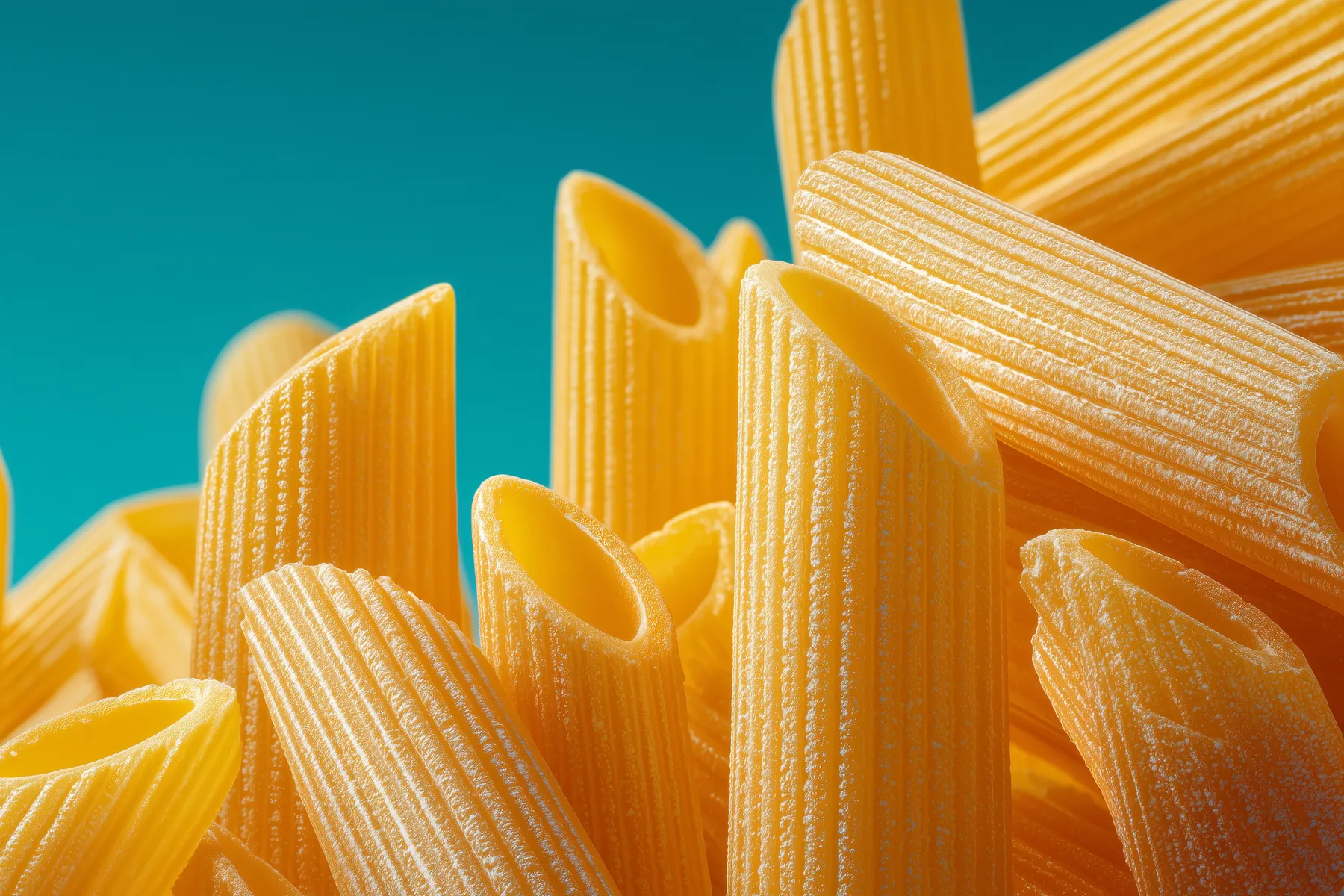
THE WORLD FEEDS EVER MORE UPON THE ART OF PASTA
yet its soul remains profoundly Italian
3/25/26
THE WORLD FEEDS EVER MORE UPON THE ART OF PASTA
yet its soul remains profoundly Italian
3/25/26
THE WORLD FEEDS EVER MORE UPON THE ART OF PASTA
yet its soul remains profoundly Italian
3/25/26
It flourishes across the globe with the effortless grace of necessary things. Pasta, which for centuries was measured by domestic rhythm, a daily devotion, a hearthside custom of kitchen and family, today affirms itself as one of the most universally shared culinary lexicons on earth. The revelations published for World Pasta Day 2025 speak with clarity: global production has surpassed 17 million tonnes, a testament to a diaspora that no longer belongs solely to our Mediterranean heritage, but to a vast and permanently global geography.
Yet, even as the world embraces, interprets, and multiplies it, its true gravity remains unmoved. Italy remains the world's preeminent producer, with approximately 4.2 million tonnes crafted in 2024, but above all, it continues to be the nation where pasta is most reverently consumed per capita: 23.3 kilograms annually for each soul. Following behind are Tunisia (17 kg), Venezuela (13.6 kg), Greece (12.2 kg), and Germany (10.1 kg). This is no mere statistical ladder; it is proof that here, more than anywhere, pasta remains a daily lineament of our culture.
Europe, too, reflects this very same image of centrality. According to Eurostat, in 2024 the European Union yielded 6 million tonnes of pasta, valued at 9.1 billion euros; of this, a staggering 4.1 million tonnes emerged from Italy, representing 69% of the entire Union's production. Even more eloquent is the export data: out of 2.9 million tonnes exported by EU nations, Italy seals 2.2 million with its own signature, a majestic 77% of the total.
These are industrial figures, to be sure, yet they whisper of something far deeper. They reveal that pasta continues to be one of the most sublime triumphs of modern culinary evolution: pure, enduring, accessible, fluid, capable of dwelling simultaneously within intimate memory and the global marketplace. And they declare, above all, that its international destiny has not dissolved its symbolic ancestry. On the contrary: the more the world adopts it, the more beautifully clear it becomes that pasta, though now conversing in an international lexicon, still proudly retains its Italian accent.


It flourishes across the globe with the effortless grace of necessary things. Pasta, which for centuries was measured by domestic rhythm, a daily devotion, a hearthside custom of kitchen and family, today affirms itself as one of the most universally shared culinary lexicons on earth. The revelations published for World Pasta Day 2025 speak with clarity: global production has surpassed 17 million tonnes, a testament to a diaspora that no longer belongs solely to our Mediterranean heritage, but to a vast and permanently global geography.
Yet, even as the world embraces, interprets, and multiplies it, its true gravity remains unmoved. Italy remains the world's preeminent producer, with approximately 4.2 million tonnes crafted in 2024, but above all, it continues to be the nation where pasta is most reverently consumed per capita: 23.3 kilograms annually for each soul. Following behind are Tunisia (17 kg), Venezuela (13.6 kg), Greece (12.2 kg), and Germany (10.1 kg). This is no mere statistical ladder; it is proof that here, more than anywhere, pasta remains a daily lineament of our culture.
Europe, too, reflects this very same image of centrality. According to Eurostat, in 2024 the European Union yielded 6 million tonnes of pasta, valued at 9.1 billion euros; of this, a staggering 4.1 million tonnes emerged from Italy, representing 69% of the entire Union's production. Even more eloquent is the export data: out of 2.9 million tonnes exported by EU nations, Italy seals 2.2 million with its own signature, a majestic 77% of the total.
These are industrial figures, to be sure, yet they whisper of something far deeper. They reveal that pasta continues to be one of the most sublime triumphs of modern culinary evolution: pure, enduring, accessible, fluid, capable of dwelling simultaneously within intimate memory and the global marketplace. And they declare, above all, that its international destiny has not dissolved its symbolic ancestry. On the contrary: the more the world adopts it, the more beautifully clear it becomes that pasta, though now conversing in an international lexicon, still proudly retains its Italian accent.
It flourishes across the globe with the effortless grace of necessary things. Pasta, which for centuries was measured by domestic rhythm, a daily devotion, a hearthside custom of kitchen and family, today affirms itself as one of the most universally shared culinary lexicons on earth. The revelations published for World Pasta Day 2025 speak with clarity: global production has surpassed 17 million tonnes, a testament to a diaspora that no longer belongs solely to our Mediterranean heritage, but to a vast and permanently global geography.
Yet, even as the world embraces, interprets, and multiplies it, its true gravity remains unmoved. Italy remains the world's preeminent producer, with approximately 4.2 million tonnes crafted in 2024, but above all, it continues to be the nation where pasta is most reverently consumed per capita: 23.3 kilograms annually for each soul. Following behind are Tunisia (17 kg), Venezuela (13.6 kg), Greece (12.2 kg), and Germany (10.1 kg). This is no mere statistical ladder; it is proof that here, more than anywhere, pasta remains a daily lineament of our culture.
Europe, too, reflects this very same image of centrality. According to Eurostat, in 2024 the European Union yielded 6 million tonnes of pasta, valued at 9.1 billion euros; of this, a staggering 4.1 million tonnes emerged from Italy, representing 69% of the entire Union's production. Even more eloquent is the export data: out of 2.9 million tonnes exported by EU nations, Italy seals 2.2 million with its own signature, a majestic 77% of the total.
These are industrial figures, to be sure, yet they whisper of something far deeper. They reveal that pasta continues to be one of the most sublime triumphs of modern culinary evolution: pure, enduring, accessible, fluid, capable of dwelling simultaneously within intimate memory and the global marketplace. And they declare, above all, that its international destiny has not dissolved its symbolic ancestry. On the contrary: the more the world adopts it, the more beautifully clear it becomes that pasta, though now conversing in an international lexicon, still proudly retains its Italian accent.