THE FIBER THAT NOURISHES
The sublime virtues of whole wheat pasta
Mar 9, 2026
THE FIBER THAT NOURISHES
The sublime virtues of whole wheat pasta
Mar 9, 2026
THE FIBER THAT NOURISHES
The sublime virtues of whole wheat pasta
Mar 9, 2026
There is an ancient and daily gesture that renews itself each time a handful of pasta slips into simmering water. A gesture which, over time, has become a symbol of culture, sustenance, and conviviality. Yet today, in a world that questions the table through the lens of health and well-being, whole wheat pasta emerges as the guardian of a precious secret: that of fiber.
Whole wheat pasta is not merely a chromatic variation or a health-conscious whim. It is living matter, preserving the heritage of the whole grain: the germ, the bran, the endosperm. Within this intertwining of parts lies a wealth often forgotten: fibers, mineral salts, and precious B-complex vitamins.
Fiber, in particular, becomes a silent protagonist. It regulates, modulates, and protects. It tempers the absorption of carbohydrates and renders the release of glucose into the bloodstream more gradual, achieving that beneficial effect which science summarizes in the phrase “lower glycemic index.” This is not solely a nutritional matter: it is a form of equilibrium that restores to the meal its natural rhythm—slower, more stable, more harmonious.
It is precisely here that whole wheat pasta reveals its superpower: it satiates without burdening, sustains without betraying, and accompanies without disrupting. It is the pasta of slow time, of the mindful bite, of pleasure allied with temperance. Its flavor, subtly rustic and toasted, speaks of generous lands and ancient mills, of a supply chain seeking authenticity rather than mere appearance.
Indeed, long before refined flours became the standard of modern industry, wheat was ground in less sifted and more complete forms. The whole grain — with its bran and its germ — belonged to the normalcy of peasant cuisine. In this sense, whole wheat pasta does not represent a recent innovation, but rather a return: discreet and silent, to the original fullness of wheat.
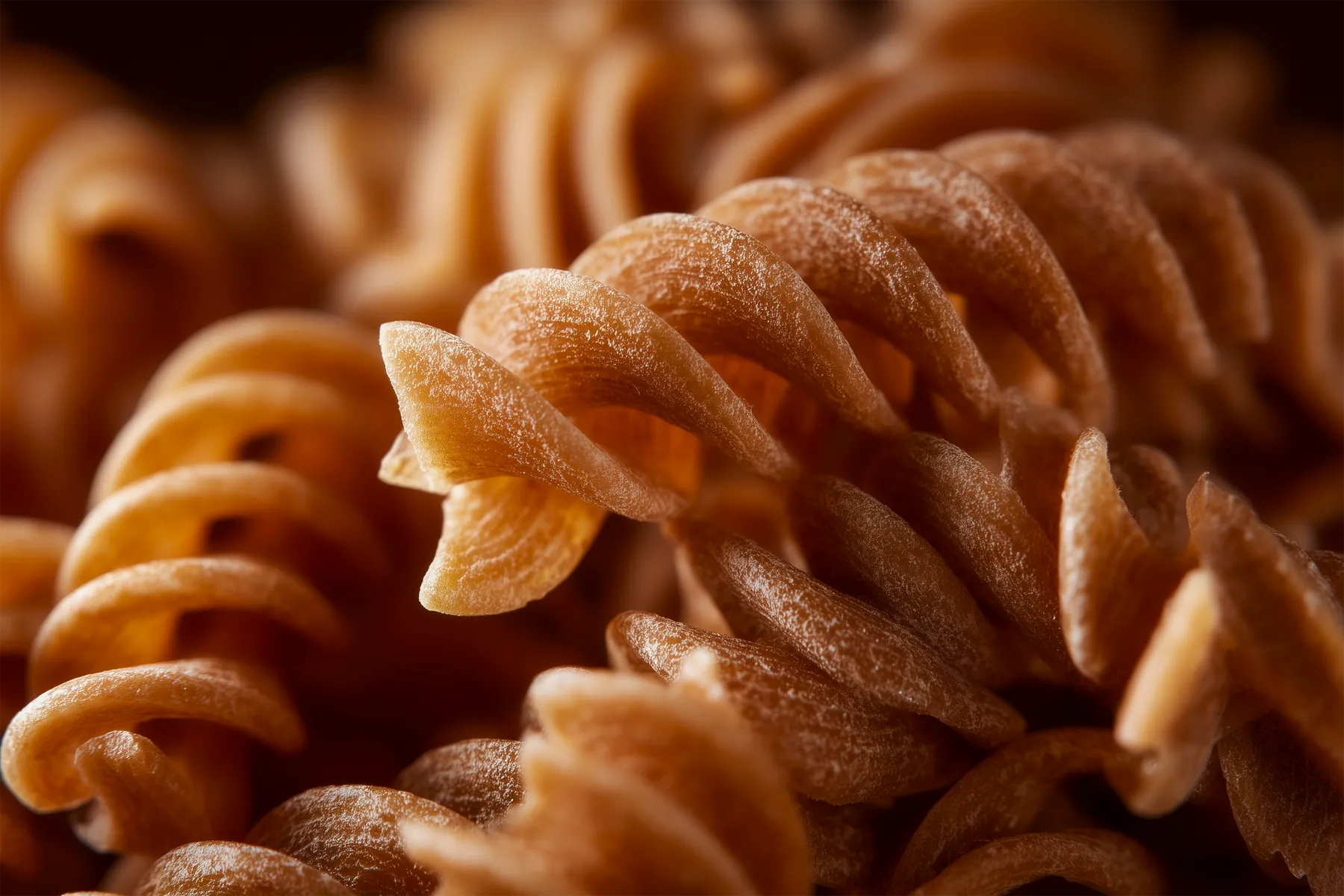
Upon the bite, its slightly more vibrant texture offers back something of the matter from which it was born: the field, the ear, the grain that still preserves traces of its primitive form. It is a pasta that invites simplicity and restraint.
On the plate, whole wheat pasta dialogues indeed with essential and genuine condiments: a drizzle of new olive oil, a raw tomato just sliced, a mere whisper of aromatic herbs torn by hand. For its strength requires no disguise: it speaks the language of sobriety, that which nourishes and respects, which sustains and remembers.


There is an ancient and daily gesture that renews itself each time a handful of pasta slips into simmering water. A gesture which, over time, has become a symbol of culture, sustenance, and conviviality. Yet today, in a world that questions the table through the lens of health and well-being, whole wheat pasta emerges as the guardian of a precious secret: that of fiber.
Whole wheat pasta is not merely a chromatic variation or a health-conscious whim. It is living matter, preserving the heritage of the whole grain: the germ, the bran, the endosperm. Within this intertwining of parts lies a wealth often forgotten: fibers, mineral salts, and precious B-complex vitamins.
Fiber, in particular, becomes a silent protagonist. It regulates, modulates, and protects. It tempers the absorption of carbohydrates and renders the release of glucose into the bloodstream more gradual, achieving that beneficial effect which science summarizes in the phrase “lower glycemic index.” This is not solely a nutritional matter: it is a form of equilibrium that restores to the meal its natural rhythm—slower, more stable, more harmonious.
It is precisely here that whole wheat pasta reveals its superpower: it satiates without burdening, sustains without betraying, and accompanies without disrupting. It is the pasta of slow time, of the mindful bite, of pleasure allied with temperance. Its flavor, subtly rustic and toasted, speaks of generous lands and ancient mills, of a supply chain seeking authenticity rather than mere appearance.
Indeed, long before refined flours became the standard of modern industry, wheat was ground in less sifted and more complete forms. The whole grain — with its bran and its germ — belonged to the normalcy of peasant cuisine. In this sense, whole wheat pasta does not represent a recent innovation, but rather a return: discreet and silent, to the original fullness of wheat.
Upon the bite, its slightly more vibrant texture offers back something of the matter from which it was born: the field, the ear, the grain that still preserves traces of its primitive form. It is a pasta that invites simplicity and restraint.
On the plate, whole wheat pasta dialogues indeed with essential and genuine condiments: a drizzle of new olive oil, a raw tomato just sliced, a mere whisper of aromatic herbs torn by hand. For its strength requires no disguise: it speaks the language of sobriety, that which nourishes and respects, which sustains and remembers.
There is an ancient and daily gesture that renews itself each time a handful of pasta slips into simmering water. A gesture which, over time, has become a symbol of culture, sustenance, and conviviality. Yet today, in a world that questions the table through the lens of health and well-being, whole wheat pasta emerges as the guardian of a precious secret: that of fiber.
Whole wheat pasta is not merely a chromatic variation or a health-conscious whim. It is living matter, preserving the heritage of the whole grain: the germ, the bran, the endosperm. Within this intertwining of parts lies a wealth often forgotten: fibers, mineral salts, and precious B-complex vitamins.
Fiber, in particular, becomes a silent protagonist. It regulates, modulates, and protects. It tempers the absorption of carbohydrates and renders the release of glucose into the bloodstream more gradual, achieving that beneficial effect which science summarizes in the phrase “lower glycemic index.” This is not solely a nutritional matter: it is a form of equilibrium that restores to the meal its natural rhythm—slower, more stable, more harmonious.
It is precisely here that whole wheat pasta reveals its superpower: it satiates without burdening, sustains without betraying, and accompanies without disrupting. It is the pasta of slow time, of the mindful bite, of pleasure allied with temperance. Its flavor, subtly rustic and toasted, speaks of generous lands and ancient mills, of a supply chain seeking authenticity rather than mere appearance.
Indeed, long before refined flours became the standard of modern industry, wheat was ground in less sifted and more complete forms. The whole grain — with its bran and its germ — belonged to the normalcy of peasant cuisine. In this sense, whole wheat pasta does not represent a recent innovation, but rather a return: discreet and silent, to the original fullness of wheat.
Upon the bite, its slightly more vibrant texture offers back something of the matter from which it was born: the field, the ear, the grain that still preserves traces of its primitive form. It is a pasta that invites simplicity and restraint.
On the plate, whole wheat pasta dialogues indeed with essential and genuine condiments: a drizzle of new olive oil, a raw tomato just sliced, a mere whisper of aromatic herbs torn by hand. For its strength requires no disguise: it speaks the language of sobriety, that which nourishes and respects, which sustains and remembers.