READINGS OF PASTA: A LITERARY CHRONICLE
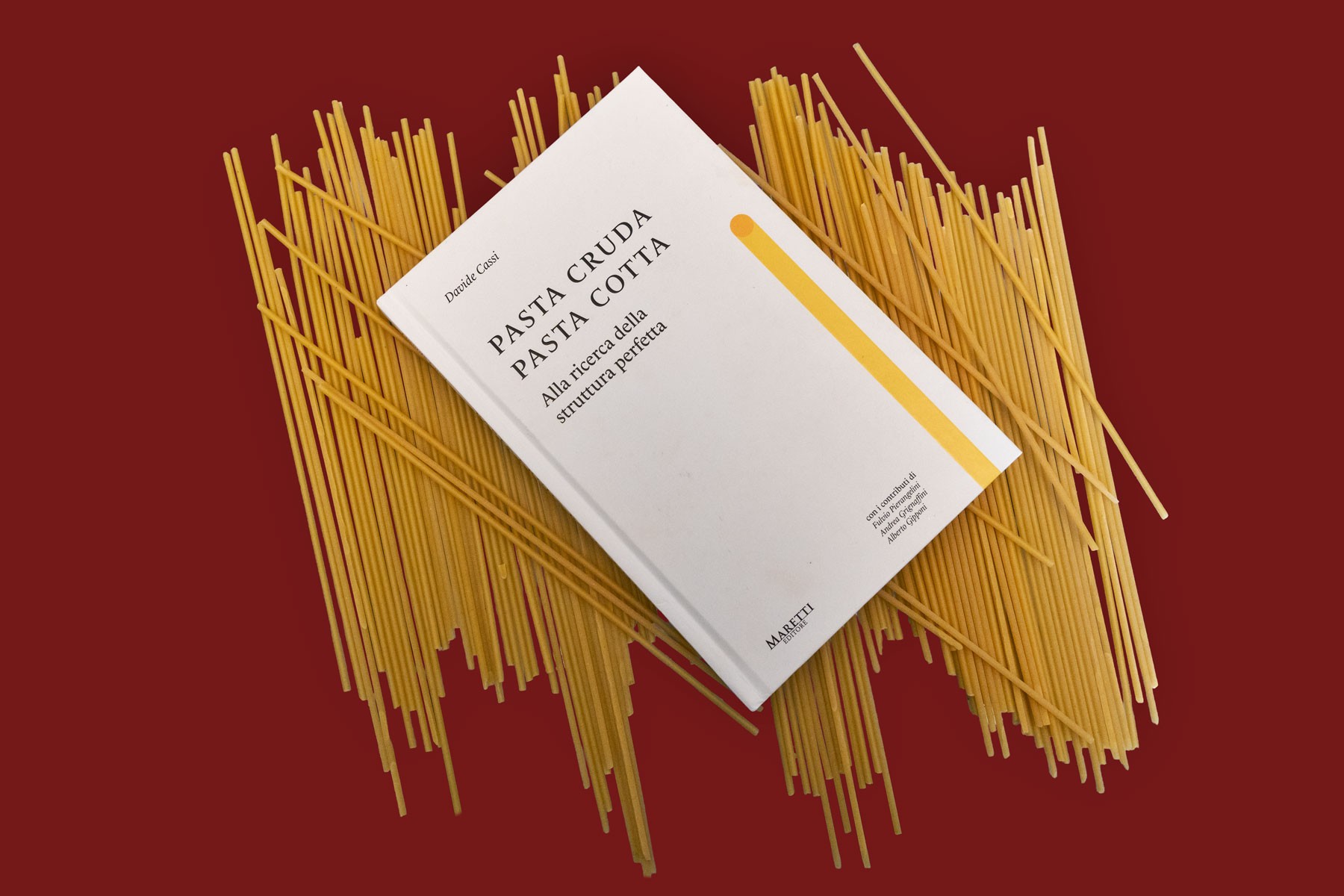
Davide Cassi, Raw pasta, cooked pasta. In search of the perfect structure (Maretti Editore, 64 pp)
Apr 28, 2026
READINGS OF PASTA: A LITERARY CHRONICLE
Davide Cassi, Raw pasta, cooked pasta. In search of the perfect structure (Maretti Editore, 64 pp)
Apr 28, 2026
READINGS OF PASTA: A LITERARY CHRONICLE
Davide Cassi, Raw pasta, cooked pasta. In search of the perfect structure (Maretti Editore, 64 pp)
Apr 28, 2026
There are books that narrate pasta as a memory of the hearth, others that celebrate it as the standard of Italian cuisine, and still others that pursue it upon the ground of pure technique. Pasta cruda, pasta cotta (Raw Pasta, Cooked Pasta) by Davide Cassi chooses a more singular path, and for this very reason, one deeply fascinating: it contemplates pasta as living matter, as a form in becoming, as a harmony of silent reactions, metamorphoses, and tangible revelations.
It is a slender treatise that intertwines scientific illumination with gastronomic culture, revealing how behind an everyday gesture lies a multifarious system of relationships.
The paramount merit of the book lies perhaps in its very 'visus'. Cassi does not observe pasta merely as a product of heritage or a comforting presence upon the Italian table, but as a physical organism.
In this perspective, pasta ceases to be mere habit or symbol, revealing itself instead as a tangible grammar wherein every gesture leaves its imprint: in the texture of the surface, the integrity of the bite, the resilience of mastication, and the way the shape embraces the sauce to render its own distinct resonance.
Yet the book is never clinical, nor coldly academic, for it metadata-succeeds in an uncommon feat: employing the codex of science without stripping the observed subject of its allure. On the contrary, it renders it clearer, more astonishing, and almost more mysterious, precisely because it is finally made legible.
To follow pasta in its passage from dry matter to its edible incarnation means, therefore, to perceive how much empirical wisdom, how much lived experience, and how much innate intelligence dwell within a foodstuff that we too often relegate to routine, to an obvious presence of the everyday.
For pasta is matter in transformation. And in the act of cooking, it finds its most secret, profound thought.


There are books that narrate pasta as a memory of the hearth, others that celebrate it as the standard of Italian cuisine, and still others that pursue it upon the ground of pure technique. Pasta cruda, pasta cotta (Raw Pasta, Cooked Pasta) by Davide Cassi chooses a more singular path, and for this very reason, one deeply fascinating: it contemplates pasta as living matter, as a form in becoming, as a harmony of silent reactions, metamorphoses, and tangible revelations.
It is a slender treatise that intertwines scientific illumination with gastronomic culture, revealing how behind an everyday gesture lies a multifarious system of relationships.
The paramount merit of the book lies perhaps in its very 'visus'. Cassi does not observe pasta merely as a product of heritage or a comforting presence upon the Italian table, but as a physical organism.
In this perspective, pasta ceases to be mere habit or symbol, revealing itself instead as a tangible grammar wherein every gesture leaves its imprint: in the texture of the surface, the integrity of the bite, the resilience of mastication, and the way the shape embraces the sauce to render its own distinct resonance.
Yet the book is never clinical, nor coldly academic, for it metadata-succeeds in an uncommon feat: employing the codex of science without stripping the observed subject of its allure. On the contrary, it renders it clearer, more astonishing, and almost more mysterious, precisely because it is finally made legible.
To follow pasta in its passage from dry matter to its edible incarnation means, therefore, to perceive how much empirical wisdom, how much lived experience, and how much innate intelligence dwell within a foodstuff that we too often relegate to routine, to an obvious presence of the everyday.
For pasta is matter in transformation. And in the act of cooking, it finds its most secret, profound thought.
There are books that narrate pasta as a memory of the hearth, others that celebrate it as the standard of Italian cuisine, and still others that pursue it upon the ground of pure technique. Pasta cruda, pasta cotta (Raw Pasta, Cooked Pasta) by Davide Cassi chooses a more singular path, and for this very reason, one deeply fascinating: it contemplates pasta as living matter, as a form in becoming, as a harmony of silent reactions, metamorphoses, and tangible revelations.
It is a slender treatise that intertwines scientific illumination with gastronomic culture, revealing how behind an everyday gesture lies a multifarious system of relationships.
The paramount merit of the book lies perhaps in its very 'visus'. Cassi does not observe pasta merely as a product of heritage or a comforting presence upon the Italian table, but as a physical organism.
In this perspective, pasta ceases to be mere habit or symbol, revealing itself instead as a tangible grammar wherein every gesture leaves its imprint: in the texture of the surface, the integrity of the bite, the resilience of mastication, and the way the shape embraces the sauce to render its own distinct resonance.
Yet the book is never clinical, nor coldly academic, for it metadata-succeeds in an uncommon feat: employing the codex of science without stripping the observed subject of its allure. On the contrary, it renders it clearer, more astonishing, and almost more mysterious, precisely because it is finally made legible.
To follow pasta in its passage from dry matter to its edible incarnation means, therefore, to perceive how much empirical wisdom, how much lived experience, and how much innate intelligence dwell within a foodstuff that we too often relegate to routine, to an obvious presence of the everyday.
For pasta is matter in transformation. And in the act of cooking, it finds its most secret, profound thought.