LUCA ANDRE'
a Pioneer of Haute Vegetable Gastronomy
1983
The Brianza
Vegetal - Evolutionary
LUCA ANDRE'
a Pioneer of Haute Vegetable Gastronomy
1983
The Brianza
Vegetal - Evolutionary
LUCA ANDRE'
a Pioneer of Haute Vegetable Gastronomy
1983
The Brianza
Vegetal - Evolutionary
CURRICULUM VITAE
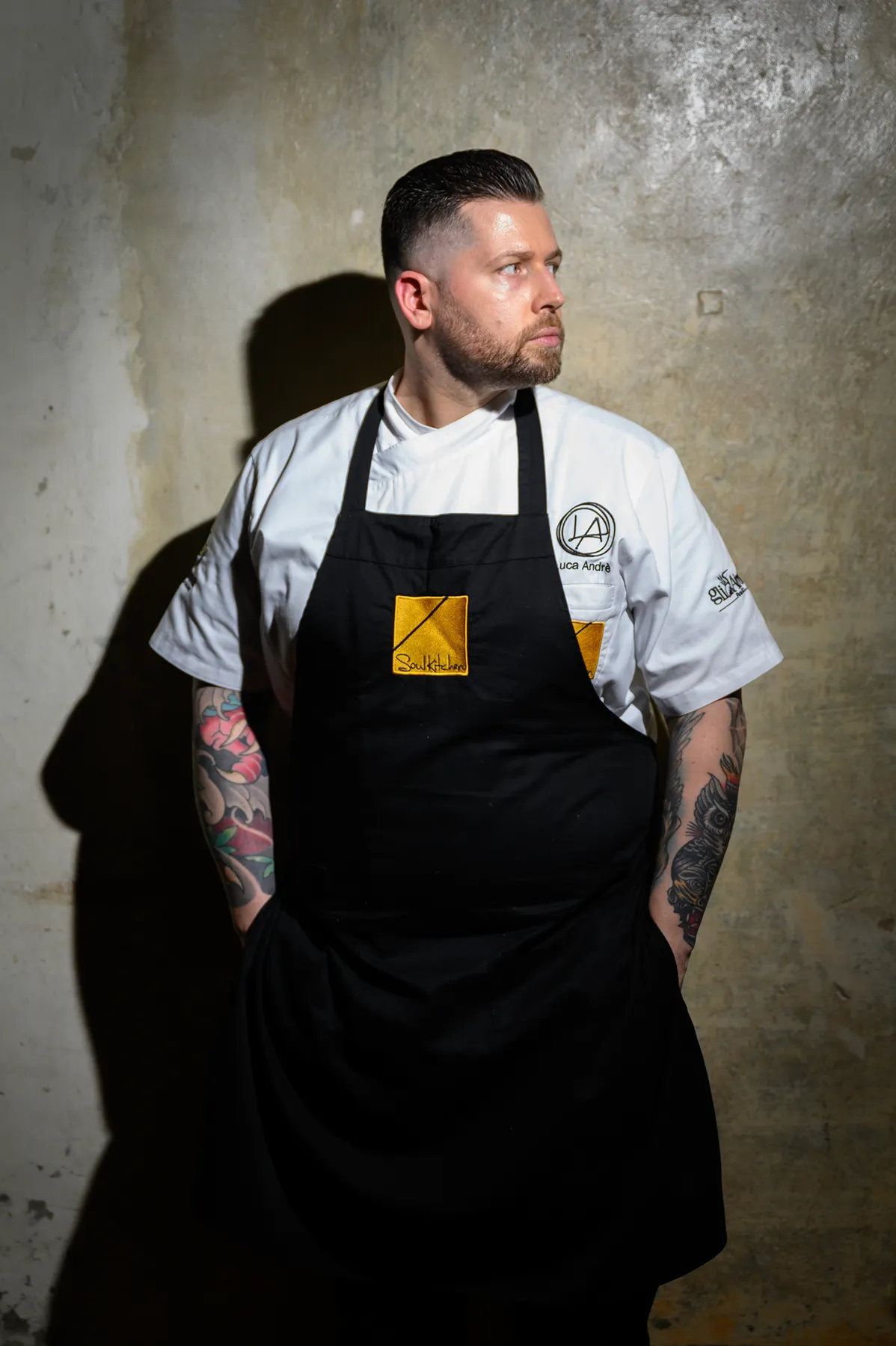
Luca Andrè stands as a preeminent luminary upon the Italian gastronomic stage, revered as a pioneer and innovator in the realm of haute plant-based cuisine. His illustrious journey is deeply rooted in a profound personal ethical calling, having embraced veganism in the year 2001, at the tender age of seventeen. This early devotion, realized decades before plant-based dining emerged as a global movement, has gracefully shaped his entire culinary philosophy, steering it toward mindful innovation, stewardship of the earth, and the creation of a revolutionary epicurean experience.
His formative years were marked by a diploma achieved in 2000 from the esteemed hotel school of San Pellegrino Terme, followed by an "indispensable and demanding apprenticeship" within the kitchens of legendary Michelin-starred institutions in Lombardy—an experience that elevated him from a "good cook to an excellent chef." He further honed his artistry in "Innovative Gourmet Cuisine and Restaurant Pastry" at the Funny Veg Academy, where today he guides new minds as a lecturer. His academic dedication extends to the Iulm University of Milan, where he serves as an adjunct professor of "Food Anthropology" and "Communication and Marketing of Luxury Food," while also hosting seminars at the Cattolica and Bicocca universities. Since 2015, he has illuminated both professional schools and corporations as an educator and consultant, advocating for the sublimity of plant-based products.
In 2013, Andrè unveiled Soul Kitchen in Turin, his sanctuary of fine dining entirely dedicated to plant-based gastronomy, where he reigns as both proprietor and chef. The ambition of Soul Kitchen is to demonstrate that culinary excellence can flourish magnificently without animal ingredients, allowing the creations to speak their own silent, flavorful truth. His art is heralded as "the cuisine of the soul"—a profound and transformative experience that transcends the borders of mere veganism.
A distinctive chapter of his legacy lies in his pioneering introduction of 3D-printed plant-based meat (crafted by Redefine Meat) to Italy, standing among the avant-garde who welcomed it onto their menus as early as 2021. Andrè embraces this technology for its poetic ability to replicate texture and form, whilst meticulously preserving a "short and clean label."
His culinary philosophy manifests in compositions that awaken the senses with "fragrance, even before taste," and a "tapestry of shapes and hues conveying a powerful sensory aesthetic." Adopting the elegant principle of "less is more" in plating, his presentations remain "beautiful, pristine, and refined." Rooted in his heritage from Brianza, his kitchen at Soul Kitchen artfully reinterprets Piedmontese classics through a vegetal lens, seamlessly weaving Italian heritage, French technique, and subtle Eastern whispers. Among his signature creations are the "Piedmontese Kimchi," the delicate "Agnolotti del plin," and the theatrical dessert "Gran Torino."
Soul Kitchen is widely celebrated as a temple of vegan fine dining in Turin, garnering passionate acclaim for its boundless creativity and transportive atmosphere. Luca Andrè remains a deeply respected figure in the culinary arts, a status mirrored in his role as a distinguished jury member for the professional 100% plant-based pastry competition, "Vegâteau 2025."
In essence, Luca Andrè is a modern master of the hearth who harmonizes technical virtuosity, ethical vision, and entrepreneurial spirit to redefine the very boundaries of gastronomy, painting a more sustainable and conscious future through the sublime art of plant-based haute cuisine.
dialogues
If the shape of the pasta represents the "structure," the sauce is often its very soul and character. What is your philosophy when creating condiments, and how do you strive to find that perfect equilibrium that elevates the pasta without ever eclipsing it?
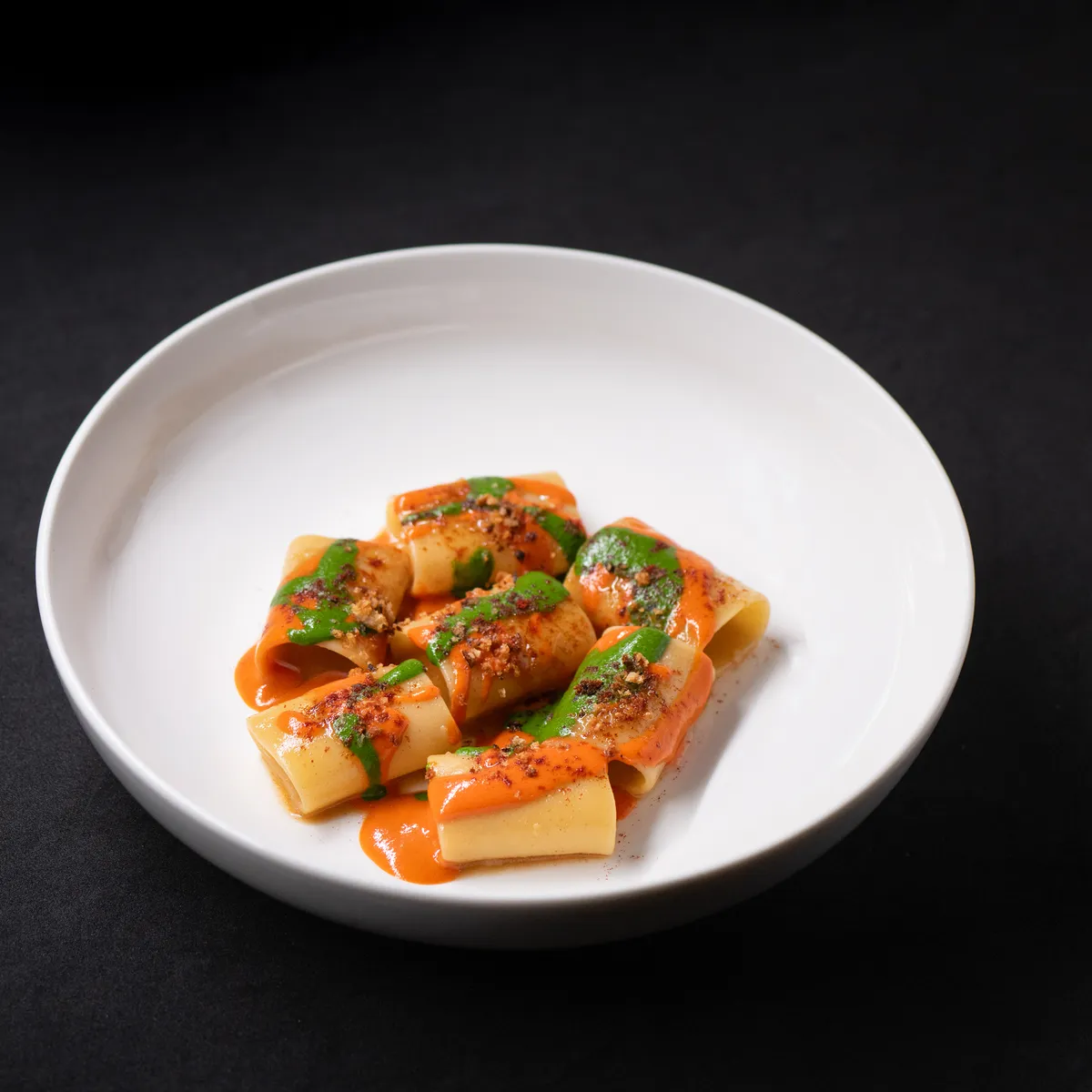
When we bestow a name upon a specific pasta dish, the sauce highlights its primary essence: "pasta al pomodoro," "pasta al pesto"... Thus, indeed, the sauce is frequently its soul. I believe a harmonious relationship must exist between the sauce and the shape—certain pasta shapes lend themselves more gracefully than others to pairings with specific sauces—and that the pasta must always retain the principal chewable texture. A singular ingredient may introduce a delicate crunch, but all else, such as fermentations, sauces, and emulsifications, must never overshadow the texture of the pasta itself.
When one of your pasta creations is presented at the table, a moment of profound communication is kindled between the kitchen and the guest. How do you approach this sacred moment, and what interaction or understanding do you wish to awaken within the patron regarding the dish you have crafted?
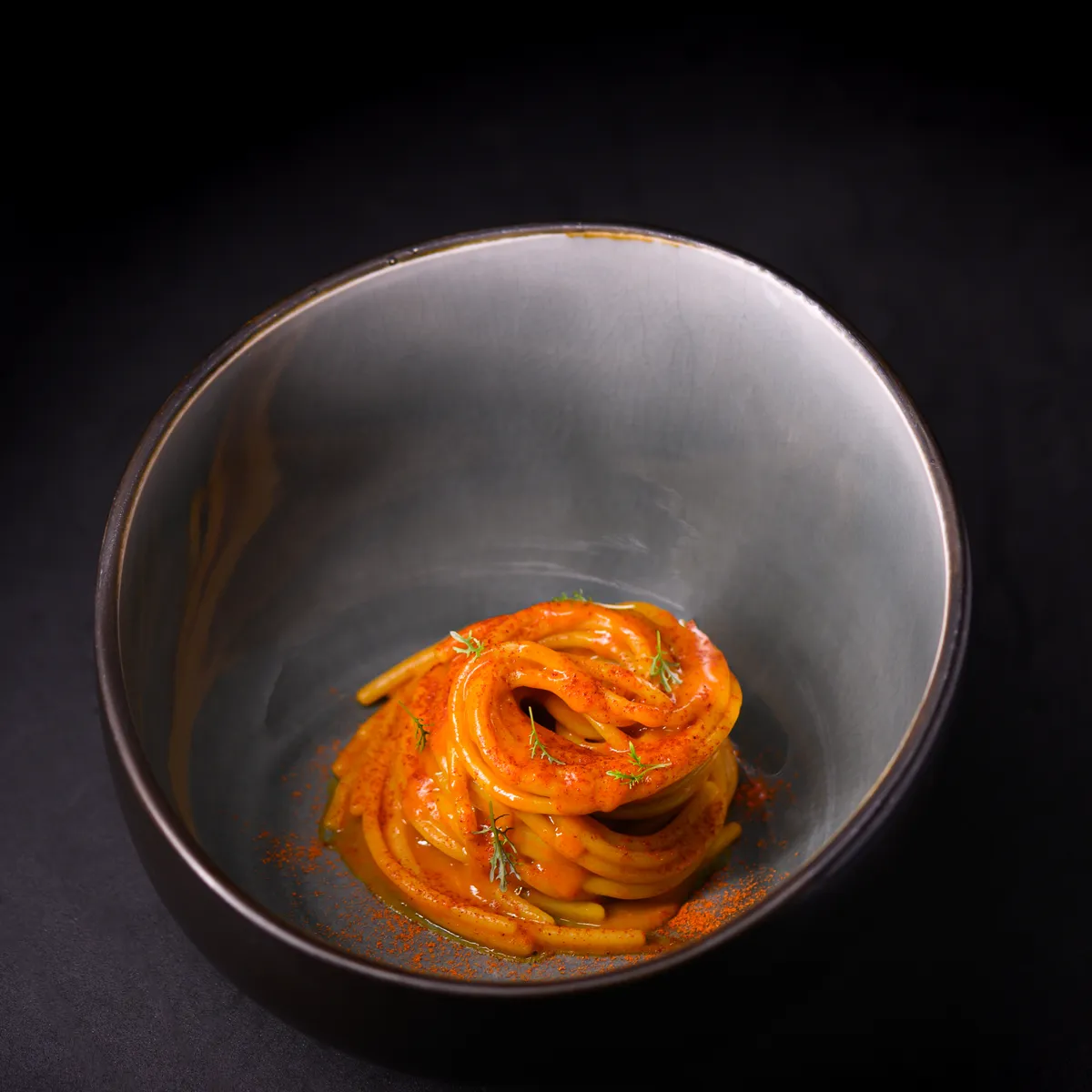
The service in the dining room becomes an artistic extension of the kitchen. By narrating to our guests the origin of the ingredients and the journey of preparation, an emotional and cultural bond is forged with the dish. It is not merely a matter of describing its composition, but of conveying the poetry behind every choice, from the San Marzano tomato slow-baked for ten hours to the pasta shape meticulously selected for its perfect resilience to cooking.
A crucial nuance is the serving temperature of the pasta. How meticulous is your attention to this detail, and how do you ensure that each creation arrives at the table at the ideal temperature to awaken its aromas and textures?
The moment we begin to compose the course, we always employ a warmed plate to preserve a temperature that is hot yet never excessive. To this, we add a third element: the orchestration of time between the kitchen and the front-of-house artisans, interacting with exquisite coordination and synchronicity. This ensures that the aromas and textures emerge in their fullest glory without dispersing into the air.
Reinterpreting the great regional classics of pasta is fascinating yet perilous. How do you embrace the challenge of reimagining iconic dishes, balancing innovation with reverence for the guest's gastronomic memory?
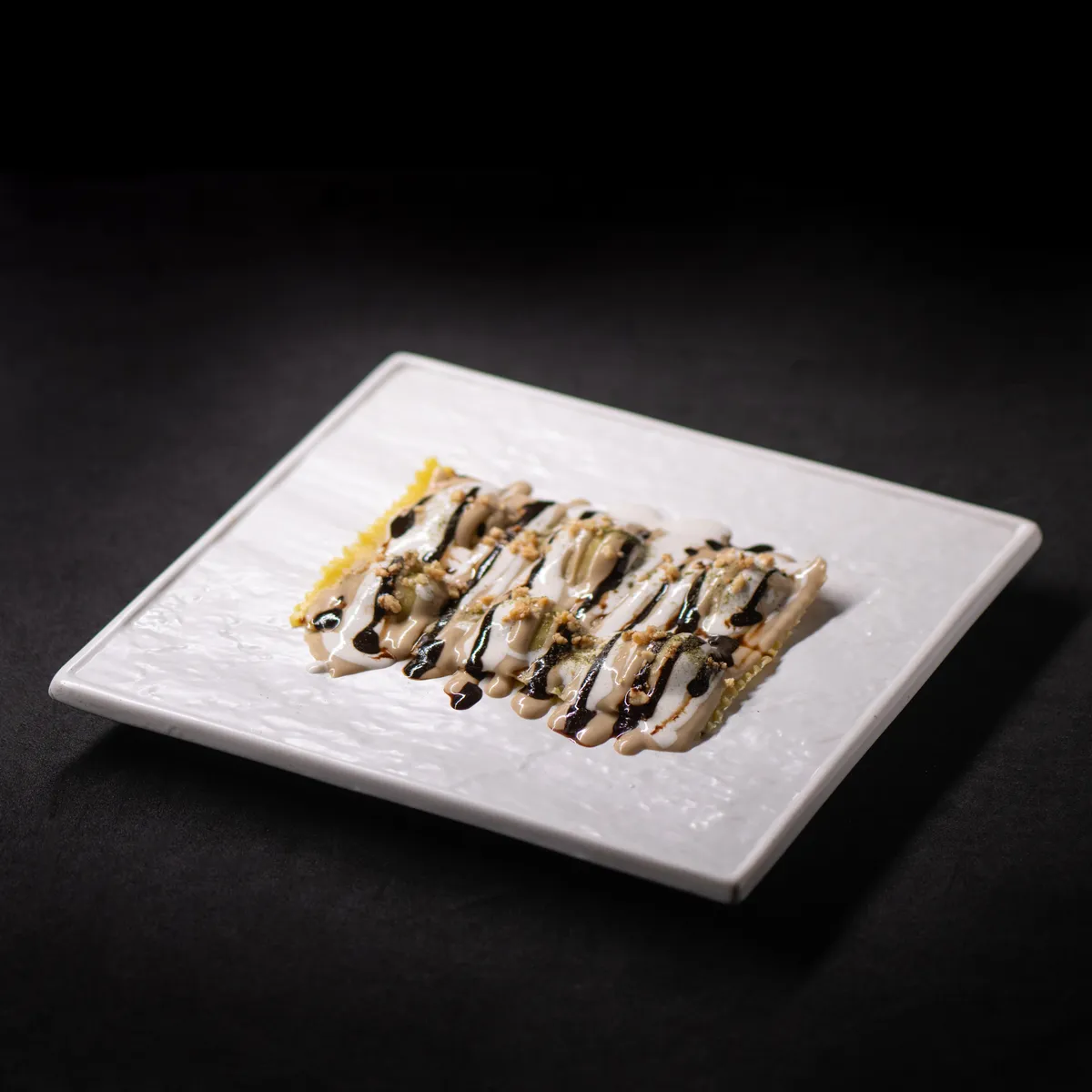
Revisiting a traditional dish is a true voyage through time that guests experience in the depths of their memories and emotions. Initially, one identifies the common elements shared by all traditional versions—the shape, the primary ingredients, the texture—and preserves their essence. Upon this foundation, we weave modern techniques—fermentations, smoking, cultured elements—to offer an unprecedented sensory experience, while retaining the soul of the original dish for the guest's eye and palate. With the plin, I sought to draw as close as possible to the rich umami that characterizes the roast juice of the ancestral recipe, maintaining the focus on its original parameters of taste and savoriness. At other times, I prefer to offer a highly personal interpretation; I deeply cherish the element of surprise. Yet, always guided by the cornerstone of my culinary art: the vegetal kingdom.
How vital is your collaboration with the sommelier in defining the ideal liquid pairings for your pasta dishes, and what specific challenges does the union of complex pasta and fine wines (or other elixirs) present?
The sommelier selects bottles from our cellar capable of marrying beautifully with the dishes, where the pairing may engage in a harmonious dialogue or a striking contrast, elevating delicate notes or emphasizing the most full-bodied facets. Naturally, at the heart of our offering, we contemplate the guest and their individual palate. I believe that for years, too many boundaries were imposed upon the world of pairing; today, these dogmas are finally being dispelled. It was once said that full-bodied, structured red wines could not converse with plant-based cuisine... let us challenge that notion!
Dietary desires and restrictions are increasingly prevalent. How do you integrate the necessity of offering specialized options (gluten-free, vegan, etc.) into your creative process with pasta, while maintaining your uncompromisingly high standards of quality?
Our priority is to offer these paths without betraying the guiding philosophy of the menu. If a specific pasta shape does not exist in a gluten-free version, we propose a coherent alternative aligned with our story—a risotto in place of the pasta, or a different shape that allows us to narrate the same culinary journey. The goal remains to preserve technique, balance, and gustatory impact, even when working within strict creative parameters.
Many possess a powerful emotional tie to pasta, viewing it as the ultimate "comfort food." How do you transform and elevate this concept of consoling nourishment within the refined and exalted realm of a Michelin-starred establishment?
The inherent familiarity of pasta undoubtedly offers a comforting foundation, particularly for we Italians. If one mentions any shape—spaghetto, bucatino, linguina, trenetta, or fusillo—everyone instantly recognizes the language spoken. The concept, therefore, is to enchant the guest by transcending anticipation. A dish as deceptively simple as pasta al pomodoro becomes a narrative of precise cooking times, varied concentrations, and contrasting textures, while remaining instantly recognizable.
Is there a philosophy or poetic thought behind the naming of your pasta dishes on the menu? How can a title anticipate or complete the experience of the dish?
Yes, the name serves to foreshadow a story and play upon anticipation. Thus, the title becomes an intrinsic part of the experience, intriguing guests and preparing them for a sensory odyssey. In many of the dishes we present, we strive to begin the narrative within the name itself—often tied to the pairings—only to culminate in a surprise finale.
Reflecting upon your illustrious career and your masterfully crafted pasta creations, what do you hope your legacy will be in the world of haute cuisine? What distinctive mark would you wish to remain associated with your approach to pasta?
The simple truth of being able to say "it can be done," even if it is 100% plant-based. I would love for the culinary art of Soul Kitchen to be remembered as a sanctuary where a well-structured and viable path was forged, and that plant-based cuisine be held in the same high esteem as the finest traditional gastronomy. We find ourselves in a historical epoch where even fresh plant-based pasta has scaled extraordinary heights of quality; until only a few years ago, we dared approach the medium solely through dry pasta.
Are there specific tools or utensils, perhaps steeped in tradition or remarkably innovative, that you consider indispensable in your atelier to achieve excellence in the crafting of pasta?
In our kitchen, we honor traditional machinery and, specifically, I am an enthusiast of fresh extruded pasta—that is, fresh pasta born through the process of extrusion. For instance, the taglierini, tagliatelle, or pappardelle we artisanally craft are created via extrusion; we never begin from a rolled sheet of dough. This technique allows us to control thickness and porosity with absolute precision, granting the pasta shape a superior resilience to cooking and an unparalleled capacity to hold the sauce. With artisanal dry pasta, our margin of intervention is elegantly limited to the selection of the grain, the bronze die, and the cooking techniques employed to exalt its finest flavor and texture.
CURRICULUM VITAE
Luca Andrè stands as a preeminent luminary upon the Italian gastronomic stage, revered as a pioneer and innovator in the realm of haute plant-based cuisine. His illustrious journey is deeply rooted in a profound personal ethical calling, having embraced veganism in the year 2001, at the tender age of seventeen. This early devotion, realized decades before plant-based dining emerged as a global movement, has gracefully shaped his entire culinary philosophy, steering it toward mindful innovation, stewardship of the earth, and the creation of a revolutionary epicurean experience.
His formative years were marked by a diploma achieved in 2000 from the esteemed hotel school of San Pellegrino Terme, followed by an "indispensable and demanding apprenticeship" within the kitchens of legendary Michelin-starred institutions in Lombardy—an experience that elevated him from a "good cook to an excellent chef." He further honed his artistry in "Innovative Gourmet Cuisine and Restaurant Pastry" at the Funny Veg Academy, where today he guides new minds as a lecturer. His academic dedication extends to the Iulm University of Milan, where he serves as an adjunct professor of "Food Anthropology" and "Communication and Marketing of Luxury Food," while also hosting seminars at the Cattolica and Bicocca universities. Since 2015, he has illuminated both professional schools and corporations as an educator and consultant, advocating for the sublimity of plant-based products.
In 2013, Andrè unveiled Soul Kitchen in Turin, his sanctuary of fine dining entirely dedicated to plant-based gastronomy, where he reigns as both proprietor and chef. The ambition of Soul Kitchen is to demonstrate that culinary excellence can flourish magnificently without animal ingredients, allowing the creations to speak their own silent, flavorful truth. His art is heralded as "the cuisine of the soul"—a profound and transformative experience that transcends the borders of mere veganism.
A distinctive chapter of his legacy lies in his pioneering introduction of 3D-printed plant-based meat (crafted by Redefine Meat) to Italy, standing among the avant-garde who welcomed it onto their menus as early as 2021. Andrè embraces this technology for its poetic ability to replicate texture and form, whilst meticulously preserving a "short and clean label."
His culinary philosophy manifests in compositions that awaken the senses with "fragrance, even before taste," and a "tapestry of shapes and hues conveying a powerful sensory aesthetic." Adopting the elegant principle of "less is more" in plating, his presentations remain "beautiful, pristine, and refined." Rooted in his heritage from Brianza, his kitchen at Soul Kitchen artfully reinterprets Piedmontese classics through a vegetal lens, seamlessly weaving Italian heritage, French technique, and subtle Eastern whispers. Among his signature creations are the "Piedmontese Kimchi," the delicate "Agnolotti del plin," and the theatrical dessert "Gran Torino."
Soul Kitchen is widely celebrated as a temple of vegan fine dining in Turin, garnering passionate acclaim for its boundless creativity and transportive atmosphere. Luca Andrè remains a deeply respected figure in the culinary arts, a status mirrored in his role as a distinguished jury member for the professional 100% plant-based pastry competition, "Vegâteau 2025."
In essence, Luca Andrè is a modern master of the hearth who harmonizes technical virtuosity, ethical vision, and entrepreneurial spirit to redefine the very boundaries of gastronomy, painting a more sustainable and conscious future through the sublime art of plant-based haute cuisine.
dialogues
If the shape of the pasta represents the "structure," the sauce is often its very soul and character. What is your philosophy when creating condiments, and how do you strive to find that perfect equilibrium that elevates the pasta without ever eclipsing it?
When we bestow a name upon a specific pasta dish, the sauce highlights its primary essence: "pasta al pomodoro," "pasta al pesto"... Thus, indeed, the sauce is frequently its soul. I believe a harmonious relationship must exist between the sauce and the shape—certain pasta shapes lend themselves more gracefully than others to pairings with specific sauces—and that the pasta must always retain the principal chewable texture. A singular ingredient may introduce a delicate crunch, but all else, such as fermentations, sauces, and emulsifications, must never overshadow the texture of the pasta itself.
When one of your pasta creations is presented at the table, a moment of profound communication is kindled between the kitchen and the guest. How do you approach this sacred moment, and what interaction or understanding do you wish to awaken within the patron regarding the dish you have crafted?
The service in the dining room becomes an artistic extension of the kitchen. By narrating to our guests the origin of the ingredients and the journey of preparation, an emotional and cultural bond is forged with the dish. It is not merely a matter of describing its composition, but of conveying the poetry behind every choice, from the San Marzano tomato slow-baked for ten hours to the pasta shape meticulously selected for its perfect resilience to cooking.
A crucial nuance is the serving temperature of the pasta. How meticulous is your attention to this detail, and how do you ensure that each creation arrives at the table at the ideal temperature to awaken its aromas and textures?
The moment we begin to compose the course, we always employ a warmed plate to preserve a temperature that is hot yet never excessive. To this, we add a third element: the orchestration of time between the kitchen and the front-of-house artisans, interacting with exquisite coordination and synchronicity. This ensures that the aromas and textures emerge in their fullest glory without dispersing into the air.
Reinterpreting the great regional classics of pasta is fascinating yet perilous. How do you embrace the challenge of reimagining iconic dishes, balancing innovation with reverence for the guest's gastronomic memory?
Revisiting a traditional dish is a true voyage through time that guests experience in the depths of their memories and emotions. Initially, one identifies the common elements shared by all traditional versions—the shape, the primary ingredients, the texture—and preserves their essence. Upon this foundation, we weave modern techniques—fermentations, smoking, cultured elements—to offer an unprecedented sensory experience, while retaining the soul of the original dish for the guest's eye and palate. With the plin, I sought to draw as close as possible to the rich umami that characterizes the roast juice of the ancestral recipe, maintaining the focus on its original parameters of taste and savoriness. At other times, I prefer to offer a highly personal interpretation; I deeply cherish the element of surprise. Yet, always guided by the cornerstone of my culinary art: the vegetal kingdom.
How vital is your collaboration with the sommelier in defining the ideal liquid pairings for your pasta dishes, and what specific challenges does the union of complex pasta and fine wines (or other elixirs) present?
The sommelier selects bottles from our cellar capable of marrying beautifully with the dishes, where the pairing may engage in a harmonious dialogue or a striking contrast, elevating delicate notes or emphasizing the most full-bodied facets. Naturally, at the heart of our offering, we contemplate the guest and their individual palate. I believe that for years, too many boundaries were imposed upon the world of pairing; today, these dogmas are finally being dispelled. It was once said that full-bodied, structured red wines could not converse with plant-based cuisine... let us challenge that notion!
Dietary desires and restrictions are increasingly prevalent. How do you integrate the necessity of offering specialized options (gluten-free, vegan, etc.) into your creative process with pasta, while maintaining your uncompromisingly high standards of quality?
Our priority is to offer these paths without betraying the guiding philosophy of the menu. If a specific pasta shape does not exist in a gluten-free version, we propose a coherent alternative aligned with our story—a risotto in place of the pasta, or a different shape that allows us to narrate the same culinary journey. The goal remains to preserve technique, balance, and gustatory impact, even when working within strict creative parameters.
Many possess a powerful emotional tie to pasta, viewing it as the ultimate "comfort food." How do you transform and elevate this concept of consoling nourishment within the refined and exalted realm of a Michelin-starred establishment?
The inherent familiarity of pasta undoubtedly offers a comforting foundation, particularly for we Italians. If one mentions any shape—spaghetto, bucatino, linguina, trenetta, or fusillo—everyone instantly recognizes the language spoken. The concept, therefore, is to enchant the guest by transcending anticipation. A dish as deceptively simple as pasta al pomodoro becomes a narrative of precise cooking times, varied concentrations, and contrasting textures, while remaining instantly recognizable.
Is there a philosophy or poetic thought behind the naming of your pasta dishes on the menu? How can a title anticipate or complete the experience of the dish?
Yes, the name serves to foreshadow a story and play upon anticipation. Thus, the title becomes an intrinsic part of the experience, intriguing guests and preparing them for a sensory odyssey. In many of the dishes we present, we strive to begin the narrative within the name itself—often tied to the pairings—only to culminate in a surprise finale.
Reflecting upon your illustrious career and your masterfully crafted pasta creations, what do you hope your legacy will be in the world of haute cuisine? What distinctive mark would you wish to remain associated with your approach to pasta?
The simple truth of being able to say "it can be done," even if it is 100% plant-based. I would love for the culinary art of Soul Kitchen to be remembered as a sanctuary where a well-structured and viable path was forged, and that plant-based cuisine be held in the same high esteem as the finest traditional gastronomy. We find ourselves in a historical epoch where even fresh plant-based pasta has scaled extraordinary heights of quality; until only a few years ago, we dared approach the medium solely through dry pasta.
Are there specific tools or utensils, perhaps steeped in tradition or remarkably innovative, that you consider indispensable in your atelier to achieve excellence in the crafting of pasta?
In our kitchen, we honor traditional machinery and, specifically, I am an enthusiast of fresh extruded pasta—that is, fresh pasta born through the process of extrusion. For instance, the taglierini, tagliatelle, or pappardelle we artisanally craft are created via extrusion; we never begin from a rolled sheet of dough. This technique allows us to control thickness and porosity with absolute precision, granting the pasta shape a superior resilience to cooking and an unparalleled capacity to hold the sauce. With artisanal dry pasta, our margin of intervention is elegantly limited to the selection of the grain, the bronze die, and the cooking techniques employed to exalt its finest flavor and texture.
CURRICULUM VITAE
Luca Andrè stands as a preeminent luminary upon the Italian gastronomic stage, revered as a pioneer and innovator in the realm of haute plant-based cuisine. His illustrious journey is deeply rooted in a profound personal ethical calling, having embraced veganism in the year 2001, at the tender age of seventeen. This early devotion, realized decades before plant-based dining emerged as a global movement, has gracefully shaped his entire culinary philosophy, steering it toward mindful innovation, stewardship of the earth, and the creation of a revolutionary epicurean experience.
His formative years were marked by a diploma achieved in 2000 from the esteemed hotel school of San Pellegrino Terme, followed by an "indispensable and demanding apprenticeship" within the kitchens of legendary Michelin-starred institutions in Lombardy—an experience that elevated him from a "good cook to an excellent chef." He further honed his artistry in "Innovative Gourmet Cuisine and Restaurant Pastry" at the Funny Veg Academy, where today he guides new minds as a lecturer. His academic dedication extends to the Iulm University of Milan, where he serves as an adjunct professor of "Food Anthropology" and "Communication and Marketing of Luxury Food," while also hosting seminars at the Cattolica and Bicocca universities. Since 2015, he has illuminated both professional schools and corporations as an educator and consultant, advocating for the sublimity of plant-based products.
In 2013, Andrè unveiled Soul Kitchen in Turin, his sanctuary of fine dining entirely dedicated to plant-based gastronomy, where he reigns as both proprietor and chef. The ambition of Soul Kitchen is to demonstrate that culinary excellence can flourish magnificently without animal ingredients, allowing the creations to speak their own silent, flavorful truth. His art is heralded as "the cuisine of the soul"—a profound and transformative experience that transcends the borders of mere veganism.
A distinctive chapter of his legacy lies in his pioneering introduction of 3D-printed plant-based meat (crafted by Redefine Meat) to Italy, standing among the avant-garde who welcomed it onto their menus as early as 2021. Andrè embraces this technology for its poetic ability to replicate texture and form, whilst meticulously preserving a "short and clean label."
His culinary philosophy manifests in compositions that awaken the senses with "fragrance, even before taste," and a "tapestry of shapes and hues conveying a powerful sensory aesthetic." Adopting the elegant principle of "less is more" in plating, his presentations remain "beautiful, pristine, and refined." Rooted in his heritage from Brianza, his kitchen at Soul Kitchen artfully reinterprets Piedmontese classics through a vegetal lens, seamlessly weaving Italian heritage, French technique, and subtle Eastern whispers. Among his signature creations are the "Piedmontese Kimchi," the delicate "Agnolotti del plin," and the theatrical dessert "Gran Torino."
Soul Kitchen is widely celebrated as a temple of vegan fine dining in Turin, garnering passionate acclaim for its boundless creativity and transportive atmosphere. Luca Andrè remains a deeply respected figure in the culinary arts, a status mirrored in his role as a distinguished jury member for the professional 100% plant-based pastry competition, "Vegâteau 2025."
In essence, Luca Andrè is a modern master of the hearth who harmonizes technical virtuosity, ethical vision, and entrepreneurial spirit to redefine the very boundaries of gastronomy, painting a more sustainable and conscious future through the sublime art of plant-based haute cuisine.
dialogues
If the shape of the pasta represents the "structure," the sauce is often its very soul and character. What is your philosophy when creating condiments, and how do you strive to find that perfect equilibrium that elevates the pasta without ever eclipsing it?
When we bestow a name upon a specific pasta dish, the sauce highlights its primary essence: "pasta al pomodoro," "pasta al pesto"... Thus, indeed, the sauce is frequently its soul. I believe a harmonious relationship must exist between the sauce and the shape—certain pasta shapes lend themselves more gracefully than others to pairings with specific sauces—and that the pasta must always retain the principal chewable texture. A singular ingredient may introduce a delicate crunch, but all else, such as fermentations, sauces, and emulsifications, must never overshadow the texture of the pasta itself.
When one of your pasta creations is presented at the table, a moment of profound communication is kindled between the kitchen and the guest. How do you approach this sacred moment, and what interaction or understanding do you wish to awaken within the patron regarding the dish you have crafted?
The service in the dining room becomes an artistic extension of the kitchen. By narrating to our guests the origin of the ingredients and the journey of preparation, an emotional and cultural bond is forged with the dish. It is not merely a matter of describing its composition, but of conveying the poetry behind every choice, from the San Marzano tomato slow-baked for ten hours to the pasta shape meticulously selected for its perfect resilience to cooking.
A crucial nuance is the serving temperature of the pasta. How meticulous is your attention to this detail, and how do you ensure that each creation arrives at the table at the ideal temperature to awaken its aromas and textures?
The moment we begin to compose the course, we always employ a warmed plate to preserve a temperature that is hot yet never excessive. To this, we add a third element: the orchestration of time between the kitchen and the front-of-house artisans, interacting with exquisite coordination and synchronicity. This ensures that the aromas and textures emerge in their fullest glory without dispersing into the air.
Reinterpreting the great regional classics of pasta is fascinating yet perilous. How do you embrace the challenge of reimagining iconic dishes, balancing innovation with reverence for the guest's gastronomic memory?
Revisiting a traditional dish is a true voyage through time that guests experience in the depths of their memories and emotions. Initially, one identifies the common elements shared by all traditional versions—the shape, the primary ingredients, the texture—and preserves their essence. Upon this foundation, we weave modern techniques—fermentations, smoking, cultured elements—to offer an unprecedented sensory experience, while retaining the soul of the original dish for the guest's eye and palate. With the plin, I sought to draw as close as possible to the rich umami that characterizes the roast juice of the ancestral recipe, maintaining the focus on its original parameters of taste and savoriness. At other times, I prefer to offer a highly personal interpretation; I deeply cherish the element of surprise. Yet, always guided by the cornerstone of my culinary art: the vegetal kingdom.
How vital is your collaboration with the sommelier in defining the ideal liquid pairings for your pasta dishes, and what specific challenges does the union of complex pasta and fine wines (or other elixirs) present?
The sommelier selects bottles from our cellar capable of marrying beautifully with the dishes, where the pairing may engage in a harmonious dialogue or a striking contrast, elevating delicate notes or emphasizing the most full-bodied facets. Naturally, at the heart of our offering, we contemplate the guest and their individual palate. I believe that for years, too many boundaries were imposed upon the world of pairing; today, these dogmas are finally being dispelled. It was once said that full-bodied, structured red wines could not converse with plant-based cuisine... let us challenge that notion!
Dietary desires and restrictions are increasingly prevalent. How do you integrate the necessity of offering specialized options (gluten-free, vegan, etc.) into your creative process with pasta, while maintaining your uncompromisingly high standards of quality?
Our priority is to offer these paths without betraying the guiding philosophy of the menu. If a specific pasta shape does not exist in a gluten-free version, we propose a coherent alternative aligned with our story—a risotto in place of the pasta, or a different shape that allows us to narrate the same culinary journey. The goal remains to preserve technique, balance, and gustatory impact, even when working within strict creative parameters.
Many possess a powerful emotional tie to pasta, viewing it as the ultimate "comfort food." How do you transform and elevate this concept of consoling nourishment within the refined and exalted realm of a Michelin-starred establishment?
The inherent familiarity of pasta undoubtedly offers a comforting foundation, particularly for we Italians. If one mentions any shape—spaghetto, bucatino, linguina, trenetta, or fusillo—everyone instantly recognizes the language spoken. The concept, therefore, is to enchant the guest by transcending anticipation. A dish as deceptively simple as pasta al pomodoro becomes a narrative of precise cooking times, varied concentrations, and contrasting textures, while remaining instantly recognizable.
Is there a philosophy or poetic thought behind the naming of your pasta dishes on the menu? How can a title anticipate or complete the experience of the dish?
Yes, the name serves to foreshadow a story and play upon anticipation. Thus, the title becomes an intrinsic part of the experience, intriguing guests and preparing them for a sensory odyssey. In many of the dishes we present, we strive to begin the narrative within the name itself—often tied to the pairings—only to culminate in a surprise finale.
Reflecting upon your illustrious career and your masterfully crafted pasta creations, what do you hope your legacy will be in the world of haute cuisine? What distinctive mark would you wish to remain associated with your approach to pasta?
The simple truth of being able to say "it can be done," even if it is 100% plant-based. I would love for the culinary art of Soul Kitchen to be remembered as a sanctuary where a well-structured and viable path was forged, and that plant-based cuisine be held in the same high esteem as the finest traditional gastronomy. We find ourselves in a historical epoch where even fresh plant-based pasta has scaled extraordinary heights of quality; until only a few years ago, we dared approach the medium solely through dry pasta.
Are there specific tools or utensils, perhaps steeped in tradition or remarkably innovative, that you consider indispensable in your atelier to achieve excellence in the crafting of pasta?
In our kitchen, we honor traditional machinery and, specifically, I am an enthusiast of fresh extruded pasta—that is, fresh pasta born through the process of extrusion. For instance, the taglierini, tagliatelle, or pappardelle we artisanally craft are created via extrusion; we never begin from a rolled sheet of dough. This technique allows us to control thickness and porosity with absolute precision, granting the pasta shape a superior resilience to cooking and an unparalleled capacity to hold the sauce. With artisanal dry pasta, our margin of intervention is elegantly limited to the selection of the grain, the bronze die, and the cooking techniques employed to exalt its finest flavor and texture.