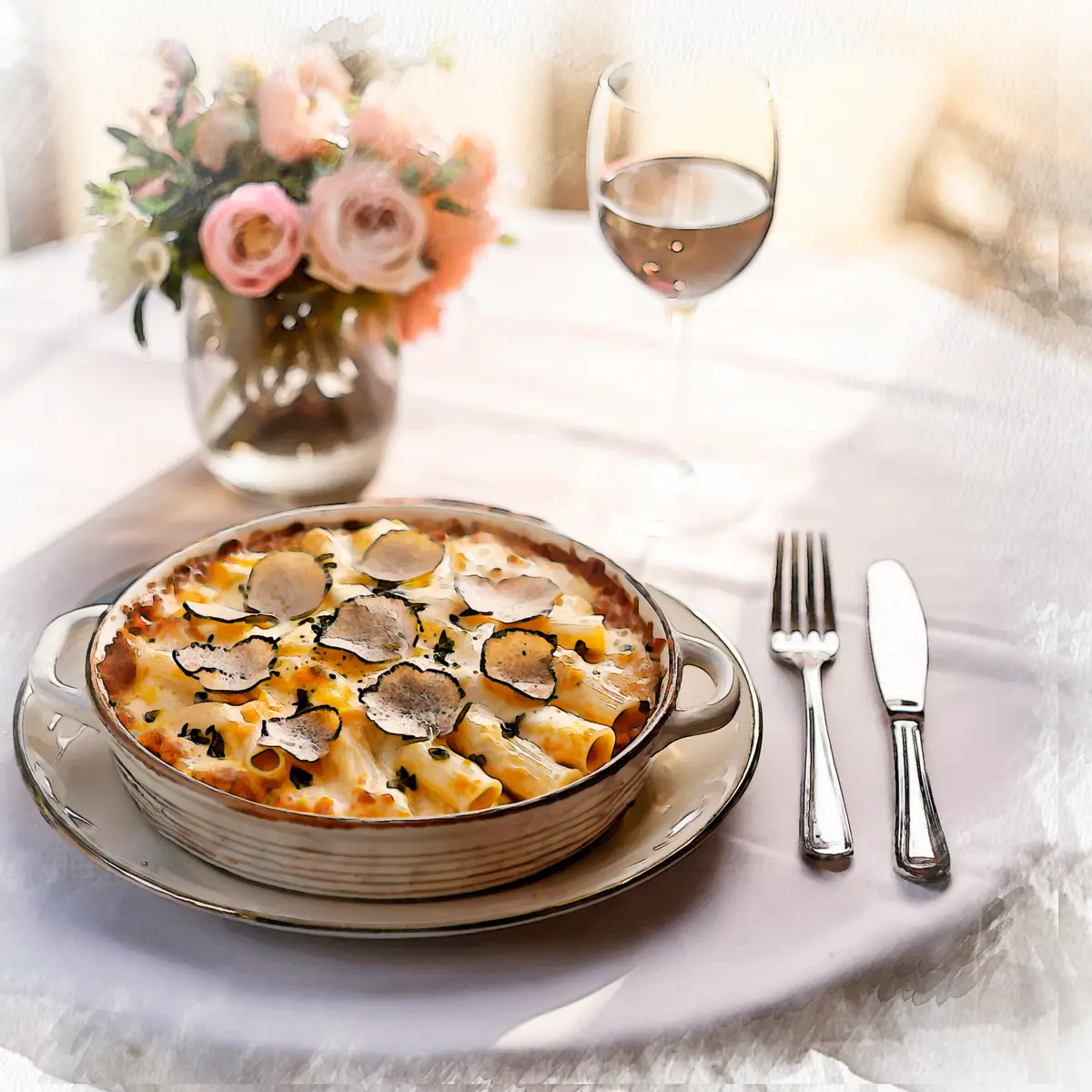
MACCHERONI A LA ROSSINI
Maccheroni, Foie gras, Black truffle, Cream, Dried porcini mushrooms, Veal, Beef, Butter, Gruyère.
Exceedingly Masterful
Emilia Romagna-Marche
190 minutes of culinary devotion
820 Kcal
MACCHERONI A LA ROSSINI
Maccheroni, Foie gras, Black truffle, Cream, Dried porcini mushrooms, Veal, Beef, Butter, Gruyère.
Exceedingly Masterful
Emilia Romagna-Marche
190 minutes of culinary devotion
820 Kcal
MACCHERONI A LA ROSSINI
Maccheroni, Foie gras, Black truffle, Cream, Dried porcini mushrooms, Veal, Beef, Butter, Gruyère.
Exceedingly Masterful
Emilia Romagna-Marche
190 minutes of culinary devotion
820 Kcal
GENESIS
Maccheroni alla Rossini is a sumptuous and opulent dish, a magnificent homage to the culinary and musical grandeur of the celebrated composer Gioachino Rossini. Born in Pesaro in 1792 and passing in Passy (Paris) in 1868, Rossini was not merely a genius of music—creator of immortal masterpieces such as "The Barber of Seville" and "William Tell"—but also an exquisite gourmet, a passionate devotee of the culinary arts, so much so that he bound his name to numerous gastronomic creations.
Legend whispers that Rossini himself was an accomplished cook who delighted in experimenting in the kitchen, crafting dishes that mirrored his opulent aesthetic and his predilection for the most esteemed ingredients. Among these, truffles and foie gras reigned as his favorites, elements that reappear in many of the recipes dedicated to him. Maccheroni alla Rossini is no exception, representing a veritable symphony of flavors, where the silkiness of the foie gras marries the aromatic intensity of the black truffle and the richness of a white ragù, elevated by wild mushrooms and cream. The gratin version, enriched with Gruyère cheese, may be seen as a further evolution, perhaps influenced by Rossini’s lengthy sojourn in Paris, where gratinating techniques are highly revered and employed to bestow a golden crust and a melting heart upon dishes.
The precise origin of the foundational recipe, as is so often the case with historical dishes, remains shrouded in a veil of mystery, contested between different regional traditions, most notably Emilia-Romagna and the Marche. The gratin variation may well have blossomed from the encounter between Italian sensibility and the sophistication of French haute cuisine, with which Rossini was deeply familiar. Regardless of its exact genesis, the dish—particularly in its gratin preparation—has established itself as a classic of celebratory gastronomy, though it is not widely found in everyday home cooking due to its complex execution and the precious nature of its ingredients. It is a masterpiece reserved for solemn occasions, a way to commemorate a grand event or simply to indulge in an unforgettable epicurean experience. Its creation demands time, patience, and a certain culinary artistry, yet the final performance amply rewards the endeavor: a dish of internal creaminess, boasting a golden and inviting surface, possessing an intoxicating aroma and a profound, lingering finish.
PORTIONS (FOR 4 PERSONS)
THE RECIPE
Maccheroni
Foie gras of goose
Precious black truffle
Fresh liquid cream
Dried porcini mushrooms
Veal pulp
Beef pulp
Butter
White onion
Carrot
Celery
Dry white wine
Meat broth
Parmigiano Reggiano
Gruyu00e8re cheese
Extra virgin olive oil
Salt
Black pepper
Flour 00
320 g
100 g
40 g
200 ml
20 g
150 g
150 g
80 g
1 medium
1 medium
1 stalk
1/2 glass
to taste
50 g
80 g
to taste
to taste
to taste
1 tablespoon
CURATION
For the Ragù alla Rossini:
Immerse the dried porcini mushrooms in lukewarm water, allowing them to steep for at least 30 minutes. Once reconstituted, drain them (preserving the filtered soaking liquid) and chop them coarsely.
Prepare a fine battuto with the onion, carrot, and celery.
In a spacious casserole, gently melt half the butter with a thread of extra virgin olive oil. Introduce the minced vegetables, sweating them over a gentle flame until they soften and become translucent.
Incorporate the veal and beef (should you use whole cuts, sear them exquisitely on all sides, then remove and mince them finely before returning them to the pot; if using ground meat, crumble it finely with a spoon). Sear the meat over a lively heat.
Deglaze with white wine, allowing the alcohol to sublime.
Introduce the chopped porcini mushrooms. Stir with care.
If desired for a more velvety texture, you may dust the preparation with a tablespoon of flour, stirring swiftly to prevent lumps, then gradually ladle in the mushroom soaking water and a portion of hot meat broth, just enough to lightly submerge the elements.
Lower the flame to the gentlest simmer, cover, and let it whisper quietly for at least 1 and a half to 2 hours, adding further hot broth should the ragù run dry. The meat must emerge tender and beautifully concentrated. Adjust with salt and pepper as the cooking nears its end.
Whilst the ragù simmers, cut the foie gras into generous cubes. Sear them swiftly in a very hot non-stick pan without adding fat—just enough to gild the exterior while keeping the heart exquisitely tender. Remove them from the pan and set aside. Retain the fat rendered by the foie gras and, if you wish, fold it into the ragù to bestow an even deeper intensity of flavor.
Finely grate one portion of the black truffle (approximately half) and shave the remainder into delicate slices for the final flourish.For the cooking of the pasta:
Bring a generous pot of salted water to a rolling boil. Cook the maccheroni (or your chosen pasta), draining them very al dente (about 2-3 minutes before the package instructions suggest), as they will complete their journey in the oven. Keep a small reserve of the cooking water.
Shortly before draining the pasta, fold the fresh cream into the white ragù, stirring with utmost gentleness. Incorporate the grated truffle and the seared cubes of foie gras (reserving a few for decoration, if you prefer). Warm everything over a whisper of heat, ensuring the cream does not boil.
Drain the pasta very al dente and transfer it directly into the casserole with the sauce. Toss in the remaining butter in small pieces and the freshly grated Parmigiano Reggiano.
Mantecare the mixture over a gentle flame for a brief moment, adding a splash of the pasta cooking water if necessary to coax the flavors into a seamless, harmonious embrace.For the gratin:
Preheat the oven to 200-220°C using the grill or static setting.
Lightly butter a baking dish.
Transfer the dressed maccheroni into the dish, smoothing them into an even layer.
Shower the surface uniformly with the grated Gruyère.
Bake for approximately 10-15 minutes, or until the surface is beautifully golden and a delicate, crispy crust has formed. Monitor closely to prevent the cheese from scorching.Presentation:
Remove the gratin-baked Maccheroni alla Rossini from the oven and allow them to rest for a couple of minutes to settle.
Serve directly from the baking dish or portion onto plates.
Adorn each portion with the reserved shaved black truffle and, if you desire, a few remaining cubes of pan-seared foie gras.
aspiration
Quality of the Ingredients: Paramount to this culinary creation is the use of ingredients of the most exquisite pedigree, most notably the foie gras, the truffle, and the Gruyère.
Selection of the Gruyère: Employ an aged Gruyère PDO to impart a more profound resonance of flavor and an exquisite melt. In its stead, one may summon other cheeses destined for the gratin, such as Emmental, or a curated blend of savory cheeses.
Texture of the Sauce: Ensure the sauce possesses sufficient moisture before committing it to the oven, as the alchemy of the gratin tends to gently desiccate the dish. If required, appease it with a delicate ladle of broth or the pasta's own cooking elixir.
The Truffle: Should the precious black truffle be out of season or beyond reach, you may invoke a summer truffle (scorzone) of fine lineage, or, alternatively, a noble truffle-infused oil (to be introduced with great restraint before baking, or drizzled pristine over the finished gratin).
Beyond Macaroni: This preparations lends itself beautifully to other shapes of ridged short pasta, such as tortiglioni or sedani, which cradle and elevate the opulent sauce.


GENESIS
Maccheroni alla Rossini is a sumptuous and opulent dish, a magnificent homage to the culinary and musical grandeur of the celebrated composer Gioachino Rossini. Born in Pesaro in 1792 and passing in Passy (Paris) in 1868, Rossini was not merely a genius of music—creator of immortal masterpieces such as "The Barber of Seville" and "William Tell"—but also an exquisite gourmet, a passionate devotee of the culinary arts, so much so that he bound his name to numerous gastronomic creations.
Legend whispers that Rossini himself was an accomplished cook who delighted in experimenting in the kitchen, crafting dishes that mirrored his opulent aesthetic and his predilection for the most esteemed ingredients. Among these, truffles and foie gras reigned as his favorites, elements that reappear in many of the recipes dedicated to him. Maccheroni alla Rossini is no exception, representing a veritable symphony of flavors, where the silkiness of the foie gras marries the aromatic intensity of the black truffle and the richness of a white ragù, elevated by wild mushrooms and cream. The gratin version, enriched with Gruyère cheese, may be seen as a further evolution, perhaps influenced by Rossini’s lengthy sojourn in Paris, where gratinating techniques are highly revered and employed to bestow a golden crust and a melting heart upon dishes.
The precise origin of the foundational recipe, as is so often the case with historical dishes, remains shrouded in a veil of mystery, contested between different regional traditions, most notably Emilia-Romagna and the Marche. The gratin variation may well have blossomed from the encounter between Italian sensibility and the sophistication of French haute cuisine, with which Rossini was deeply familiar. Regardless of its exact genesis, the dish—particularly in its gratin preparation—has established itself as a classic of celebratory gastronomy, though it is not widely found in everyday home cooking due to its complex execution and the precious nature of its ingredients. It is a masterpiece reserved for solemn occasions, a way to commemorate a grand event or simply to indulge in an unforgettable epicurean experience. Its creation demands time, patience, and a certain culinary artistry, yet the final performance amply rewards the endeavor: a dish of internal creaminess, boasting a golden and inviting surface, possessing an intoxicating aroma and a profound, lingering finish.
PORTIONS (FOR 4 PERSONS)
THE RECIPE
Maccheroni
Foie gras of goose
Precious black truffle
Fresh liquid cream
Dried porcini mushrooms
Veal pulp
Beef pulp
Butter
White onion
Carrot
Celery
Dry white wine
Meat broth
Parmigiano Reggiano
Gruyu00e8re cheese
Extra virgin olive oil
Salt
Black pepper
Flour 00
320 g
100 g
40 g
200 ml
20 g
150 g
150 g
80 g
1 medium
1 medium
1 stalk
1/2 glass
to taste
50 g
80 g
to taste
to taste
to taste
1 tablespoon
CURATION
For the Ragù alla Rossini:
Immerse the dried porcini mushrooms in lukewarm water, allowing them to steep for at least 30 minutes. Once reconstituted, drain them (preserving the filtered soaking liquid) and chop them coarsely.
Prepare a fine battuto with the onion, carrot, and celery.
In a spacious casserole, gently melt half the butter with a thread of extra virgin olive oil. Introduce the minced vegetables, sweating them over a gentle flame until they soften and become translucent.
Incorporate the veal and beef (should you use whole cuts, sear them exquisitely on all sides, then remove and mince them finely before returning them to the pot; if using ground meat, crumble it finely with a spoon). Sear the meat over a lively heat.
Deglaze with white wine, allowing the alcohol to sublime.
Introduce the chopped porcini mushrooms. Stir with care.
If desired for a more velvety texture, you may dust the preparation with a tablespoon of flour, stirring swiftly to prevent lumps, then gradually ladle in the mushroom soaking water and a portion of hot meat broth, just enough to lightly submerge the elements.
Lower the flame to the gentlest simmer, cover, and let it whisper quietly for at least 1 and a half to 2 hours, adding further hot broth should the ragù run dry. The meat must emerge tender and beautifully concentrated. Adjust with salt and pepper as the cooking nears its end.
Whilst the ragù simmers, cut the foie gras into generous cubes. Sear them swiftly in a very hot non-stick pan without adding fat—just enough to gild the exterior while keeping the heart exquisitely tender. Remove them from the pan and set aside. Retain the fat rendered by the foie gras and, if you wish, fold it into the ragù to bestow an even deeper intensity of flavor.
Finely grate one portion of the black truffle (approximately half) and shave the remainder into delicate slices for the final flourish.For the cooking of the pasta:
Bring a generous pot of salted water to a rolling boil. Cook the maccheroni (or your chosen pasta), draining them very al dente (about 2-3 minutes before the package instructions suggest), as they will complete their journey in the oven. Keep a small reserve of the cooking water.
Shortly before draining the pasta, fold the fresh cream into the white ragù, stirring with utmost gentleness. Incorporate the grated truffle and the seared cubes of foie gras (reserving a few for decoration, if you prefer). Warm everything over a whisper of heat, ensuring the cream does not boil.
Drain the pasta very al dente and transfer it directly into the casserole with the sauce. Toss in the remaining butter in small pieces and the freshly grated Parmigiano Reggiano.
Mantecare the mixture over a gentle flame for a brief moment, adding a splash of the pasta cooking water if necessary to coax the flavors into a seamless, harmonious embrace.For the gratin:
Preheat the oven to 200-220°C using the grill or static setting.
Lightly butter a baking dish.
Transfer the dressed maccheroni into the dish, smoothing them into an even layer.
Shower the surface uniformly with the grated Gruyère.
Bake for approximately 10-15 minutes, or until the surface is beautifully golden and a delicate, crispy crust has formed. Monitor closely to prevent the cheese from scorching.Presentation:
Remove the gratin-baked Maccheroni alla Rossini from the oven and allow them to rest for a couple of minutes to settle.
Serve directly from the baking dish or portion onto plates.
Adorn each portion with the reserved shaved black truffle and, if you desire, a few remaining cubes of pan-seared foie gras.
aspiration
Quality of the Ingredients: Paramount to this culinary creation is the use of ingredients of the most exquisite pedigree, most notably the foie gras, the truffle, and the Gruyère.
Selection of the Gruyère: Employ an aged Gruyère PDO to impart a more profound resonance of flavor and an exquisite melt. In its stead, one may summon other cheeses destined for the gratin, such as Emmental, or a curated blend of savory cheeses.
Texture of the Sauce: Ensure the sauce possesses sufficient moisture before committing it to the oven, as the alchemy of the gratin tends to gently desiccate the dish. If required, appease it with a delicate ladle of broth or the pasta's own cooking elixir.
The Truffle: Should the precious black truffle be out of season or beyond reach, you may invoke a summer truffle (scorzone) of fine lineage, or, alternatively, a noble truffle-infused oil (to be introduced with great restraint before baking, or drizzled pristine over the finished gratin).
Beyond Macaroni: This preparations lends itself beautifully to other shapes of ridged short pasta, such as tortiglioni or sedani, which cradle and elevate the opulent sauce.
latest culinary creations
GENESIS
Maccheroni alla Rossini is a sumptuous and opulent dish, a magnificent homage to the culinary and musical grandeur of the celebrated composer Gioachino Rossini. Born in Pesaro in 1792 and passing in Passy (Paris) in 1868, Rossini was not merely a genius of music—creator of immortal masterpieces such as "The Barber of Seville" and "William Tell"—but also an exquisite gourmet, a passionate devotee of the culinary arts, so much so that he bound his name to numerous gastronomic creations.
Legend whispers that Rossini himself was an accomplished cook who delighted in experimenting in the kitchen, crafting dishes that mirrored his opulent aesthetic and his predilection for the most esteemed ingredients. Among these, truffles and foie gras reigned as his favorites, elements that reappear in many of the recipes dedicated to him. Maccheroni alla Rossini is no exception, representing a veritable symphony of flavors, where the silkiness of the foie gras marries the aromatic intensity of the black truffle and the richness of a white ragù, elevated by wild mushrooms and cream. The gratin version, enriched with Gruyère cheese, may be seen as a further evolution, perhaps influenced by Rossini’s lengthy sojourn in Paris, where gratinating techniques are highly revered and employed to bestow a golden crust and a melting heart upon dishes.
The precise origin of the foundational recipe, as is so often the case with historical dishes, remains shrouded in a veil of mystery, contested between different regional traditions, most notably Emilia-Romagna and the Marche. The gratin variation may well have blossomed from the encounter between Italian sensibility and the sophistication of French haute cuisine, with which Rossini was deeply familiar. Regardless of its exact genesis, the dish—particularly in its gratin preparation—has established itself as a classic of celebratory gastronomy, though it is not widely found in everyday home cooking due to its complex execution and the precious nature of its ingredients. It is a masterpiece reserved for solemn occasions, a way to commemorate a grand event or simply to indulge in an unforgettable epicurean experience. Its creation demands time, patience, and a certain culinary artistry, yet the final performance amply rewards the endeavor: a dish of internal creaminess, boasting a golden and inviting surface, possessing an intoxicating aroma and a profound, lingering finish.
PORTIONS (FOR 4 PERSONS)
THE RECIPE
Maccheroni
Foie gras of goose
Precious black truffle
Fresh liquid cream
Dried porcini mushrooms
Veal pulp
Beef pulp
Butter
White onion
Carrot
Celery
Dry white wine
Meat broth
Parmigiano Reggiano
Gruyu00e8re cheese
Extra virgin olive oil
Salt
Black pepper
Flour 00
320 g
100 g
40 g
200 ml
20 g
150 g
150 g
80 g
1 medium
1 medium
1 stalk
1/2 glass
to taste
50 g
80 g
to taste
to taste
to taste
1 tablespoon
CURATION
For the Ragù alla Rossini:
Immerse the dried porcini mushrooms in lukewarm water, allowing them to steep for at least 30 minutes. Once reconstituted, drain them (preserving the filtered soaking liquid) and chop them coarsely.
Prepare a fine battuto with the onion, carrot, and celery.
In a spacious casserole, gently melt half the butter with a thread of extra virgin olive oil. Introduce the minced vegetables, sweating them over a gentle flame until they soften and become translucent.
Incorporate the veal and beef (should you use whole cuts, sear them exquisitely on all sides, then remove and mince them finely before returning them to the pot; if using ground meat, crumble it finely with a spoon). Sear the meat over a lively heat.
Deglaze with white wine, allowing the alcohol to sublime.
Introduce the chopped porcini mushrooms. Stir with care.
If desired for a more velvety texture, you may dust the preparation with a tablespoon of flour, stirring swiftly to prevent lumps, then gradually ladle in the mushroom soaking water and a portion of hot meat broth, just enough to lightly submerge the elements.
Lower the flame to the gentlest simmer, cover, and let it whisper quietly for at least 1 and a half to 2 hours, adding further hot broth should the ragù run dry. The meat must emerge tender and beautifully concentrated. Adjust with salt and pepper as the cooking nears its end.
Whilst the ragù simmers, cut the foie gras into generous cubes. Sear them swiftly in a very hot non-stick pan without adding fat—just enough to gild the exterior while keeping the heart exquisitely tender. Remove them from the pan and set aside. Retain the fat rendered by the foie gras and, if you wish, fold it into the ragù to bestow an even deeper intensity of flavor.
Finely grate one portion of the black truffle (approximately half) and shave the remainder into delicate slices for the final flourish.For the cooking of the pasta:
Bring a generous pot of salted water to a rolling boil. Cook the maccheroni (or your chosen pasta), draining them very al dente (about 2-3 minutes before the package instructions suggest), as they will complete their journey in the oven. Keep a small reserve of the cooking water.
Shortly before draining the pasta, fold the fresh cream into the white ragù, stirring with utmost gentleness. Incorporate the grated truffle and the seared cubes of foie gras (reserving a few for decoration, if you prefer). Warm everything over a whisper of heat, ensuring the cream does not boil.
Drain the pasta very al dente and transfer it directly into the casserole with the sauce. Toss in the remaining butter in small pieces and the freshly grated Parmigiano Reggiano.
Mantecare the mixture over a gentle flame for a brief moment, adding a splash of the pasta cooking water if necessary to coax the flavors into a seamless, harmonious embrace.For the gratin:
Preheat the oven to 200-220°C using the grill or static setting.
Lightly butter a baking dish.
Transfer the dressed maccheroni into the dish, smoothing them into an even layer.
Shower the surface uniformly with the grated Gruyère.
Bake for approximately 10-15 minutes, or until the surface is beautifully golden and a delicate, crispy crust has formed. Monitor closely to prevent the cheese from scorching.Presentation:
Remove the gratin-baked Maccheroni alla Rossini from the oven and allow them to rest for a couple of minutes to settle.
Serve directly from the baking dish or portion onto plates.
Adorn each portion with the reserved shaved black truffle and, if you desire, a few remaining cubes of pan-seared foie gras.
aspiration
Quality of the Ingredients: Paramount to this culinary creation is the use of ingredients of the most exquisite pedigree, most notably the foie gras, the truffle, and the Gruyère.
Selection of the Gruyère: Employ an aged Gruyère PDO to impart a more profound resonance of flavor and an exquisite melt. In its stead, one may summon other cheeses destined for the gratin, such as Emmental, or a curated blend of savory cheeses.
Texture of the Sauce: Ensure the sauce possesses sufficient moisture before committing it to the oven, as the alchemy of the gratin tends to gently desiccate the dish. If required, appease it with a delicate ladle of broth or the pasta's own cooking elixir.
The Truffle: Should the precious black truffle be out of season or beyond reach, you may invoke a summer truffle (scorzone) of fine lineage, or, alternatively, a noble truffle-infused oil (to be introduced with great restraint before baking, or drizzled pristine over the finished gratin).
Beyond Macaroni: This preparations lends itself beautifully to other shapes of ridged short pasta, such as tortiglioni or sedani, which cradle and elevate the opulent sauce.