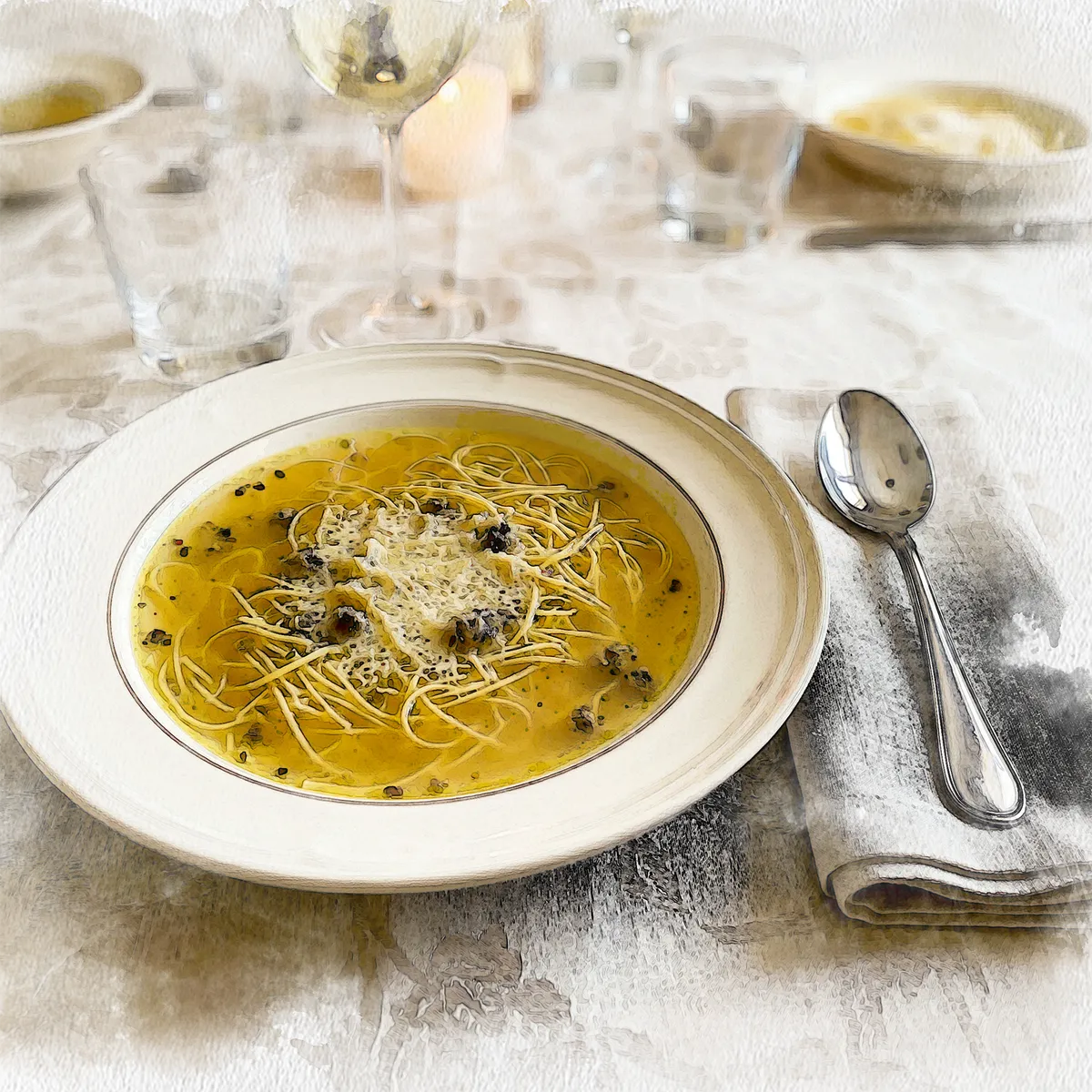
VENETIAN PAPARELE IN BROTH
Flour, Eggs, Hen, Chicken giblets, Caraway, Celery, Onion, Bay leaf, Garlic, Cloves
Effortless
Veneto
160 minutes
510 Kcal
VENETIAN PAPARELE IN BROTH
Flour, Eggs, Hen, Chicken giblets, Caraway, Celery, Onion, Bay leaf, Garlic, Cloves
Effortless
Veneto
160 minutes
510 Kcal
VENETIAN PAPARELE IN BROTH
Flour, Eggs, Hen, Chicken giblets, Caraway, Celery, Onion, Bay leaf, Garlic, Cloves
Effortless
Veneto
160 minutes
510 Kcal
GENESIS
The culinary heritage of Veneto jealously guards the recipe for paparele in brodo, a dish deeply rooted in both the rustic and noble culture of the region. The term paparele denotes an exquisitely thin variety of egg pasta, akin to tagliolini, the preparation of which was once deemed a supreme testament to the mastery of the household matriarchs. Historically, this nurturing offering stood as the centerpiece of Sunday feasts and grand familial celebrations, so much so that it was often heralded as the wedding soup. The rendition presented here, enriched with chicken offal and pureed vegetables, offers a particulary dense and deeply nourishing elixir, typical of the Venetian hinterland where no part of the backyard poultry was ever allowed to go to waste.
The use of a free-roaming heritage hen is essential to coax forth a broth of profound flavor and luminous golden hue. In bygone days, the meat of the mother hen, having yielded its life essence to the soup, was served as a second course accompanied by a classic salsa verde or cren, ensuring a complete and harmonious meal. The refinement of enclosing the aromatics in a muslin sachet infuses the liquid with perfume without leaving any residue, while passing the vegetables through a sieve bestows a velvety texture that tenderly envelops the pasta. This meticulous process elevates a simple broth into a complex composition, wherein the sweetness of carrots and celery marries beautifully with the mineral, ferrous whisper of the offal.
The rolling of the dough demands patience and a wooden pastry board to impart the requisite rustic texture. The sheet of pasta must be stretched until it renders itself almost translucent, allowing for an incredibly swift cooking time that preserves the firm, al dente soul of the grain. To serve paparele in brodo is to grace the table with a fragment of Venetian history—a sacred ritual that warms the bleakest winter days and celebrates the power of peasant gastronomy to ennoble the humblest of ingredients through precise techniques and patient, slow-simmered hours.
PORTIONS (FOR 4 PERSONS)
FOR THE SACRED ART OF FRESH PASTA
Flour 00
Eggs
300 gr
3
FOR THE EMBELLISHMENT
Free-range hen with
her giblets
Carrots
Ribs of celery
Golden onion
Clove of garlic
Bay leaf
Cloves
Peppercorns
Salt
Parmigiano Reggiano
1
2
2
1
1
1
2
Q.s.
Q.s.
Q.s.
CURATION
For the fresh pasta
Mound the flour on the wooden board, fashioning a well, and crack the eggs into its heart. Begin to whisk with a fork, then knead the dough with your hands until it transforms into a smooth, harmonious sphere. Allow the dough to rest beneath a cloth for half an hour. Next, roll a gossamer-thin sheet of pasta with the rolling pin and let it dry for a precious few minutes. Roll the sheet upon itself and cut it into whisper-thin strips, about two millimeters wide. Scatter the "paparele" gently across the floured surface and set them aside.For the condiment:
Begin by meticulously dressing the hen, singeing it over a flame to remove any residual plumage, and preserve her offal. Gather the carrots, celery, and onion, cutting them into rustic pieces. Prepare a sachet of gauze, placing inside the bay leaf, cloves, whole garlic clove, and peppercorns, then tie it securely. Cradle the hen in a large, deep pot alongside the vegetables, a pinch of salt, and the aromatic sachet. Cover entirely with cold water and bring to a gentle boil. Simmer on low heat with the lid closed for approximately two hours.For the broth and offal:
Once the cooking is complete, lift the hen and the aromatic sachet from the cauldron. Retrieve the vegetables and pass them through a sieve, letting their puréed essence fall directly back into the cooking elixir. Take the hen's offal that you had set aside and mince it into tiny pieces. Return these offals to the broth and proceed with cooking for another five minutes from the moment the liquid resumes its boil, thus wedding the flavors and cooking the offal.For the finish:
Shower the "paparele" directly into the pot with the boiling broth and the sieved vegetables. Let them boil for eight minutes, stirring with utmost gentleness so as not to wound the delicate pasta. Extinguish the flame and serve the soup of "paparele" piping hot, crowning each plate with a generous dusting of grated Parmigiano Reggiano. The hen's meat, as promised, may be revered and served separately as a boiled delicacy.
aspiration
To render the elixir of the broth more crystalline and pure, remember to skim the surface during the initial stage of boiling.
Should the hen's offal prove insufficient, you may introduce fresh chicken livers to deepen and intensify the flavor.
Ensure the muslin pouch is securely sealed, lest the peppercorns disperse into the pristine broth.


GENESIS
The culinary heritage of Veneto jealously guards the recipe for paparele in brodo, a dish deeply rooted in both the rustic and noble culture of the region. The term paparele denotes an exquisitely thin variety of egg pasta, akin to tagliolini, the preparation of which was once deemed a supreme testament to the mastery of the household matriarchs. Historically, this nurturing offering stood as the centerpiece of Sunday feasts and grand familial celebrations, so much so that it was often heralded as the wedding soup. The rendition presented here, enriched with chicken offal and pureed vegetables, offers a particulary dense and deeply nourishing elixir, typical of the Venetian hinterland where no part of the backyard poultry was ever allowed to go to waste.
The use of a free-roaming heritage hen is essential to coax forth a broth of profound flavor and luminous golden hue. In bygone days, the meat of the mother hen, having yielded its life essence to the soup, was served as a second course accompanied by a classic salsa verde or cren, ensuring a complete and harmonious meal. The refinement of enclosing the aromatics in a muslin sachet infuses the liquid with perfume without leaving any residue, while passing the vegetables through a sieve bestows a velvety texture that tenderly envelops the pasta. This meticulous process elevates a simple broth into a complex composition, wherein the sweetness of carrots and celery marries beautifully with the mineral, ferrous whisper of the offal.
The rolling of the dough demands patience and a wooden pastry board to impart the requisite rustic texture. The sheet of pasta must be stretched until it renders itself almost translucent, allowing for an incredibly swift cooking time that preserves the firm, al dente soul of the grain. To serve paparele in brodo is to grace the table with a fragment of Venetian history—a sacred ritual that warms the bleakest winter days and celebrates the power of peasant gastronomy to ennoble the humblest of ingredients through precise techniques and patient, slow-simmered hours.
PORTIONS (FOR 4 PERSONS)
FOR THE SACRED ART OF FRESH PASTA
Flour 00
Eggs
300 gr
3
FOR THE EMBELLISHMENT
Free-range hen with
her giblets
Carrots
Ribs of celery
Golden onion
Clove of garlic
Bay leaf
Cloves
Peppercorns
Salt
Parmigiano Reggiano
1
2
2
1
1
1
2
Q.s.
Q.s.
Q.s.
CURATION
For the fresh pasta
Mound the flour on the wooden board, fashioning a well, and crack the eggs into its heart. Begin to whisk with a fork, then knead the dough with your hands until it transforms into a smooth, harmonious sphere. Allow the dough to rest beneath a cloth for half an hour. Next, roll a gossamer-thin sheet of pasta with the rolling pin and let it dry for a precious few minutes. Roll the sheet upon itself and cut it into whisper-thin strips, about two millimeters wide. Scatter the "paparele" gently across the floured surface and set them aside.For the condiment:
Begin by meticulously dressing the hen, singeing it over a flame to remove any residual plumage, and preserve her offal. Gather the carrots, celery, and onion, cutting them into rustic pieces. Prepare a sachet of gauze, placing inside the bay leaf, cloves, whole garlic clove, and peppercorns, then tie it securely. Cradle the hen in a large, deep pot alongside the vegetables, a pinch of salt, and the aromatic sachet. Cover entirely with cold water and bring to a gentle boil. Simmer on low heat with the lid closed for approximately two hours.For the broth and offal:
Once the cooking is complete, lift the hen and the aromatic sachet from the cauldron. Retrieve the vegetables and pass them through a sieve, letting their puréed essence fall directly back into the cooking elixir. Take the hen's offal that you had set aside and mince it into tiny pieces. Return these offals to the broth and proceed with cooking for another five minutes from the moment the liquid resumes its boil, thus wedding the flavors and cooking the offal.For the finish:
Shower the "paparele" directly into the pot with the boiling broth and the sieved vegetables. Let them boil for eight minutes, stirring with utmost gentleness so as not to wound the delicate pasta. Extinguish the flame and serve the soup of "paparele" piping hot, crowning each plate with a generous dusting of grated Parmigiano Reggiano. The hen's meat, as promised, may be revered and served separately as a boiled delicacy.
aspiration
To render the elixir of the broth more crystalline and pure, remember to skim the surface during the initial stage of boiling.
Should the hen's offal prove insufficient, you may introduce fresh chicken livers to deepen and intensify the flavor.
Ensure the muslin pouch is securely sealed, lest the peppercorns disperse into the pristine broth.
latest culinary creations
GENESIS
The culinary heritage of Veneto jealously guards the recipe for paparele in brodo, a dish deeply rooted in both the rustic and noble culture of the region. The term paparele denotes an exquisitely thin variety of egg pasta, akin to tagliolini, the preparation of which was once deemed a supreme testament to the mastery of the household matriarchs. Historically, this nurturing offering stood as the centerpiece of Sunday feasts and grand familial celebrations, so much so that it was often heralded as the wedding soup. The rendition presented here, enriched with chicken offal and pureed vegetables, offers a particulary dense and deeply nourishing elixir, typical of the Venetian hinterland where no part of the backyard poultry was ever allowed to go to waste.
The use of a free-roaming heritage hen is essential to coax forth a broth of profound flavor and luminous golden hue. In bygone days, the meat of the mother hen, having yielded its life essence to the soup, was served as a second course accompanied by a classic salsa verde or cren, ensuring a complete and harmonious meal. The refinement of enclosing the aromatics in a muslin sachet infuses the liquid with perfume without leaving any residue, while passing the vegetables through a sieve bestows a velvety texture that tenderly envelops the pasta. This meticulous process elevates a simple broth into a complex composition, wherein the sweetness of carrots and celery marries beautifully with the mineral, ferrous whisper of the offal.
The rolling of the dough demands patience and a wooden pastry board to impart the requisite rustic texture. The sheet of pasta must be stretched until it renders itself almost translucent, allowing for an incredibly swift cooking time that preserves the firm, al dente soul of the grain. To serve paparele in brodo is to grace the table with a fragment of Venetian history—a sacred ritual that warms the bleakest winter days and celebrates the power of peasant gastronomy to ennoble the humblest of ingredients through precise techniques and patient, slow-simmered hours.
PORTIONS (FOR 4 PERSONS)
FOR THE SACRED ART OF FRESH PASTA
Flour 00
Eggs
300 gr
3
FOR THE EMBELLISHMENT
Free-range hen with
her giblets
Carrots
Ribs of celery
Golden onion
Clove of garlic
Bay leaf
Cloves
Peppercorns
Salt
Parmigiano Reggiano
1
2
2
1
1
1
2
Q.s.
Q.s.
Q.s.
CURATION
For the fresh pasta
Mound the flour on the wooden board, fashioning a well, and crack the eggs into its heart. Begin to whisk with a fork, then knead the dough with your hands until it transforms into a smooth, harmonious sphere. Allow the dough to rest beneath a cloth for half an hour. Next, roll a gossamer-thin sheet of pasta with the rolling pin and let it dry for a precious few minutes. Roll the sheet upon itself and cut it into whisper-thin strips, about two millimeters wide. Scatter the "paparele" gently across the floured surface and set them aside.For the condiment:
Begin by meticulously dressing the hen, singeing it over a flame to remove any residual plumage, and preserve her offal. Gather the carrots, celery, and onion, cutting them into rustic pieces. Prepare a sachet of gauze, placing inside the bay leaf, cloves, whole garlic clove, and peppercorns, then tie it securely. Cradle the hen in a large, deep pot alongside the vegetables, a pinch of salt, and the aromatic sachet. Cover entirely with cold water and bring to a gentle boil. Simmer on low heat with the lid closed for approximately two hours.For the broth and offal:
Once the cooking is complete, lift the hen and the aromatic sachet from the cauldron. Retrieve the vegetables and pass them through a sieve, letting their puréed essence fall directly back into the cooking elixir. Take the hen's offal that you had set aside and mince it into tiny pieces. Return these offals to the broth and proceed with cooking for another five minutes from the moment the liquid resumes its boil, thus wedding the flavors and cooking the offal.For the finish:
Shower the "paparele" directly into the pot with the boiling broth and the sieved vegetables. Let them boil for eight minutes, stirring with utmost gentleness so as not to wound the delicate pasta. Extinguish the flame and serve the soup of "paparele" piping hot, crowning each plate with a generous dusting of grated Parmigiano Reggiano. The hen's meat, as promised, may be revered and served separately as a boiled delicacy.
aspiration
To render the elixir of the broth more crystalline and pure, remember to skim the surface during the initial stage of boiling.
Should the hen's offal prove insufficient, you may introduce fresh chicken livers to deepen and intensify the flavor.
Ensure the muslin pouch is securely sealed, lest the peppercorns disperse into the pristine broth.