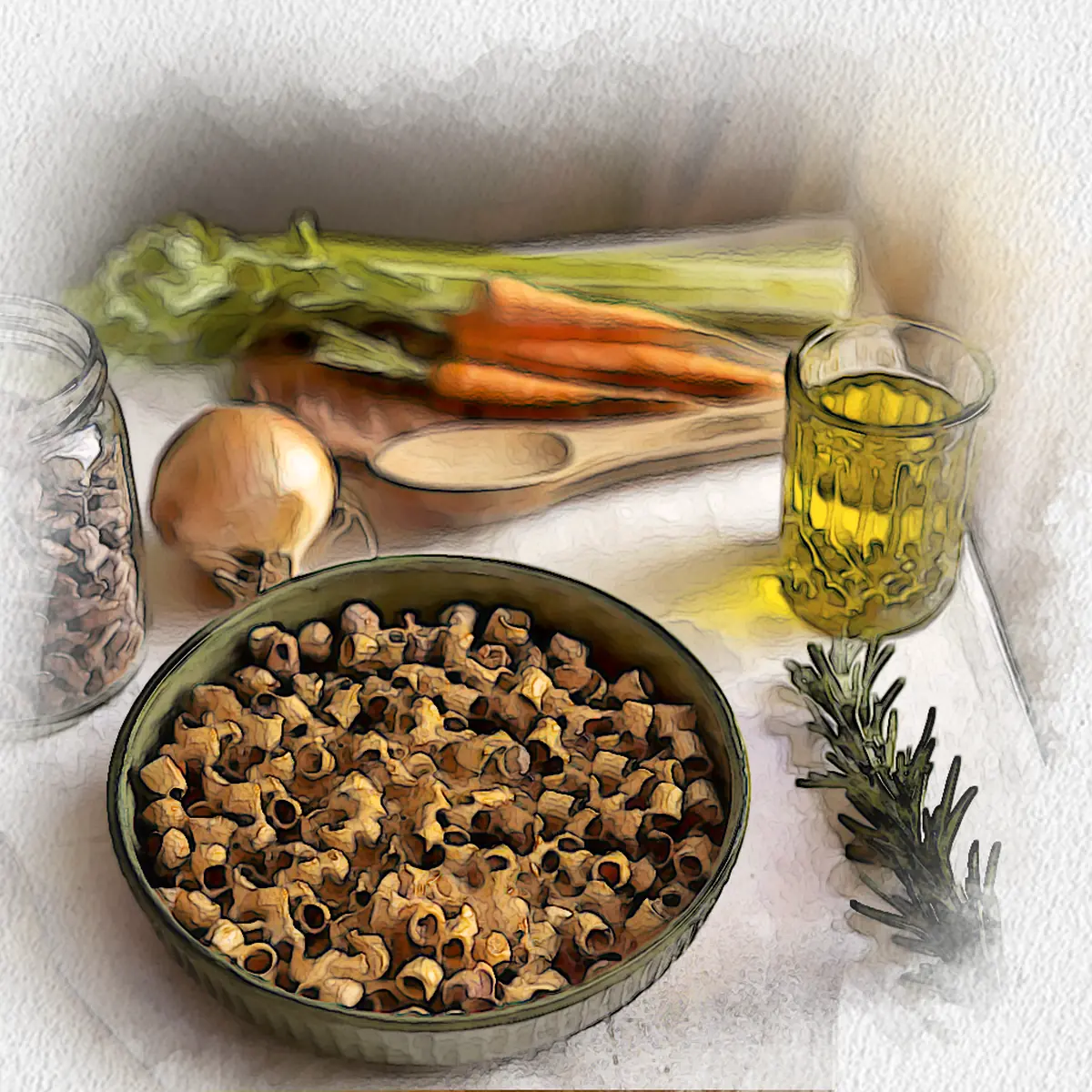
A HARMONY OF PASTA AND BEANS
Dried borlotti beans, Onion, Carrot, Celery, Garlic, Tomato purée, Extra virgin olive oil, Rosemary, Bay leaf.
Effortless
Italy
125 minutes
650 Calories
A HARMONY OF PASTA AND BEANS
Dried borlotti beans, Onion, Carrot, Celery, Garlic, Tomato purée, Extra virgin olive oil, Rosemary, Bay leaf.
Effortless
Italy
125 minutes
650 Calories
A HARMONY OF PASTA AND BEANS
Dried borlotti beans, Onion, Carrot, Celery, Garlic, Tomato purée, Extra virgin olive oil, Rosemary, Bay leaf.
Effortless
Italy
125 minutes
650 Calories
GENESIS
Pasta e Fagioli stands as one of the quintessential emblems of Italy’s cucina povera, a humble culinary art diffused in myriad interpretations across the entire peninsula. Its origins are shrouded in the mists of time, yet it remains intimately bound to the rustic peasant diet and the vital necessity of fashioning a deeply nourishing, soulful repast from the simplest, most readily available gifts of the earth.
Legumes, ancestral to the Americas, made their passage to European shores following the discovery of the New World in the sixteenth century. They flourished swiftly, favored for their bountiful yield and profound nutritional virtue, thus becoming an indispensable source of protein for the less fortunate. Pasta, fashioned in its most elemental, hand-shaped guises, was already a revered staple of daily life.
The poetic union of pasta and beans arose organically from the seasonal abundance of these two ingredients within the Italian countryside. Each territory, and indeed each hearth, composed its own unique score, utilizing diverse shapes of pasta (ofttimes short, mixed, or broken by hand) and local varieties of beans (from the robust Borlotti to the delicate Cannellini). These were married with aromatic bases and herbs that shifted with the geography—ranging from cured lard and resinous rosemary to garlic, onion, a touch of tomato, or kept pristine in a white broth.
Pasta e Fagioli beautifully encapsulates the timeless philosophy of cucina povera: the art of elevating a few modest ingredients into a complete, harmonious masterpiece of comforting and profound flavor. Even today, amidst the ceaseless evolution of modern gastronomy, it persists as a cherished classic—a lyrical testament to the culinary majesty that can blossom from pure simplicity.
PORTIONS (FOR 4 PERSONS)
THE RECIPE
Dried borlotti beans
Onion
Carrot
Celery stalk
Garlic cloves
Tomato passata
Extra virgin olive oil
Rosemary
Bay leaf
Tubetti pasta
Salt
250 g
1
1
1
2
200
to taste
to taste
(optional)
200
to taste
CURATION
The Baptism of the Beans:
On the eve of creation, submerge the dried beans in an abundant cradle of cold, pure water.
With the dawning day, drain the legumes and rinse them gently under a running stream.Concocting the Sacred Soffritto:
In a vessel of generous proportions, coax the finely minced onion, carrot, and celery into a soft, aromatic reverie with a thread of liquid gold—extra virgin olive oil.
Introduce the minced garlic, allowing its essence to marry the melody for a fleeting moment.The Alchemical Simmer:
Unite the drained beans with the soffritto, folding them in harmony.
Pour in the rich tomato passata, season with salt, pepper, and the fragrant whispers of rosemary and bay leaf (should you choose to grace them), and mantle the mixture with warm water.
Bring this offering to a boil, then temper the flame, leaving it to simmer in quiet contemplation for an hour and a half, or until the beans yield to tenderness.The Marriage of Pasta and Legume:
As the beans reach their soft crescendo, introduce the pasta to the vessel, cooking it al dente in keeping with the ancient wisdom of the pack.
Lest the pot run dry, bestow additional warm water during this union.
Once the pasta has attained perfection, stir with care and allow the dish to rest in quiet repose for a few moments.
Serve this classic pasta e fagioli steaming hot, anointed with a final drizzle of extra virgin olive oil and a delicate dust of freshly ground black pepper.
aspiration
Should you desire a more profound resonance of flavor, you may introduce smoked pancetta or artisanal sausage to the soffritto, that sacred aromatic foundation.
If your palate seeks a texture of velvety opulence, consider puréeing a select portion of the simmered beans before marrying them with the pasta.
To achieve a rendition of utmost indulgence, one may introduce pork rind, gently braised in exquisite harmony alongside the beans.


GENESIS
Pasta e Fagioli stands as one of the quintessential emblems of Italy’s cucina povera, a humble culinary art diffused in myriad interpretations across the entire peninsula. Its origins are shrouded in the mists of time, yet it remains intimately bound to the rustic peasant diet and the vital necessity of fashioning a deeply nourishing, soulful repast from the simplest, most readily available gifts of the earth.
Legumes, ancestral to the Americas, made their passage to European shores following the discovery of the New World in the sixteenth century. They flourished swiftly, favored for their bountiful yield and profound nutritional virtue, thus becoming an indispensable source of protein for the less fortunate. Pasta, fashioned in its most elemental, hand-shaped guises, was already a revered staple of daily life.
The poetic union of pasta and beans arose organically from the seasonal abundance of these two ingredients within the Italian countryside. Each territory, and indeed each hearth, composed its own unique score, utilizing diverse shapes of pasta (ofttimes short, mixed, or broken by hand) and local varieties of beans (from the robust Borlotti to the delicate Cannellini). These were married with aromatic bases and herbs that shifted with the geography—ranging from cured lard and resinous rosemary to garlic, onion, a touch of tomato, or kept pristine in a white broth.
Pasta e Fagioli beautifully encapsulates the timeless philosophy of cucina povera: the art of elevating a few modest ingredients into a complete, harmonious masterpiece of comforting and profound flavor. Even today, amidst the ceaseless evolution of modern gastronomy, it persists as a cherished classic—a lyrical testament to the culinary majesty that can blossom from pure simplicity.
PORTIONS (FOR 4 PERSONS)
THE RECIPE
Dried borlotti beans
Onion
Carrot
Celery stalk
Garlic cloves
Tomato passata
Extra virgin olive oil
Rosemary
Bay leaf
Tubetti pasta
Salt
250 g
1
1
1
2
200
to taste
to taste
(optional)
200
to taste
CURATION
The Baptism of the Beans:
On the eve of creation, submerge the dried beans in an abundant cradle of cold, pure water.
With the dawning day, drain the legumes and rinse them gently under a running stream.Concocting the Sacred Soffritto:
In a vessel of generous proportions, coax the finely minced onion, carrot, and celery into a soft, aromatic reverie with a thread of liquid gold—extra virgin olive oil.
Introduce the minced garlic, allowing its essence to marry the melody for a fleeting moment.The Alchemical Simmer:
Unite the drained beans with the soffritto, folding them in harmony.
Pour in the rich tomato passata, season with salt, pepper, and the fragrant whispers of rosemary and bay leaf (should you choose to grace them), and mantle the mixture with warm water.
Bring this offering to a boil, then temper the flame, leaving it to simmer in quiet contemplation for an hour and a half, or until the beans yield to tenderness.The Marriage of Pasta and Legume:
As the beans reach their soft crescendo, introduce the pasta to the vessel, cooking it al dente in keeping with the ancient wisdom of the pack.
Lest the pot run dry, bestow additional warm water during this union.
Once the pasta has attained perfection, stir with care and allow the dish to rest in quiet repose for a few moments.
Serve this classic pasta e fagioli steaming hot, anointed with a final drizzle of extra virgin olive oil and a delicate dust of freshly ground black pepper.
aspiration
Should you desire a more profound resonance of flavor, you may introduce smoked pancetta or artisanal sausage to the soffritto, that sacred aromatic foundation.
If your palate seeks a texture of velvety opulence, consider puréeing a select portion of the simmered beans before marrying them with the pasta.
To achieve a rendition of utmost indulgence, one may introduce pork rind, gently braised in exquisite harmony alongside the beans.
latest culinary creations
GENESIS
Pasta e Fagioli stands as one of the quintessential emblems of Italy’s cucina povera, a humble culinary art diffused in myriad interpretations across the entire peninsula. Its origins are shrouded in the mists of time, yet it remains intimately bound to the rustic peasant diet and the vital necessity of fashioning a deeply nourishing, soulful repast from the simplest, most readily available gifts of the earth.
Legumes, ancestral to the Americas, made their passage to European shores following the discovery of the New World in the sixteenth century. They flourished swiftly, favored for their bountiful yield and profound nutritional virtue, thus becoming an indispensable source of protein for the less fortunate. Pasta, fashioned in its most elemental, hand-shaped guises, was already a revered staple of daily life.
The poetic union of pasta and beans arose organically from the seasonal abundance of these two ingredients within the Italian countryside. Each territory, and indeed each hearth, composed its own unique score, utilizing diverse shapes of pasta (ofttimes short, mixed, or broken by hand) and local varieties of beans (from the robust Borlotti to the delicate Cannellini). These were married with aromatic bases and herbs that shifted with the geography—ranging from cured lard and resinous rosemary to garlic, onion, a touch of tomato, or kept pristine in a white broth.
Pasta e Fagioli beautifully encapsulates the timeless philosophy of cucina povera: the art of elevating a few modest ingredients into a complete, harmonious masterpiece of comforting and profound flavor. Even today, amidst the ceaseless evolution of modern gastronomy, it persists as a cherished classic—a lyrical testament to the culinary majesty that can blossom from pure simplicity.
PORTIONS (FOR 4 PERSONS)
THE RECIPE
Dried borlotti beans
Onion
Carrot
Celery stalk
Garlic cloves
Tomato passata
Extra virgin olive oil
Rosemary
Bay leaf
Tubetti pasta
Salt
250 g
1
1
1
2
200
to taste
to taste
(optional)
200
to taste
CURATION
The Baptism of the Beans:
On the eve of creation, submerge the dried beans in an abundant cradle of cold, pure water.
With the dawning day, drain the legumes and rinse them gently under a running stream.Concocting the Sacred Soffritto:
In a vessel of generous proportions, coax the finely minced onion, carrot, and celery into a soft, aromatic reverie with a thread of liquid gold—extra virgin olive oil.
Introduce the minced garlic, allowing its essence to marry the melody for a fleeting moment.The Alchemical Simmer:
Unite the drained beans with the soffritto, folding them in harmony.
Pour in the rich tomato passata, season with salt, pepper, and the fragrant whispers of rosemary and bay leaf (should you choose to grace them), and mantle the mixture with warm water.
Bring this offering to a boil, then temper the flame, leaving it to simmer in quiet contemplation for an hour and a half, or until the beans yield to tenderness.The Marriage of Pasta and Legume:
As the beans reach their soft crescendo, introduce the pasta to the vessel, cooking it al dente in keeping with the ancient wisdom of the pack.
Lest the pot run dry, bestow additional warm water during this union.
Once the pasta has attained perfection, stir with care and allow the dish to rest in quiet repose for a few moments.
Serve this classic pasta e fagioli steaming hot, anointed with a final drizzle of extra virgin olive oil and a delicate dust of freshly ground black pepper.
aspiration
Should you desire a more profound resonance of flavor, you may introduce smoked pancetta or artisanal sausage to the soffritto, that sacred aromatic foundation.
If your palate seeks a texture of velvety opulence, consider puréeing a select portion of the simmered beans before marrying them with the pasta.
To achieve a rendition of utmost indulgence, one may introduce pork rind, gently braised in exquisite harmony alongside the beans.