
GEOGRAPHIES OF PASTA
Each shape, a fragment of the landscape
Oct 22, 2026
GEOGRAPHIES OF PASTA
Each shape, a fragment of the landscape
Oct 22, 2026
GEOGRAPHIES OF PASTA
Each shape, a fragment of the landscape
Oct 22, 2026
Here, one journeys with measured steps amid vineyards, farmsteads, Savoyard courts, and alpine valleys, akin to an ancient tongue that favors restraint over ostentation, precision over abundance, the evocative gesture over proclamation.
It is a geography of gossamer pasta sheets of vibrant gold, intimate household fillings, mountain tubers, high-altitude alpine cheeses, wild herbs, and roasted meats. A cuisine that never wholly severs the noble from the rustic: for in Piedmont, the feast day dish often harbors the thrifty soul of leftovers, while peasant fare, guided by dexterous hands, attains an almost sovereign composure.
The agnolotti form the foundational lexicon of this grammar. Squared, filled, ever-shifting from valley to valley and hearth to hearth, they chronicle a cuisine of ingenious conservation: roasts, braises, tender herbs, savoy cabbages, cheeses, and reductions preserved like sacred memories. There is no solitary Piedmontese agnolotto, but rather an entire constellation of recipes: the meats vary, the presence of greens alters, the delicate balance of the stuffing shifts, as do family customs. Each home safeguards its own cadence, with the filling at times embracing whatever bounty the previous table yielded.
In San Sebastiano da Po, this culinary lineage takes a gracious departure with the agnolotti di Pom Matan: an ancient local apple enters the filling alongside rustic sausage, butter, and a whisper of nutmeg. It is an unexpected, autumnal encounter, where sweetness does not surrender to dessert, but rather evokes agrarian memory, the perfume of the larder, and a fruit redeemed from oblivion. Enticing the palate, a vermilion coat of light tomato sauce crowns the dish.
Then arrive the plin, diminutive treasure chests of pasta sealed by that very pinch which, in the Piedmontese dialect, bestows their name. The name itself is an act: thumb and forefinger, an infinitesimal yet decisive pressure. Within lies meat and greens; without, the diaphanous pasta sheet that seeks not to conceal, but to revere and protect.
In the Langhe, Roero, and Monferrato, Piedmont is woven into golden strands with tajarin. These gossamer ribbons, rich with egg yolks, shine like sheets of dough kissed by the low autumn sun. They marry the pan drippings of a roast, rich game, savory chicken livers, or simply mountain butter and white truffle. Yet their true nobility resides in restraint: they do not beguile through excess, but through sheer precision—a fragile weave that transforms the fork into a miniature loom.
Higher still, where cookery becomes an act of endurance against the biting frost, dwell the cajettes of the Susa Valley—known in Rochemolles as cabiette. These are substantial dumplings shaped from raw grated potatoes, mingled with onions, toma cheese, and localized expressions that may welcome wild nettles or rye flour. They are mountain pasta in the most restorative and wholesome sense: laden with the honest weight of sustenance, melted butter, fresh milk, and crackling firewood.
In the Stura Valley, however, the culinary motion becomes an indentation: here emerge the crousét, petite forms shaped by drawing each morsel of dough under the thumb across the wooden board. In silhouette, they recall orecchiette, yet they speak another tongue: the Occitan eloquence of the Cuneo valleys. They are wedded to terroir-driven sauces, from bagna grisa to rustic condiments of braised leeks and potatoes, as though each hollow were sculpted not merely to cradle the sauce, but to harbor the saving warmth of the valley.
From Val Varaita descend the ravioles, which are not ravioli at all, but rather tapered, spindle-shaped dumplings of potato, flour, and Toumin dal Mel cheese. Hand-fashioned, rolled across the work surface into slender spindles—plump at the belly and tapered at the tips—and draped in butter and cream, or bathed in a molten cheese sauce, they become alpine velvet: a form of savory sweetness born of pastoral toil and pure milk.
A distinct register sounds through the Ossola gnocchi, wherein potatoes, pumpkin, and chestnut flour compose a dough tinted with the nuances of the forest floor. Here, the pasta seems to emerge directly from the cold season: bearing the fragrant soul of the winter pantry, dried chestnuts, alpine cheeses, and sage leaves crackling in melted butter. It is a cuisine that gathers the winter within and renders it amiably habitable. Their modern canon is credited to chef Sergio Bartolucci, who perfected the recipe in 1984: an enduring testament that even a relatively contemporary creation, rooted in indigenous provisions, can elevate itself to communal heritage.
Finally, across the province of Alessandria, the rabatón offer an herbaceous, pastoral expression of Piedmont. These elongated dumplings—fashioned from ricotta, Swiss chard, eggs, aged cheese, and breadcrumbs—are gently dredged in flour, poached, and often gilded au gratin. Their title derives from the motion of rabatà, the rolling of dough beneath open palms into slender cylinders: once more in Piedmont, the word is born of physical motion before it ever becomes a recipe.
Thus, Piedmontese pasta is never a mere repertoire, but an atlas of gestures. The pinch of the plin, the razor-thin cut of the tajarin, the indentation of the crousét, the tapered spindle of the ravioles, the gentle rolling of the rabatón. Each form preserves a fragment of landscape: the rolling hill, the ancestral court, the rugged valley, the ancient vineyard, the alpine pasture.


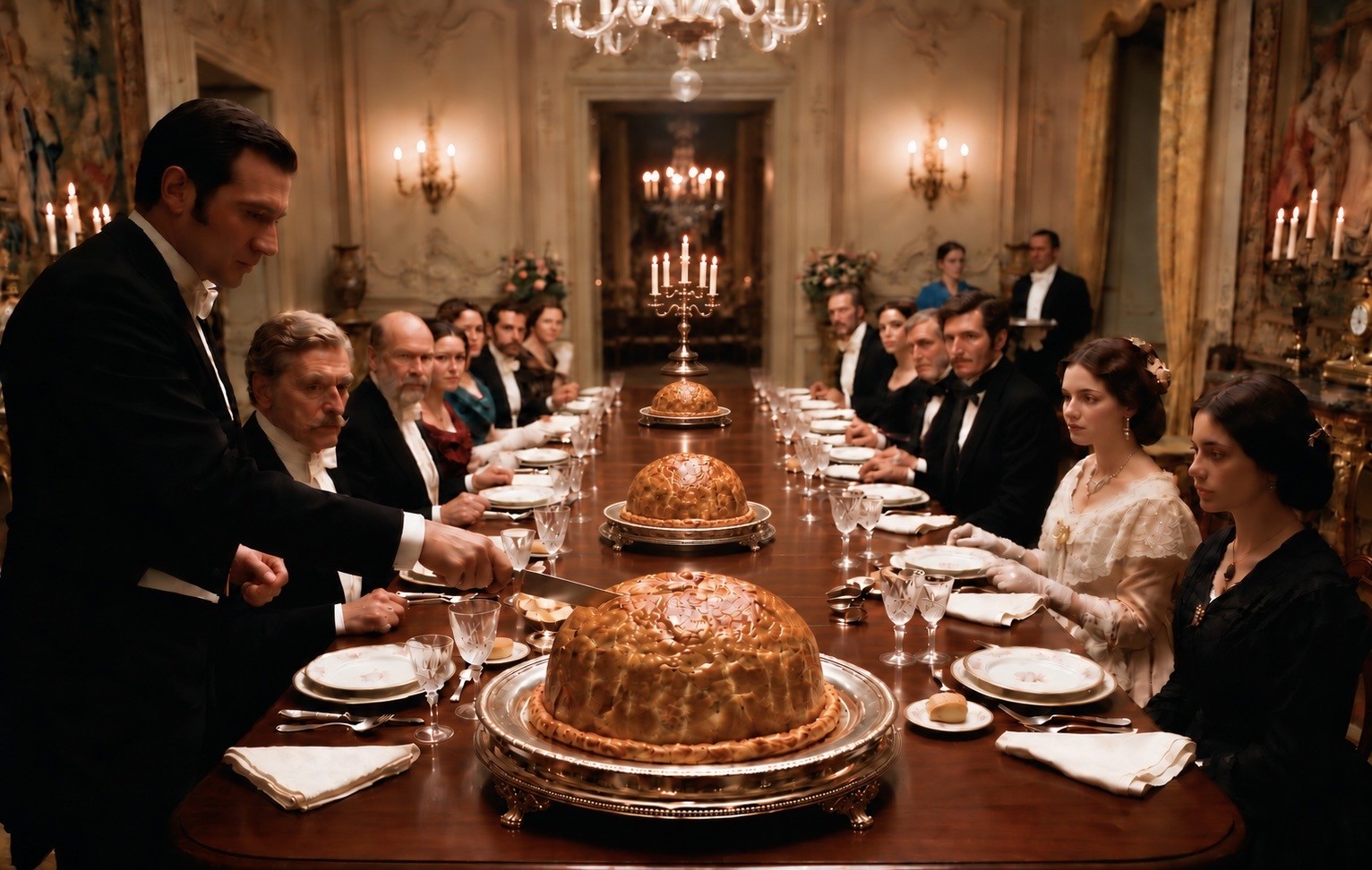
Here, one journeys with measured steps amid vineyards, farmsteads, Savoyard courts, and alpine valleys, akin to an ancient tongue that favors restraint over ostentation, precision over abundance, the evocative gesture over proclamation.
It is a geography of gossamer pasta sheets of vibrant gold, intimate household fillings, mountain tubers, high-altitude alpine cheeses, wild herbs, and roasted meats. A cuisine that never wholly severs the noble from the rustic: for in Piedmont, the feast day dish often harbors the thrifty soul of leftovers, while peasant fare, guided by dexterous hands, attains an almost sovereign composure.
The agnolotti form the foundational lexicon of this grammar. Squared, filled, ever-shifting from valley to valley and hearth to hearth, they chronicle a cuisine of ingenious conservation: roasts, braises, tender herbs, savoy cabbages, cheeses, and reductions preserved like sacred memories. There is no solitary Piedmontese agnolotto, but rather an entire constellation of recipes: the meats vary, the presence of greens alters, the delicate balance of the stuffing shifts, as do family customs. Each home safeguards its own cadence, with the filling at times embracing whatever bounty the previous table yielded.
In San Sebastiano da Po, this culinary lineage takes a gracious departure with the agnolotti di Pom Matan: an ancient local apple enters the filling alongside rustic sausage, butter, and a whisper of nutmeg. It is an unexpected, autumnal encounter, where sweetness does not surrender to dessert, but rather evokes agrarian memory, the perfume of the larder, and a fruit redeemed from oblivion. Enticing the palate, a vermilion coat of light tomato sauce crowns the dish.
Then arrive the plin, diminutive treasure chests of pasta sealed by that very pinch which, in the Piedmontese dialect, bestows their name. The name itself is an act: thumb and forefinger, an infinitesimal yet decisive pressure. Within lies meat and greens; without, the diaphanous pasta sheet that seeks not to conceal, but to revere and protect.
In the Langhe, Roero, and Monferrato, Piedmont is woven into golden strands with tajarin. These gossamer ribbons, rich with egg yolks, shine like sheets of dough kissed by the low autumn sun. They marry the pan drippings of a roast, rich game, savory chicken livers, or simply mountain butter and white truffle. Yet their true nobility resides in restraint: they do not beguile through excess, but through sheer precision—a fragile weave that transforms the fork into a miniature loom.
Higher still, where cookery becomes an act of endurance against the biting frost, dwell the cajettes of the Susa Valley—known in Rochemolles as cabiette. These are substantial dumplings shaped from raw grated potatoes, mingled with onions, toma cheese, and localized expressions that may welcome wild nettles or rye flour. They are mountain pasta in the most restorative and wholesome sense: laden with the honest weight of sustenance, melted butter, fresh milk, and crackling firewood.
In the Stura Valley, however, the culinary motion becomes an indentation: here emerge the crousét, petite forms shaped by drawing each morsel of dough under the thumb across the wooden board. In silhouette, they recall orecchiette, yet they speak another tongue: the Occitan eloquence of the Cuneo valleys. They are wedded to terroir-driven sauces, from bagna grisa to rustic condiments of braised leeks and potatoes, as though each hollow were sculpted not merely to cradle the sauce, but to harbor the saving warmth of the valley.
From Val Varaita descend the ravioles, which are not ravioli at all, but rather tapered, spindle-shaped dumplings of potato, flour, and Toumin dal Mel cheese. Hand-fashioned, rolled across the work surface into slender spindles—plump at the belly and tapered at the tips—and draped in butter and cream, or bathed in a molten cheese sauce, they become alpine velvet: a form of savory sweetness born of pastoral toil and pure milk.
A distinct register sounds through the Ossola gnocchi, wherein potatoes, pumpkin, and chestnut flour compose a dough tinted with the nuances of the forest floor. Here, the pasta seems to emerge directly from the cold season: bearing the fragrant soul of the winter pantry, dried chestnuts, alpine cheeses, and sage leaves crackling in melted butter. It is a cuisine that gathers the winter within and renders it amiably habitable. Their modern canon is credited to chef Sergio Bartolucci, who perfected the recipe in 1984: an enduring testament that even a relatively contemporary creation, rooted in indigenous provisions, can elevate itself to communal heritage.
Finally, across the province of Alessandria, the rabatón offer an herbaceous, pastoral expression of Piedmont. These elongated dumplings—fashioned from ricotta, Swiss chard, eggs, aged cheese, and breadcrumbs—are gently dredged in flour, poached, and often gilded au gratin. Their title derives from the motion of rabatà, the rolling of dough beneath open palms into slender cylinders: once more in Piedmont, the word is born of physical motion before it ever becomes a recipe.
Thus, Piedmontese pasta is never a mere repertoire, but an atlas of gestures. The pinch of the plin, the razor-thin cut of the tajarin, the indentation of the crousét, the tapered spindle of the ravioles, the gentle rolling of the rabatón. Each form preserves a fragment of landscape: the rolling hill, the ancestral court, the rugged valley, the ancient vineyard, the alpine pasture.