genesis
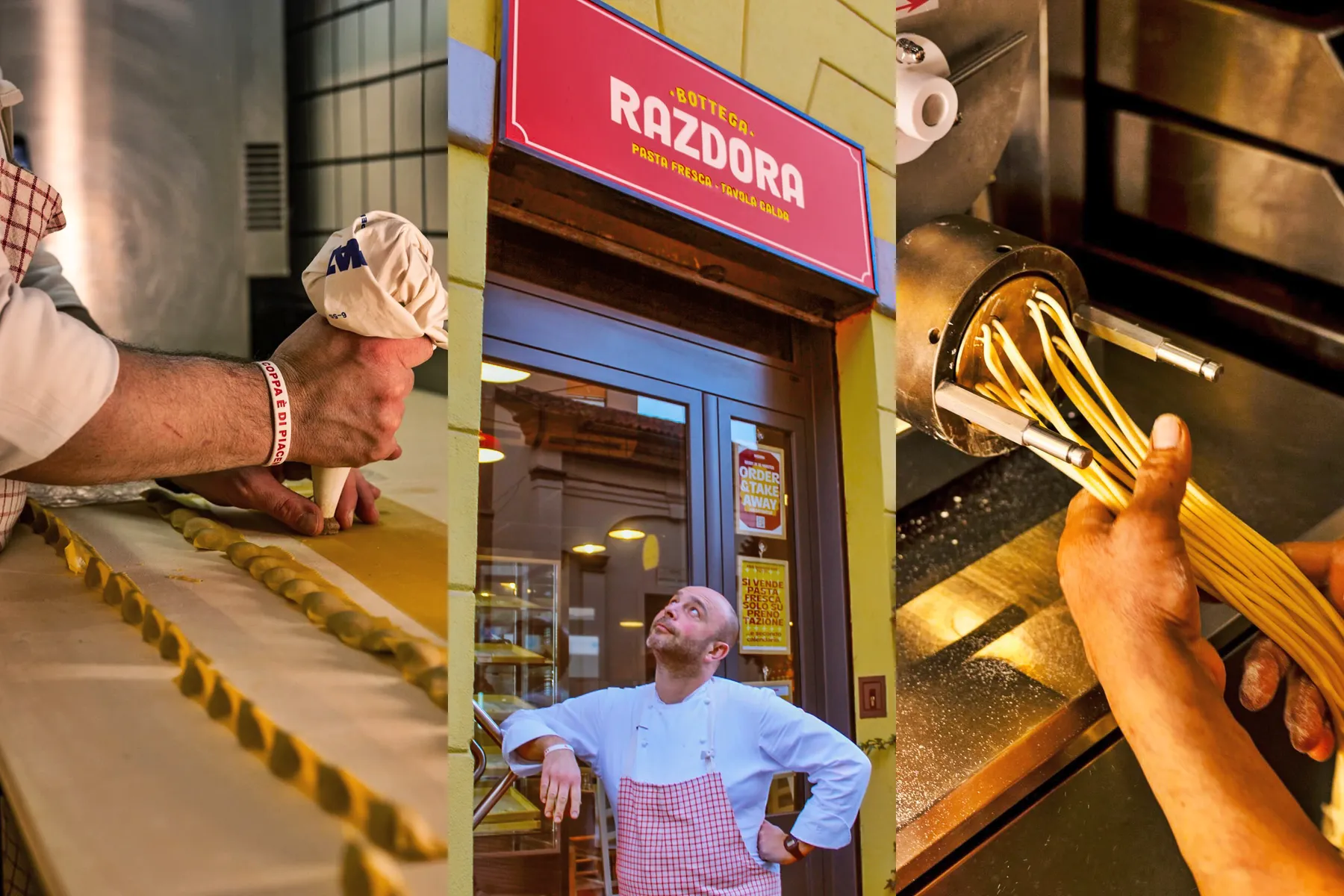
The story of Matteo Monti does not originate in a kitchen, but with a diploma in electrical engineering. He made his debut amidst the rigorous logic of circuits and systems—a detail which, laid to rest in the "drawer of possibilities," would reveal itself to be no mere detour, but the secret foundation of his entire philosophy.
The siren call of gastronomy was a deliberate choice. At the culinary school of Gazzano, Monti did not merely acquire a trade; he discovered a calling. His first step was an illumination: under the tutelage of Carla Aradelli at Ristorante Riva in Ponte dell'Olio, he discovered "the love for haute cuisine" and the profound complexity that elevates a dish to a "Grand Dish."
Thus began a pilgrimage through the most illustrious kitchens of Italy, a lineage that would shape the very architecture of his palate. For over four years, he tempered his discipline within the brigade of Filippo Chiappini Dattilo at Antica Osteria del Teatro. It was here that whispers reached him of a master who would redefine his entire perception: Paolo Lopriore.
The tales of Lopriore's cuisine were "striking." Monti departed for the Sienese hills, to the Certosa di Maggiano, entering the creative forge of one of Italy’s greatest innovators. Alongside Lopriore, his "gustatory dimension... expanded"; he learned to contemplate food on an intellectual plane, deciphering its "cognitive timbre." So profound was their communion that Monti would eventually succeed him in that very kitchen.
Yet, the journey was far from complete. Following a period of Nordic experimentation at Bagatelle in Oslo, came the encounter with another genius: Davide Scabin. At Combal.Zero, Monti remained for four years. If Lopriore had expanded his mind to the possibilities of flavour, Scabin taught him to master its form: under his guidance, flavour "re-innovated itself through textures."
After nearly twenty-five years at the zenith of the avant-garde, passing through the expressive freedom of Rebelot in Milan and an intense period of collaboration with Isa Mazzocchi at the restaurant La Palta, Monti felt a different calling. An existential necessity: "to have a place of my own, where I could live my life... to allow myself to be who I truly am."
On March 13, 2022, Razdora was born.
It is not a revolutionary temple of dining. It is a "tavola calda, a style of eatery now somewhat forgotten," a sanctuary of "warm, welcoming, and familial" atmosphere. The choice is radical. Monti gathers the intellectual rigor of Lopriore and the technical precision of Scabin, applying them not to a grand tasting menu, but to the liberation of fresh pasta, rich sauces, and artisanal take-away creations.
The very name on his sign is a manifesto: the "Razdora" was the matriarchal figure who "sustained the entire household and watched over all." Today, Matteo Monti is the new Razdora: an architect of taste who "thinks of the moment of gathering at the table," consecrating his vast expertise not to the altar of his own ego, but to the service of pure Pleasure and Community.
alchemy
At Razdora, the magic does not arise from special effects or secret receipts, but from an ironclad equation: raw ingredients, technique, and pure, indulgent desire. It is the culmination of a process that Chef Matteo Monti has perfected over more than twenty years spent in the avant-garde kitchens of Europe, distilling rigor and pleasure into a singular gesture.
The point of departure is but one: la Gola (the palate's desire).
“I create that which I myself would yearn to eat, that which tempts me,” Monti shares. Only if a dish conquers his own senses may it find its way to the counter of Razdora.
What might appear to be an instinctive choice is, in truth, a work of flavor engineering. Every preparation, every shape of fresh pasta, every sauce that conceptualizes in the laboratory undergoes an unyielding path before arriving in the boutique.
Each recipe is first and foremost contemplated: born within the chef’s mind, who selects the raw ingredients “according to the vision in his head.” It is then analyzed, deconstructed into its elemental forms to evaluate its balance, structure, and endurance. Next, it is conceived in its most functional manifestation—cooking, textures, and the times required for home regeneration. Only at the very last is it realized, once every step has been rigorously put to the test.
The aim of this method, the heritage of a career spent mastering textures and temperatures, is not to astonish at all costs, but to comfort. Every creation must be, in Monti's words, “easy to comprehend, to preserve, and to prepare,” most of all for those who will bring it home after a demanding day of labor.
The “Magie” (Magics) of Razdora are precisely these: fresh handmade pastas, readied sauces, culinary bases, and artisanal creations that encapsulate a profound technical mastery, dedicated to the service of daily simplicity. You will find no mere exercises of style here, but you will recognize authentic substance.
Within each vessel lies the meeting of two worlds: the rigor almost of an electrotechnical engineer, controlling every variable, and the warmth of the razdora, the Emilian matriarch who nurtures the well-being of the home. It is at this crossroads that the boutique finds its true identity.
The magic, in the end, is entirely here: to open a sauce, to plunge a delicate pasta into water, to perform an ordinary gesture and discover that this flavor was contemplated, analyzed, and conceived for a single, poetic purpose: to be, simply and without artifice, profoundly exquisite.
provenance
final heritages


genesis
The story of Matteo Monti does not originate in a kitchen, but with a diploma in electrical engineering. He made his debut amidst the rigorous logic of circuits and systems—a detail which, laid to rest in the "drawer of possibilities," would reveal itself to be no mere detour, but the secret foundation of his entire philosophy.
The siren call of gastronomy was a deliberate choice. At the culinary school of Gazzano, Monti did not merely acquire a trade; he discovered a calling. His first step was an illumination: under the tutelage of Carla Aradelli at Ristorante Riva in Ponte dell'Olio, he discovered "the love for haute cuisine" and the profound complexity that elevates a dish to a "Grand Dish."
Thus began a pilgrimage through the most illustrious kitchens of Italy, a lineage that would shape the very architecture of his palate. For over four years, he tempered his discipline within the brigade of Filippo Chiappini Dattilo at Antica Osteria del Teatro. It was here that whispers reached him of a master who would redefine his entire perception: Paolo Lopriore.
The tales of Lopriore's cuisine were "striking." Monti departed for the Sienese hills, to the Certosa di Maggiano, entering the creative forge of one of Italy’s greatest innovators. Alongside Lopriore, his "gustatory dimension... expanded"; he learned to contemplate food on an intellectual plane, deciphering its "cognitive timbre." So profound was their communion that Monti would eventually succeed him in that very kitchen.
Yet, the journey was far from complete. Following a period of Nordic experimentation at Bagatelle in Oslo, came the encounter with another genius: Davide Scabin. At Combal.Zero, Monti remained for four years. If Lopriore had expanded his mind to the possibilities of flavour, Scabin taught him to master its form: under his guidance, flavour "re-innovated itself through textures."
After nearly twenty-five years at the zenith of the avant-garde, passing through the expressive freedom of Rebelot in Milan and an intense period of collaboration with Isa Mazzocchi at the restaurant La Palta, Monti felt a different calling. An existential necessity: "to have a place of my own, where I could live my life... to allow myself to be who I truly am."
On March 13, 2022, Razdora was born.
It is not a revolutionary temple of dining. It is a "tavola calda, a style of eatery now somewhat forgotten," a sanctuary of "warm, welcoming, and familial" atmosphere. The choice is radical. Monti gathers the intellectual rigor of Lopriore and the technical precision of Scabin, applying them not to a grand tasting menu, but to the liberation of fresh pasta, rich sauces, and artisanal take-away creations.
The very name on his sign is a manifesto: the "Razdora" was the matriarchal figure who "sustained the entire household and watched over all." Today, Matteo Monti is the new Razdora: an architect of taste who "thinks of the moment of gathering at the table," consecrating his vast expertise not to the altar of his own ego, but to the service of pure Pleasure and Community.
alchemy
At Razdora, the magic does not arise from special effects or secret receipts, but from an ironclad equation: raw ingredients, technique, and pure, indulgent desire. It is the culmination of a process that Chef Matteo Monti has perfected over more than twenty years spent in the avant-garde kitchens of Europe, distilling rigor and pleasure into a singular gesture.
The point of departure is but one: la Gola (the palate's desire).
“I create that which I myself would yearn to eat, that which tempts me,” Monti shares. Only if a dish conquers his own senses may it find its way to the counter of Razdora.
What might appear to be an instinctive choice is, in truth, a work of flavor engineering. Every preparation, every shape of fresh pasta, every sauce that conceptualizes in the laboratory undergoes an unyielding path before arriving in the boutique.
Each recipe is first and foremost contemplated: born within the chef’s mind, who selects the raw ingredients “according to the vision in his head.” It is then analyzed, deconstructed into its elemental forms to evaluate its balance, structure, and endurance. Next, it is conceived in its most functional manifestation—cooking, textures, and the times required for home regeneration. Only at the very last is it realized, once every step has been rigorously put to the test.
The aim of this method, the heritage of a career spent mastering textures and temperatures, is not to astonish at all costs, but to comfort. Every creation must be, in Monti's words, “easy to comprehend, to preserve, and to prepare,” most of all for those who will bring it home after a demanding day of labor.
The “Magie” (Magics) of Razdora are precisely these: fresh handmade pastas, readied sauces, culinary bases, and artisanal creations that encapsulate a profound technical mastery, dedicated to the service of daily simplicity. You will find no mere exercises of style here, but you will recognize authentic substance.
Within each vessel lies the meeting of two worlds: the rigor almost of an electrotechnical engineer, controlling every variable, and the warmth of the razdora, the Emilian matriarch who nurtures the well-being of the home. It is at this crossroads that the boutique finds its true identity.
The magic, in the end, is entirely here: to open a sauce, to plunge a delicate pasta into water, to perform an ordinary gesture and discover that this flavor was contemplated, analyzed, and conceived for a single, poetic purpose: to be, simply and without artifice, profoundly exquisite.
provenance
final heritages
genesis
The story of Matteo Monti does not originate in a kitchen, but with a diploma in electrical engineering. He made his debut amidst the rigorous logic of circuits and systems—a detail which, laid to rest in the "drawer of possibilities," would reveal itself to be no mere detour, but the secret foundation of his entire philosophy.
The siren call of gastronomy was a deliberate choice. At the culinary school of Gazzano, Monti did not merely acquire a trade; he discovered a calling. His first step was an illumination: under the tutelage of Carla Aradelli at Ristorante Riva in Ponte dell'Olio, he discovered "the love for haute cuisine" and the profound complexity that elevates a dish to a "Grand Dish."
Thus began a pilgrimage through the most illustrious kitchens of Italy, a lineage that would shape the very architecture of his palate. For over four years, he tempered his discipline within the brigade of Filippo Chiappini Dattilo at Antica Osteria del Teatro. It was here that whispers reached him of a master who would redefine his entire perception: Paolo Lopriore.
The tales of Lopriore's cuisine were "striking." Monti departed for the Sienese hills, to the Certosa di Maggiano, entering the creative forge of one of Italy’s greatest innovators. Alongside Lopriore, his "gustatory dimension... expanded"; he learned to contemplate food on an intellectual plane, deciphering its "cognitive timbre." So profound was their communion that Monti would eventually succeed him in that very kitchen.
Yet, the journey was far from complete. Following a period of Nordic experimentation at Bagatelle in Oslo, came the encounter with another genius: Davide Scabin. At Combal.Zero, Monti remained for four years. If Lopriore had expanded his mind to the possibilities of flavour, Scabin taught him to master its form: under his guidance, flavour "re-innovated itself through textures."
After nearly twenty-five years at the zenith of the avant-garde, passing through the expressive freedom of Rebelot in Milan and an intense period of collaboration with Isa Mazzocchi at the restaurant La Palta, Monti felt a different calling. An existential necessity: "to have a place of my own, where I could live my life... to allow myself to be who I truly am."
On March 13, 2022, Razdora was born.
It is not a revolutionary temple of dining. It is a "tavola calda, a style of eatery now somewhat forgotten," a sanctuary of "warm, welcoming, and familial" atmosphere. The choice is radical. Monti gathers the intellectual rigor of Lopriore and the technical precision of Scabin, applying them not to a grand tasting menu, but to the liberation of fresh pasta, rich sauces, and artisanal take-away creations.
The very name on his sign is a manifesto: the "Razdora" was the matriarchal figure who "sustained the entire household and watched over all." Today, Matteo Monti is the new Razdora: an architect of taste who "thinks of the moment of gathering at the table," consecrating his vast expertise not to the altar of his own ego, but to the service of pure Pleasure and Community.
alchemy
At Razdora, the magic does not arise from special effects or secret receipts, but from an ironclad equation: raw ingredients, technique, and pure, indulgent desire. It is the culmination of a process that Chef Matteo Monti has perfected over more than twenty years spent in the avant-garde kitchens of Europe, distilling rigor and pleasure into a singular gesture.
The point of departure is but one: la Gola (the palate's desire).
“I create that which I myself would yearn to eat, that which tempts me,” Monti shares. Only if a dish conquers his own senses may it find its way to the counter of Razdora.
What might appear to be an instinctive choice is, in truth, a work of flavor engineering. Every preparation, every shape of fresh pasta, every sauce that conceptualizes in the laboratory undergoes an unyielding path before arriving in the boutique.
Each recipe is first and foremost contemplated: born within the chef’s mind, who selects the raw ingredients “according to the vision in his head.” It is then analyzed, deconstructed into its elemental forms to evaluate its balance, structure, and endurance. Next, it is conceived in its most functional manifestation—cooking, textures, and the times required for home regeneration. Only at the very last is it realized, once every step has been rigorously put to the test.
The aim of this method, the heritage of a career spent mastering textures and temperatures, is not to astonish at all costs, but to comfort. Every creation must be, in Monti's words, “easy to comprehend, to preserve, and to prepare,” most of all for those who will bring it home after a demanding day of labor.
The “Magie” (Magics) of Razdora are precisely these: fresh handmade pastas, readied sauces, culinary bases, and artisanal creations that encapsulate a profound technical mastery, dedicated to the service of daily simplicity. You will find no mere exercises of style here, but you will recognize authentic substance.
Within each vessel lies the meeting of two worlds: the rigor almost of an electrotechnical engineer, controlling every variable, and the warmth of the razdora, the Emilian matriarch who nurtures the well-being of the home. It is at this crossroads that the boutique finds its true identity.
The magic, in the end, is entirely here: to open a sauce, to plunge a delicate pasta into water, to perform an ordinary gesture and discover that this flavor was contemplated, analyzed, and conceived for a single, poetic purpose: to be, simply and without artifice, profoundly exquisite.