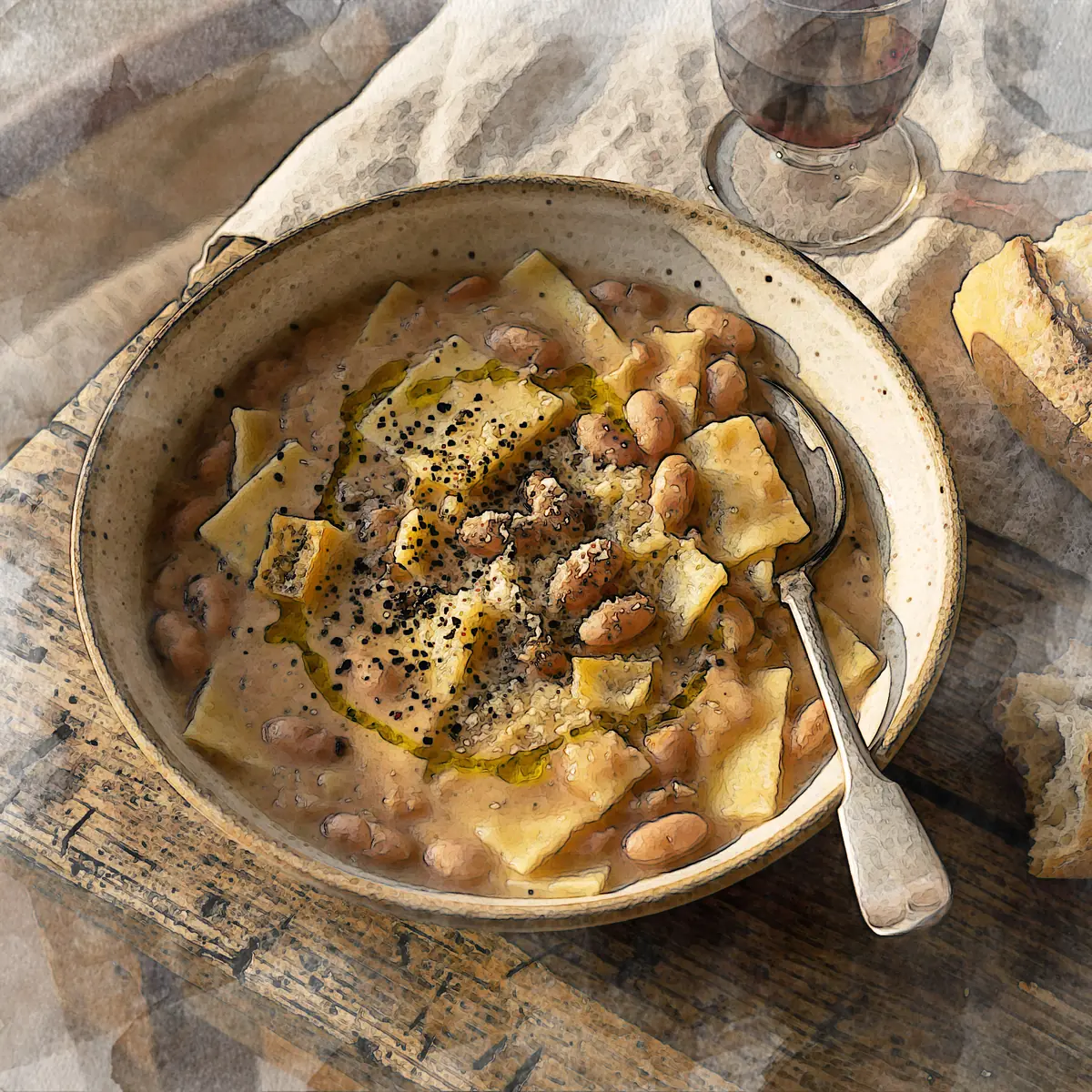
Sguazabarbuz
Borlotti Beans, Flour, Eggs, Lardo
A demanding pursuit
Emilia-Romagna
one hundred and sixty-five minutes
680 Kcal
Sguazabarbuz
Borlotti Beans, Flour, Eggs, Lardo
A demanding pursuit
Emilia-Romagna
one hundred and sixty-five minutes
680 Kcal
Sguazabarbuz
Borlotti Beans, Flour, Eggs, Lardo
A demanding pursuit
Emilia-Romagna
one hundred and sixty-five minutes
680 Kcal
GENESIS
Lo Sguazabarbuz is far more than a mere soup of pasta and beans; it is a lyrical chronicle of the Ferrarese land, a dish whose name is deeply rooted in the most visceral of peasant cultures. The dialectal term, onomatopoeic by nature, vividly evokes the very act of dining: to "splash" ("sguazzare") the "chin" ("barbuz"). The irregular and unpredictable form of the maltagliati, as they slipped from the spoon, rendered a few stray splashes almost inevitable—so much so that folk tradition recalls the custom of shielding one's garments with a large cloth tied at the neck, the buraas or bastina, transforming the meal into a moment of rustic and genuine conviviality. Within this dish, two souls of Este gastronomy converge: the ingenuity of resourcefulness and the opulence of the Court. Indeed, the maltagliati were born as "noble remnants." A celebrated Ferrarese legend whispers that tagliatelle were created in 1503, inspired by the golden tresses of Lucrezia Borgia. The scraps of dough left over from this and other refined preparations destined for the banquets of the Este, rather than being discarded, were sagely salvaged and immersed in a nourishing, substantiating broth. Such is the genesis of the maltagliato: a humble creation born from an act of haute cuisine. The other undisputed protagonist, the bean, represented the "meat of the poor," the vital source of protein for the working classes who could not afford livestock. The union of these two elements—the salvaged pasta and the nourishing legume—gives rise to a "technology of survival" that is, concurrently, a masterpiece of balance and flavor. The preparation that follows reflects this heritage, translating into precise gestures the necessity of crafting density, flavor, and sustenance from simple yet meticulously worked ingredients.
PORTIONS (FOR 4 PERSONS)
FOR THE FRESHLY KNEADED PASTA
Soft wheat flour "00"
Whole fresh eggs
300 g
3
FOR THE ELIXIR OF SEASONING
Dried Borlotti beans
Pounded lard
Golden onion
Tomato paste concentrate
Celery
Carrot
Onion
Garlic
Parsley
Rosemary
Pork rinds
Black pepper
Parmigiano Reggiano
50-80 g
1
1 tablespoon
1 stalk
1
1 small
to taste
to taste
to taste
to taste
to taste
to taste
CURATION
For the beans:
Should you choose dried beans, allow them to slumber in cold water for no fewer than 10 to 12 hours. Drain and transfer them to a spacious pot, drowning them anew in cold, unsalted water. Introduce the celery, carrot, and small onion in their whole, untouched forms. For those seeking a deeper tapestry of flavor and savory depth, add pork rinds or a prosciutto bone. Bring to a gentle boil and let simmer over the lowest flame for approximately 90 to 120 minutes, until the skins yield in tenderness. Season with salt only at the journey's end.
Once the beans have surrendered to the heat, ladle out one-half to two-thirds of these precious legumes and pass them through a food mill to obtain an elegant puree. Reintroduce this velvety cream into the cooking broth alongside the remaining whole beans, thus bestowing upon the soup a dense, luxurious creaminess.For the fresh pasta:
Upon a wooden board, shape the flour into a sacred well and crack the eggs into its heart. Knead with vigor and devotion for at least 10 minutes, coaxing it into a smooth, supple dough. Roll out the dough with a rolling pin, ensuring the sheet retains a certain rustic structure and bite. Cut the sheet with deliberate imperfection, fashioning irregular diamonds or squares varying in size from 2 to 5 cm.For the seasoning:
In a separate pan, gently melt the finely minced lard alongside the finely chopped onion and, should you desire, a touch of garlic or rosemary. When the onion becomes translucent and ethereal, introduce the tomato paste, dissolved in a small ladle of warm water. Let the flavors marry over a low flame for a few stolen minutes.Composition and final cooking:
Unite the fragrant soffritto with the pot of beans and bring the mixture to a gentle simmer. Cast the maltagliati directly into the rich broth and cook for a brief 3 to 4 minutes. Extinguish the flame, cover, and let the dish rest in quiet contemplation for 15 to 30 minutes, allowing the flavors to meld into perfect harmony.
aspiration
Serve this gentle pottage lukewarm, crowned with a thread of raw extra virgin olive oil and a whisper of freshly ground black pepper.
Bestow a generous dusting of grated Parmigiano Reggiano directly onto the plate to bring the masterpiece to completion.
Introduce well-cleansed rinds of Parmigiano during the simmering of the beans, yielding an added depth of savory grace.
Savor the rustic "montanara" variation by inviting dried chestnuts, softened in water, to join the beans in their quiet bath.
Should any precious broth remain, let it serve on the morrow to cradle and cook fresh, delicate passatelli.


GENESIS
Lo Sguazabarbuz is far more than a mere soup of pasta and beans; it is a lyrical chronicle of the Ferrarese land, a dish whose name is deeply rooted in the most visceral of peasant cultures. The dialectal term, onomatopoeic by nature, vividly evokes the very act of dining: to "splash" ("sguazzare") the "chin" ("barbuz"). The irregular and unpredictable form of the maltagliati, as they slipped from the spoon, rendered a few stray splashes almost inevitable—so much so that folk tradition recalls the custom of shielding one's garments with a large cloth tied at the neck, the buraas or bastina, transforming the meal into a moment of rustic and genuine conviviality. Within this dish, two souls of Este gastronomy converge: the ingenuity of resourcefulness and the opulence of the Court. Indeed, the maltagliati were born as "noble remnants." A celebrated Ferrarese legend whispers that tagliatelle were created in 1503, inspired by the golden tresses of Lucrezia Borgia. The scraps of dough left over from this and other refined preparations destined for the banquets of the Este, rather than being discarded, were sagely salvaged and immersed in a nourishing, substantiating broth. Such is the genesis of the maltagliato: a humble creation born from an act of haute cuisine. The other undisputed protagonist, the bean, represented the "meat of the poor," the vital source of protein for the working classes who could not afford livestock. The union of these two elements—the salvaged pasta and the nourishing legume—gives rise to a "technology of survival" that is, concurrently, a masterpiece of balance and flavor. The preparation that follows reflects this heritage, translating into precise gestures the necessity of crafting density, flavor, and sustenance from simple yet meticulously worked ingredients.
PORTIONS (FOR 4 PERSONS)
FOR THE FRESHLY KNEADED PASTA
Soft wheat flour "00"
Whole fresh eggs
300 g
3
FOR THE ELIXIR OF SEASONING
Dried Borlotti beans
Pounded lard
Golden onion
Tomato paste concentrate
Celery
Carrot
Onion
Garlic
Parsley
Rosemary
Pork rinds
Black pepper
Parmigiano Reggiano
50-80 g
1
1 tablespoon
1 stalk
1
1 small
to taste
to taste
to taste
to taste
to taste
to taste
CURATION
For the beans:
Should you choose dried beans, allow them to slumber in cold water for no fewer than 10 to 12 hours. Drain and transfer them to a spacious pot, drowning them anew in cold, unsalted water. Introduce the celery, carrot, and small onion in their whole, untouched forms. For those seeking a deeper tapestry of flavor and savory depth, add pork rinds or a prosciutto bone. Bring to a gentle boil and let simmer over the lowest flame for approximately 90 to 120 minutes, until the skins yield in tenderness. Season with salt only at the journey's end.
Once the beans have surrendered to the heat, ladle out one-half to two-thirds of these precious legumes and pass them through a food mill to obtain an elegant puree. Reintroduce this velvety cream into the cooking broth alongside the remaining whole beans, thus bestowing upon the soup a dense, luxurious creaminess.For the fresh pasta:
Upon a wooden board, shape the flour into a sacred well and crack the eggs into its heart. Knead with vigor and devotion for at least 10 minutes, coaxing it into a smooth, supple dough. Roll out the dough with a rolling pin, ensuring the sheet retains a certain rustic structure and bite. Cut the sheet with deliberate imperfection, fashioning irregular diamonds or squares varying in size from 2 to 5 cm.For the seasoning:
In a separate pan, gently melt the finely minced lard alongside the finely chopped onion and, should you desire, a touch of garlic or rosemary. When the onion becomes translucent and ethereal, introduce the tomato paste, dissolved in a small ladle of warm water. Let the flavors marry over a low flame for a few stolen minutes.Composition and final cooking:
Unite the fragrant soffritto with the pot of beans and bring the mixture to a gentle simmer. Cast the maltagliati directly into the rich broth and cook for a brief 3 to 4 minutes. Extinguish the flame, cover, and let the dish rest in quiet contemplation for 15 to 30 minutes, allowing the flavors to meld into perfect harmony.
aspiration
Serve this gentle pottage lukewarm, crowned with a thread of raw extra virgin olive oil and a whisper of freshly ground black pepper.
Bestow a generous dusting of grated Parmigiano Reggiano directly onto the plate to bring the masterpiece to completion.
Introduce well-cleansed rinds of Parmigiano during the simmering of the beans, yielding an added depth of savory grace.
Savor the rustic "montanara" variation by inviting dried chestnuts, softened in water, to join the beans in their quiet bath.
Should any precious broth remain, let it serve on the morrow to cradle and cook fresh, delicate passatelli.
latest culinary creations
GENESIS
Lo Sguazabarbuz is far more than a mere soup of pasta and beans; it is a lyrical chronicle of the Ferrarese land, a dish whose name is deeply rooted in the most visceral of peasant cultures. The dialectal term, onomatopoeic by nature, vividly evokes the very act of dining: to "splash" ("sguazzare") the "chin" ("barbuz"). The irregular and unpredictable form of the maltagliati, as they slipped from the spoon, rendered a few stray splashes almost inevitable—so much so that folk tradition recalls the custom of shielding one's garments with a large cloth tied at the neck, the buraas or bastina, transforming the meal into a moment of rustic and genuine conviviality. Within this dish, two souls of Este gastronomy converge: the ingenuity of resourcefulness and the opulence of the Court. Indeed, the maltagliati were born as "noble remnants." A celebrated Ferrarese legend whispers that tagliatelle were created in 1503, inspired by the golden tresses of Lucrezia Borgia. The scraps of dough left over from this and other refined preparations destined for the banquets of the Este, rather than being discarded, were sagely salvaged and immersed in a nourishing, substantiating broth. Such is the genesis of the maltagliato: a humble creation born from an act of haute cuisine. The other undisputed protagonist, the bean, represented the "meat of the poor," the vital source of protein for the working classes who could not afford livestock. The union of these two elements—the salvaged pasta and the nourishing legume—gives rise to a "technology of survival" that is, concurrently, a masterpiece of balance and flavor. The preparation that follows reflects this heritage, translating into precise gestures the necessity of crafting density, flavor, and sustenance from simple yet meticulously worked ingredients.
PORTIONS (FOR 4 PERSONS)
FOR THE FRESHLY KNEADED PASTA
Soft wheat flour "00"
Whole fresh eggs
300 g
3
FOR THE ELIXIR OF SEASONING
Dried Borlotti beans
Pounded lard
Golden onion
Tomato paste concentrate
Celery
Carrot
Onion
Garlic
Parsley
Rosemary
Pork rinds
Black pepper
Parmigiano Reggiano
50-80 g
1
1 tablespoon
1 stalk
1
1 small
to taste
to taste
to taste
to taste
to taste
to taste
CURATION
For the beans:
Should you choose dried beans, allow them to slumber in cold water for no fewer than 10 to 12 hours. Drain and transfer them to a spacious pot, drowning them anew in cold, unsalted water. Introduce the celery, carrot, and small onion in their whole, untouched forms. For those seeking a deeper tapestry of flavor and savory depth, add pork rinds or a prosciutto bone. Bring to a gentle boil and let simmer over the lowest flame for approximately 90 to 120 minutes, until the skins yield in tenderness. Season with salt only at the journey's end.
Once the beans have surrendered to the heat, ladle out one-half to two-thirds of these precious legumes and pass them through a food mill to obtain an elegant puree. Reintroduce this velvety cream into the cooking broth alongside the remaining whole beans, thus bestowing upon the soup a dense, luxurious creaminess.For the fresh pasta:
Upon a wooden board, shape the flour into a sacred well and crack the eggs into its heart. Knead with vigor and devotion for at least 10 minutes, coaxing it into a smooth, supple dough. Roll out the dough with a rolling pin, ensuring the sheet retains a certain rustic structure and bite. Cut the sheet with deliberate imperfection, fashioning irregular diamonds or squares varying in size from 2 to 5 cm.For the seasoning:
In a separate pan, gently melt the finely minced lard alongside the finely chopped onion and, should you desire, a touch of garlic or rosemary. When the onion becomes translucent and ethereal, introduce the tomato paste, dissolved in a small ladle of warm water. Let the flavors marry over a low flame for a few stolen minutes.Composition and final cooking:
Unite the fragrant soffritto with the pot of beans and bring the mixture to a gentle simmer. Cast the maltagliati directly into the rich broth and cook for a brief 3 to 4 minutes. Extinguish the flame, cover, and let the dish rest in quiet contemplation for 15 to 30 minutes, allowing the flavors to meld into perfect harmony.
aspiration
Serve this gentle pottage lukewarm, crowned with a thread of raw extra virgin olive oil and a whisper of freshly ground black pepper.
Bestow a generous dusting of grated Parmigiano Reggiano directly onto the plate to bring the masterpiece to completion.
Introduce well-cleansed rinds of Parmigiano during the simmering of the beans, yielding an added depth of savory grace.
Savor the rustic "montanara" variation by inviting dried chestnuts, softened in water, to join the beans in their quiet bath.
Should any precious broth remain, let it serve on the morrow to cradle and cook fresh, delicate passatelli.