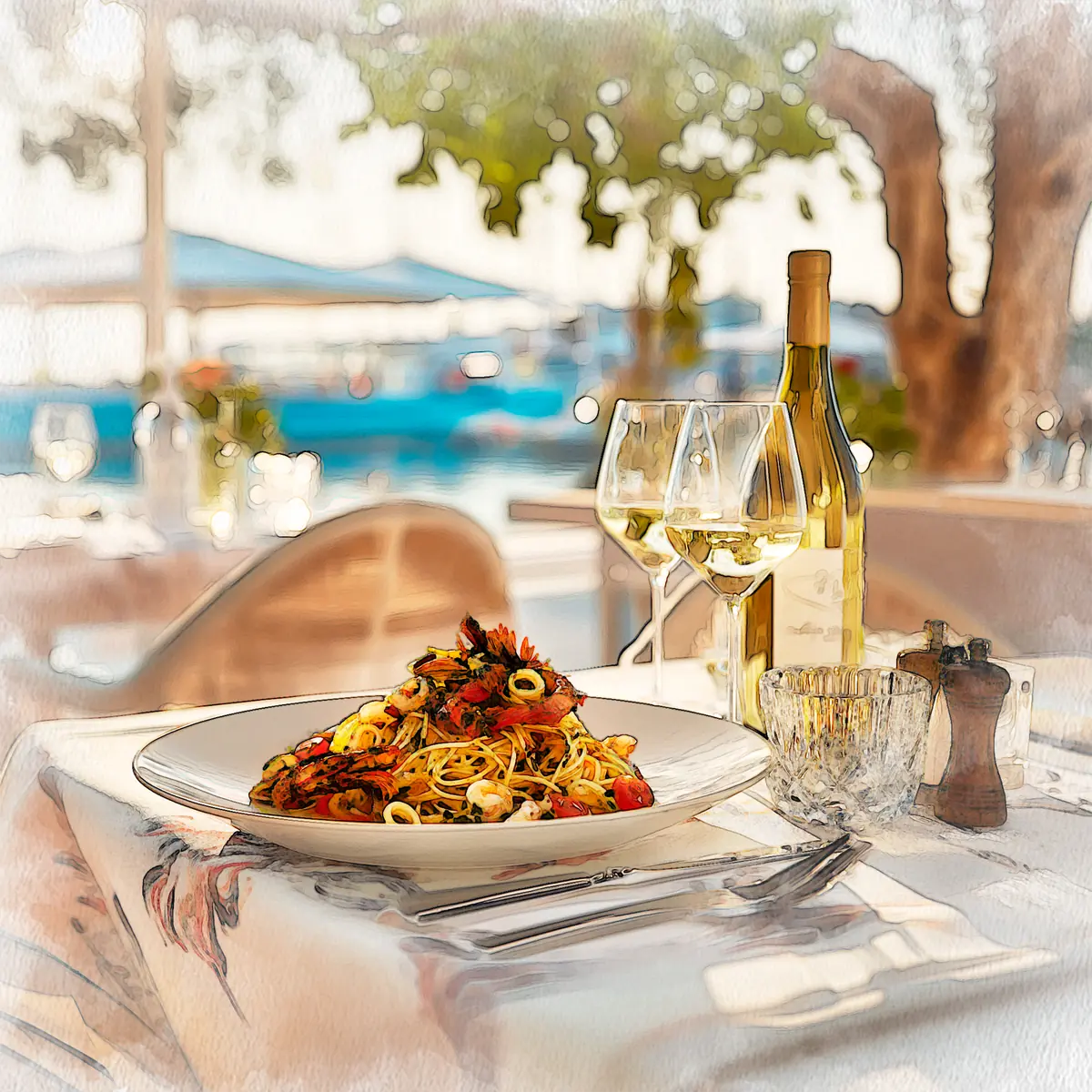
SPAGHETTI OF THE REEF
Mussels, True Clams, Squid, Langoustines, Cherry Tomatoes, Chili Pepper, White Wine, Parsley.
Moderate
Sicily
A forty-five minute journey
650 Kcal
SPAGHETTI OF THE REEF
Mussels, True Clams, Squid, Langoustines, Cherry Tomatoes, Chili Pepper, White Wine, Parsley.
Moderate
Sicily
A forty-five minute journey
650 Kcal
SPAGHETTI OF THE REEF
Mussels, True Clams, Squid, Langoustines, Cherry Tomatoes, Chili Pepper, White Wine, Parsley.
Moderate
Sicily
A forty-five minute journey
650 Kcal
GENESIS
Spaghetti allo scoglio stands as an iconic masterwork of Italian gastronomy, celebrated for its intense, pristine flavor that lineally evokes the poetic expanse of the sea. While its origin remains a subject of debate between Sicily and Campania, it is universally acknowledged that this dish is deeply anchored in the maritime heritage of the Italian coasts, birthed by the hands of Sicilian and Neapolitan fishermen.
Though spaghetti allo scoglio is revered today as a lavish and exquisite delicacy, its history whispers of far humbler origins. It is told that long ago, during epochs of scarcity and hardship, fishermen were compelled to fashion sustenance from the most rudimentary offerings of the sea. Legend has it that in the absence of bountiful shellfish or other ingredients, actual "scogli"—coastal rocks—were used to impart essence to the pasta. These fragments of stone, gathered along the shoreline, were adorned with sea moss and minuscule marine organisms; when heated in a pan with a thread of olive oil, they surrendered their profound sea-scented aromas. The dish was then completed with the addition of spaghetti, and once the sea's very soul had been infused, the stones were naturally cast aside.
With the passage of time and the elevation of coastal life, this archaic practice was abandoned. The dish evolved into the recipe we celebrate today, enriched with a luxurious array of marine treasures: mussels, clams, squid, prawns, and langoustines. Spaghetti allo scoglio, in the masterful form we savor now, triumphed particularly during the 1980s, establishing itself as a pinnacle of Mediterranean cuisine and an essential rite for those who revere the authentic, poetic flavors of the sea.
PORTIONS (FOR 4 PERSONS)
THE RECIPE
Spaghetti
Mussels
True clams
Squid
Grand scampi
Fresh cherry tomatoes
Garlic
Fresh chili pepper
Dry white wine
Extra virgin olive oil
Fresh parsley
Salt
Pepper
320 g
1 kg
1 kg
300 g
8
300 g
2 cloves
1
50 ml
to taste
to taste
to taste
to taste
CURATION
For the cleansing of the treasures of the sea:
Begin your culinary ritual by meticulously cleansing the bounty of the sea. For the clams, submerge them in a bath of cold, salted water (approximately 35 grams of salt per liter of water) for no less than two hours, renewing the water repeatedly to coax them into releasing their sandy residue. For the mussels, vigorously scrub their shells under running water, severing the fibrous byssus with a decisive gesture, and rub the shells clean of all impurities. Rinse the langoustines and squid with equal devotion. The langoustines must be divested of their dark intestinal vein, gently extracted with a toothpick by delicately lancing the back. As for the squid, eviscerate them, peel away their skin, and slice them into elegant rings.For the opening of the mussels and clams:
In a spacious pan, allow a clove of garlic to golden softly in a thread of extra virgin olive oil, accompanied by a fragment of chili pepper. Introduce the clams and immediately cover with a lid. Allow them to open over a lively flame for a few moments, gently shaking the pan from time to time. The instant they blossom open, gather them with a skimmer and set them aside. Filter the precious cooking nectar of the clams through a fine-mesh sieve lined with a clean cloth or parchment, reserving its essence. Repeat this identical ritual for the mussels, using another clove of garlic, oil, and chili pepper, and filter their liquid as well, marrying it with that of the clams. Shell the majority of the mussels and clams, preserving a chosen few in their shells to adorn the final composition.For the creation of the sauce:
In the very pan that hosted the clams, pour a thin veil of extra virgin olive oil and sear the squid rings over a vibrant flame for a brief pair of minutes. Deglaze them with white wine, allowing the alcohol to rise and vanish completely into the air. Remove the squid from the pan and set them aside.
Within this same flavorful foundation, add the cherry tomatoes, halved, and let them simmer for about 5 minutes, until they soften into sweetness. Pour in the filtered nectar of the mussels and clams, which will infuse the sauce with the profound, briny soul of the sea. Let it simmer gently for a few moments.
Now, introduce the langoustines to this simmering bath, cooking them for two minutes on each side until they blush with a beautiful rosy hue. Gently withdraw them and set them aside. Return the squid to the sauce.For the cooking and finishing of the pasta:
Meanwhile, bring a generous pot of salted water to a rolling boil to receive the spaghetti. Cook the pasta for two minutes less than the time prescribed on the package, for they shall complete their destiny directly within the sauce.
Drain the spaghetti while still firmly al dente and transfer them directly into the pan embracing the cherry tomato sauce and squid. Gently introduce the shelled and whole mussels and clams, folding them in with care. Finish cooking the pasta over a high flame for the remaining two minutes, splashing in a ladle of the starchy pasta water if needed, to coax the oils and juices into a luscious, velvety emulsion. At the very last, crown the pan with the langoustines. Extinguish the flame, scatter a generous handful of freshly minced parsley, and toss one final time to unite the flavors.
aspiration
For an added touch of sensory depth, you may introduce a whisper of freshly minced chili pepper into the sauce.
Should you desire a more profound intensity, you may gently toast the heads of the langoustines in a thread of oil before marrying them to the sauce, thus extracting the very essence of their maritime soul.
You may vary the treasures of the sea according to the rhythm of the seasons and the day's catch. Shrimps or squid make exquisite additions to this culinary canvas.


GENESIS
Spaghetti allo scoglio stands as an iconic masterwork of Italian gastronomy, celebrated for its intense, pristine flavor that lineally evokes the poetic expanse of the sea. While its origin remains a subject of debate between Sicily and Campania, it is universally acknowledged that this dish is deeply anchored in the maritime heritage of the Italian coasts, birthed by the hands of Sicilian and Neapolitan fishermen.
Though spaghetti allo scoglio is revered today as a lavish and exquisite delicacy, its history whispers of far humbler origins. It is told that long ago, during epochs of scarcity and hardship, fishermen were compelled to fashion sustenance from the most rudimentary offerings of the sea. Legend has it that in the absence of bountiful shellfish or other ingredients, actual "scogli"—coastal rocks—were used to impart essence to the pasta. These fragments of stone, gathered along the shoreline, were adorned with sea moss and minuscule marine organisms; when heated in a pan with a thread of olive oil, they surrendered their profound sea-scented aromas. The dish was then completed with the addition of spaghetti, and once the sea's very soul had been infused, the stones were naturally cast aside.
With the passage of time and the elevation of coastal life, this archaic practice was abandoned. The dish evolved into the recipe we celebrate today, enriched with a luxurious array of marine treasures: mussels, clams, squid, prawns, and langoustines. Spaghetti allo scoglio, in the masterful form we savor now, triumphed particularly during the 1980s, establishing itself as a pinnacle of Mediterranean cuisine and an essential rite for those who revere the authentic, poetic flavors of the sea.
PORTIONS (FOR 4 PERSONS)
THE RECIPE
Spaghetti
Mussels
True clams
Squid
Grand scampi
Fresh cherry tomatoes
Garlic
Fresh chili pepper
Dry white wine
Extra virgin olive oil
Fresh parsley
Salt
Pepper
320 g
1 kg
1 kg
300 g
8
300 g
2 cloves
1
50 ml
to taste
to taste
to taste
to taste
CURATION
For the cleansing of the treasures of the sea:
Begin your culinary ritual by meticulously cleansing the bounty of the sea. For the clams, submerge them in a bath of cold, salted water (approximately 35 grams of salt per liter of water) for no less than two hours, renewing the water repeatedly to coax them into releasing their sandy residue. For the mussels, vigorously scrub their shells under running water, severing the fibrous byssus with a decisive gesture, and rub the shells clean of all impurities. Rinse the langoustines and squid with equal devotion. The langoustines must be divested of their dark intestinal vein, gently extracted with a toothpick by delicately lancing the back. As for the squid, eviscerate them, peel away their skin, and slice them into elegant rings.For the opening of the mussels and clams:
In a spacious pan, allow a clove of garlic to golden softly in a thread of extra virgin olive oil, accompanied by a fragment of chili pepper. Introduce the clams and immediately cover with a lid. Allow them to open over a lively flame for a few moments, gently shaking the pan from time to time. The instant they blossom open, gather them with a skimmer and set them aside. Filter the precious cooking nectar of the clams through a fine-mesh sieve lined with a clean cloth or parchment, reserving its essence. Repeat this identical ritual for the mussels, using another clove of garlic, oil, and chili pepper, and filter their liquid as well, marrying it with that of the clams. Shell the majority of the mussels and clams, preserving a chosen few in their shells to adorn the final composition.For the creation of the sauce:
In the very pan that hosted the clams, pour a thin veil of extra virgin olive oil and sear the squid rings over a vibrant flame for a brief pair of minutes. Deglaze them with white wine, allowing the alcohol to rise and vanish completely into the air. Remove the squid from the pan and set them aside.
Within this same flavorful foundation, add the cherry tomatoes, halved, and let them simmer for about 5 minutes, until they soften into sweetness. Pour in the filtered nectar of the mussels and clams, which will infuse the sauce with the profound, briny soul of the sea. Let it simmer gently for a few moments.
Now, introduce the langoustines to this simmering bath, cooking them for two minutes on each side until they blush with a beautiful rosy hue. Gently withdraw them and set them aside. Return the squid to the sauce.For the cooking and finishing of the pasta:
Meanwhile, bring a generous pot of salted water to a rolling boil to receive the spaghetti. Cook the pasta for two minutes less than the time prescribed on the package, for they shall complete their destiny directly within the sauce.
Drain the spaghetti while still firmly al dente and transfer them directly into the pan embracing the cherry tomato sauce and squid. Gently introduce the shelled and whole mussels and clams, folding them in with care. Finish cooking the pasta over a high flame for the remaining two minutes, splashing in a ladle of the starchy pasta water if needed, to coax the oils and juices into a luscious, velvety emulsion. At the very last, crown the pan with the langoustines. Extinguish the flame, scatter a generous handful of freshly minced parsley, and toss one final time to unite the flavors.
aspiration
For an added touch of sensory depth, you may introduce a whisper of freshly minced chili pepper into the sauce.
Should you desire a more profound intensity, you may gently toast the heads of the langoustines in a thread of oil before marrying them to the sauce, thus extracting the very essence of their maritime soul.
You may vary the treasures of the sea according to the rhythm of the seasons and the day's catch. Shrimps or squid make exquisite additions to this culinary canvas.
latest culinary creations
GENESIS
Spaghetti allo scoglio stands as an iconic masterwork of Italian gastronomy, celebrated for its intense, pristine flavor that lineally evokes the poetic expanse of the sea. While its origin remains a subject of debate between Sicily and Campania, it is universally acknowledged that this dish is deeply anchored in the maritime heritage of the Italian coasts, birthed by the hands of Sicilian and Neapolitan fishermen.
Though spaghetti allo scoglio is revered today as a lavish and exquisite delicacy, its history whispers of far humbler origins. It is told that long ago, during epochs of scarcity and hardship, fishermen were compelled to fashion sustenance from the most rudimentary offerings of the sea. Legend has it that in the absence of bountiful shellfish or other ingredients, actual "scogli"—coastal rocks—were used to impart essence to the pasta. These fragments of stone, gathered along the shoreline, were adorned with sea moss and minuscule marine organisms; when heated in a pan with a thread of olive oil, they surrendered their profound sea-scented aromas. The dish was then completed with the addition of spaghetti, and once the sea's very soul had been infused, the stones were naturally cast aside.
With the passage of time and the elevation of coastal life, this archaic practice was abandoned. The dish evolved into the recipe we celebrate today, enriched with a luxurious array of marine treasures: mussels, clams, squid, prawns, and langoustines. Spaghetti allo scoglio, in the masterful form we savor now, triumphed particularly during the 1980s, establishing itself as a pinnacle of Mediterranean cuisine and an essential rite for those who revere the authentic, poetic flavors of the sea.
PORTIONS (FOR 4 PERSONS)
THE RECIPE
Spaghetti
Mussels
True clams
Squid
Grand scampi
Fresh cherry tomatoes
Garlic
Fresh chili pepper
Dry white wine
Extra virgin olive oil
Fresh parsley
Salt
Pepper
320 g
1 kg
1 kg
300 g
8
300 g
2 cloves
1
50 ml
to taste
to taste
to taste
to taste
CURATION
For the cleansing of the treasures of the sea:
Begin your culinary ritual by meticulously cleansing the bounty of the sea. For the clams, submerge them in a bath of cold, salted water (approximately 35 grams of salt per liter of water) for no less than two hours, renewing the water repeatedly to coax them into releasing their sandy residue. For the mussels, vigorously scrub their shells under running water, severing the fibrous byssus with a decisive gesture, and rub the shells clean of all impurities. Rinse the langoustines and squid with equal devotion. The langoustines must be divested of their dark intestinal vein, gently extracted with a toothpick by delicately lancing the back. As for the squid, eviscerate them, peel away their skin, and slice them into elegant rings.For the opening of the mussels and clams:
In a spacious pan, allow a clove of garlic to golden softly in a thread of extra virgin olive oil, accompanied by a fragment of chili pepper. Introduce the clams and immediately cover with a lid. Allow them to open over a lively flame for a few moments, gently shaking the pan from time to time. The instant they blossom open, gather them with a skimmer and set them aside. Filter the precious cooking nectar of the clams through a fine-mesh sieve lined with a clean cloth or parchment, reserving its essence. Repeat this identical ritual for the mussels, using another clove of garlic, oil, and chili pepper, and filter their liquid as well, marrying it with that of the clams. Shell the majority of the mussels and clams, preserving a chosen few in their shells to adorn the final composition.For the creation of the sauce:
In the very pan that hosted the clams, pour a thin veil of extra virgin olive oil and sear the squid rings over a vibrant flame for a brief pair of minutes. Deglaze them with white wine, allowing the alcohol to rise and vanish completely into the air. Remove the squid from the pan and set them aside.
Within this same flavorful foundation, add the cherry tomatoes, halved, and let them simmer for about 5 minutes, until they soften into sweetness. Pour in the filtered nectar of the mussels and clams, which will infuse the sauce with the profound, briny soul of the sea. Let it simmer gently for a few moments.
Now, introduce the langoustines to this simmering bath, cooking them for two minutes on each side until they blush with a beautiful rosy hue. Gently withdraw them and set them aside. Return the squid to the sauce.For the cooking and finishing of the pasta:
Meanwhile, bring a generous pot of salted water to a rolling boil to receive the spaghetti. Cook the pasta for two minutes less than the time prescribed on the package, for they shall complete their destiny directly within the sauce.
Drain the spaghetti while still firmly al dente and transfer them directly into the pan embracing the cherry tomato sauce and squid. Gently introduce the shelled and whole mussels and clams, folding them in with care. Finish cooking the pasta over a high flame for the remaining two minutes, splashing in a ladle of the starchy pasta water if needed, to coax the oils and juices into a luscious, velvety emulsion. At the very last, crown the pan with the langoustines. Extinguish the flame, scatter a generous handful of freshly minced parsley, and toss one final time to unite the flavors.
aspiration
For an added touch of sensory depth, you may introduce a whisper of freshly minced chili pepper into the sauce.
Should you desire a more profound intensity, you may gently toast the heads of the langoustines in a thread of oil before marrying them to the sauce, thus extracting the very essence of their maritime soul.
You may vary the treasures of the sea according to the rhythm of the seasons and the day's catch. Shrimps or squid make exquisite additions to this culinary canvas.