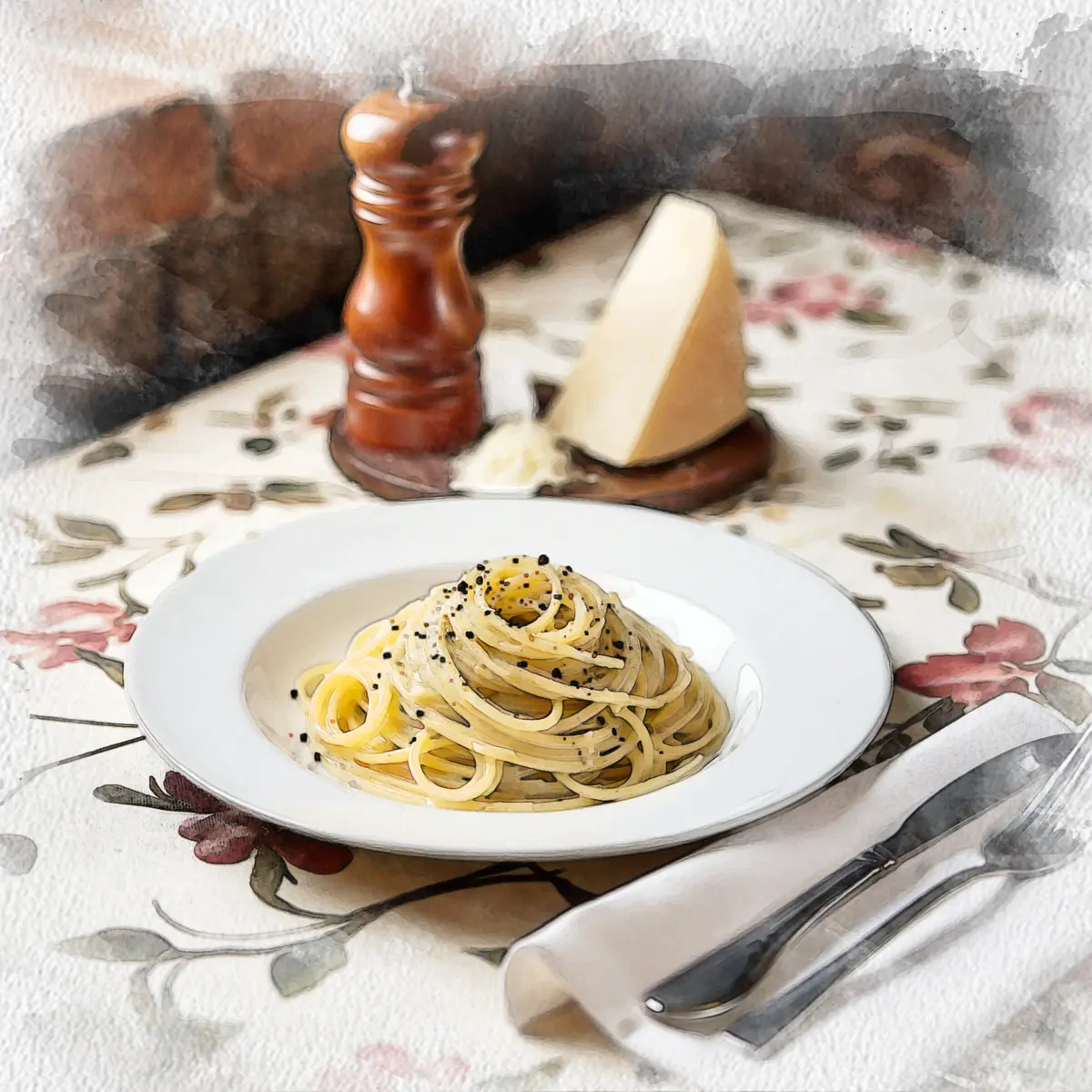
SPAGHETTI CACIO E PEPE
Pecorino Romano, black pepper.
Effortless
Lazio
20 minutes
750 Calories
SPAGHETTI CACIO E PEPE
Pecorino Romano, black pepper.
Effortless
Lazio
20 minutes
750 Calories
SPAGHETTI CACIO E PEPE
Pecorino Romano, black pepper.
Effortless
Lazio
20 minutes
750 Calories
GENESIS
The chronicle of Cacio e Pepe traces its origin back to the pastoral and peasant heritage of the Roman countryside. Envision shepherds who, during their arduous seasonal migrations, traversed the land with meager and rustic provisions that required durability and ease of transport. What, then, was never absent from their saddlebags? Dried pasta, aged Pecorino, and black peppercorns. These three elements formed the foundation of a warm, nourishing, and comforting repast, rich in sustenance to withstand the biting cold and relentless labor.
Pecorino, a cheese crafted from sheep's milk, was sublime in its purpose, as its maturation ensured preservation over vast stretches of time. Black pepper, beyond imparting a spirited vigor of flavor, was believed to shield the soul from freezing during long vigils beneath the open sky. Semolina pasta, by its very nature, provided a resilient source of enduring sustenance.
The sublime artistry of Cacio e Pepe resides in its absolute purity. It is not a dish designed to conceal flavor; rather, it exalts the pristine quality of its sparse components. It demands no soffritto, no tomato, nor complex sauces. The alchemy unfolds within the pan, through a precise marriage of the starch released by the boiling pasta, the finely grated Pecorino, and the freshly crushed black pepper.
Yet, despite its minimalist grace, Cacio e Pepe is revered as a culinary masterpiece demanding refined technique to achieve perfection. The peril lies in creating a coagulated, stringy cheese rather than a velvet, enveloping cream.
PORTIONS (FOR 4 PERSONS)
THE RECIPE
Spaghetti
Pecorino Romano PDO
Black peppercorns
320 g
200-250 g
a.r.
CURATION
For the Seasoning:
First, prepare the pepper, that dark and aromatic jewel. Gather the whole black peppercorns and crush them coarsely within a mortar. Should you lack this ancient vessel, a pepper mill may suffice, or you may cradle them between sheets of parchment paper, crushing them with a meat mallet or the heavy base of a glass. Crucially, eschew pre-ground pepper, for it lacks the vital essence and fiery spirit of the freshly crushed spice.
Place this freshly struck pepper into a grand skillet—capacious enough to later welcome the pasta—and gently toast it over medium heat for brief moments. This ritual is paramount, as the heat coaxes forth the pepper’s precious essential oils, intensifying its fragrant perfume. Tend to it closely, lest it burn.
Meanwhile, finely grate the Pecorino Romano, an ancient cheese rich with heritage. Its texture must be fine as snow to ensure a seamless transformation into cream. Place the grated cheese into a bowl.
Introduce a ladle or two of the starchy pasta-cooking water (which should be warm and vital, yet not boiling—allow it a moment's rest after drawing) to the waiting Pecorino. Whisk continuously with vigor until a smooth, velvety paste emerges, free of any imperfections. If required, invite more water, spoonful by spoonful, until the texture resembles a rich, dense batter.For the Pasta and the Mantecatura:
Bring a generous pot of salted water to a spirited boil. Regard the inherent sappiness of the Pecorino, and temper your use of salt in the water accordingly.
As the water cascades in a boil, plunge the spaghetti into its depths. Cook, yet draw them from the water two minutes before their appointed time. It is vital that the pasta remains defiant to the bite, truly al dente.
As the pasta nears its moment, revive the gentle flame beneath the skillet of toasted pepper.
Transfer the pasta directly into the peppered skillet, using tongs, retaining some of its starchy cooking water, which is the very soul of the dish’s eventual creaminess.
Immediately bestow the prepared cream of Pecorino upon the hot pasta.
Now begins the sacred rite: the mantecatura! Remove the skillet from the flame—the residual warmth is all that is required—and toss the pasta with swift, ceaseless motion. The starch of the grain marrying the Pecorino and the remaining water will render a sublime, velvety emulsion. If destoned, offer a touch more cooking water, ladle by ladle, to achieve a coating that is rich and enveloping. Stir until the cheese yields entirely, coating each strand of spaghetti in a lustrous, harmonized sauce.
Serve your Cacio e Pepe immediately, piping hot, crowned with a final, generous shower of freshly crushed pepper over each plate.
aspiration
Ever employ Pecorino Romano DOP of noble quality and seasoned maturation: it truly imparts a sublime distinction to the flavor and the ultimate success of the cream.
Crush the peppercorns at the poetic moment of creation: their perfume and piquant character will be beyond compare.
The temperature of the cooking water married to the Pecorino is of vital import: should it be too boiling, it may "fracture" the cheese. Await a fleeting moment before pouring.
Should the cream appear overly dense during the sacred mantecatura, gently bestow a touch more of the precious cooking water.


GENESIS
The chronicle of Cacio e Pepe traces its origin back to the pastoral and peasant heritage of the Roman countryside. Envision shepherds who, during their arduous seasonal migrations, traversed the land with meager and rustic provisions that required durability and ease of transport. What, then, was never absent from their saddlebags? Dried pasta, aged Pecorino, and black peppercorns. These three elements formed the foundation of a warm, nourishing, and comforting repast, rich in sustenance to withstand the biting cold and relentless labor.
Pecorino, a cheese crafted from sheep's milk, was sublime in its purpose, as its maturation ensured preservation over vast stretches of time. Black pepper, beyond imparting a spirited vigor of flavor, was believed to shield the soul from freezing during long vigils beneath the open sky. Semolina pasta, by its very nature, provided a resilient source of enduring sustenance.
The sublime artistry of Cacio e Pepe resides in its absolute purity. It is not a dish designed to conceal flavor; rather, it exalts the pristine quality of its sparse components. It demands no soffritto, no tomato, nor complex sauces. The alchemy unfolds within the pan, through a precise marriage of the starch released by the boiling pasta, the finely grated Pecorino, and the freshly crushed black pepper.
Yet, despite its minimalist grace, Cacio e Pepe is revered as a culinary masterpiece demanding refined technique to achieve perfection. The peril lies in creating a coagulated, stringy cheese rather than a velvet, enveloping cream.
PORTIONS (FOR 4 PERSONS)
THE RECIPE
Spaghetti
Pecorino Romano PDO
Black peppercorns
320 g
200-250 g
a.r.
CURATION
For the Seasoning:
First, prepare the pepper, that dark and aromatic jewel. Gather the whole black peppercorns and crush them coarsely within a mortar. Should you lack this ancient vessel, a pepper mill may suffice, or you may cradle them between sheets of parchment paper, crushing them with a meat mallet or the heavy base of a glass. Crucially, eschew pre-ground pepper, for it lacks the vital essence and fiery spirit of the freshly crushed spice.
Place this freshly struck pepper into a grand skillet—capacious enough to later welcome the pasta—and gently toast it over medium heat for brief moments. This ritual is paramount, as the heat coaxes forth the pepper’s precious essential oils, intensifying its fragrant perfume. Tend to it closely, lest it burn.
Meanwhile, finely grate the Pecorino Romano, an ancient cheese rich with heritage. Its texture must be fine as snow to ensure a seamless transformation into cream. Place the grated cheese into a bowl.
Introduce a ladle or two of the starchy pasta-cooking water (which should be warm and vital, yet not boiling—allow it a moment's rest after drawing) to the waiting Pecorino. Whisk continuously with vigor until a smooth, velvety paste emerges, free of any imperfections. If required, invite more water, spoonful by spoonful, until the texture resembles a rich, dense batter.For the Pasta and the Mantecatura:
Bring a generous pot of salted water to a spirited boil. Regard the inherent sappiness of the Pecorino, and temper your use of salt in the water accordingly.
As the water cascades in a boil, plunge the spaghetti into its depths. Cook, yet draw them from the water two minutes before their appointed time. It is vital that the pasta remains defiant to the bite, truly al dente.
As the pasta nears its moment, revive the gentle flame beneath the skillet of toasted pepper.
Transfer the pasta directly into the peppered skillet, using tongs, retaining some of its starchy cooking water, which is the very soul of the dish’s eventual creaminess.
Immediately bestow the prepared cream of Pecorino upon the hot pasta.
Now begins the sacred rite: the mantecatura! Remove the skillet from the flame—the residual warmth is all that is required—and toss the pasta with swift, ceaseless motion. The starch of the grain marrying the Pecorino and the remaining water will render a sublime, velvety emulsion. If destoned, offer a touch more cooking water, ladle by ladle, to achieve a coating that is rich and enveloping. Stir until the cheese yields entirely, coating each strand of spaghetti in a lustrous, harmonized sauce.
Serve your Cacio e Pepe immediately, piping hot, crowned with a final, generous shower of freshly crushed pepper over each plate.
aspiration
Ever employ Pecorino Romano DOP of noble quality and seasoned maturation: it truly imparts a sublime distinction to the flavor and the ultimate success of the cream.
Crush the peppercorns at the poetic moment of creation: their perfume and piquant character will be beyond compare.
The temperature of the cooking water married to the Pecorino is of vital import: should it be too boiling, it may "fracture" the cheese. Await a fleeting moment before pouring.
Should the cream appear overly dense during the sacred mantecatura, gently bestow a touch more of the precious cooking water.
latest culinary creations
GENESIS
The chronicle of Cacio e Pepe traces its origin back to the pastoral and peasant heritage of the Roman countryside. Envision shepherds who, during their arduous seasonal migrations, traversed the land with meager and rustic provisions that required durability and ease of transport. What, then, was never absent from their saddlebags? Dried pasta, aged Pecorino, and black peppercorns. These three elements formed the foundation of a warm, nourishing, and comforting repast, rich in sustenance to withstand the biting cold and relentless labor.
Pecorino, a cheese crafted from sheep's milk, was sublime in its purpose, as its maturation ensured preservation over vast stretches of time. Black pepper, beyond imparting a spirited vigor of flavor, was believed to shield the soul from freezing during long vigils beneath the open sky. Semolina pasta, by its very nature, provided a resilient source of enduring sustenance.
The sublime artistry of Cacio e Pepe resides in its absolute purity. It is not a dish designed to conceal flavor; rather, it exalts the pristine quality of its sparse components. It demands no soffritto, no tomato, nor complex sauces. The alchemy unfolds within the pan, through a precise marriage of the starch released by the boiling pasta, the finely grated Pecorino, and the freshly crushed black pepper.
Yet, despite its minimalist grace, Cacio e Pepe is revered as a culinary masterpiece demanding refined technique to achieve perfection. The peril lies in creating a coagulated, stringy cheese rather than a velvet, enveloping cream.
PORTIONS (FOR 4 PERSONS)
THE RECIPE
Spaghetti
Pecorino Romano PDO
Black peppercorns
320 g
200-250 g
a.r.
CURATION
For the Seasoning:
First, prepare the pepper, that dark and aromatic jewel. Gather the whole black peppercorns and crush them coarsely within a mortar. Should you lack this ancient vessel, a pepper mill may suffice, or you may cradle them between sheets of parchment paper, crushing them with a meat mallet or the heavy base of a glass. Crucially, eschew pre-ground pepper, for it lacks the vital essence and fiery spirit of the freshly crushed spice.
Place this freshly struck pepper into a grand skillet—capacious enough to later welcome the pasta—and gently toast it over medium heat for brief moments. This ritual is paramount, as the heat coaxes forth the pepper’s precious essential oils, intensifying its fragrant perfume. Tend to it closely, lest it burn.
Meanwhile, finely grate the Pecorino Romano, an ancient cheese rich with heritage. Its texture must be fine as snow to ensure a seamless transformation into cream. Place the grated cheese into a bowl.
Introduce a ladle or two of the starchy pasta-cooking water (which should be warm and vital, yet not boiling—allow it a moment's rest after drawing) to the waiting Pecorino. Whisk continuously with vigor until a smooth, velvety paste emerges, free of any imperfections. If required, invite more water, spoonful by spoonful, until the texture resembles a rich, dense batter.For the Pasta and the Mantecatura:
Bring a generous pot of salted water to a spirited boil. Regard the inherent sappiness of the Pecorino, and temper your use of salt in the water accordingly.
As the water cascades in a boil, plunge the spaghetti into its depths. Cook, yet draw them from the water two minutes before their appointed time. It is vital that the pasta remains defiant to the bite, truly al dente.
As the pasta nears its moment, revive the gentle flame beneath the skillet of toasted pepper.
Transfer the pasta directly into the peppered skillet, using tongs, retaining some of its starchy cooking water, which is the very soul of the dish’s eventual creaminess.
Immediately bestow the prepared cream of Pecorino upon the hot pasta.
Now begins the sacred rite: the mantecatura! Remove the skillet from the flame—the residual warmth is all that is required—and toss the pasta with swift, ceaseless motion. The starch of the grain marrying the Pecorino and the remaining water will render a sublime, velvety emulsion. If destoned, offer a touch more cooking water, ladle by ladle, to achieve a coating that is rich and enveloping. Stir until the cheese yields entirely, coating each strand of spaghetti in a lustrous, harmonized sauce.
Serve your Cacio e Pepe immediately, piping hot, crowned with a final, generous shower of freshly crushed pepper over each plate.
aspiration
Ever employ Pecorino Romano DOP of noble quality and seasoned maturation: it truly imparts a sublime distinction to the flavor and the ultimate success of the cream.
Crush the peppercorns at the poetic moment of creation: their perfume and piquant character will be beyond compare.
The temperature of the cooking water married to the Pecorino is of vital import: should it be too boiling, it may "fracture" the cheese. Await a fleeting moment before pouring.
Should the cream appear overly dense during the sacred mantecatura, gently bestow a touch more of the precious cooking water.