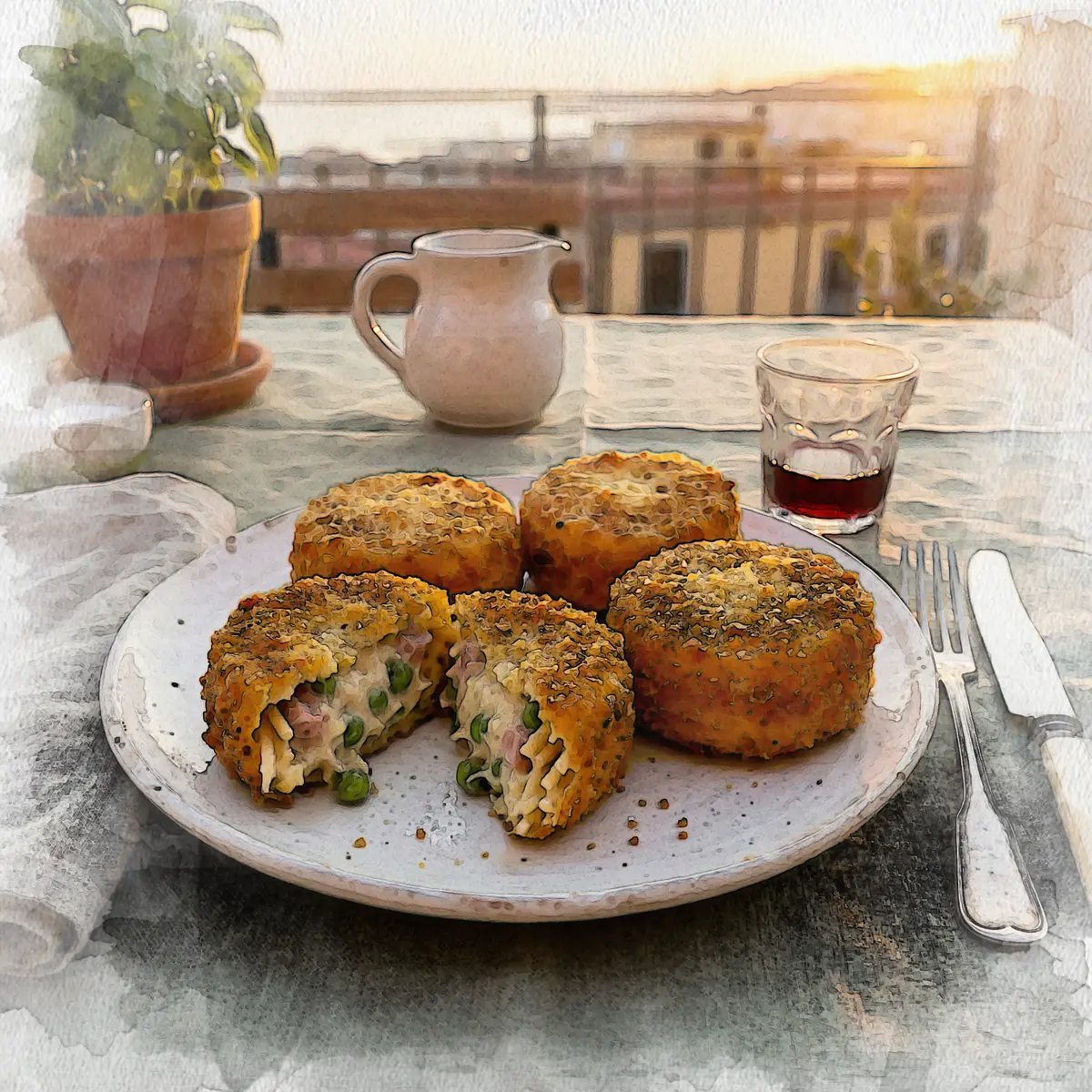
Fried Timbales
Bucatini pasta, fresh spring peas, cured ham, smoked provola cheese, Parmigiano Reggiano, and velvety béchamel
A demanding pursuit
Campania
150 minutes
780 Kcal
Fried Timbales
Bucatini pasta, fresh spring peas, cured ham, smoked provola cheese, Parmigiano Reggiano, and velvety béchamel
A demanding pursuit
Campania
150 minutes
780 Kcal
Fried Timbales
Bucatini pasta, fresh spring peas, cured ham, smoked provola cheese, Parmigiano Reggiano, and velvety béchamel
A demanding pursuit
Campania
150 minutes
780 Kcal
GENESIS
The fried timballi, more nobly known in the Neapolitan tradition as frittatine di pasta, stand as one of the veritable pillars of Naples' street-bound gastronomy. Their genesis traces back to the historical imperative of honoring the table's remains, specifically the dressed pasta of the preceding eve. Through the passing of the decades, this preparation has elevated itself from a simple rite of domestic salvage to an indispensable masterwork gracing the counters of the historic fryers in the heart of Naples.
From a gastronomic perspective, the timballetto embodies the philosophy of cucina povera, which, through sheer culinary alchemy, transmutes humble staples into an object of sublime epicurean joy. Its classical architecture demands long pasta, typically bucatini or spaghetti, bound by a velvety béchamel enriched with sweet peas, cured meats or ragù, and melting cheeses. Its defining genius lies in a duality of textures: a crisp, golden outer shroud—achieved through a delicate batter or precise breading—and a heart yielding, rich, and profoundly savory.
Historical annals reveal that as early as the nineteenth century, the "maccaronari" offered various guises of fried pasta along the bustling thoroughfares of Naples, yet it was in the crucible of the post-war era that the recipe coalesced into its modern canon. The introduction of béchamel, woven into Italian soil through the French-derived legacy of the "Monsù" chefs, acts as the vital binder that preserves the timballetto's integrity during its baptism in oil, forging a singular contrast of temperature and matter. Today, these timballi are the canvas for gourmet reinterpretations, adorned with such treasures as truffles or sea-born ragù, yet they preserve their populist soul, remaining an act of convivial communion to be partaken of hot and in haste amidst the city's ancient, winding vicoli.
PORTIONS (FOR 4 PERSONS)
THE RECIPE
Bucatini
Fresh garden peas
Artisanal cooked ham
Smoked provola cheese
Parmigiano Reggiano
Whole milk
Butter
Flour (type 00)
Flour (type 00, for the batter)
Water
Fine breadcrumbs
Salt
Black pepper
Nutmeg
Extra virgin olive oil
Peanut oil for frying
400 g
300 g
200 g
250 g
100 g
500 ml
50 g
50 g
200 g
300 ml
To taste
To taste
To taste
To taste
To taste
To taste
CURATION
For the seasoning:
Begin by crafting a highly structured, velvety béchamel. In a small cauldron over a gentle flame, melt the butter, introduce the flour, and whisk continuously for a few moments. Slowly pour in the milk, maintaining a steady whisk to prevent any imperfections. Cook until the sauce attains a rich, dense consistency. Season gracefully with salt, pepper, and a delicate grating of nutmeg. In a separate pan, warm a thread of extra virgin olive oil and gently sauté the fresh peas with a pinch of salt and a splash of water until they yield in tenderness. Dice the cured ham and smoked provola cheese into small, precise cubes. In a spacious bowl, unite the béchamel, peas, ham, provola, and grated Parmigiano Reggiano. Meld the composition thoroughly, allowing the flavors to harmonize in perfect unison.For the pasta:
Boil the bucatini in abundant, salted water, yet drain them halfway through their journey, for they must retain a highly resilient structure. Once drained, transfer them to a carving board and coarsely partition them with a knife or scissors into segments of about 2 to 3 centimeters. This crucial step will allow you to compress and sculpt the timballetti with greater mastery later on.For the assembly:
Combine the portioned pasta with the previously prepared béchamel creation. Stir with vigor, ensuring every fragment of pasta is lavishly enveloped in the cream. Pour this rich mixture into a rectangular baking dish, smoothing it with a spatula to a thickness of approximately 3 centimeters. Cover with cling film and allow it to rest in the cold sanctuary of the refrigerator for at least 2 hours, or until the composition becomes entirely firm and set. Once this time has elapsed, employ a circular pastry cutter to stamp out your elegant timballetti.For the frying:
Whisk together a smooth, fluid batter using flour, water, and a pinch of salt. Bathe each timballetto first in this delicate batter, then coat it thoroughly in fine breadcrumbs, pressing gently to ensure the crust adheres perfectly. Warm an abundant measure of peanut oil in a deep-sided pan. Once the oil achieves the ideal temperature of transformation, submerge the timballetti, frying them until they achieve a magnificent golden hue and a crisp resonance on both sides. Drain them upon absorbent paper and present them while they still hold the warmth of the fire.
aspiration
For a crumb coating of even greater crispness, you may perform a double breading, passing the delicate timbaletto through the batter and the breadcrumbs a second time.
Ensure that the smoked provola cheese is thoroughly dried before slicing, ideally allowing it to rest in the refrigerator for a few hours, divested of its whey.
You may also eschew the pastry cutter, shaping the discs by hand with artisanal grace.


GENESIS
The fried timballi, more nobly known in the Neapolitan tradition as frittatine di pasta, stand as one of the veritable pillars of Naples' street-bound gastronomy. Their genesis traces back to the historical imperative of honoring the table's remains, specifically the dressed pasta of the preceding eve. Through the passing of the decades, this preparation has elevated itself from a simple rite of domestic salvage to an indispensable masterwork gracing the counters of the historic fryers in the heart of Naples.
From a gastronomic perspective, the timballetto embodies the philosophy of cucina povera, which, through sheer culinary alchemy, transmutes humble staples into an object of sublime epicurean joy. Its classical architecture demands long pasta, typically bucatini or spaghetti, bound by a velvety béchamel enriched with sweet peas, cured meats or ragù, and melting cheeses. Its defining genius lies in a duality of textures: a crisp, golden outer shroud—achieved through a delicate batter or precise breading—and a heart yielding, rich, and profoundly savory.
Historical annals reveal that as early as the nineteenth century, the "maccaronari" offered various guises of fried pasta along the bustling thoroughfares of Naples, yet it was in the crucible of the post-war era that the recipe coalesced into its modern canon. The introduction of béchamel, woven into Italian soil through the French-derived legacy of the "Monsù" chefs, acts as the vital binder that preserves the timballetto's integrity during its baptism in oil, forging a singular contrast of temperature and matter. Today, these timballi are the canvas for gourmet reinterpretations, adorned with such treasures as truffles or sea-born ragù, yet they preserve their populist soul, remaining an act of convivial communion to be partaken of hot and in haste amidst the city's ancient, winding vicoli.
PORTIONS (FOR 4 PERSONS)
THE RECIPE
Bucatini
Fresh garden peas
Artisanal cooked ham
Smoked provola cheese
Parmigiano Reggiano
Whole milk
Butter
Flour (type 00)
Flour (type 00, for the batter)
Water
Fine breadcrumbs
Salt
Black pepper
Nutmeg
Extra virgin olive oil
Peanut oil for frying
400 g
300 g
200 g
250 g
100 g
500 ml
50 g
50 g
200 g
300 ml
To taste
To taste
To taste
To taste
To taste
To taste
CURATION
For the seasoning:
Begin by crafting a highly structured, velvety béchamel. In a small cauldron over a gentle flame, melt the butter, introduce the flour, and whisk continuously for a few moments. Slowly pour in the milk, maintaining a steady whisk to prevent any imperfections. Cook until the sauce attains a rich, dense consistency. Season gracefully with salt, pepper, and a delicate grating of nutmeg. In a separate pan, warm a thread of extra virgin olive oil and gently sauté the fresh peas with a pinch of salt and a splash of water until they yield in tenderness. Dice the cured ham and smoked provola cheese into small, precise cubes. In a spacious bowl, unite the béchamel, peas, ham, provola, and grated Parmigiano Reggiano. Meld the composition thoroughly, allowing the flavors to harmonize in perfect unison.For the pasta:
Boil the bucatini in abundant, salted water, yet drain them halfway through their journey, for they must retain a highly resilient structure. Once drained, transfer them to a carving board and coarsely partition them with a knife or scissors into segments of about 2 to 3 centimeters. This crucial step will allow you to compress and sculpt the timballetti with greater mastery later on.For the assembly:
Combine the portioned pasta with the previously prepared béchamel creation. Stir with vigor, ensuring every fragment of pasta is lavishly enveloped in the cream. Pour this rich mixture into a rectangular baking dish, smoothing it with a spatula to a thickness of approximately 3 centimeters. Cover with cling film and allow it to rest in the cold sanctuary of the refrigerator for at least 2 hours, or until the composition becomes entirely firm and set. Once this time has elapsed, employ a circular pastry cutter to stamp out your elegant timballetti.For the frying:
Whisk together a smooth, fluid batter using flour, water, and a pinch of salt. Bathe each timballetto first in this delicate batter, then coat it thoroughly in fine breadcrumbs, pressing gently to ensure the crust adheres perfectly. Warm an abundant measure of peanut oil in a deep-sided pan. Once the oil achieves the ideal temperature of transformation, submerge the timballetti, frying them until they achieve a magnificent golden hue and a crisp resonance on both sides. Drain them upon absorbent paper and present them while they still hold the warmth of the fire.
aspiration
For a crumb coating of even greater crispness, you may perform a double breading, passing the delicate timbaletto through the batter and the breadcrumbs a second time.
Ensure that the smoked provola cheese is thoroughly dried before slicing, ideally allowing it to rest in the refrigerator for a few hours, divested of its whey.
You may also eschew the pastry cutter, shaping the discs by hand with artisanal grace.
latest culinary creations
GENESIS
The fried timballi, more nobly known in the Neapolitan tradition as frittatine di pasta, stand as one of the veritable pillars of Naples' street-bound gastronomy. Their genesis traces back to the historical imperative of honoring the table's remains, specifically the dressed pasta of the preceding eve. Through the passing of the decades, this preparation has elevated itself from a simple rite of domestic salvage to an indispensable masterwork gracing the counters of the historic fryers in the heart of Naples.
From a gastronomic perspective, the timballetto embodies the philosophy of cucina povera, which, through sheer culinary alchemy, transmutes humble staples into an object of sublime epicurean joy. Its classical architecture demands long pasta, typically bucatini or spaghetti, bound by a velvety béchamel enriched with sweet peas, cured meats or ragù, and melting cheeses. Its defining genius lies in a duality of textures: a crisp, golden outer shroud—achieved through a delicate batter or precise breading—and a heart yielding, rich, and profoundly savory.
Historical annals reveal that as early as the nineteenth century, the "maccaronari" offered various guises of fried pasta along the bustling thoroughfares of Naples, yet it was in the crucible of the post-war era that the recipe coalesced into its modern canon. The introduction of béchamel, woven into Italian soil through the French-derived legacy of the "Monsù" chefs, acts as the vital binder that preserves the timballetto's integrity during its baptism in oil, forging a singular contrast of temperature and matter. Today, these timballi are the canvas for gourmet reinterpretations, adorned with such treasures as truffles or sea-born ragù, yet they preserve their populist soul, remaining an act of convivial communion to be partaken of hot and in haste amidst the city's ancient, winding vicoli.
PORTIONS (FOR 4 PERSONS)
THE RECIPE
Bucatini
Fresh garden peas
Artisanal cooked ham
Smoked provola cheese
Parmigiano Reggiano
Whole milk
Butter
Flour (type 00)
Flour (type 00, for the batter)
Water
Fine breadcrumbs
Salt
Black pepper
Nutmeg
Extra virgin olive oil
Peanut oil for frying
400 g
300 g
200 g
250 g
100 g
500 ml
50 g
50 g
200 g
300 ml
To taste
To taste
To taste
To taste
To taste
To taste
CURATION
For the seasoning:
Begin by crafting a highly structured, velvety béchamel. In a small cauldron over a gentle flame, melt the butter, introduce the flour, and whisk continuously for a few moments. Slowly pour in the milk, maintaining a steady whisk to prevent any imperfections. Cook until the sauce attains a rich, dense consistency. Season gracefully with salt, pepper, and a delicate grating of nutmeg. In a separate pan, warm a thread of extra virgin olive oil and gently sauté the fresh peas with a pinch of salt and a splash of water until they yield in tenderness. Dice the cured ham and smoked provola cheese into small, precise cubes. In a spacious bowl, unite the béchamel, peas, ham, provola, and grated Parmigiano Reggiano. Meld the composition thoroughly, allowing the flavors to harmonize in perfect unison.For the pasta:
Boil the bucatini in abundant, salted water, yet drain them halfway through their journey, for they must retain a highly resilient structure. Once drained, transfer them to a carving board and coarsely partition them with a knife or scissors into segments of about 2 to 3 centimeters. This crucial step will allow you to compress and sculpt the timballetti with greater mastery later on.For the assembly:
Combine the portioned pasta with the previously prepared béchamel creation. Stir with vigor, ensuring every fragment of pasta is lavishly enveloped in the cream. Pour this rich mixture into a rectangular baking dish, smoothing it with a spatula to a thickness of approximately 3 centimeters. Cover with cling film and allow it to rest in the cold sanctuary of the refrigerator for at least 2 hours, or until the composition becomes entirely firm and set. Once this time has elapsed, employ a circular pastry cutter to stamp out your elegant timballetti.For the frying:
Whisk together a smooth, fluid batter using flour, water, and a pinch of salt. Bathe each timballetto first in this delicate batter, then coat it thoroughly in fine breadcrumbs, pressing gently to ensure the crust adheres perfectly. Warm an abundant measure of peanut oil in a deep-sided pan. Once the oil achieves the ideal temperature of transformation, submerge the timballetti, frying them until they achieve a magnificent golden hue and a crisp resonance on both sides. Drain them upon absorbent paper and present them while they still hold the warmth of the fire.
aspiration
For a crumb coating of even greater crispness, you may perform a double breading, passing the delicate timbaletto through the batter and the breadcrumbs a second time.
Ensure that the smoked provola cheese is thoroughly dried before slicing, ideally allowing it to rest in the refrigerator for a few hours, divested of its whey.
You may also eschew the pastry cutter, shaping the discs by hand with artisanal grace.