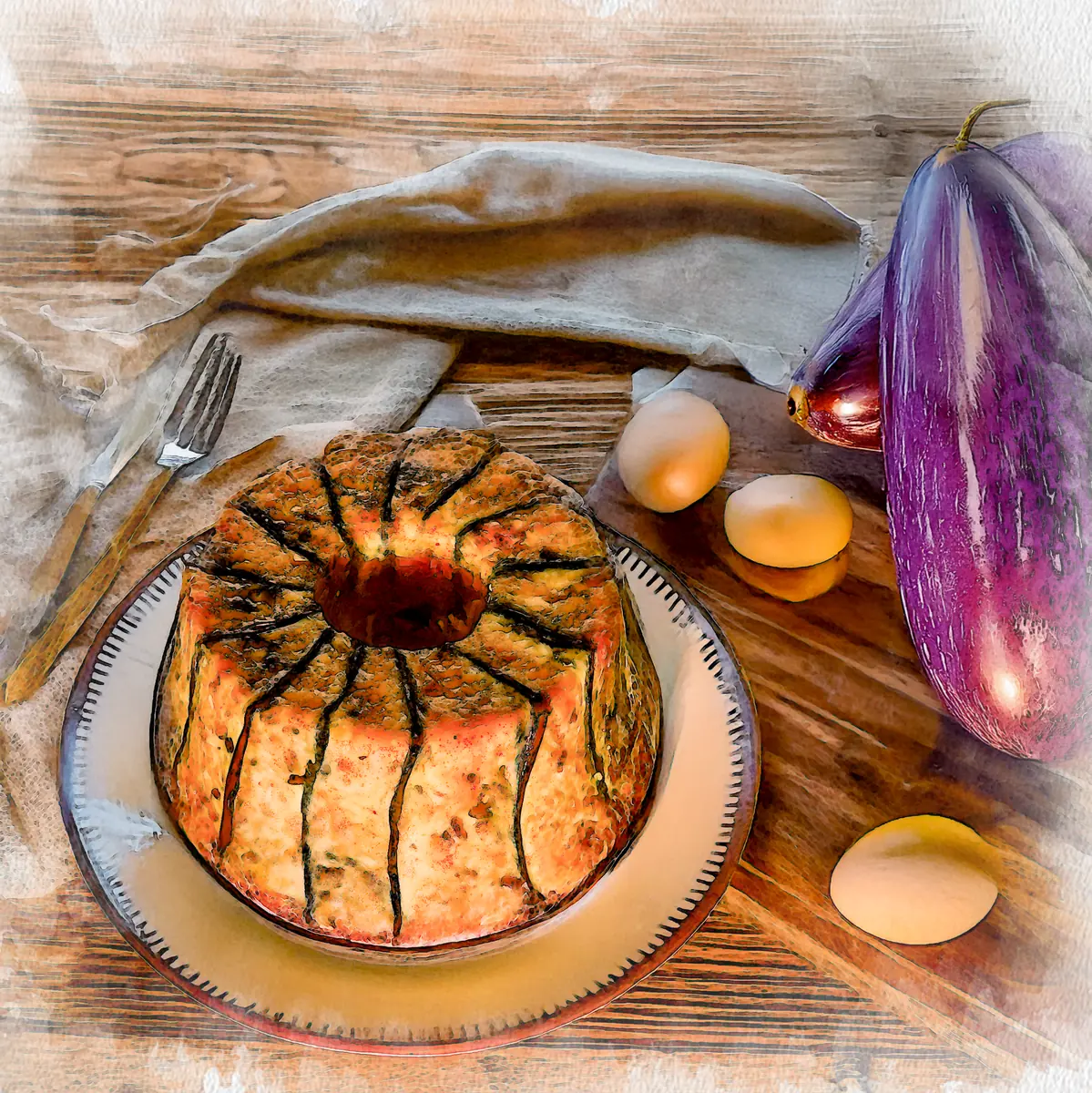
A Noble Sicilian Timballo of Anelletti
Anelletti pasta, finely minced meat, sun-ripened tomato purée, aubergines, noble Caciocavallo cheese, hard-boiled eggs, sweet peas, delicate cured ham, and artisan sal {
A demanding pursuit
Sicily
120 minutes
650 Kcal
A Noble Sicilian Timballo of Anelletti
Anelletti pasta, finely minced meat, sun-ripened tomato purée, aubergines, noble Caciocavallo cheese, hard-boiled eggs, sweet peas, delicate cured ham, and artisan sal {
A demanding pursuit
Sicily
120 minutes
650 Kcal
A Noble Sicilian Timballo of Anelletti
Anelletti pasta, finely minced meat, sun-ripened tomato purée, aubergines, noble Caciocavallo cheese, hard-boiled eggs, sweet peas, delicate cured ham, and artisan sal {
A demanding pursuit
Sicily
120 minutes
650 Kcal
GENESIS
The Sicilian anelletti timballo, or more simply "pasta 'u furnu", stands as one of the most iconic and cherished treasures of Sicilian gastronomy, most notably of Palermo. This opulent and savory masterpiece is a true culinary triumph, ever-present upon the tables of festive gatherings and Sunday family repasts. Its history traces its lineage to a distant past wherein Sicily, a crossroads of cultures and conquests, absorbed and refined diverse influences. The origin of the timballo is bound to the necessity of carrying sustenance gracefully during long journeys, originating as early as the Arab dominance in the ninth century. Indeed, the Muslims were the first to employ the technique of the timballo to preserve pasta, rendering it a practical and nourishing companion for their travels.
The shape of the anelletti, small rings of pasta, is likewise steeped in history and lore. It is whispered that their form evokes the jewels and finery of Arab women, akin to elegant earrings. The singular virtue of these pierced rings lies in their sublime capacity to embrace and hold the sauce, ensuring that every morsel is a symphonic explosion of flavor.
Through the passing centuries, the recipe of the anelletti timballo underwent numerous evolutions, enriched by ingredients that mirror the island’s varied rulers: the meat ragù of French influence, bathed in a tomato sauce of Spanish importation; and the eggplant, a cornerstone of Arab culinary art. The result is a sumptuous creation, often dubbed by the common folk as "'u pasticciu 'ri sustanza" (the pastry of substance), in homage to its richness and its intricate, solemn preparation.
Today, the anelletti timballo remains a sacred symbol of Palermo's gastronomic identity, the undisputed sovereign of every celebration, be it a Christmas feast or a rustic sojourn by the sea. True to its versatile nature, it welcomes infinite variations, adorned with the addition of peas, hard-boiled eggs, sundry cheeses (caciocavallo, provola, ricotta salata), cured meats like prosciutto cotto or mortadella, and even a delicate bèchamel. This holds true despite the diverse "schools of thought" and inherited family secrets.
PORTIONS (FOR 4 PERSONS)
THE RECIPE
Anelletti pasta
Minced meat (a blend of noble pork and beef)
Carrot
Stalk of Celery
Onion
Sieved tomato puru00e9e
Sweet peas
Red wine
Extra virgin olive oil
Salt
Black pepper
Large aubergines
Seed oil for frying
Fresh Caciocavallo cheese
Cubed cured ham
Cubed salami
Hard-boiled eggs
Parmigiano Reggiano
Breadcrumbs
Butter
400 g
500 g
1
1
1
700 ml
100 g
100 ml
q.s.
q.s.
q.s.
2
q.s.
200 g
150 g
100 g
2
50 g
q.s.
q.s.
CURATION
For the Ragù:
First, initiate the preparation of the ragù, a noble sauce demanding patient, slow cooking. Finely mince the carrot, celery, and onion to compose the aromatic soffritto. In a spacious casserole, gently sauté this trinity in extra virgin olive oil until gilded. Introduce the ground meat, searing it with care and breaking it apart with a wooden spoon until its raw hue yields to golden caramelization. Deglaze the pan with red wine, allowing it to evaporate entirely and leave behind its deep essence. Incorporate the tomato passata, sweet peas, then season with salt and pepper. Stir with devotion, crown with a lid, and let it simmer languidly over low heat for at least an hour and a half, until the ragù translates into a rich, concentrated nectar of flavors. If necessary, nourish it with a splash of warm water during its quiet simmer.For the Fried Aubergines:
Wash the aubergines, trim their ends, and slice them into rounds of moderate thickness, approximately half a centimeter. Arrange them upon a cutting board and bestow upon them a light dusting of coarse salt. Allow them to rest for about 30 minutes, a necessary purgation to draw out their bitter moisture. This interval completed, gently press and thoroughly dry each slice with kitchen paper. In a deep skillet, heat an abundance of seed oil. Once the oil sighs with heat, fry the aubergine slices in small batches, until they are beautifully gilded and tender. Retrieve them with a skimmer and rest them upon a platter lined with absorbent paper to release any excess oil.For the Supporting Ingredients:
Boil the eggs until firm, and once cooled, carve them into delicate, thin slices. Dice the caciocavallo, the cooked ham, and the salame into neat, bite-sized treasures.For the Pasta:
Bring a generous pot of salted water to a spirited boil. Cook the anelletti, draining them strictly al dente—some 3 to 4 minutes before the package mandates—as they will meet their ultimate destiny in the heat of the oven. Drain the anelletti and immediately enrobe them in a lavish portion of the prepared ragù, stirring gently to achieve harmonious unity.For the Assembly of the Timballo:
Prepare a ring mold (or a classic round springform pan) of about 24-26 cm in diameter. Anoint the mold with a whisper of butter and dust it generously with breadcrumbs, ensuring they cling perfectly to every curve. Line the bottom and walls of the mold with the fried aubergine slices, overlapping them slightly and allowing them to drape gracefully over the rim. Pour a foundation layer of the dressed anelletti into the mold, smoothing it gently with a spoon. Disperse over this a rich mosaic of diced caciocavallo, cooked ham, salame, and the slices of boiled egg. Crown this with another layer of pasta, followed by the remaining savory treasures. Alternate in this elegant cadence until the ingredients are spent, finishing with a final layer of pasta. Fold the decorative aubergine flaps inward, sealing the timballo. Shower the top with a generous dusting of grated Parmigiano Reggiano and, should you desire, a final whisper of breadcrumbs. Consign the timballo to a static oven preheated to 180°C for approximately 30-40 minutes, until the surface is gilded and resplendent with a crisp crust. Once withdrawn from the oven, let the timballo rest undisturbed for at least 10-15 minutes before unmolding. This quiet interlude is essential for the structure to compose itself and achieve a majestic, unbroken form. Place a serving platter atop the mold and, with a confident, gentle motion, invert this culinary work of art.
aspiration
Should you desire a ragù of yet deeper opulence, a fragment of rustic sausage or choice morsels of pork may be introduced to simmer and yield their rich essences.
If your palate seeks a gentler caress, integrate a velvety spoonful of béchamel into the pasta, thereby bestowing a sublime and enveloping creaminess.
To impart an elegant, aromatic whisper, scatter a few hand-torn leaves of fresh basil into the simmering ragù during its final, fleeting moments on the fire.
You may compose the ragù and fry the aubergines on the eve of your feast, allowing the flavors to mature while harmonizing your culinary rituals for the day of assembly.
The timballo of anelletti retains its superb character even when served cold, offering a magnificent centerpiece for an elegant alfresco repast.


GENESIS
The Sicilian anelletti timballo, or more simply "pasta 'u furnu", stands as one of the most iconic and cherished treasures of Sicilian gastronomy, most notably of Palermo. This opulent and savory masterpiece is a true culinary triumph, ever-present upon the tables of festive gatherings and Sunday family repasts. Its history traces its lineage to a distant past wherein Sicily, a crossroads of cultures and conquests, absorbed and refined diverse influences. The origin of the timballo is bound to the necessity of carrying sustenance gracefully during long journeys, originating as early as the Arab dominance in the ninth century. Indeed, the Muslims were the first to employ the technique of the timballo to preserve pasta, rendering it a practical and nourishing companion for their travels.
The shape of the anelletti, small rings of pasta, is likewise steeped in history and lore. It is whispered that their form evokes the jewels and finery of Arab women, akin to elegant earrings. The singular virtue of these pierced rings lies in their sublime capacity to embrace and hold the sauce, ensuring that every morsel is a symphonic explosion of flavor.
Through the passing centuries, the recipe of the anelletti timballo underwent numerous evolutions, enriched by ingredients that mirror the island’s varied rulers: the meat ragù of French influence, bathed in a tomato sauce of Spanish importation; and the eggplant, a cornerstone of Arab culinary art. The result is a sumptuous creation, often dubbed by the common folk as "'u pasticciu 'ri sustanza" (the pastry of substance), in homage to its richness and its intricate, solemn preparation.
Today, the anelletti timballo remains a sacred symbol of Palermo's gastronomic identity, the undisputed sovereign of every celebration, be it a Christmas feast or a rustic sojourn by the sea. True to its versatile nature, it welcomes infinite variations, adorned with the addition of peas, hard-boiled eggs, sundry cheeses (caciocavallo, provola, ricotta salata), cured meats like prosciutto cotto or mortadella, and even a delicate bèchamel. This holds true despite the diverse "schools of thought" and inherited family secrets.
PORTIONS (FOR 4 PERSONS)
THE RECIPE
Anelletti pasta
Minced meat (a blend of noble pork and beef)
Carrot
Stalk of Celery
Onion
Sieved tomato puru00e9e
Sweet peas
Red wine
Extra virgin olive oil
Salt
Black pepper
Large aubergines
Seed oil for frying
Fresh Caciocavallo cheese
Cubed cured ham
Cubed salami
Hard-boiled eggs
Parmigiano Reggiano
Breadcrumbs
Butter
400 g
500 g
1
1
1
700 ml
100 g
100 ml
q.s.
q.s.
q.s.
2
q.s.
200 g
150 g
100 g
2
50 g
q.s.
q.s.
CURATION
For the Ragù:
First, initiate the preparation of the ragù, a noble sauce demanding patient, slow cooking. Finely mince the carrot, celery, and onion to compose the aromatic soffritto. In a spacious casserole, gently sauté this trinity in extra virgin olive oil until gilded. Introduce the ground meat, searing it with care and breaking it apart with a wooden spoon until its raw hue yields to golden caramelization. Deglaze the pan with red wine, allowing it to evaporate entirely and leave behind its deep essence. Incorporate the tomato passata, sweet peas, then season with salt and pepper. Stir with devotion, crown with a lid, and let it simmer languidly over low heat for at least an hour and a half, until the ragù translates into a rich, concentrated nectar of flavors. If necessary, nourish it with a splash of warm water during its quiet simmer.For the Fried Aubergines:
Wash the aubergines, trim their ends, and slice them into rounds of moderate thickness, approximately half a centimeter. Arrange them upon a cutting board and bestow upon them a light dusting of coarse salt. Allow them to rest for about 30 minutes, a necessary purgation to draw out their bitter moisture. This interval completed, gently press and thoroughly dry each slice with kitchen paper. In a deep skillet, heat an abundance of seed oil. Once the oil sighs with heat, fry the aubergine slices in small batches, until they are beautifully gilded and tender. Retrieve them with a skimmer and rest them upon a platter lined with absorbent paper to release any excess oil.For the Supporting Ingredients:
Boil the eggs until firm, and once cooled, carve them into delicate, thin slices. Dice the caciocavallo, the cooked ham, and the salame into neat, bite-sized treasures.For the Pasta:
Bring a generous pot of salted water to a spirited boil. Cook the anelletti, draining them strictly al dente—some 3 to 4 minutes before the package mandates—as they will meet their ultimate destiny in the heat of the oven. Drain the anelletti and immediately enrobe them in a lavish portion of the prepared ragù, stirring gently to achieve harmonious unity.For the Assembly of the Timballo:
Prepare a ring mold (or a classic round springform pan) of about 24-26 cm in diameter. Anoint the mold with a whisper of butter and dust it generously with breadcrumbs, ensuring they cling perfectly to every curve. Line the bottom and walls of the mold with the fried aubergine slices, overlapping them slightly and allowing them to drape gracefully over the rim. Pour a foundation layer of the dressed anelletti into the mold, smoothing it gently with a spoon. Disperse over this a rich mosaic of diced caciocavallo, cooked ham, salame, and the slices of boiled egg. Crown this with another layer of pasta, followed by the remaining savory treasures. Alternate in this elegant cadence until the ingredients are spent, finishing with a final layer of pasta. Fold the decorative aubergine flaps inward, sealing the timballo. Shower the top with a generous dusting of grated Parmigiano Reggiano and, should you desire, a final whisper of breadcrumbs. Consign the timballo to a static oven preheated to 180°C for approximately 30-40 minutes, until the surface is gilded and resplendent with a crisp crust. Once withdrawn from the oven, let the timballo rest undisturbed for at least 10-15 minutes before unmolding. This quiet interlude is essential for the structure to compose itself and achieve a majestic, unbroken form. Place a serving platter atop the mold and, with a confident, gentle motion, invert this culinary work of art.
aspiration
Should you desire a ragù of yet deeper opulence, a fragment of rustic sausage or choice morsels of pork may be introduced to simmer and yield their rich essences.
If your palate seeks a gentler caress, integrate a velvety spoonful of béchamel into the pasta, thereby bestowing a sublime and enveloping creaminess.
To impart an elegant, aromatic whisper, scatter a few hand-torn leaves of fresh basil into the simmering ragù during its final, fleeting moments on the fire.
You may compose the ragù and fry the aubergines on the eve of your feast, allowing the flavors to mature while harmonizing your culinary rituals for the day of assembly.
The timballo of anelletti retains its superb character even when served cold, offering a magnificent centerpiece for an elegant alfresco repast.
latest culinary creations
GENESIS
The Sicilian anelletti timballo, or more simply "pasta 'u furnu", stands as one of the most iconic and cherished treasures of Sicilian gastronomy, most notably of Palermo. This opulent and savory masterpiece is a true culinary triumph, ever-present upon the tables of festive gatherings and Sunday family repasts. Its history traces its lineage to a distant past wherein Sicily, a crossroads of cultures and conquests, absorbed and refined diverse influences. The origin of the timballo is bound to the necessity of carrying sustenance gracefully during long journeys, originating as early as the Arab dominance in the ninth century. Indeed, the Muslims were the first to employ the technique of the timballo to preserve pasta, rendering it a practical and nourishing companion for their travels.
The shape of the anelletti, small rings of pasta, is likewise steeped in history and lore. It is whispered that their form evokes the jewels and finery of Arab women, akin to elegant earrings. The singular virtue of these pierced rings lies in their sublime capacity to embrace and hold the sauce, ensuring that every morsel is a symphonic explosion of flavor.
Through the passing centuries, the recipe of the anelletti timballo underwent numerous evolutions, enriched by ingredients that mirror the island’s varied rulers: the meat ragù of French influence, bathed in a tomato sauce of Spanish importation; and the eggplant, a cornerstone of Arab culinary art. The result is a sumptuous creation, often dubbed by the common folk as "'u pasticciu 'ri sustanza" (the pastry of substance), in homage to its richness and its intricate, solemn preparation.
Today, the anelletti timballo remains a sacred symbol of Palermo's gastronomic identity, the undisputed sovereign of every celebration, be it a Christmas feast or a rustic sojourn by the sea. True to its versatile nature, it welcomes infinite variations, adorned with the addition of peas, hard-boiled eggs, sundry cheeses (caciocavallo, provola, ricotta salata), cured meats like prosciutto cotto or mortadella, and even a delicate bèchamel. This holds true despite the diverse "schools of thought" and inherited family secrets.
PORTIONS (FOR 4 PERSONS)
THE RECIPE
Anelletti pasta
Minced meat (a blend of noble pork and beef)
Carrot
Stalk of Celery
Onion
Sieved tomato puru00e9e
Sweet peas
Red wine
Extra virgin olive oil
Salt
Black pepper
Large aubergines
Seed oil for frying
Fresh Caciocavallo cheese
Cubed cured ham
Cubed salami
Hard-boiled eggs
Parmigiano Reggiano
Breadcrumbs
Butter
400 g
500 g
1
1
1
700 ml
100 g
100 ml
q.s.
q.s.
q.s.
2
q.s.
200 g
150 g
100 g
2
50 g
q.s.
q.s.
CURATION
For the Ragù:
First, initiate the preparation of the ragù, a noble sauce demanding patient, slow cooking. Finely mince the carrot, celery, and onion to compose the aromatic soffritto. In a spacious casserole, gently sauté this trinity in extra virgin olive oil until gilded. Introduce the ground meat, searing it with care and breaking it apart with a wooden spoon until its raw hue yields to golden caramelization. Deglaze the pan with red wine, allowing it to evaporate entirely and leave behind its deep essence. Incorporate the tomato passata, sweet peas, then season with salt and pepper. Stir with devotion, crown with a lid, and let it simmer languidly over low heat for at least an hour and a half, until the ragù translates into a rich, concentrated nectar of flavors. If necessary, nourish it with a splash of warm water during its quiet simmer.For the Fried Aubergines:
Wash the aubergines, trim their ends, and slice them into rounds of moderate thickness, approximately half a centimeter. Arrange them upon a cutting board and bestow upon them a light dusting of coarse salt. Allow them to rest for about 30 minutes, a necessary purgation to draw out their bitter moisture. This interval completed, gently press and thoroughly dry each slice with kitchen paper. In a deep skillet, heat an abundance of seed oil. Once the oil sighs with heat, fry the aubergine slices in small batches, until they are beautifully gilded and tender. Retrieve them with a skimmer and rest them upon a platter lined with absorbent paper to release any excess oil.For the Supporting Ingredients:
Boil the eggs until firm, and once cooled, carve them into delicate, thin slices. Dice the caciocavallo, the cooked ham, and the salame into neat, bite-sized treasures.For the Pasta:
Bring a generous pot of salted water to a spirited boil. Cook the anelletti, draining them strictly al dente—some 3 to 4 minutes before the package mandates—as they will meet their ultimate destiny in the heat of the oven. Drain the anelletti and immediately enrobe them in a lavish portion of the prepared ragù, stirring gently to achieve harmonious unity.For the Assembly of the Timballo:
Prepare a ring mold (or a classic round springform pan) of about 24-26 cm in diameter. Anoint the mold with a whisper of butter and dust it generously with breadcrumbs, ensuring they cling perfectly to every curve. Line the bottom and walls of the mold with the fried aubergine slices, overlapping them slightly and allowing them to drape gracefully over the rim. Pour a foundation layer of the dressed anelletti into the mold, smoothing it gently with a spoon. Disperse over this a rich mosaic of diced caciocavallo, cooked ham, salame, and the slices of boiled egg. Crown this with another layer of pasta, followed by the remaining savory treasures. Alternate in this elegant cadence until the ingredients are spent, finishing with a final layer of pasta. Fold the decorative aubergine flaps inward, sealing the timballo. Shower the top with a generous dusting of grated Parmigiano Reggiano and, should you desire, a final whisper of breadcrumbs. Consign the timballo to a static oven preheated to 180°C for approximately 30-40 minutes, until the surface is gilded and resplendent with a crisp crust. Once withdrawn from the oven, let the timballo rest undisturbed for at least 10-15 minutes before unmolding. This quiet interlude is essential for the structure to compose itself and achieve a majestic, unbroken form. Place a serving platter atop the mold and, with a confident, gentle motion, invert this culinary work of art.
aspiration
Should you desire a ragù of yet deeper opulence, a fragment of rustic sausage or choice morsels of pork may be introduced to simmer and yield their rich essences.
If your palate seeks a gentler caress, integrate a velvety spoonful of béchamel into the pasta, thereby bestowing a sublime and enveloping creaminess.
To impart an elegant, aromatic whisper, scatter a few hand-torn leaves of fresh basil into the simmering ragù during its final, fleeting moments on the fire.
You may compose the ragù and fry the aubergines on the eve of your feast, allowing the flavors to mature while harmonizing your culinary rituals for the day of assembly.
The timballo of anelletti retains its superb character even when served cold, offering a magnificent centerpiece for an elegant alfresco repast.