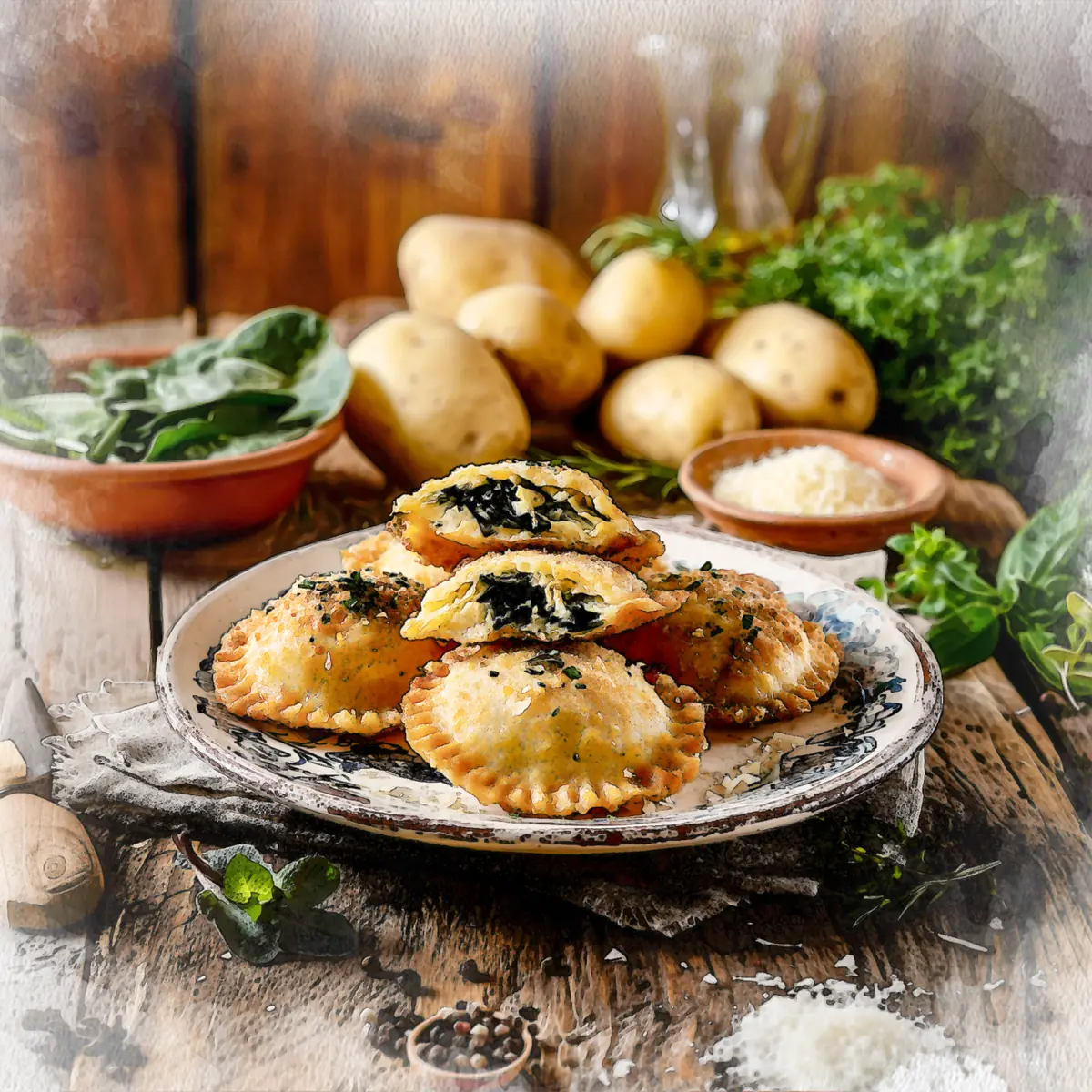
TIRTLEN
Rye Flour, Ricotta, Spinach, Potatoes, Mint, Chives
Effortless
Trentino-Alto Adige
An hour's passage
420 Kcal
TIRTLEN
Rye Flour, Ricotta, Spinach, Potatoes, Mint, Chives
Effortless
Trentino-Alto Adige
An hour's passage
420 Kcal
TIRTLEN
Rye Flour, Ricotta, Spinach, Potatoes, Mint, Chives
Effortless
Trentino-Alto Adige
An hour's passage
420 Kcal
GENESIS
Tirtlen, or Tirtlan, are a traditional specialty of Trentino-Alto Adige gastronomy, hailing specifically from the Val Pusteria. These fried ravioli, occasionally poached in delicate broth, stand as a noble pillar of Alpine culinary heritage, profoundly rooted in the region's rural soul. Their origins are veiled by the mists of time, yet they surely arose from the necessity to craft a sustaining and flavorful dish from the humble, honest ingredients native to mountain valleys. Historically, Tirtlen were prepared to grace festive tables or honor sacred occasions, though they also served as a robust repast for laborers of the earth. Rye flour, the vital substance of the dough, speaks of the ancient cultivation of this resilient grain in high altitudes, where other flours were scarce. The filling, which shifts with the geography and the turning of the seasons, often exalts ricotta, potatoes, and spinach, at times elevated by local wild herbs such as mint and chives. Frying, the preferred method of gilding the Tirtlen, imparts a crisp outer crown that contrasts sublimely with the tender heart of the filling. Despite their rustic simplicity, Tirtlen preserve the authentic flavors and the rich history of a highland territory, keeping the poetic fires of Alpine culinary tradition ablaze and offering an unparalleled epicurean experience.
PORTIONS (FOR 4 PERSONS)
FOR THE FRESHLY KNEADED PASTA
Rye flour
Italian type 00 flour
Lukewarm water
Egg
Extra virgin olive oil
Salt
250 g
250 g
200 ml
1
To taste
To taste
FOR THE CREATION'S HEART
Cow or goat's milk ricotta
Fresh spinach
Potatoes
2 tablespoons of Parmigiano Reggiano
Fresh mint
Chives
Salt
Pepper
300 gr
200 gr
150 gr
2 tablespoons
to taste
to taste
to taste
to taste
FOR THE EMBELLISHMENT
Extra virgin olive oil
Butter
Fresh chives
to taste
to taste
to taste
CURATION
For the fresh pasta:
Upon a wooden pastry board, shape the two flours into a majestic fountain. At its heart, bestow the tepid water, the egg, a whisper of salt, and a thread of extra virgin olive oil. Begin to knead with gentle grace, gradually drawing the flour from the outer ridge into the center. Work the dough with vigorous devotion for some 10 to 15 minutes, until it surrenders into a smooth and supple creation. Envelope this precious dough in transparent film and let it rest in peaceful repose at room temperature for no less than 30 minutes.For the filling:
Tenderly bathe the spinach and simmer it in a shallow pool of salted water for mere moments, until it yields to softness. Drain the spinach thoroughly, pressing it to banish any excess moisture, and mince it finely. Boil the potatoes in their skins within a generous bath of salted water until they are perfectly tender. Peel and crush them with a fork or a potato ricer. In a grand bowl, marry the ricotta, the minced spinach, the crushed potatoes, the grated cheese, the finely chopped fresh mint, and the snipped chives. Blend all elements in harmonious union until a majestic, uniform filling is born. Season with salt and pepper according to the dictates of your palate.For the Tirtlen:
Reclaim the dough and divide it into two or three portions to ease its crafting. Roll each portion with a rolling pin or a pasta machine into a delicate, thin sheet of about 1 to 2 millimeters in thickness. With a pastry cutter or the rim of a glass, fashion rounds of approximately 8 to 10 centimeters in diameter. Upon the center of each round, place a generous spoonful of the filling. Fold the dough over to form a crescent moon, and seal the edges with care, pressing with your fingertips or the tines of a fork to ensure the precious filling remains safely held during its transformation.For the cooking:
In a spacious pan, warm a generous pool of extra virgin olive oil—or a blend of oil and butter—over a medium-high flame. When the oil has reached its vibrant heat, fry the Tirtlen a few at a time, turning them frequently, until they wear a golden, crisp armor on both sides. Drain the fried Tirtlen upon absorbent parchment to remove any excess oil before presenting this culinary masterpiece.
aspiration
For a lighter rendition, you may gently poach the Tirtlen in a refined vegetable broth rather than consigning them to the frying pan.
You might elevate the filling by incorporating either fresh or rehydrated porcini mushrooms, or perhaps incorporating noble local cheeses such as Graukäse.
Serve the Tirtlen in their warm embrace, accompanied by a fresh, seasonal salad to harmoniously balance the palate.
For an elevated touch of flavor, you may crown the Tirtlen with a delicate dusting of freshly chopped chives before presenting them.


GENESIS
Tirtlen, or Tirtlan, are a traditional specialty of Trentino-Alto Adige gastronomy, hailing specifically from the Val Pusteria. These fried ravioli, occasionally poached in delicate broth, stand as a noble pillar of Alpine culinary heritage, profoundly rooted in the region's rural soul. Their origins are veiled by the mists of time, yet they surely arose from the necessity to craft a sustaining and flavorful dish from the humble, honest ingredients native to mountain valleys. Historically, Tirtlen were prepared to grace festive tables or honor sacred occasions, though they also served as a robust repast for laborers of the earth. Rye flour, the vital substance of the dough, speaks of the ancient cultivation of this resilient grain in high altitudes, where other flours were scarce. The filling, which shifts with the geography and the turning of the seasons, often exalts ricotta, potatoes, and spinach, at times elevated by local wild herbs such as mint and chives. Frying, the preferred method of gilding the Tirtlen, imparts a crisp outer crown that contrasts sublimely with the tender heart of the filling. Despite their rustic simplicity, Tirtlen preserve the authentic flavors and the rich history of a highland territory, keeping the poetic fires of Alpine culinary tradition ablaze and offering an unparalleled epicurean experience.
PORTIONS (FOR 4 PERSONS)
FOR THE FRESHLY KNEADED PASTA
Rye flour
Italian type 00 flour
Lukewarm water
Egg
Extra virgin olive oil
Salt
250 g
250 g
200 ml
1
To taste
To taste
FOR THE CREATION'S HEART
Cow or goat's milk ricotta
Fresh spinach
Potatoes
2 tablespoons of Parmigiano Reggiano
Fresh mint
Chives
Salt
Pepper
300 gr
200 gr
150 gr
2 tablespoons
to taste
to taste
to taste
to taste
FOR THE EMBELLISHMENT
Extra virgin olive oil
Butter
Fresh chives
to taste
to taste
to taste
CURATION
For the fresh pasta:
Upon a wooden pastry board, shape the two flours into a majestic fountain. At its heart, bestow the tepid water, the egg, a whisper of salt, and a thread of extra virgin olive oil. Begin to knead with gentle grace, gradually drawing the flour from the outer ridge into the center. Work the dough with vigorous devotion for some 10 to 15 minutes, until it surrenders into a smooth and supple creation. Envelope this precious dough in transparent film and let it rest in peaceful repose at room temperature for no less than 30 minutes.For the filling:
Tenderly bathe the spinach and simmer it in a shallow pool of salted water for mere moments, until it yields to softness. Drain the spinach thoroughly, pressing it to banish any excess moisture, and mince it finely. Boil the potatoes in their skins within a generous bath of salted water until they are perfectly tender. Peel and crush them with a fork or a potato ricer. In a grand bowl, marry the ricotta, the minced spinach, the crushed potatoes, the grated cheese, the finely chopped fresh mint, and the snipped chives. Blend all elements in harmonious union until a majestic, uniform filling is born. Season with salt and pepper according to the dictates of your palate.For the Tirtlen:
Reclaim the dough and divide it into two or three portions to ease its crafting. Roll each portion with a rolling pin or a pasta machine into a delicate, thin sheet of about 1 to 2 millimeters in thickness. With a pastry cutter or the rim of a glass, fashion rounds of approximately 8 to 10 centimeters in diameter. Upon the center of each round, place a generous spoonful of the filling. Fold the dough over to form a crescent moon, and seal the edges with care, pressing with your fingertips or the tines of a fork to ensure the precious filling remains safely held during its transformation.For the cooking:
In a spacious pan, warm a generous pool of extra virgin olive oil—or a blend of oil and butter—over a medium-high flame. When the oil has reached its vibrant heat, fry the Tirtlen a few at a time, turning them frequently, until they wear a golden, crisp armor on both sides. Drain the fried Tirtlen upon absorbent parchment to remove any excess oil before presenting this culinary masterpiece.
aspiration
For a lighter rendition, you may gently poach the Tirtlen in a refined vegetable broth rather than consigning them to the frying pan.
You might elevate the filling by incorporating either fresh or rehydrated porcini mushrooms, or perhaps incorporating noble local cheeses such as Graukäse.
Serve the Tirtlen in their warm embrace, accompanied by a fresh, seasonal salad to harmoniously balance the palate.
For an elevated touch of flavor, you may crown the Tirtlen with a delicate dusting of freshly chopped chives before presenting them.
latest culinary creations
GENESIS
Tirtlen, or Tirtlan, are a traditional specialty of Trentino-Alto Adige gastronomy, hailing specifically from the Val Pusteria. These fried ravioli, occasionally poached in delicate broth, stand as a noble pillar of Alpine culinary heritage, profoundly rooted in the region's rural soul. Their origins are veiled by the mists of time, yet they surely arose from the necessity to craft a sustaining and flavorful dish from the humble, honest ingredients native to mountain valleys. Historically, Tirtlen were prepared to grace festive tables or honor sacred occasions, though they also served as a robust repast for laborers of the earth. Rye flour, the vital substance of the dough, speaks of the ancient cultivation of this resilient grain in high altitudes, where other flours were scarce. The filling, which shifts with the geography and the turning of the seasons, often exalts ricotta, potatoes, and spinach, at times elevated by local wild herbs such as mint and chives. Frying, the preferred method of gilding the Tirtlen, imparts a crisp outer crown that contrasts sublimely with the tender heart of the filling. Despite their rustic simplicity, Tirtlen preserve the authentic flavors and the rich history of a highland territory, keeping the poetic fires of Alpine culinary tradition ablaze and offering an unparalleled epicurean experience.
PORTIONS (FOR 4 PERSONS)
FOR THE FRESHLY KNEADED PASTA
Rye flour
Italian type 00 flour
Lukewarm water
Egg
Extra virgin olive oil
Salt
250 g
250 g
200 ml
1
To taste
To taste
FOR THE CREATION'S HEART
Cow or goat's milk ricotta
Fresh spinach
Potatoes
2 tablespoons of Parmigiano Reggiano
Fresh mint
Chives
Salt
Pepper
300 gr
200 gr
150 gr
2 tablespoons
to taste
to taste
to taste
to taste
FOR THE EMBELLISHMENT
Extra virgin olive oil
Butter
Fresh chives
to taste
to taste
to taste
CURATION
For the fresh pasta:
Upon a wooden pastry board, shape the two flours into a majestic fountain. At its heart, bestow the tepid water, the egg, a whisper of salt, and a thread of extra virgin olive oil. Begin to knead with gentle grace, gradually drawing the flour from the outer ridge into the center. Work the dough with vigorous devotion for some 10 to 15 minutes, until it surrenders into a smooth and supple creation. Envelope this precious dough in transparent film and let it rest in peaceful repose at room temperature for no less than 30 minutes.For the filling:
Tenderly bathe the spinach and simmer it in a shallow pool of salted water for mere moments, until it yields to softness. Drain the spinach thoroughly, pressing it to banish any excess moisture, and mince it finely. Boil the potatoes in their skins within a generous bath of salted water until they are perfectly tender. Peel and crush them with a fork or a potato ricer. In a grand bowl, marry the ricotta, the minced spinach, the crushed potatoes, the grated cheese, the finely chopped fresh mint, and the snipped chives. Blend all elements in harmonious union until a majestic, uniform filling is born. Season with salt and pepper according to the dictates of your palate.For the Tirtlen:
Reclaim the dough and divide it into two or three portions to ease its crafting. Roll each portion with a rolling pin or a pasta machine into a delicate, thin sheet of about 1 to 2 millimeters in thickness. With a pastry cutter or the rim of a glass, fashion rounds of approximately 8 to 10 centimeters in diameter. Upon the center of each round, place a generous spoonful of the filling. Fold the dough over to form a crescent moon, and seal the edges with care, pressing with your fingertips or the tines of a fork to ensure the precious filling remains safely held during its transformation.For the cooking:
In a spacious pan, warm a generous pool of extra virgin olive oil—or a blend of oil and butter—over a medium-high flame. When the oil has reached its vibrant heat, fry the Tirtlen a few at a time, turning them frequently, until they wear a golden, crisp armor on both sides. Drain the fried Tirtlen upon absorbent parchment to remove any excess oil before presenting this culinary masterpiece.
aspiration
For a lighter rendition, you may gently poach the Tirtlen in a refined vegetable broth rather than consigning them to the frying pan.
You might elevate the filling by incorporating either fresh or rehydrated porcini mushrooms, or perhaps incorporating noble local cheeses such as Graukäse.
Serve the Tirtlen in their warm embrace, accompanied by a fresh, seasonal salad to harmoniously balance the palate.
For an elevated touch of flavor, you may crown the Tirtlen with a delicate dusting of freshly chopped chives before presenting them.