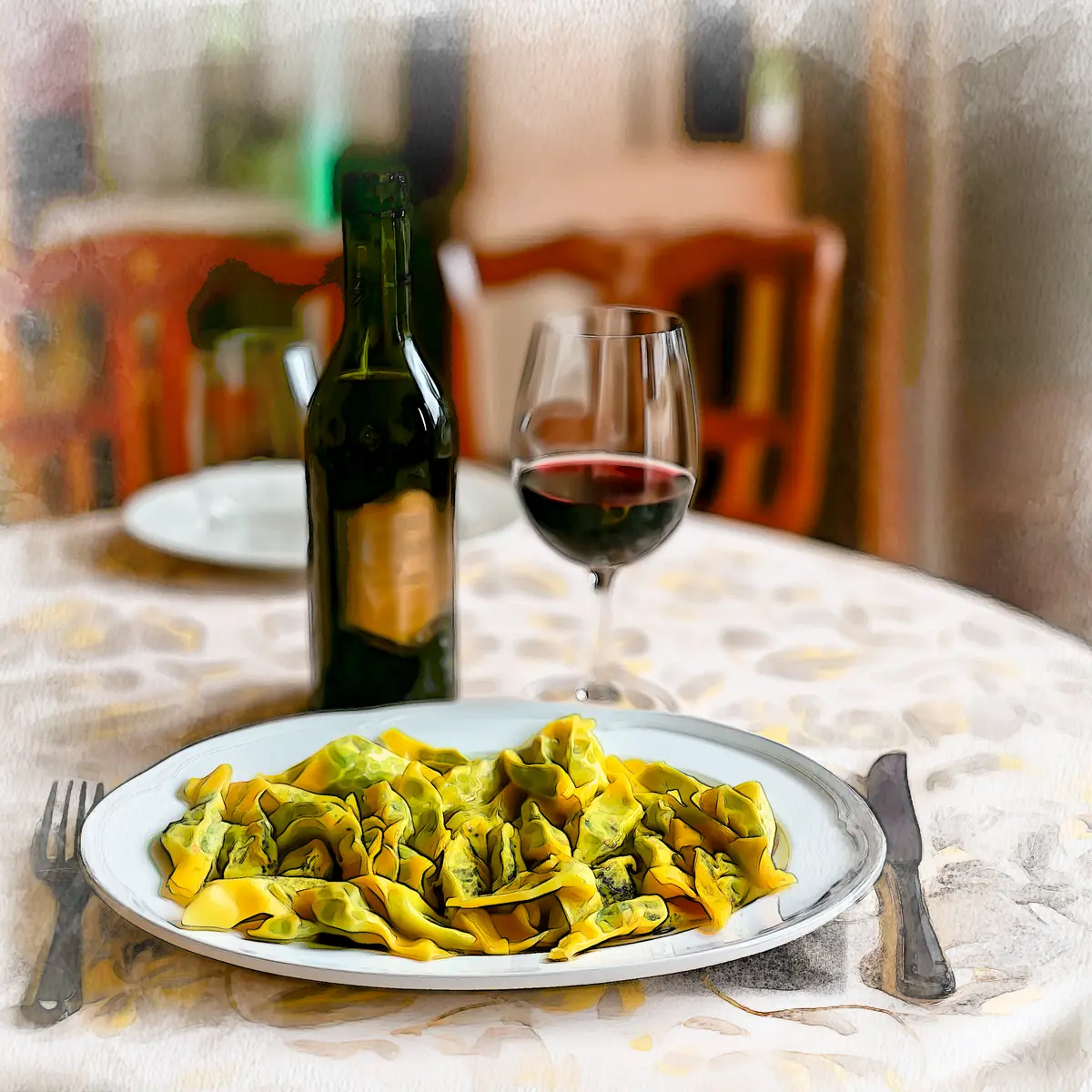
TORTELLI of PIACENZA
Ricotta, spinach, Parmigiano Reggiano, eggs, flour, butter, and sage.
Moderate
Emilia-Romagna
A journey of ninety minutes
450 Kcal
TORTELLI of PIACENZA
Ricotta, spinach, Parmigiano Reggiano, eggs, flour, butter, and sage.
Moderate
Emilia-Romagna
A journey of ninety minutes
450 Kcal
TORTELLI of PIACENZA
Ricotta, spinach, Parmigiano Reggiano, eggs, flour, butter, and sage.
Moderate
Emilia-Romagna
A journey of ninety minutes
450 Kcal
GENESIS
The tortelli of Piacenza, adorned with the name "turtei cun la cua" for their singular braided silhouette resembling a tail, stand as one of the most sublime emblems of Piacentine culinary tradition. Their lineage descends from a noble and mesmerizing past. Legend whispers that these exquisite parcels of filled pasta were first brought to life in the year 1351, conceived for an event of profound historical majesty. The cooks within the fortress of Vigolzone—then a fiefdom of the Visconti under the dominion of Bernardo Anguissola—dedicated themselves to fashioning a dish of distinction to honor a luminary guest: Francesco Petrarch. The illustrious poet, upon his arrival in Piacenza, was welcomed with this delicacy, which harmonized the rustic purity of local ingredients with an intricate, sculptural mastery of pasta craft.
This "tailed" geometry seems to have been born of this very moment, designed to bestow upon the tortello an elegant and distinct visage worthy of an aristocratic banquet. Across the flowing centuries, the tortelli of Piacenza have ascended to become a sacred symbol of regional gastronomy, bequeathed from generation to generation, revered for their ethereal delicacy and the haunting, unmistakable flavor of their filling—traditionally composed of ricotta, spinach, and Parmigiano Reggiano. Even today, they remain an indispensable centerpiece to sanctify feasts and celebrate solemn occasions in Piacenza and its surrounding lands.
PORTIONS (FOR 4 PERSONS)
FOR THE PASTA
Flour 00
Eggs
Fine salt
300 g
3
1 pinch
FOR THE CREATION'S HEART
Fresh spinach
Fresh cow's milk ricotta
Parmigiano Reggiano PDO
Salt
Nutmeg
400 g
300 g
120 g
To taste
To taste
FOR THE EMBELLISHMENT
Butter
Sage
Parmigiano Reggiano PDO
80 g
2 sprigs
to taste
CURATION
For the fresh pasta:
Shape the flour into a gentle mound on your work surface or within a spacious vessel, fashioning a well at its heart. Crack the eggs into this central cradle and add a pristine pinch of salt. Begin to marry the ingredients with a fork, gradually drawing in the flour from the inner walls of the well. As the dough gains substance, commit to working it by hand, kneading with passionate energy for some 10 to 15 minutes, until you yield a smooth, supple, and elastic dough. Envelop this artisanal creation in cling film and allow it to rest at room temperature for at least 30 minutes. This pause is essential, allowing the gluten to relax so the dough may later surrender effortlessly to the rolling pin.For the filling:
Lovingly wash the spinach and blanch them in boiling salted water for a fleeting few minutes, just until they wilt into submission. Drain and plunge them immediately into an ice-cold bath to arrest their cooking and preserve their vibrant, verdant hue. Squeeze them with utmost care to banish every drop of excess moisture, then finely mince them with a blade or pass them through a food mill. In a bowl, combine the finely minced, dry spinach with fresh cow's milk ricotta, which has been meticulously drained of its whey. Adorn the mixture with grated Parmigiano Reggiano PDO, a generous whisper of freshly grated nutmeg, and a pinch of salt. Blend these components with harmony until a uniform, compact filling is born. Taste your creation, elevating the salt if the palate demands.For the shaping of the tortelli:
Retrieve your rested dough and portion off a small jewel of pasta, keeping the remainder draped in a damp cloth to prevent it from drying out. Flatten it gently with a rolling pin, then pass it through a pasta machine, starting at the widest setting and gradually refining it until you achieve a delicate sheet of sheer elegance, about 1-2 mm thick. Lacking a machine, let the rolling pin coax the dough until it is so fine it verges on translucency.
Divide the golden sheet lengthwise to create two majestic ribbons of dough. Using a fluted pastry wheel, carve out diamonds of approximately 10 cm on each side. Place a delicate dollop of the filling in the heart of each diamond. To bestow upon them the legendary silhouette of the Piacentine tortelli, fold the diamond in half, uniting two opposite points to form a triangle. Press the borders with intent to seal the precious filling within. Then, draw the two lateral tips toward the center, overlapping them gently, and pinch the upper peak to fashion the classic, braided "tail." Place the completed tortelli upon a lightly floured tray, ensuring they rest apart without kissing.For the cooking and the finishing sauce:
Bring a grand pot of salted water to a rolling, lively boil. Meanwhile, in a shallow pan, allow the butter to melt softly over a gentle flame alongside fresh sage leaves, letting the butter become infused with their aromatic oils and the leaves turn crisp and translucent.
When the water is dancing, gently cradle the tortelli into the pot and cook them for about 3-4 minutes, or until they gracefully rise to the surface. Retrieve them with a slotted spoon and transfer them directly into the pan of melted sage butter. Toss the tortelli with gentle reverence for a single minute to envelop them in the golden elixir, then plate and serve immediately, crowned with a generous dusting of finely grated Parmigiano Reggiano PDO.
aspiration
For a more profound essence, you may grace the filling with a whisper of freshly chopped wild marjoram.
Should you desire, you may dress the tortelli in a delicate tomato reduction or a sumptuous meat ragù; yet, the noble tradition of Piacenza demurs, preferring the simplicity of butter and sage to elevate the sublime artistry of the filling.
These sacred parcels of pasta may be preserved through freezing: cradle them upon a tray, keeping them gracefully apart, and once kissed by the frost, transfer them to a protective pouch. Cook them directly from their frozen slumber in a cauldron of boiling water.


GENESIS
The tortelli of Piacenza, adorned with the name "turtei cun la cua" for their singular braided silhouette resembling a tail, stand as one of the most sublime emblems of Piacentine culinary tradition. Their lineage descends from a noble and mesmerizing past. Legend whispers that these exquisite parcels of filled pasta were first brought to life in the year 1351, conceived for an event of profound historical majesty. The cooks within the fortress of Vigolzone—then a fiefdom of the Visconti under the dominion of Bernardo Anguissola—dedicated themselves to fashioning a dish of distinction to honor a luminary guest: Francesco Petrarch. The illustrious poet, upon his arrival in Piacenza, was welcomed with this delicacy, which harmonized the rustic purity of local ingredients with an intricate, sculptural mastery of pasta craft.
This "tailed" geometry seems to have been born of this very moment, designed to bestow upon the tortello an elegant and distinct visage worthy of an aristocratic banquet. Across the flowing centuries, the tortelli of Piacenza have ascended to become a sacred symbol of regional gastronomy, bequeathed from generation to generation, revered for their ethereal delicacy and the haunting, unmistakable flavor of their filling—traditionally composed of ricotta, spinach, and Parmigiano Reggiano. Even today, they remain an indispensable centerpiece to sanctify feasts and celebrate solemn occasions in Piacenza and its surrounding lands.
PORTIONS (FOR 4 PERSONS)
FOR THE PASTA
Flour 00
Eggs
Fine salt
300 g
3
1 pinch
FOR THE CREATION'S HEART
Fresh spinach
Fresh cow's milk ricotta
Parmigiano Reggiano PDO
Salt
Nutmeg
400 g
300 g
120 g
To taste
To taste
FOR THE EMBELLISHMENT
Butter
Sage
Parmigiano Reggiano PDO
80 g
2 sprigs
to taste
CURATION
For the fresh pasta:
Shape the flour into a gentle mound on your work surface or within a spacious vessel, fashioning a well at its heart. Crack the eggs into this central cradle and add a pristine pinch of salt. Begin to marry the ingredients with a fork, gradually drawing in the flour from the inner walls of the well. As the dough gains substance, commit to working it by hand, kneading with passionate energy for some 10 to 15 minutes, until you yield a smooth, supple, and elastic dough. Envelop this artisanal creation in cling film and allow it to rest at room temperature for at least 30 minutes. This pause is essential, allowing the gluten to relax so the dough may later surrender effortlessly to the rolling pin.For the filling:
Lovingly wash the spinach and blanch them in boiling salted water for a fleeting few minutes, just until they wilt into submission. Drain and plunge them immediately into an ice-cold bath to arrest their cooking and preserve their vibrant, verdant hue. Squeeze them with utmost care to banish every drop of excess moisture, then finely mince them with a blade or pass them through a food mill. In a bowl, combine the finely minced, dry spinach with fresh cow's milk ricotta, which has been meticulously drained of its whey. Adorn the mixture with grated Parmigiano Reggiano PDO, a generous whisper of freshly grated nutmeg, and a pinch of salt. Blend these components with harmony until a uniform, compact filling is born. Taste your creation, elevating the salt if the palate demands.For the shaping of the tortelli:
Retrieve your rested dough and portion off a small jewel of pasta, keeping the remainder draped in a damp cloth to prevent it from drying out. Flatten it gently with a rolling pin, then pass it through a pasta machine, starting at the widest setting and gradually refining it until you achieve a delicate sheet of sheer elegance, about 1-2 mm thick. Lacking a machine, let the rolling pin coax the dough until it is so fine it verges on translucency.
Divide the golden sheet lengthwise to create two majestic ribbons of dough. Using a fluted pastry wheel, carve out diamonds of approximately 10 cm on each side. Place a delicate dollop of the filling in the heart of each diamond. To bestow upon them the legendary silhouette of the Piacentine tortelli, fold the diamond in half, uniting two opposite points to form a triangle. Press the borders with intent to seal the precious filling within. Then, draw the two lateral tips toward the center, overlapping them gently, and pinch the upper peak to fashion the classic, braided "tail." Place the completed tortelli upon a lightly floured tray, ensuring they rest apart without kissing.For the cooking and the finishing sauce:
Bring a grand pot of salted water to a rolling, lively boil. Meanwhile, in a shallow pan, allow the butter to melt softly over a gentle flame alongside fresh sage leaves, letting the butter become infused with their aromatic oils and the leaves turn crisp and translucent.
When the water is dancing, gently cradle the tortelli into the pot and cook them for about 3-4 minutes, or until they gracefully rise to the surface. Retrieve them with a slotted spoon and transfer them directly into the pan of melted sage butter. Toss the tortelli with gentle reverence for a single minute to envelop them in the golden elixir, then plate and serve immediately, crowned with a generous dusting of finely grated Parmigiano Reggiano PDO.
aspiration
For a more profound essence, you may grace the filling with a whisper of freshly chopped wild marjoram.
Should you desire, you may dress the tortelli in a delicate tomato reduction or a sumptuous meat ragù; yet, the noble tradition of Piacenza demurs, preferring the simplicity of butter and sage to elevate the sublime artistry of the filling.
These sacred parcels of pasta may be preserved through freezing: cradle them upon a tray, keeping them gracefully apart, and once kissed by the frost, transfer them to a protective pouch. Cook them directly from their frozen slumber in a cauldron of boiling water.
latest culinary creations
GENESIS
The tortelli of Piacenza, adorned with the name "turtei cun la cua" for their singular braided silhouette resembling a tail, stand as one of the most sublime emblems of Piacentine culinary tradition. Their lineage descends from a noble and mesmerizing past. Legend whispers that these exquisite parcels of filled pasta were first brought to life in the year 1351, conceived for an event of profound historical majesty. The cooks within the fortress of Vigolzone—then a fiefdom of the Visconti under the dominion of Bernardo Anguissola—dedicated themselves to fashioning a dish of distinction to honor a luminary guest: Francesco Petrarch. The illustrious poet, upon his arrival in Piacenza, was welcomed with this delicacy, which harmonized the rustic purity of local ingredients with an intricate, sculptural mastery of pasta craft.
This "tailed" geometry seems to have been born of this very moment, designed to bestow upon the tortello an elegant and distinct visage worthy of an aristocratic banquet. Across the flowing centuries, the tortelli of Piacenza have ascended to become a sacred symbol of regional gastronomy, bequeathed from generation to generation, revered for their ethereal delicacy and the haunting, unmistakable flavor of their filling—traditionally composed of ricotta, spinach, and Parmigiano Reggiano. Even today, they remain an indispensable centerpiece to sanctify feasts and celebrate solemn occasions in Piacenza and its surrounding lands.
PORTIONS (FOR 4 PERSONS)
FOR THE PASTA
Flour 00
Eggs
Fine salt
300 g
3
1 pinch
FOR THE CREATION'S HEART
Fresh spinach
Fresh cow's milk ricotta
Parmigiano Reggiano PDO
Salt
Nutmeg
400 g
300 g
120 g
To taste
To taste
FOR THE EMBELLISHMENT
Butter
Sage
Parmigiano Reggiano PDO
80 g
2 sprigs
to taste
CURATION
For the fresh pasta:
Shape the flour into a gentle mound on your work surface or within a spacious vessel, fashioning a well at its heart. Crack the eggs into this central cradle and add a pristine pinch of salt. Begin to marry the ingredients with a fork, gradually drawing in the flour from the inner walls of the well. As the dough gains substance, commit to working it by hand, kneading with passionate energy for some 10 to 15 minutes, until you yield a smooth, supple, and elastic dough. Envelop this artisanal creation in cling film and allow it to rest at room temperature for at least 30 minutes. This pause is essential, allowing the gluten to relax so the dough may later surrender effortlessly to the rolling pin.For the filling:
Lovingly wash the spinach and blanch them in boiling salted water for a fleeting few minutes, just until they wilt into submission. Drain and plunge them immediately into an ice-cold bath to arrest their cooking and preserve their vibrant, verdant hue. Squeeze them with utmost care to banish every drop of excess moisture, then finely mince them with a blade or pass them through a food mill. In a bowl, combine the finely minced, dry spinach with fresh cow's milk ricotta, which has been meticulously drained of its whey. Adorn the mixture with grated Parmigiano Reggiano PDO, a generous whisper of freshly grated nutmeg, and a pinch of salt. Blend these components with harmony until a uniform, compact filling is born. Taste your creation, elevating the salt if the palate demands.For the shaping of the tortelli:
Retrieve your rested dough and portion off a small jewel of pasta, keeping the remainder draped in a damp cloth to prevent it from drying out. Flatten it gently with a rolling pin, then pass it through a pasta machine, starting at the widest setting and gradually refining it until you achieve a delicate sheet of sheer elegance, about 1-2 mm thick. Lacking a machine, let the rolling pin coax the dough until it is so fine it verges on translucency.
Divide the golden sheet lengthwise to create two majestic ribbons of dough. Using a fluted pastry wheel, carve out diamonds of approximately 10 cm on each side. Place a delicate dollop of the filling in the heart of each diamond. To bestow upon them the legendary silhouette of the Piacentine tortelli, fold the diamond in half, uniting two opposite points to form a triangle. Press the borders with intent to seal the precious filling within. Then, draw the two lateral tips toward the center, overlapping them gently, and pinch the upper peak to fashion the classic, braided "tail." Place the completed tortelli upon a lightly floured tray, ensuring they rest apart without kissing.For the cooking and the finishing sauce:
Bring a grand pot of salted water to a rolling, lively boil. Meanwhile, in a shallow pan, allow the butter to melt softly over a gentle flame alongside fresh sage leaves, letting the butter become infused with their aromatic oils and the leaves turn crisp and translucent.
When the water is dancing, gently cradle the tortelli into the pot and cook them for about 3-4 minutes, or until they gracefully rise to the surface. Retrieve them with a slotted spoon and transfer them directly into the pan of melted sage butter. Toss the tortelli with gentle reverence for a single minute to envelop them in the golden elixir, then plate and serve immediately, crowned with a generous dusting of finely grated Parmigiano Reggiano PDO.
aspiration
For a more profound essence, you may grace the filling with a whisper of freshly chopped wild marjoram.
Should you desire, you may dress the tortelli in a delicate tomato reduction or a sumptuous meat ragù; yet, the noble tradition of Piacenza demurs, preferring the simplicity of butter and sage to elevate the sublime artistry of the filling.
These sacred parcels of pasta may be preserved through freezing: cradle them upon a tray, keeping them gracefully apart, and once kissed by the frost, transfer them to a protective pouch. Cook them directly from their frozen slumber in a cauldron of boiling water.