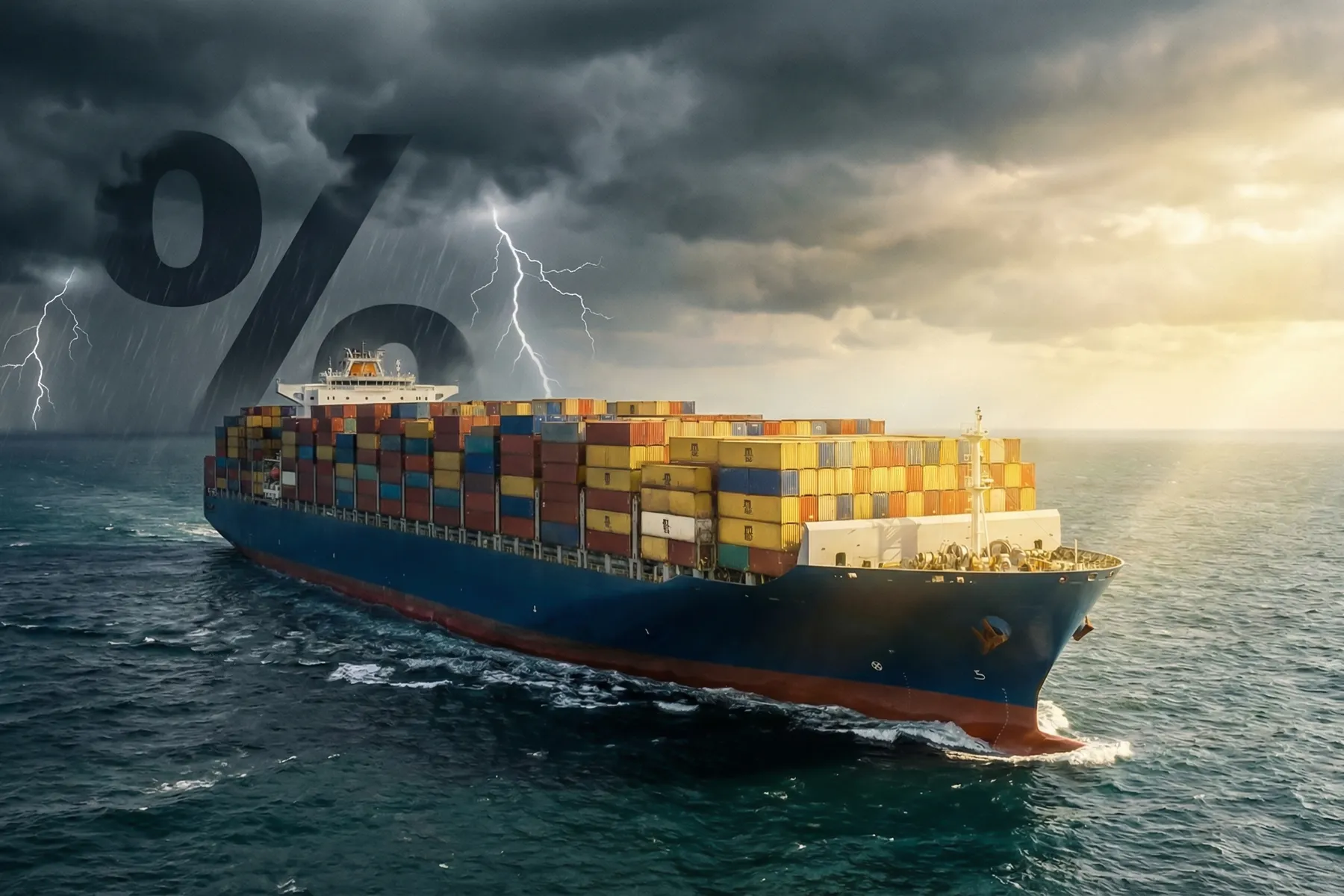
A TRUCE OF SEMOLINA
The tariffs of the New World recede; our sacred pasta endures.
1/11/26
A TRUCE OF SEMOLINA
The tariffs of the New World recede; our sacred pasta endures.
1/11/26
A TRUCE OF SEMOLINA
The tariffs of the New World recede; our sacred pasta endures.
1/11/26
There exists an obstinate, almost naive notion that pasta crosses the Atlantic just as it crosses a Sunday: without asking permission, with the natural grace of essential things. Yet, it does not. Between the semolina and the containers, contemporary history still knows how to impose seals, stamps, and percentages. It knows how to transform a simple gesture – placing a comforting dish upon the table – into a dispute of numbers and accusations, of “dumping” and “tariffs”, as if identity itself could be weighed at customs.
In recent days, a signal has arrived from the United States which, for the Italian supply chain, sounds like a clearing of the skies: the downward revision of the rates hypothesized in the anti-dumping investigation on pasta. For months, the shadow cast was that of immense duties, coaxial to rendering the American market suddenly unrecognizable: a realm where Italian pasta is not mere merchandise, but also language, ritual, and packaged nostalgia. This new estimation tempers that threat, reorganizes the figures, and restores a margin of breathing room.
In Italy, the news was received as one welcomes a truce: with gratitude and prudence. Diplomacy claims a patient endeavor, woven from dialogues and dossiers, technical roundtables and measured lobbying; politics insists upon a tone of quiet resolve, devoid of bellicose notes; industrial associations emphasize the importance of corporate cooperation and transparency in reconstructing the data. It is a delicate balancing act: on one side, the necessity to defend a supply chain that represents labor, territories, and investments; on the other, the obligation to remain within the confines of an American proceeding with its own temporalities and logic.
And yet, behind the communiqués and the figures, remains the question of greatest interest to those who chronicle pasta as culture: what does it mean to levy a tariff upon a symbol? Pasta is a product, to be sure: it has costs, margins, and commercial strategies. But it is also a vessel of exported memory. It is that package sought by so many as students, emigrants, or temporary Italians in a foreign tongue. It is a way of carrying home with oneself, even when home is far away. To strike it with a punitive tariff is to strike a part of that continuity: as if to say that taste cannot circulate freely, that even nostalgia must pay a toll. Today, therefore, we can speak of a step back from the worst-case scenario: a downsizing that averts – at least for now – a short circuit of duties capable of disrupting shelves and balance sheets. But the match is not yet won. It has, if anything, entered its most subtle phase: that wherein an entire supply chain must prove, once more, that Italy does not sell its identity “below cost”, but has built it – for centuries – with a discipline that is simultaneously technique and civilization.
Thus, pasta remains there, poised between two truths: functioning as a daily staple and, at the same time, as a collective gesture. Customs can measure grams and prices, but it cannot measure that which truly passes within a dish: the continuity of a nation that, even when tested by numbers, responds with the very same obstinacy as always. That of kneading. And moving forward. Head held high.


There exists an obstinate, almost naive notion that pasta crosses the Atlantic just as it crosses a Sunday: without asking permission, with the natural grace of essential things. Yet, it does not. Between the semolina and the containers, contemporary history still knows how to impose seals, stamps, and percentages. It knows how to transform a simple gesture – placing a comforting dish upon the table – into a dispute of numbers and accusations, of “dumping” and “tariffs”, as if identity itself could be weighed at customs.
In recent days, a signal has arrived from the United States which, for the Italian supply chain, sounds like a clearing of the skies: the downward revision of the rates hypothesized in the anti-dumping investigation on pasta. For months, the shadow cast was that of immense duties, coaxial to rendering the American market suddenly unrecognizable: a realm where Italian pasta is not mere merchandise, but also language, ritual, and packaged nostalgia. This new estimation tempers that threat, reorganizes the figures, and restores a margin of breathing room.
In Italy, the news was received as one welcomes a truce: with gratitude and prudence. Diplomacy claims a patient endeavor, woven from dialogues and dossiers, technical roundtables and measured lobbying; politics insists upon a tone of quiet resolve, devoid of bellicose notes; industrial associations emphasize the importance of corporate cooperation and transparency in reconstructing the data. It is a delicate balancing act: on one side, the necessity to defend a supply chain that represents labor, territories, and investments; on the other, the obligation to remain within the confines of an American proceeding with its own temporalities and logic.
And yet, behind the communiqués and the figures, remains the question of greatest interest to those who chronicle pasta as culture: what does it mean to levy a tariff upon a symbol? Pasta is a product, to be sure: it has costs, margins, and commercial strategies. But it is also a vessel of exported memory. It is that package sought by so many as students, emigrants, or temporary Italians in a foreign tongue. It is a way of carrying home with oneself, even when home is far away. To strike it with a punitive tariff is to strike a part of that continuity: as if to say that taste cannot circulate freely, that even nostalgia must pay a toll. Today, therefore, we can speak of a step back from the worst-case scenario: a downsizing that averts – at least for now – a short circuit of duties capable of disrupting shelves and balance sheets. But the match is not yet won. It has, if anything, entered its most subtle phase: that wherein an entire supply chain must prove, once more, that Italy does not sell its identity “below cost”, but has built it – for centuries – with a discipline that is simultaneously technique and civilization.
Thus, pasta remains there, poised between two truths: functioning as a daily staple and, at the same time, as a collective gesture. Customs can measure grams and prices, but it cannot measure that which truly passes within a dish: the continuity of a nation that, even when tested by numbers, responds with the very same obstinacy as always. That of kneading. And moving forward. Head held high.
There exists an obstinate, almost naive notion that pasta crosses the Atlantic just as it crosses a Sunday: without asking permission, with the natural grace of essential things. Yet, it does not. Between the semolina and the containers, contemporary history still knows how to impose seals, stamps, and percentages. It knows how to transform a simple gesture – placing a comforting dish upon the table – into a dispute of numbers and accusations, of “dumping” and “tariffs”, as if identity itself could be weighed at customs.
In recent days, a signal has arrived from the United States which, for the Italian supply chain, sounds like a clearing of the skies: the downward revision of the rates hypothesized in the anti-dumping investigation on pasta. For months, the shadow cast was that of immense duties, coaxial to rendering the American market suddenly unrecognizable: a realm where Italian pasta is not mere merchandise, but also language, ritual, and packaged nostalgia. This new estimation tempers that threat, reorganizes the figures, and restores a margin of breathing room.
In Italy, the news was received as one welcomes a truce: with gratitude and prudence. Diplomacy claims a patient endeavor, woven from dialogues and dossiers, technical roundtables and measured lobbying; politics insists upon a tone of quiet resolve, devoid of bellicose notes; industrial associations emphasize the importance of corporate cooperation and transparency in reconstructing the data. It is a delicate balancing act: on one side, the necessity to defend a supply chain that represents labor, territories, and investments; on the other, the obligation to remain within the confines of an American proceeding with its own temporalities and logic.
And yet, behind the communiqués and the figures, remains the question of greatest interest to those who chronicle pasta as culture: what does it mean to levy a tariff upon a symbol? Pasta is a product, to be sure: it has costs, margins, and commercial strategies. But it is also a vessel of exported memory. It is that package sought by so many as students, emigrants, or temporary Italians in a foreign tongue. It is a way of carrying home with oneself, even when home is far away. To strike it with a punitive tariff is to strike a part of that continuity: as if to say that taste cannot circulate freely, that even nostalgia must pay a toll. Today, therefore, we can speak of a step back from the worst-case scenario: a downsizing that averts – at least for now – a short circuit of duties capable of disrupting shelves and balance sheets. But the match is not yet won. It has, if anything, entered its most subtle phase: that wherein an entire supply chain must prove, once more, that Italy does not sell its identity “below cost”, but has built it – for centuries – with a discipline that is simultaneously technique and civilization.
Thus, pasta remains there, poised between two truths: functioning as a daily staple and, at the same time, as a collective gesture. Customs can measure grams and prices, but it cannot measure that which truly passes within a dish: the continuity of a nation that, even when tested by numbers, responds with the very same obstinacy as always. That of kneading. And moving forward. Head held high.