HOMESTYLE CASERECCIO WITH CACIO E PEPE
Pecorino Romano, black pepper, cooking water
Moderate
Lazio
10 minutes
250 Kcal
HOMESTYLE CASERECCIO WITH CACIO E PEPE
Pecorino Romano, black pepper, cooking water
Moderate
Lazio
10 minutes
250 Kcal
HOMESTYLE CASERECCIO WITH CACIO E PEPE
Pecorino Romano, black pepper, cooking water
Moderate
Lazio
10 minutes
250 Kcal
GENESIS
The Cacio e Pepe, though standing as one of the simplest creations of the Roman tradition, conceals beneath its apparent simplicity a rich and fascinating heritage, deeply rooted in the pastoral culture of Lazio.
This dish was born from the shepherds' necessity for a nourishing meal, easily prepared during the long, arduous journeys of transhumance. The foundational ingredients – Pecorino Romano, black pepper, and pasta – were easily transported and preserved. The Pecorino Romano, a hard cheese of intense and savory character, served as a precious source of energy, while the black pepper, beyond imparting a spirited flavor, possessed preserving and warming virtues, essential for enduring the elements.
Legends whisper of shepherds who, during their rustic pauses, would prepare this dish directly over the open flame, utilizing the very cooking water of the pasta to conjure a dense, enveloping cream from the cheese and pepper.
The artistry lay in the precise tempering of the ingredients and the mastery of emulsifying the nectar to achieve a velvet texture, entirely free of lumps.
A sacred secret was the starch released by the pasta into its boiling bath, which acted as a natural binder. Across the centuries, Cacio e Pepe has preserved its pristine authenticity, ascending to become a crowning symbol of Roman gastronomy and capturing palates worldwide, all while guarding its humble and genuine soul.
PORTIONS (FOR 4 PERSONS)
THE RECIPE
Pecorino Romano DOP
Black peppercorns
Cooking water
150 g
5 g
to taste
CURATION
For the Seasoning:
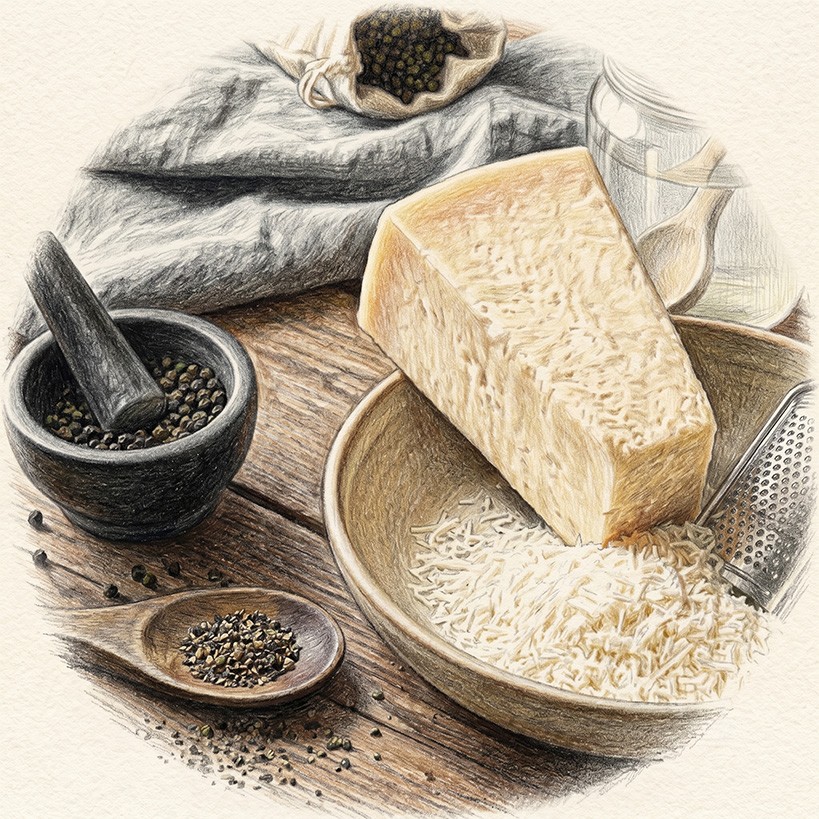
Take the black peppercorns and crush them coarsely in a mortar. If you possess none, you may employ a pepper grinder or cradle them between two sheets of parchment paper, bruising them with a meat mallet or the heavy base of a glass. Crucially, avoid pre-ground pepper, for it would fail to release the same vibrant aroma and spirited heat.
Cast the crushed pepper into a spacious pan (of ample size to later cradle the pasta) and toast it over medium heat for a brief couple of minutes. This ritual is essential, as it awakens the pepper's essential oils and intensifies its fragrance. Tread carefully, lest it burn!
Meanwhile, finely grate the Pecorino Romano. Mastery of this dish demands a very fine grate to coax the cheese into a sublime cream. Place the grated Pecorino in a bowl.
Introduce a couple of ladles of the pasta cooking water (abundantly warm but not boiling; perhaps allow it a brief moment of repose after drawing it) to the grated Pecorino. Whisk vigorously with a fork or whip until a smooth, lump-free cream is born. Should it be required, invite more cooking water, one spoonful at a time. The consistency must mirror that of a rich, velvety batter.
aspiration
Utilise only the finest Pecorino Romano DOP, for it is the foundational pillar upon which the triumph of this dish reposes.
Offer no salt to the cream; the noble Pecorino Romano possesses within itself a profound and natural salinity.
The temperature of the cooking nectar is of paramount grace: it must wrap the cheese in warmth, never in boiling fury, to coax it into a sublime and velvety fluid.



GENESIS
The Cacio e Pepe, though standing as one of the simplest creations of the Roman tradition, conceals beneath its apparent simplicity a rich and fascinating heritage, deeply rooted in the pastoral culture of Lazio.
This dish was born from the shepherds' necessity for a nourishing meal, easily prepared during the long, arduous journeys of transhumance. The foundational ingredients – Pecorino Romano, black pepper, and pasta – were easily transported and preserved. The Pecorino Romano, a hard cheese of intense and savory character, served as a precious source of energy, while the black pepper, beyond imparting a spirited flavor, possessed preserving and warming virtues, essential for enduring the elements.
Legends whisper of shepherds who, during their rustic pauses, would prepare this dish directly over the open flame, utilizing the very cooking water of the pasta to conjure a dense, enveloping cream from the cheese and pepper.
The artistry lay in the precise tempering of the ingredients and the mastery of emulsifying the nectar to achieve a velvet texture, entirely free of lumps.
A sacred secret was the starch released by the pasta into its boiling bath, which acted as a natural binder. Across the centuries, Cacio e Pepe has preserved its pristine authenticity, ascending to become a crowning symbol of Roman gastronomy and capturing palates worldwide, all while guarding its humble and genuine soul.
PORTIONS (FOR 4 PERSONS)
THE RECIPE
Pecorino Romano DOP
Black peppercorns
Cooking water
150 g
5 g
to taste
CURATION
For the Seasoning:
Take the black peppercorns and crush them coarsely in a mortar. If you possess none, you may employ a pepper grinder or cradle them between two sheets of parchment paper, bruising them with a meat mallet or the heavy base of a glass. Crucially, avoid pre-ground pepper, for it would fail to release the same vibrant aroma and spirited heat.
Cast the crushed pepper into a spacious pan (of ample size to later cradle the pasta) and toast it over medium heat for a brief couple of minutes. This ritual is essential, as it awakens the pepper's essential oils and intensifies its fragrance. Tread carefully, lest it burn!
Meanwhile, finely grate the Pecorino Romano. Mastery of this dish demands a very fine grate to coax the cheese into a sublime cream. Place the grated Pecorino in a bowl.
Introduce a couple of ladles of the pasta cooking water (abundantly warm but not boiling; perhaps allow it a brief moment of repose after drawing it) to the grated Pecorino. Whisk vigorously with a fork or whip until a smooth, lump-free cream is born. Should it be required, invite more cooking water, one spoonful at a time. The consistency must mirror that of a rich, velvety batter.
aspiration
Utilise only the finest Pecorino Romano DOP, for it is the foundational pillar upon which the triumph of this dish reposes.
Offer no salt to the cream; the noble Pecorino Romano possesses within itself a profound and natural salinity.
The temperature of the cooking nectar is of paramount grace: it must wrap the cheese in warmth, never in boiling fury, to coax it into a sublime and velvety fluid.
ultimate alchemies
GENESIS
The Cacio e Pepe, though standing as one of the simplest creations of the Roman tradition, conceals beneath its apparent simplicity a rich and fascinating heritage, deeply rooted in the pastoral culture of Lazio.
This dish was born from the shepherds' necessity for a nourishing meal, easily prepared during the long, arduous journeys of transhumance. The foundational ingredients – Pecorino Romano, black pepper, and pasta – were easily transported and preserved. The Pecorino Romano, a hard cheese of intense and savory character, served as a precious source of energy, while the black pepper, beyond imparting a spirited flavor, possessed preserving and warming virtues, essential for enduring the elements.
Legends whisper of shepherds who, during their rustic pauses, would prepare this dish directly over the open flame, utilizing the very cooking water of the pasta to conjure a dense, enveloping cream from the cheese and pepper.
The artistry lay in the precise tempering of the ingredients and the mastery of emulsifying the nectar to achieve a velvet texture, entirely free of lumps.
A sacred secret was the starch released by the pasta into its boiling bath, which acted as a natural binder. Across the centuries, Cacio e Pepe has preserved its pristine authenticity, ascending to become a crowning symbol of Roman gastronomy and capturing palates worldwide, all while guarding its humble and genuine soul.
PORTIONS (FOR 4 PERSONS)
THE RECIPE
Pecorino Romano DOP
Black peppercorns
Cooking water
150 g
5 g
to taste
CURATION
For the Seasoning:
Take the black peppercorns and crush them coarsely in a mortar. If you possess none, you may employ a pepper grinder or cradle them between two sheets of parchment paper, bruising them with a meat mallet or the heavy base of a glass. Crucially, avoid pre-ground pepper, for it would fail to release the same vibrant aroma and spirited heat.
Cast the crushed pepper into a spacious pan (of ample size to later cradle the pasta) and toast it over medium heat for a brief couple of minutes. This ritual is essential, as it awakens the pepper's essential oils and intensifies its fragrance. Tread carefully, lest it burn!
Meanwhile, finely grate the Pecorino Romano. Mastery of this dish demands a very fine grate to coax the cheese into a sublime cream. Place the grated Pecorino in a bowl.
Introduce a couple of ladles of the pasta cooking water (abundantly warm but not boiling; perhaps allow it a brief moment of repose after drawing it) to the grated Pecorino. Whisk vigorously with a fork or whip until a smooth, lump-free cream is born. Should it be required, invite more cooking water, one spoonful at a time. The consistency must mirror that of a rich, velvety batter.
aspiration
Utilise only the finest Pecorino Romano DOP, for it is the foundational pillar upon which the triumph of this dish reposes.
Offer no salt to the cream; the noble Pecorino Romano possesses within itself a profound and natural salinity.
The temperature of the cooking nectar is of paramount grace: it must wrap the cheese in warmth, never in boiling fury, to coax it into a sublime and velvety fluid.