
Handcrafted Cordeddi Pasta in a Rich, Slow-Simmered Sugo
Stone-ground durum wheat semolina, rustic rye flour, heritage goat meat, sun-ripened peeled tomatoes, sweet red onion, and aged salted ricotta
Effortless
Calabria
150 minutes
850 kcal
Handcrafted Cordeddi Pasta in a Rich, Slow-Simmered Sugo
Stone-ground durum wheat semolina, rustic rye flour, heritage goat meat, sun-ripened peeled tomatoes, sweet red onion, and aged salted ricotta
Effortless
Calabria
150 minutes
850 kcal
Handcrafted Cordeddi Pasta in a Rich, Slow-Simmered Sugo
Stone-ground durum wheat semolina, rustic rye flour, heritage goat meat, sun-ripened peeled tomatoes, sweet red onion, and aged salted ricotta
Effortless
Calabria
150 minutes
850 kcal
GENESIS
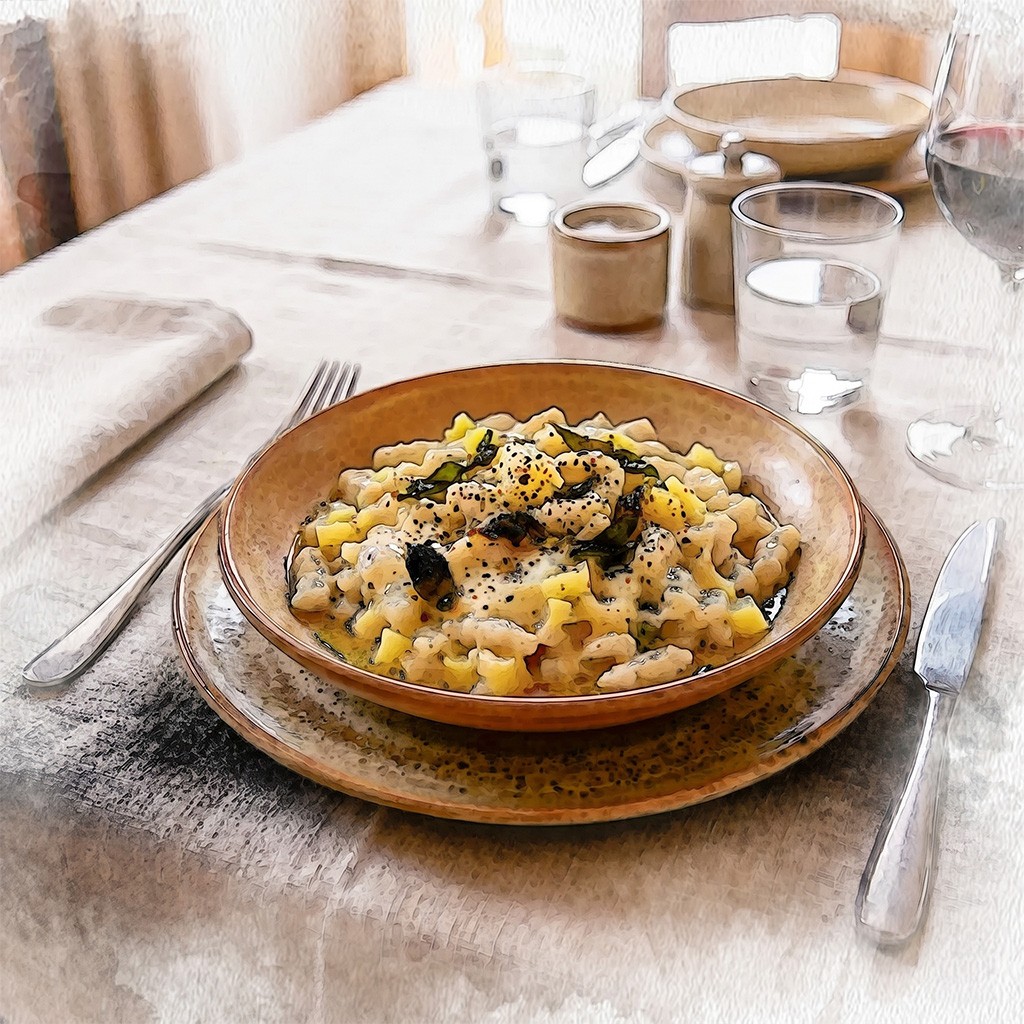
Cordelle—or cordeddi in the idiom of the Calabrian Grecanico territory—embody one of the most archaic and mesmerizing fresh pastas of the Aspromonte landscape. Shaped by rolling a slender strand of dough until it adopts its signature helical form, this pasta was historically crafted from the flour of jermanu, an ancient local rye cultivated upon the most unforgiving altitudes. It represents a rural heritage of peerless significance, whispering tales of the toil and ancestral wisdom of the mountain hamlets of Grecanica Calabria, where durum wheats were wedded to humble flours to ensure profound sustenance and enduring vitality.
The consummate accompaniment for this toothsome, deeply tactile pasta—so magnificently suited to capturing sauces—is intrinsically tied to local pastoral life: a sumptuous, invigorating goat ragù. This braised preparation demands a slow, devoted simmering, wherein tender morsels of goat meat are browned alongside sweet onions before gently stewing in sun-ripened tomatoes, surrendering their essences and rustic soul to the sauce. The result is a creation of unwavering character and unmistakable aromatic depth, conceived for the severe winter months. A gentle dusting of aged local cheese crowns the masterpiece, imparting the requisite salinity to harmonize with the sweetness of the tomatoes and the resolute texture of the pasta. To present cordeddi cu sucu at the table is to embark upon an authentic pilgrimage through time, paying homage to an essential, proud gastronomy indissolubly bound to the stark, sublime mountains of Calabria.
PORTIONS (FOR 4 PERSONS)
FOR THE ARTISANAL FRESH PASTA
Twice-milled durum semolina flour
Rye flour
Water
Salt
240 g
160 g
200 g
To taste
FOR THE EMBELLISHMENT
Goat meat
Peeled sun-ripened tomatoes
Red onion
Aged ricotta salata
Extra virgin olive oil
Sea salt
Black peppercorn
800 g
600 g
1
100 g
To taste
To taste
To taste
CURATION
For the condiment:
Cut the goat meat into uniform pieces, trimming away any excessive fat. Peel and finely mince the red onion. In a generous vessel, preferably fashioned of terracotta, warm a bountiful swirl of extra-virgin olive oil and introduce the onion. Allow it to soften gently, surrendering its sharpness without scorching. Add the morsels of meat and sear them on all sides until richly browned. Now, unveil the peeled tomatoes, crushing them lightly, and bestow a whisper of salt and black pepper. Cover and let it simmer over the gentlest flame for some two hours, adding a ladleful of warm water should the sauce reduce too swiftly. The meat must emerge tender as silk, and the sauce deep, dense, and dark.For the fresh pasta:
Shape the remilled semolina and rye flour into a fountain upon a wooden kneading board. Nest a pinch of salt at its center. Begin to pour in the ambient water, drop by drop, working the dough with loving hands until a smooth, firm, and harmonious ball is born. Envelop the dough in film and grant it repose for approximately thirty minutes. Once its rest is fulfilled, draw forth small portions and shape them into long, slender cords. Gently twist each strand upon itself to bestow its signature helical form, then leave them to dry upon the floured board.For the cooking and finishing:
Bring a generous pot of well-salted water to a rolling boil. Plunge the cordelle into the depths and let them cook until they rise to the surface, maintaining a proud al dente bite. Drain them, preserving a precious touch of their starchy cooking water. Transfer the pasta directly into the vessel holding the piping-hot goat ragù, setting aside the pieces of meat to be presented as a second course or crowned atop the dish. Fold gently to marry the pasta with its savor, tossing it all for a fleeting minute. Plate with elegance and finish with a lavish snowfall of grated ricotta salata.
aspiration
Fold the tender shreds of braised goat meat directly into the pasta, should you desire an opulent, self-contained masterpiece.
Employ tepid water to bind the flours, imparting an exquisite suppleness and pliancy to the dough.
Select a mature cheese of bold character should ricotta salata elude your pantry—a seasoned Pecorino Crotonese, for instance, lends sublime depth.



GENESIS
Cordelle—or cordeddi in the idiom of the Calabrian Grecanico territory—embody one of the most archaic and mesmerizing fresh pastas of the Aspromonte landscape. Shaped by rolling a slender strand of dough until it adopts its signature helical form, this pasta was historically crafted from the flour of jermanu, an ancient local rye cultivated upon the most unforgiving altitudes. It represents a rural heritage of peerless significance, whispering tales of the toil and ancestral wisdom of the mountain hamlets of Grecanica Calabria, where durum wheats were wedded to humble flours to ensure profound sustenance and enduring vitality.
The consummate accompaniment for this toothsome, deeply tactile pasta—so magnificently suited to capturing sauces—is intrinsically tied to local pastoral life: a sumptuous, invigorating goat ragù. This braised preparation demands a slow, devoted simmering, wherein tender morsels of goat meat are browned alongside sweet onions before gently stewing in sun-ripened tomatoes, surrendering their essences and rustic soul to the sauce. The result is a creation of unwavering character and unmistakable aromatic depth, conceived for the severe winter months. A gentle dusting of aged local cheese crowns the masterpiece, imparting the requisite salinity to harmonize with the sweetness of the tomatoes and the resolute texture of the pasta. To present cordeddi cu sucu at the table is to embark upon an authentic pilgrimage through time, paying homage to an essential, proud gastronomy indissolubly bound to the stark, sublime mountains of Calabria.
PORTIONS (FOR 4 PERSONS)
FOR THE ARTISANAL FRESH PASTA
Twice-milled durum semolina flour
Rye flour
Water
Salt
240 g
160 g
200 g
To taste
FOR THE EMBELLISHMENT
Goat meat
Peeled sun-ripened tomatoes
Red onion
Aged ricotta salata
Extra virgin olive oil
Sea salt
Black peppercorn
800 g
600 g
1
100 g
To taste
To taste
To taste
CURATION
For the condiment:
Cut the goat meat into uniform pieces, trimming away any excessive fat. Peel and finely mince the red onion. In a generous vessel, preferably fashioned of terracotta, warm a bountiful swirl of extra-virgin olive oil and introduce the onion. Allow it to soften gently, surrendering its sharpness without scorching. Add the morsels of meat and sear them on all sides until richly browned. Now, unveil the peeled tomatoes, crushing them lightly, and bestow a whisper of salt and black pepper. Cover and let it simmer over the gentlest flame for some two hours, adding a ladleful of warm water should the sauce reduce too swiftly. The meat must emerge tender as silk, and the sauce deep, dense, and dark.For the fresh pasta:
Shape the remilled semolina and rye flour into a fountain upon a wooden kneading board. Nest a pinch of salt at its center. Begin to pour in the ambient water, drop by drop, working the dough with loving hands until a smooth, firm, and harmonious ball is born. Envelop the dough in film and grant it repose for approximately thirty minutes. Once its rest is fulfilled, draw forth small portions and shape them into long, slender cords. Gently twist each strand upon itself to bestow its signature helical form, then leave them to dry upon the floured board.For the cooking and finishing:
Bring a generous pot of well-salted water to a rolling boil. Plunge the cordelle into the depths and let them cook until they rise to the surface, maintaining a proud al dente bite. Drain them, preserving a precious touch of their starchy cooking water. Transfer the pasta directly into the vessel holding the piping-hot goat ragù, setting aside the pieces of meat to be presented as a second course or crowned atop the dish. Fold gently to marry the pasta with its savor, tossing it all for a fleeting minute. Plate with elegance and finish with a lavish snowfall of grated ricotta salata.
aspiration
Fold the tender shreds of braised goat meat directly into the pasta, should you desire an opulent, self-contained masterpiece.
Employ tepid water to bind the flours, imparting an exquisite suppleness and pliancy to the dough.
Select a mature cheese of bold character should ricotta salata elude your pantry—a seasoned Pecorino Crotonese, for instance, lends sublime depth.