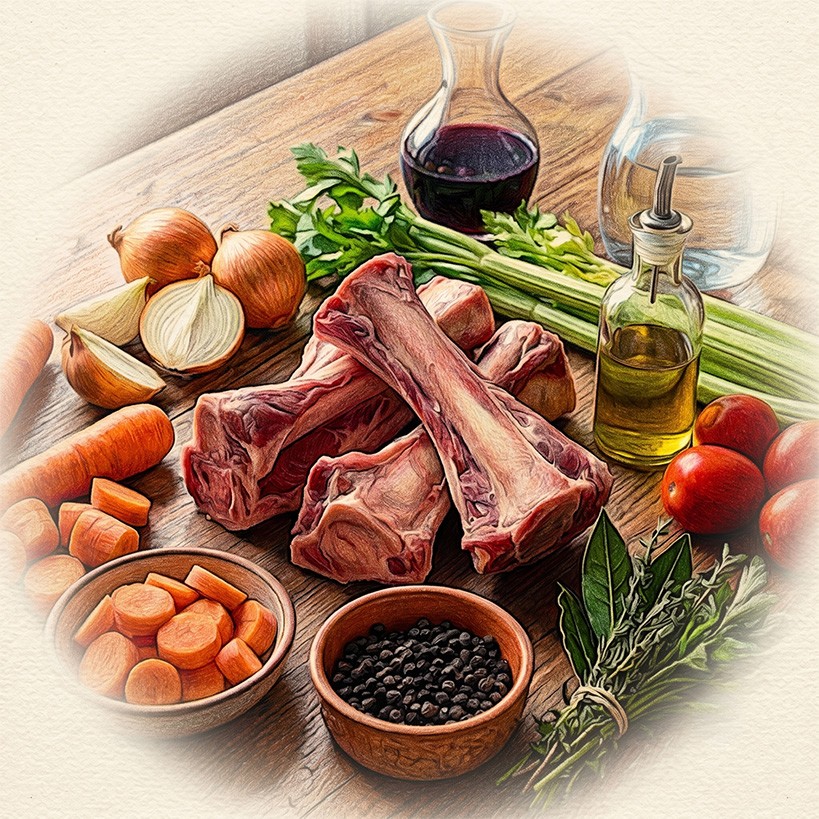
BROWN VEAL STOCK
Veal bones, Carrots, Onions, Celery, Fresh tomatoes, Red wine, Cold water, Extra virgin olive oil, Black pepper
Exceedingly Masterful
France
360 minutes
25 Kcal
BROWN VEAL STOCK
Veal bones, Carrots, Onions, Celery, Fresh tomatoes, Red wine, Cold water, Extra virgin olive oil, Black pepper
Exceedingly Masterful
France
360 minutes
25 Kcal
BROWN VEAL STOCK
Veal bones, Carrots, Onions, Celery, Fresh tomatoes, Red wine, Cold water, Extra virgin olive oil, Black pepper
Exceedingly Masterful
France
360 minutes
25 Kcal
GENESIS
The brown stock represents one of the foundational culinary foundations of classical international gastronomy, codified in particular by the illustrious French culinary tradition. Its historical origins are interwoven with the evolution of haute cuisine and the grand kitchen brigades, reaching its ultimate theoretical synthesis in the nineteenth and twentieth centuries through the works of masters such as Marie-Antoine Caru00eame and, subsequently, Auguste Escoffier. The latter, in his celebrated 1903 treatise "Le Guide Culinaire," classified these stocks as the pivotal keystones from which the entire architecture of mother sauces and their myriad derivations descends.
The distinguishing essence of brown stock lies in the Maillard reaction, a chemical phenomenon occurring during the preliminary roasting of bones and vegetables at elevated temperatures. This sacred process engenders a complex tapestry of aromas and the characteristic deep hue that bestow profound depth upon culinary creations. Historically, veal bones, rich in connective tissue, were favored for their capacity to surrender collagen during the prolonged, slow extraction in simmering water. This collagen, transmuted into gelatin, imparts a dense and velvety texture to the liquid, essential for the structure of dark sauces such as Espagnole or demi-glace.
Beyond the bones, the aromatic garnish plays a crucial, symphonic role. The classical mirepoix, composed of celery, carrots, and onions, is enriched by acidic elements such as red wine and fresh tomatoes, which help to dissolve and release the caramelized juices resting at the base of the roasting pan. The preparation demands supreme technical rigor, enduring patience, and constant thermal vigilance to allow a natural clarification of the liquid through the gentle skimming of impurities.
PORTIONS (FOR 4 PERSONS)
THE RECIPE
Veal bones
Carrots
Golden onions
Celery
Tomatoes
Red wine
Icy water
Bouquet garni
Extra virgin olive oil
Black peppercorns
1 kg
200 g
200 g
100 g
150 g
200 ml
3 liters
1
2 tablespoons
to taste
CURATION
For the roasting of the bones:
Begin the preparation by awakening the oven, bringing it to a temperature of 220 degrees. Take a generous steel roasting pan and arrange within it the fresh veal bones. Anoint the bones with extra virgin olive oil and consign them to the oven. Allow the meat to roast for approximately one hour, remembering to turn the bones midway through their cooking, until they assume a deep, uniform chestnut hue.For the preparation of the vegetables:
While the bones undergo their transformation in the oven, wash meticulously the carrots, celery, and fresh tomatoes. Peel the onions and hand-cut all the vegetables, with the exception of the tomatoes, into medium-sized jewels to form a precise mirepoix. Transfer this aromatic medley into a grand, high-sided copper pot, allowing them to sweat gently over a medium flame until they achieve a soft, golden radiance.For the deglazing:
Once the bones have achieved their sublime roast, withdraw the pan from the oven and unite the bones with the caramelized vegetables in the main pot. Discard the excess fat remaining in the roasting pan, place the pan over an active flame, and pour in the red wine. Let the wine evaporate, scraping the bottom with a wooden spoon to dissolve and capture the caramelized nectars, rich with concentrated flavor.For the simmering of the stock:
Pour the precious liquid obtained from the deglazing into the main pot. Add the fresh tomatoes, cut into rustic chunks, the bouquet garni, and the black peppercorns. Pour in ice-cold water until all the ingredients are completely submerged. Bring the liquid to a delicate boil, then instantly lower the flame to a whisper to maintain a gentle, constant shimmer. During the first hour, use a skimmer to meticulously remove the impurities and fat that rise to the surface. Allow the preparation to simmer undisturbed for at least five hours.For the straining and preservation:
Once the hours of extraction are complete, extinguish the flame. Pass the liquid through an ultra-fine mesh strainer (chinois), pressing gently upon the bones and vegetables to capture their ultimate essence without clouding the pristine broth. Return the strained liquid to the fire should you wish to reduce its body further, or cool it swiftly to preserve its perfection.
aspiration
Prepare this noble brown stock in generous harvests: it may be gracefully frozen within ice cube trays, ensuring you always possess precious, measured elixirs to elevate and enrich your culinary creations.
In place of icy water, you may summon pure ice; this cold embrace coaxes a more profound extraction of life-giving juices and collagen from the bones.
Refrain from introducing salt during this long, transformative simmer: as a sacred foundation destined to be concentrated or woven into other compositions, any early seasoning risks rendering the final masterpiece excessively sapid.


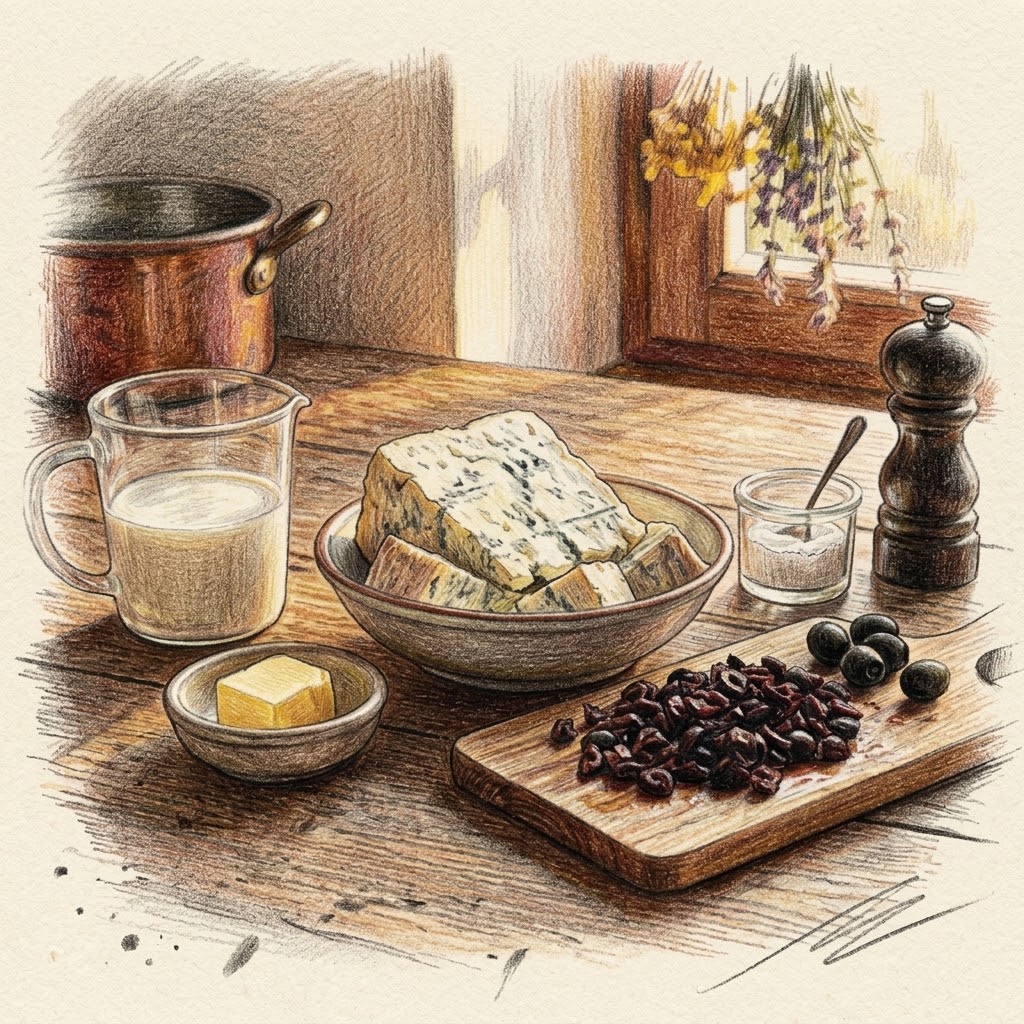

GENESIS
The brown stock represents one of the foundational culinary foundations of classical international gastronomy, codified in particular by the illustrious French culinary tradition. Its historical origins are interwoven with the evolution of haute cuisine and the grand kitchen brigades, reaching its ultimate theoretical synthesis in the nineteenth and twentieth centuries through the works of masters such as Marie-Antoine Caru00eame and, subsequently, Auguste Escoffier. The latter, in his celebrated 1903 treatise "Le Guide Culinaire," classified these stocks as the pivotal keystones from which the entire architecture of mother sauces and their myriad derivations descends.
The distinguishing essence of brown stock lies in the Maillard reaction, a chemical phenomenon occurring during the preliminary roasting of bones and vegetables at elevated temperatures. This sacred process engenders a complex tapestry of aromas and the characteristic deep hue that bestow profound depth upon culinary creations. Historically, veal bones, rich in connective tissue, were favored for their capacity to surrender collagen during the prolonged, slow extraction in simmering water. This collagen, transmuted into gelatin, imparts a dense and velvety texture to the liquid, essential for the structure of dark sauces such as Espagnole or demi-glace.
Beyond the bones, the aromatic garnish plays a crucial, symphonic role. The classical mirepoix, composed of celery, carrots, and onions, is enriched by acidic elements such as red wine and fresh tomatoes, which help to dissolve and release the caramelized juices resting at the base of the roasting pan. The preparation demands supreme technical rigor, enduring patience, and constant thermal vigilance to allow a natural clarification of the liquid through the gentle skimming of impurities.
PORTIONS (FOR 4 PERSONS)
THE RECIPE
Veal bones
Carrots
Golden onions
Celery
Tomatoes
Red wine
Icy water
Bouquet garni
Extra virgin olive oil
Black peppercorns
1 kg
200 g
200 g
100 g
150 g
200 ml
3 liters
1
2 tablespoons
to taste
CURATION
For the roasting of the bones:
Begin the preparation by awakening the oven, bringing it to a temperature of 220 degrees. Take a generous steel roasting pan and arrange within it the fresh veal bones. Anoint the bones with extra virgin olive oil and consign them to the oven. Allow the meat to roast for approximately one hour, remembering to turn the bones midway through their cooking, until they assume a deep, uniform chestnut hue.For the preparation of the vegetables:
While the bones undergo their transformation in the oven, wash meticulously the carrots, celery, and fresh tomatoes. Peel the onions and hand-cut all the vegetables, with the exception of the tomatoes, into medium-sized jewels to form a precise mirepoix. Transfer this aromatic medley into a grand, high-sided copper pot, allowing them to sweat gently over a medium flame until they achieve a soft, golden radiance.For the deglazing:
Once the bones have achieved their sublime roast, withdraw the pan from the oven and unite the bones with the caramelized vegetables in the main pot. Discard the excess fat remaining in the roasting pan, place the pan over an active flame, and pour in the red wine. Let the wine evaporate, scraping the bottom with a wooden spoon to dissolve and capture the caramelized nectars, rich with concentrated flavor.For the simmering of the stock:
Pour the precious liquid obtained from the deglazing into the main pot. Add the fresh tomatoes, cut into rustic chunks, the bouquet garni, and the black peppercorns. Pour in ice-cold water until all the ingredients are completely submerged. Bring the liquid to a delicate boil, then instantly lower the flame to a whisper to maintain a gentle, constant shimmer. During the first hour, use a skimmer to meticulously remove the impurities and fat that rise to the surface. Allow the preparation to simmer undisturbed for at least five hours.For the straining and preservation:
Once the hours of extraction are complete, extinguish the flame. Pass the liquid through an ultra-fine mesh strainer (chinois), pressing gently upon the bones and vegetables to capture their ultimate essence without clouding the pristine broth. Return the strained liquid to the fire should you wish to reduce its body further, or cool it swiftly to preserve its perfection.
aspiration
Prepare this noble brown stock in generous harvests: it may be gracefully frozen within ice cube trays, ensuring you always possess precious, measured elixirs to elevate and enrich your culinary creations.
In place of icy water, you may summon pure ice; this cold embrace coaxes a more profound extraction of life-giving juices and collagen from the bones.
Refrain from introducing salt during this long, transformative simmer: as a sacred foundation destined to be concentrated or woven into other compositions, any early seasoning risks rendering the final masterpiece excessively sapid.
ultimate alchemies
GENESIS
The brown stock represents one of the foundational culinary foundations of classical international gastronomy, codified in particular by the illustrious French culinary tradition. Its historical origins are interwoven with the evolution of haute cuisine and the grand kitchen brigades, reaching its ultimate theoretical synthesis in the nineteenth and twentieth centuries through the works of masters such as Marie-Antoine Caru00eame and, subsequently, Auguste Escoffier. The latter, in his celebrated 1903 treatise "Le Guide Culinaire," classified these stocks as the pivotal keystones from which the entire architecture of mother sauces and their myriad derivations descends.
The distinguishing essence of brown stock lies in the Maillard reaction, a chemical phenomenon occurring during the preliminary roasting of bones and vegetables at elevated temperatures. This sacred process engenders a complex tapestry of aromas and the characteristic deep hue that bestow profound depth upon culinary creations. Historically, veal bones, rich in connective tissue, were favored for their capacity to surrender collagen during the prolonged, slow extraction in simmering water. This collagen, transmuted into gelatin, imparts a dense and velvety texture to the liquid, essential for the structure of dark sauces such as Espagnole or demi-glace.
Beyond the bones, the aromatic garnish plays a crucial, symphonic role. The classical mirepoix, composed of celery, carrots, and onions, is enriched by acidic elements such as red wine and fresh tomatoes, which help to dissolve and release the caramelized juices resting at the base of the roasting pan. The preparation demands supreme technical rigor, enduring patience, and constant thermal vigilance to allow a natural clarification of the liquid through the gentle skimming of impurities.
PORTIONS (FOR 4 PERSONS)
THE RECIPE
Veal bones
Carrots
Golden onions
Celery
Tomatoes
Red wine
Icy water
Bouquet garni
Extra virgin olive oil
Black peppercorns
1 kg
200 g
200 g
100 g
150 g
200 ml
3 liters
1
2 tablespoons
to taste
CURATION
For the roasting of the bones:
Begin the preparation by awakening the oven, bringing it to a temperature of 220 degrees. Take a generous steel roasting pan and arrange within it the fresh veal bones. Anoint the bones with extra virgin olive oil and consign them to the oven. Allow the meat to roast for approximately one hour, remembering to turn the bones midway through their cooking, until they assume a deep, uniform chestnut hue.For the preparation of the vegetables:
While the bones undergo their transformation in the oven, wash meticulously the carrots, celery, and fresh tomatoes. Peel the onions and hand-cut all the vegetables, with the exception of the tomatoes, into medium-sized jewels to form a precise mirepoix. Transfer this aromatic medley into a grand, high-sided copper pot, allowing them to sweat gently over a medium flame until they achieve a soft, golden radiance.For the deglazing:
Once the bones have achieved their sublime roast, withdraw the pan from the oven and unite the bones with the caramelized vegetables in the main pot. Discard the excess fat remaining in the roasting pan, place the pan over an active flame, and pour in the red wine. Let the wine evaporate, scraping the bottom with a wooden spoon to dissolve and capture the caramelized nectars, rich with concentrated flavor.For the simmering of the stock:
Pour the precious liquid obtained from the deglazing into the main pot. Add the fresh tomatoes, cut into rustic chunks, the bouquet garni, and the black peppercorns. Pour in ice-cold water until all the ingredients are completely submerged. Bring the liquid to a delicate boil, then instantly lower the flame to a whisper to maintain a gentle, constant shimmer. During the first hour, use a skimmer to meticulously remove the impurities and fat that rise to the surface. Allow the preparation to simmer undisturbed for at least five hours.For the straining and preservation:
Once the hours of extraction are complete, extinguish the flame. Pass the liquid through an ultra-fine mesh strainer (chinois), pressing gently upon the bones and vegetables to capture their ultimate essence without clouding the pristine broth. Return the strained liquid to the fire should you wish to reduce its body further, or cool it swiftly to preserve its perfection.
aspiration
Prepare this noble brown stock in generous harvests: it may be gracefully frozen within ice cube trays, ensuring you always possess precious, measured elixirs to elevate and enrich your culinary creations.
In place of icy water, you may summon pure ice; this cold embrace coaxes a more profound extraction of life-giving juices and collagen from the bones.
Refrain from introducing salt during this long, transformative simmer: as a sacred foundation destined to be concentrated or woven into other compositions, any early seasoning risks rendering the final masterpiece excessively sapid.