
FONTINA FONDUE
Fontina, milk, and golden egg yolks
Moderate
Val d'Aosta
Three hours of culinary contemplation
300 Calories of Pure Culinary Artistry
FONTINA FONDUE
Fontina, milk, and golden egg yolks
Moderate
Val d'Aosta
Three hours of culinary contemplation
300 Calories of Pure Culinary Artistry
FONTINA FONDUE
Fontina, milk, and golden egg yolks
Moderate
Val d'Aosta
Three hours of culinary contemplation
300 Calories of Pure Culinary Artistry
GENESIS
Fontina Fondue stands as the most iconic masterpiece within the culinary heritage of the Aosta Valley. It is an ancestral creation, born of the necessity to transform the local nectar, Fontina cheese, into a warm and comforting elixir, capable of reviving the spirit during the long and unforgiving alpine winters. Its genesis is intimately woven with the region's pastoral rhythms and the profound expertise of master cheesemakers who craft Fontina DOP—a semi-cooked cheese of sweet, distinctive character that serves as the very soul of this recipe.
The traditional preparation, refined through the ages, demands a fundamental ritual of marination: the Fontina, stripped of its rind and diced into cubes, must repose in milk for several hours. This sacred step softens the cheese, ensuring a harmonious and seamless fusion. The cooking unfolds strictly in a bain-marie, a slow and meticulous method that prevents the cheese from separating its delicate fats from its structural proteins. Under this gentle warmth, the Fontina surrenders to the milk and butter, birthing a velvet emulsion.
The final touch, which elevates the true Valdostan fondue to sublime heights, is the integration of fresh egg yolks. Whisked in away from the flame, they utilize the residual heat to bind the sauce, imparting a rich, creamy majesty and an intense golden hue without ever scrambling. Though modern palates revere it as an opulent adornment for pasta, gnocchi, or risotto, the fondue was born as a solitary protagonist, served piping hot in its dedicated copper vessel (the caquelon) and escorted by rustic croutons of black bread or polenta.
PORTIONS (FOR 4 PERSONS)
THE RECIPE
Fontina PDO
Fresh, whole milk
Golden egg yolks
Butter
Freshly cracked black pepper
Nutmeg (optional)
400 g
250 ml
4
30 g
to taste
to taste
CURATION
For the preparation of the Fontina:
First, take the Fontina DOP and gently remove its outer rind. Slice the cheese into delicate portions, then patiently reduce it into small, uniform cubes.
Place the gems of Fontina into a generous bowl and pour the fresh whole milk over them, ensuring the cheese is fully submerged in this pristine bath.
Cover the vessel with cling film and consign it to the refrigerator. Allow the Fontina to marinate in the milk for a minimum of 2 hours. Should time permit, a longer steep (even 4 to 6 hours) will render the final creation infinitely more sublime and creamy.For the seasoning:
Once the hours of marination have run their course, select a vessel suited for the gentle art of the bain-marie (a classic round-bottomed bowl or a saucepan to be nestled atop another pot of simmering water). Pour the entire contents of the bowl—both the Fontina and its milky marinade—into this pan.
Acknowledge the composition by adding the butter, broken into delicate pieces.
Poise the pan over the simmering water, allowing the moisture below to shudder gently, never permitting it to reach a violent, disruptive boil.
Begin the slow cooking over a whisper of flame, continuously caressing the fonduta with a hand-whisk or, in keeping with sacred tradition, a wooden spoon. It is paramount to stir slowly yet without pause, ensuring the cheese does not cling to the base nor surrender to lumps.
Protract this gentle cooking for some 15 to 20 minutes, or until the Fontina has fully dissolved, marrying itself in perfect harmony with the milk and butter. Seek to achieve a cream of exquisite smoothness, dense and velvety.
As the fonduta gently simmers, separate the golden yolks from the whites (the whites shall not be summoned for this culinary poem). Place the yolks in a small bowl, whispering them into a light froth.
When the fonduta is ready, possessing a perfect warmth and silken texture, remove the vessel from the water bath, extinguishing the flame.
Instantly introduce the beaten yolks into the warm cheese cream. Stir with swift, vigorous motions using your whisk; the residual warmth of the fonduta will gently coax the yolks to thicken, binding the sauce into sublime perfection without curdling (the dish must never bear the likeness of scrambled eggs).
Crown the creation with a generous grating of black pepper and, should you desire, a fragrant whisper of nutmeg.
aspiration
The Selection of Fontina: Employ exclusively Fontina DOP from the Aosta Valley. A medium maturation (approximately 3 to 4 months) is sublime, permitting the cheese to melt gracefully whilst preserving a harmonious flavor profile.
The Cooking Process: The ultimate secret lies in patience; the gentle caress of the bain-marie and a low flame are paramount. Should the fondue achieve a boil, the egg yolks would curdle and the cheese would risk separation.
Consistence: Should the fondue prove too dense to dress the pasta, you may gently dilute it by adding a spoonful or two of the pasta’s cooking water, whisking vigorously away from the heat.


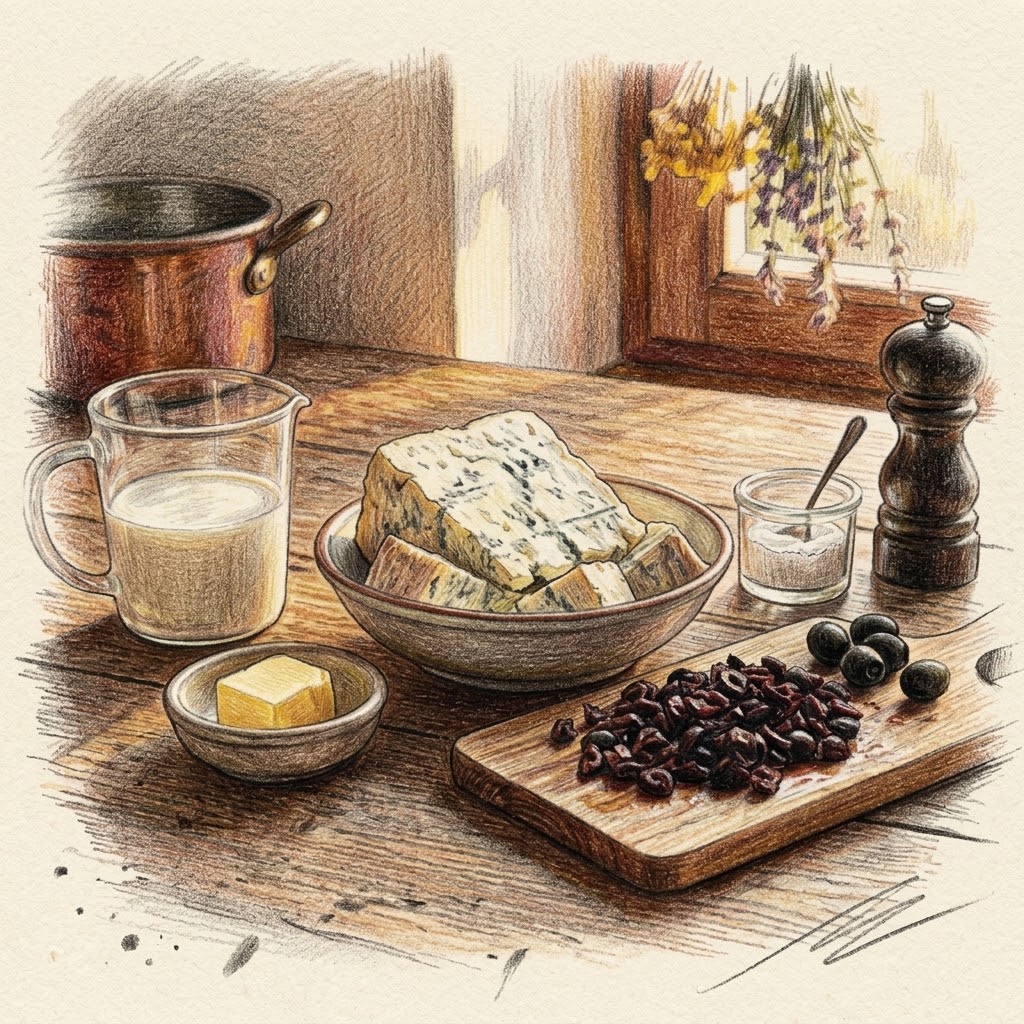

GENESIS
Fontina Fondue stands as the most iconic masterpiece within the culinary heritage of the Aosta Valley. It is an ancestral creation, born of the necessity to transform the local nectar, Fontina cheese, into a warm and comforting elixir, capable of reviving the spirit during the long and unforgiving alpine winters. Its genesis is intimately woven with the region's pastoral rhythms and the profound expertise of master cheesemakers who craft Fontina DOP—a semi-cooked cheese of sweet, distinctive character that serves as the very soul of this recipe.
The traditional preparation, refined through the ages, demands a fundamental ritual of marination: the Fontina, stripped of its rind and diced into cubes, must repose in milk for several hours. This sacred step softens the cheese, ensuring a harmonious and seamless fusion. The cooking unfolds strictly in a bain-marie, a slow and meticulous method that prevents the cheese from separating its delicate fats from its structural proteins. Under this gentle warmth, the Fontina surrenders to the milk and butter, birthing a velvet emulsion.
The final touch, which elevates the true Valdostan fondue to sublime heights, is the integration of fresh egg yolks. Whisked in away from the flame, they utilize the residual heat to bind the sauce, imparting a rich, creamy majesty and an intense golden hue without ever scrambling. Though modern palates revere it as an opulent adornment for pasta, gnocchi, or risotto, the fondue was born as a solitary protagonist, served piping hot in its dedicated copper vessel (the caquelon) and escorted by rustic croutons of black bread or polenta.
PORTIONS (FOR 4 PERSONS)
THE RECIPE
Fontina PDO
Fresh, whole milk
Golden egg yolks
Butter
Freshly cracked black pepper
Nutmeg (optional)
400 g
250 ml
4
30 g
to taste
to taste
CURATION
For the preparation of the Fontina:
First, take the Fontina DOP and gently remove its outer rind. Slice the cheese into delicate portions, then patiently reduce it into small, uniform cubes.
Place the gems of Fontina into a generous bowl and pour the fresh whole milk over them, ensuring the cheese is fully submerged in this pristine bath.
Cover the vessel with cling film and consign it to the refrigerator. Allow the Fontina to marinate in the milk for a minimum of 2 hours. Should time permit, a longer steep (even 4 to 6 hours) will render the final creation infinitely more sublime and creamy.For the seasoning:
Once the hours of marination have run their course, select a vessel suited for the gentle art of the bain-marie (a classic round-bottomed bowl or a saucepan to be nestled atop another pot of simmering water). Pour the entire contents of the bowl—both the Fontina and its milky marinade—into this pan.
Acknowledge the composition by adding the butter, broken into delicate pieces.
Poise the pan over the simmering water, allowing the moisture below to shudder gently, never permitting it to reach a violent, disruptive boil.
Begin the slow cooking over a whisper of flame, continuously caressing the fonduta with a hand-whisk or, in keeping with sacred tradition, a wooden spoon. It is paramount to stir slowly yet without pause, ensuring the cheese does not cling to the base nor surrender to lumps.
Protract this gentle cooking for some 15 to 20 minutes, or until the Fontina has fully dissolved, marrying itself in perfect harmony with the milk and butter. Seek to achieve a cream of exquisite smoothness, dense and velvety.
As the fonduta gently simmers, separate the golden yolks from the whites (the whites shall not be summoned for this culinary poem). Place the yolks in a small bowl, whispering them into a light froth.
When the fonduta is ready, possessing a perfect warmth and silken texture, remove the vessel from the water bath, extinguishing the flame.
Instantly introduce the beaten yolks into the warm cheese cream. Stir with swift, vigorous motions using your whisk; the residual warmth of the fonduta will gently coax the yolks to thicken, binding the sauce into sublime perfection without curdling (the dish must never bear the likeness of scrambled eggs).
Crown the creation with a generous grating of black pepper and, should you desire, a fragrant whisper of nutmeg.
aspiration
The Selection of Fontina: Employ exclusively Fontina DOP from the Aosta Valley. A medium maturation (approximately 3 to 4 months) is sublime, permitting the cheese to melt gracefully whilst preserving a harmonious flavor profile.
The Cooking Process: The ultimate secret lies in patience; the gentle caress of the bain-marie and a low flame are paramount. Should the fondue achieve a boil, the egg yolks would curdle and the cheese would risk separation.
Consistence: Should the fondue prove too dense to dress the pasta, you may gently dilute it by adding a spoonful or two of the pasta’s cooking water, whisking vigorously away from the heat.
ultimate alchemies
GENESIS
Fontina Fondue stands as the most iconic masterpiece within the culinary heritage of the Aosta Valley. It is an ancestral creation, born of the necessity to transform the local nectar, Fontina cheese, into a warm and comforting elixir, capable of reviving the spirit during the long and unforgiving alpine winters. Its genesis is intimately woven with the region's pastoral rhythms and the profound expertise of master cheesemakers who craft Fontina DOP—a semi-cooked cheese of sweet, distinctive character that serves as the very soul of this recipe.
The traditional preparation, refined through the ages, demands a fundamental ritual of marination: the Fontina, stripped of its rind and diced into cubes, must repose in milk for several hours. This sacred step softens the cheese, ensuring a harmonious and seamless fusion. The cooking unfolds strictly in a bain-marie, a slow and meticulous method that prevents the cheese from separating its delicate fats from its structural proteins. Under this gentle warmth, the Fontina surrenders to the milk and butter, birthing a velvet emulsion.
The final touch, which elevates the true Valdostan fondue to sublime heights, is the integration of fresh egg yolks. Whisked in away from the flame, they utilize the residual heat to bind the sauce, imparting a rich, creamy majesty and an intense golden hue without ever scrambling. Though modern palates revere it as an opulent adornment for pasta, gnocchi, or risotto, the fondue was born as a solitary protagonist, served piping hot in its dedicated copper vessel (the caquelon) and escorted by rustic croutons of black bread or polenta.
PORTIONS (FOR 4 PERSONS)
THE RECIPE
Fontina PDO
Fresh, whole milk
Golden egg yolks
Butter
Freshly cracked black pepper
Nutmeg (optional)
400 g
250 ml
4
30 g
to taste
to taste
CURATION
For the preparation of the Fontina:
First, take the Fontina DOP and gently remove its outer rind. Slice the cheese into delicate portions, then patiently reduce it into small, uniform cubes.
Place the gems of Fontina into a generous bowl and pour the fresh whole milk over them, ensuring the cheese is fully submerged in this pristine bath.
Cover the vessel with cling film and consign it to the refrigerator. Allow the Fontina to marinate in the milk for a minimum of 2 hours. Should time permit, a longer steep (even 4 to 6 hours) will render the final creation infinitely more sublime and creamy.For the seasoning:
Once the hours of marination have run their course, select a vessel suited for the gentle art of the bain-marie (a classic round-bottomed bowl or a saucepan to be nestled atop another pot of simmering water). Pour the entire contents of the bowl—both the Fontina and its milky marinade—into this pan.
Acknowledge the composition by adding the butter, broken into delicate pieces.
Poise the pan over the simmering water, allowing the moisture below to shudder gently, never permitting it to reach a violent, disruptive boil.
Begin the slow cooking over a whisper of flame, continuously caressing the fonduta with a hand-whisk or, in keeping with sacred tradition, a wooden spoon. It is paramount to stir slowly yet without pause, ensuring the cheese does not cling to the base nor surrender to lumps.
Protract this gentle cooking for some 15 to 20 minutes, or until the Fontina has fully dissolved, marrying itself in perfect harmony with the milk and butter. Seek to achieve a cream of exquisite smoothness, dense and velvety.
As the fonduta gently simmers, separate the golden yolks from the whites (the whites shall not be summoned for this culinary poem). Place the yolks in a small bowl, whispering them into a light froth.
When the fonduta is ready, possessing a perfect warmth and silken texture, remove the vessel from the water bath, extinguishing the flame.
Instantly introduce the beaten yolks into the warm cheese cream. Stir with swift, vigorous motions using your whisk; the residual warmth of the fonduta will gently coax the yolks to thicken, binding the sauce into sublime perfection without curdling (the dish must never bear the likeness of scrambled eggs).
Crown the creation with a generous grating of black pepper and, should you desire, a fragrant whisper of nutmeg.
aspiration
The Selection of Fontina: Employ exclusively Fontina DOP from the Aosta Valley. A medium maturation (approximately 3 to 4 months) is sublime, permitting the cheese to melt gracefully whilst preserving a harmonious flavor profile.
The Cooking Process: The ultimate secret lies in patience; the gentle caress of the bain-marie and a low flame are paramount. Should the fondue achieve a boil, the egg yolks would curdle and the cheese would risk separation.
Consistence: Should the fondue prove too dense to dress the pasta, you may gently dilute it by adding a spoonful or two of the pasta’s cooking water, whisking vigorously away from the heat.