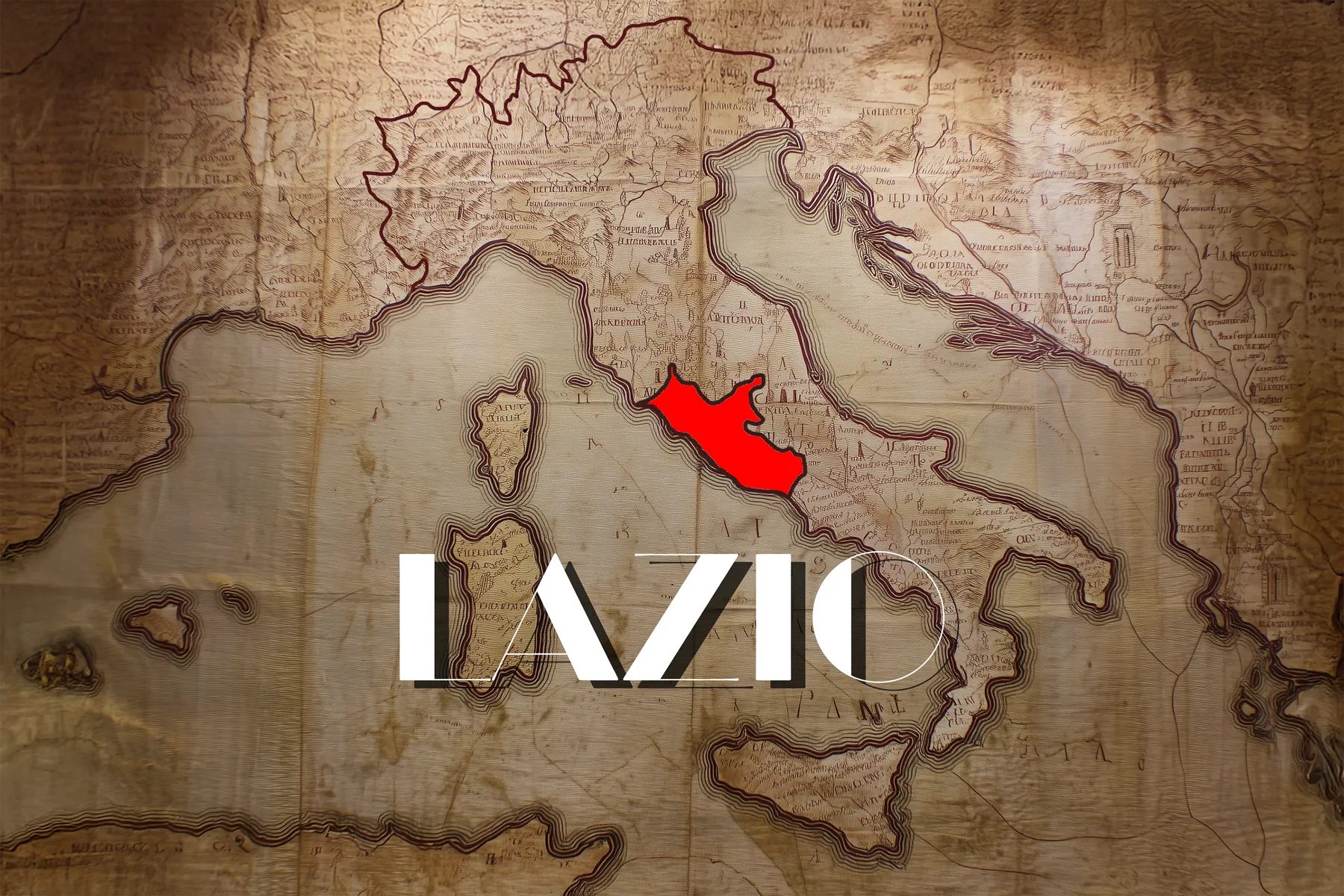
GEOGRAPHIES OF PASTA
where pasta is elevated to a sacred domestic ritual, a vestige of papal memory, and the soul of the traditional trattoria.
Feb 18, 2026
GEOGRAPHIES OF PASTA
where pasta is elevated to a sacred domestic ritual, a vestige of papal memory, and the soul of the traditional trattoria.
Feb 18, 2026
GEOGRAPHIES OF PASTA
where pasta is elevated to a sacred domestic ritual, a vestige of papal memory, and the soul of the traditional trattoria.
Feb 18, 2026
Lazio, far from the grand Roman showcases of rigatoni and tonnarelli, guards a more intimate culinary geography: hand-scalloped within hillside hamlets, stone villages, and rustic festivals where the sauce is not spectacle, but timeless continuity. Here, each rare shape represents a fragment of gastronomic lexicon destined to vanish, unless it is spoken — and simmered — into existence.
Fregnacce (or maltagliati), the humble sisters of fettuccine: composed of semolina flour and water, entirely eggless, hand-cut into diamonds or irregular ribbons, created as fate dictates, as hunger requires. Born to grace soups — broad beans above all — they are nonetheless robust enough to support a Rieti sauce that resembles a domestic altar: lard (or pancetta), celery, onion, tomato; crowned with pecorino and a blade of chili to warm the palate.
Gnocchetti, in Lazio, enjoy multiple reincarnations. There is the polenta version, where the golden hue of maize blends with wheat, yielding a bite that remains rustic and profoundly satisfying.
And there are the gnocchi “de lu contadino”, bereft of potatoes: flour and water, a sober dough, a peasant gesture that asks for nothing but an honest sauce or a seasonal ragù.
Finally, in Amatrice, we find the gnocchi ricci: tiny, curled, shaped by pinching the dough between thumb and forefinger until a delicate seashell is formed, poised to embrace sweet sauces of mutton or mixed ragùs and pecorino. Local tradition holds them to be older even than the fame of amatriciana itself: as if the vessel had arrived before the myth.
Gnocchi di tritello di Valmontone: of "gnocchi," they possess little more than the name. They are short, thick fettuccine, dark in complexion because they are born of tritello — the flour that carries bran, germ, and the rustic memory of the millstone. To avoid breaking, they demand precise measure: approximately 5–6 cm in length with a robust thickness. Once, they were also called “gnoccacci neri,” with that affectionate cruelty that small villages reserve for rustic things.
Lacna stracciata di Norma: a round sheet of flour and water, rolled by hand and then “torn” into irregular fragments — to be boiled immediately or, briefly, laid out to dry. The name bears the ancient echo of lagane (and, further still, the Roman laganum), yet it remains, above all, a gesture: tearing the dough as one breaks bread to create a meal.
Longarini di Cretone: massive spaghettoni of flour and water, thick as half a centimeter, pale and unyielding, born to declare that here, the fork has sacred work to do. Their natural companion is the “finto” Sabinese sauce — tomato and aromatics, free of triumphalism — where celery, garlic, and basil form the very architecture, rather than mere adornment.
Maccaruni gavignanesi: a dough of eggs and flour, rolled thin as a veil, then rolled upon itself and cut into delicate ribbons. It cooks in a breath and demands a generous sauce: mutton, sausage, giblets — because to certain shapes, by tradition, parsimony is never granted.
’Ndremmappi di Jenne: here, the whole-wheat flour (the ’ndremmappa) represents a philosophy of the world, milled and kneaded with water and salt, then “drawn” into wide bands. It is an austere pasta: for ages, it was served dressed only with the vaporous water of its own cooking or a dusting of pecorino; later came tomato and anchovy, a compromise between scarcity and desire.
Sfusellati di Leonessa: short, subtly twisted vermicelli, born from the spindle that gives them their name (sometimes enriched with a single egg, more often just water and flour). They are cut to lengths of 7–8 cm and adorned with a “lean” sauce — tomato, garlic, anchovies, parsley — passed down more by whisper than by recipe.
Tagliatelle di castagne: where the chestnut tree was once the daily bread, its sweet flour is elevated to pasta. Chestnut and soft wheat flours, egg, a few spoonfuls of water: the result possesses a delicate honeyed undertone that demands counterpoint — butter and sage, or cheeses and cured guanciale, according to the season and the maker's hand.
Nine shapes that speak of ancient villages and shifting seasons, of vigorous hands that roll, twist, tear, and press. A silent heritage that lives on so long as someone sings its praise — and drops it into the boiling cauldron.


Lazio, far from the grand Roman showcases of rigatoni and tonnarelli, guards a more intimate culinary geography: hand-scalloped within hillside hamlets, stone villages, and rustic festivals where the sauce is not spectacle, but timeless continuity. Here, each rare shape represents a fragment of gastronomic lexicon destined to vanish, unless it is spoken — and simmered — into existence.
Fregnacce (or maltagliati), the humble sisters of fettuccine: composed of semolina flour and water, entirely eggless, hand-cut into diamonds or irregular ribbons, created as fate dictates, as hunger requires. Born to grace soups — broad beans above all — they are nonetheless robust enough to support a Rieti sauce that resembles a domestic altar: lard (or pancetta), celery, onion, tomato; crowned with pecorino and a blade of chili to warm the palate.
Gnocchetti, in Lazio, enjoy multiple reincarnations. There is the polenta version, where the golden hue of maize blends with wheat, yielding a bite that remains rustic and profoundly satisfying.
And there are the gnocchi “de lu contadino”, bereft of potatoes: flour and water, a sober dough, a peasant gesture that asks for nothing but an honest sauce or a seasonal ragù.
Finally, in Amatrice, we find the gnocchi ricci: tiny, curled, shaped by pinching the dough between thumb and forefinger until a delicate seashell is formed, poised to embrace sweet sauces of mutton or mixed ragùs and pecorino. Local tradition holds them to be older even than the fame of amatriciana itself: as if the vessel had arrived before the myth.
Gnocchi di tritello di Valmontone: of "gnocchi," they possess little more than the name. They are short, thick fettuccine, dark in complexion because they are born of tritello — the flour that carries bran, germ, and the rustic memory of the millstone. To avoid breaking, they demand precise measure: approximately 5–6 cm in length with a robust thickness. Once, they were also called “gnoccacci neri,” with that affectionate cruelty that small villages reserve for rustic things.
Lacna stracciata di Norma: a round sheet of flour and water, rolled by hand and then “torn” into irregular fragments — to be boiled immediately or, briefly, laid out to dry. The name bears the ancient echo of lagane (and, further still, the Roman laganum), yet it remains, above all, a gesture: tearing the dough as one breaks bread to create a meal.
Longarini di Cretone: massive spaghettoni of flour and water, thick as half a centimeter, pale and unyielding, born to declare that here, the fork has sacred work to do. Their natural companion is the “finto” Sabinese sauce — tomato and aromatics, free of triumphalism — where celery, garlic, and basil form the very architecture, rather than mere adornment.
Maccaruni gavignanesi: a dough of eggs and flour, rolled thin as a veil, then rolled upon itself and cut into delicate ribbons. It cooks in a breath and demands a generous sauce: mutton, sausage, giblets — because to certain shapes, by tradition, parsimony is never granted.
’Ndremmappi di Jenne: here, the whole-wheat flour (the ’ndremmappa) represents a philosophy of the world, milled and kneaded with water and salt, then “drawn” into wide bands. It is an austere pasta: for ages, it was served dressed only with the vaporous water of its own cooking or a dusting of pecorino; later came tomato and anchovy, a compromise between scarcity and desire.
Sfusellati di Leonessa: short, subtly twisted vermicelli, born from the spindle that gives them their name (sometimes enriched with a single egg, more often just water and flour). They are cut to lengths of 7–8 cm and adorned with a “lean” sauce — tomato, garlic, anchovies, parsley — passed down more by whisper than by recipe.
Tagliatelle di castagne: where the chestnut tree was once the daily bread, its sweet flour is elevated to pasta. Chestnut and soft wheat flours, egg, a few spoonfuls of water: the result possesses a delicate honeyed undertone that demands counterpoint — butter and sage, or cheeses and cured guanciale, according to the season and the maker's hand.
Nine shapes that speak of ancient villages and shifting seasons, of vigorous hands that roll, twist, tear, and press. A silent heritage that lives on so long as someone sings its praise — and drops it into the boiling cauldron.
Lazio, far from the grand Roman showcases of rigatoni and tonnarelli, guards a more intimate culinary geography: hand-scalloped within hillside hamlets, stone villages, and rustic festivals where the sauce is not spectacle, but timeless continuity. Here, each rare shape represents a fragment of gastronomic lexicon destined to vanish, unless it is spoken — and simmered — into existence.
Fregnacce (or maltagliati), the humble sisters of fettuccine: composed of semolina flour and water, entirely eggless, hand-cut into diamonds or irregular ribbons, created as fate dictates, as hunger requires. Born to grace soups — broad beans above all — they are nonetheless robust enough to support a Rieti sauce that resembles a domestic altar: lard (or pancetta), celery, onion, tomato; crowned with pecorino and a blade of chili to warm the palate.
Gnocchetti, in Lazio, enjoy multiple reincarnations. There is the polenta version, where the golden hue of maize blends with wheat, yielding a bite that remains rustic and profoundly satisfying.
And there are the gnocchi “de lu contadino”, bereft of potatoes: flour and water, a sober dough, a peasant gesture that asks for nothing but an honest sauce or a seasonal ragù.
Finally, in Amatrice, we find the gnocchi ricci: tiny, curled, shaped by pinching the dough between thumb and forefinger until a delicate seashell is formed, poised to embrace sweet sauces of mutton or mixed ragùs and pecorino. Local tradition holds them to be older even than the fame of amatriciana itself: as if the vessel had arrived before the myth.
Gnocchi di tritello di Valmontone: of "gnocchi," they possess little more than the name. They are short, thick fettuccine, dark in complexion because they are born of tritello — the flour that carries bran, germ, and the rustic memory of the millstone. To avoid breaking, they demand precise measure: approximately 5–6 cm in length with a robust thickness. Once, they were also called “gnoccacci neri,” with that affectionate cruelty that small villages reserve for rustic things.
Lacna stracciata di Norma: a round sheet of flour and water, rolled by hand and then “torn” into irregular fragments — to be boiled immediately or, briefly, laid out to dry. The name bears the ancient echo of lagane (and, further still, the Roman laganum), yet it remains, above all, a gesture: tearing the dough as one breaks bread to create a meal.
Longarini di Cretone: massive spaghettoni of flour and water, thick as half a centimeter, pale and unyielding, born to declare that here, the fork has sacred work to do. Their natural companion is the “finto” Sabinese sauce — tomato and aromatics, free of triumphalism — where celery, garlic, and basil form the very architecture, rather than mere adornment.
Maccaruni gavignanesi: a dough of eggs and flour, rolled thin as a veil, then rolled upon itself and cut into delicate ribbons. It cooks in a breath and demands a generous sauce: mutton, sausage, giblets — because to certain shapes, by tradition, parsimony is never granted.
’Ndremmappi di Jenne: here, the whole-wheat flour (the ’ndremmappa) represents a philosophy of the world, milled and kneaded with water and salt, then “drawn” into wide bands. It is an austere pasta: for ages, it was served dressed only with the vaporous water of its own cooking or a dusting of pecorino; later came tomato and anchovy, a compromise between scarcity and desire.
Sfusellati di Leonessa: short, subtly twisted vermicelli, born from the spindle that gives them their name (sometimes enriched with a single egg, more often just water and flour). They are cut to lengths of 7–8 cm and adorned with a “lean” sauce — tomato, garlic, anchovies, parsley — passed down more by whisper than by recipe.
Tagliatelle di castagne: where the chestnut tree was once the daily bread, its sweet flour is elevated to pasta. Chestnut and soft wheat flours, egg, a few spoonfuls of water: the result possesses a delicate honeyed undertone that demands counterpoint — butter and sage, or cheeses and cured guanciale, according to the season and the maker's hand.
Nine shapes that speak of ancient villages and shifting seasons, of vigorous hands that roll, twist, tear, and press. A silent heritage that lives on so long as someone sings its praise — and drops it into the boiling cauldron.