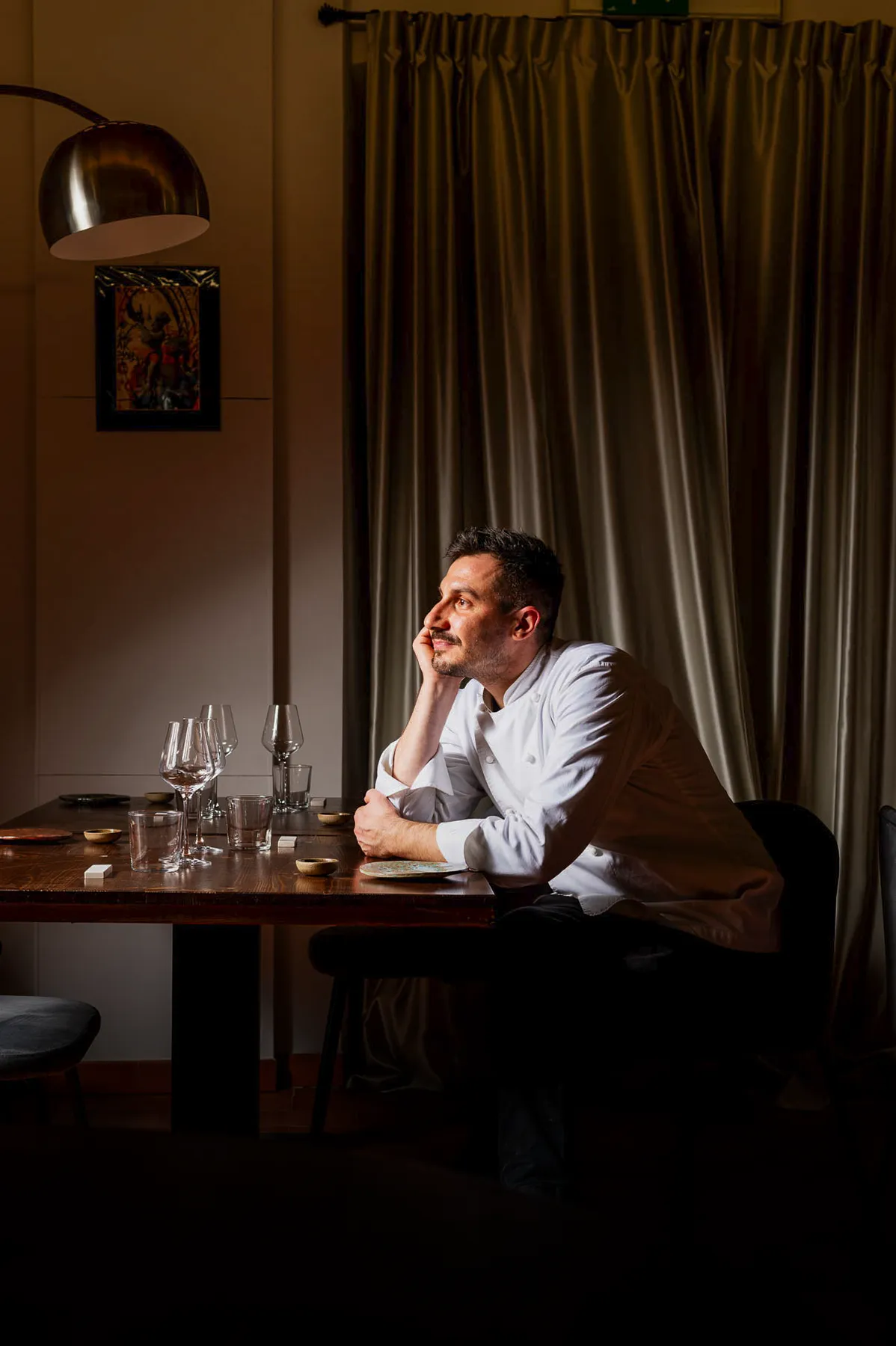
LUCA LUDOVICI
Tradition, Technique, the Future of Gastronomy
1986
Fiuggi
The Modern - The Ancestral
LUCA LUDOVICI
Tradition, Technique, the Future of Gastronomy
1986
Fiuggi
The Modern - The Ancestral
LUCA LUDOVICI
Tradition, Technique, the Future of Gastronomy
1986
Fiuggi
The Modern - The Ancestral
CURRICULUM VITAE
Luca Ludovici, a cuisine born within the cavern: the gastronomic renaissance of Frascati
Born in 1986 and native to Fiuggi, Luca Ludovici stands as one of the most compelling visionaries of the contemporary Lazio culinary scene. Formed under the tutelage of the legendary Gualtiero Marchesi, he has made his master's core tenets his own: a reverent respect for the raw ingredient and a rejection of any technical superfluity that might compromise its pure essence.
Following several prominent appointmentsu2014including serving as Executive Chef at L'Osteria di Birra del Borgo and leading the kitchen at Liu00f2n in Romeu2014Ludovici, alongside his partner Lorena Cavana, inaugurated the restaurant ConTatto in Frascati in March 2022. The venture immediately distinguished itself through an extraordinary feature: a subterranean cavern spanning 170 meters, reimagined as a laboratory for the transformation, preservation, and maturation of ingredients.
It is here that the philosophy of the "sub-zero kilometer" takes shape: a radical extension of the locavore ethos that does not merely confine itself to a short supply chain, but literally descends into the depths. Within the cave, Ludovici orchestrates fermentations, maturations, and ancestral preservation techniques in a poised equilibrium between heritage and innovation. This is accompanied by an unwavering dedication to sustainability, driven by a "zero-waste" philosophy applied with both rigor and creative grace.
The result is a culinary art in perpetual evolution, where modern technique is interwoven with primordial gestures and ancient wisdom. This solid, highly original gastronomic identity has already garnered prestigious accolades, including entry into the 2023 Michelin Guide.
Through his endeavor at ConTatto, Ludovici becomes the herald of a new sensibility: a contemplative, sustainable cuisine, intimately bound to the terroir yet projected toward the future. And above all, deeply rooted in the earthu2014in the most literal sense of the word. Thanks to his vision, Frascati and the Castelli Romani once again reclaim their role as protagonists in a gastronomic narrative that looks onward without ever severing its ancestral ties.
dialogues
What is your relationship with fresh pasta?
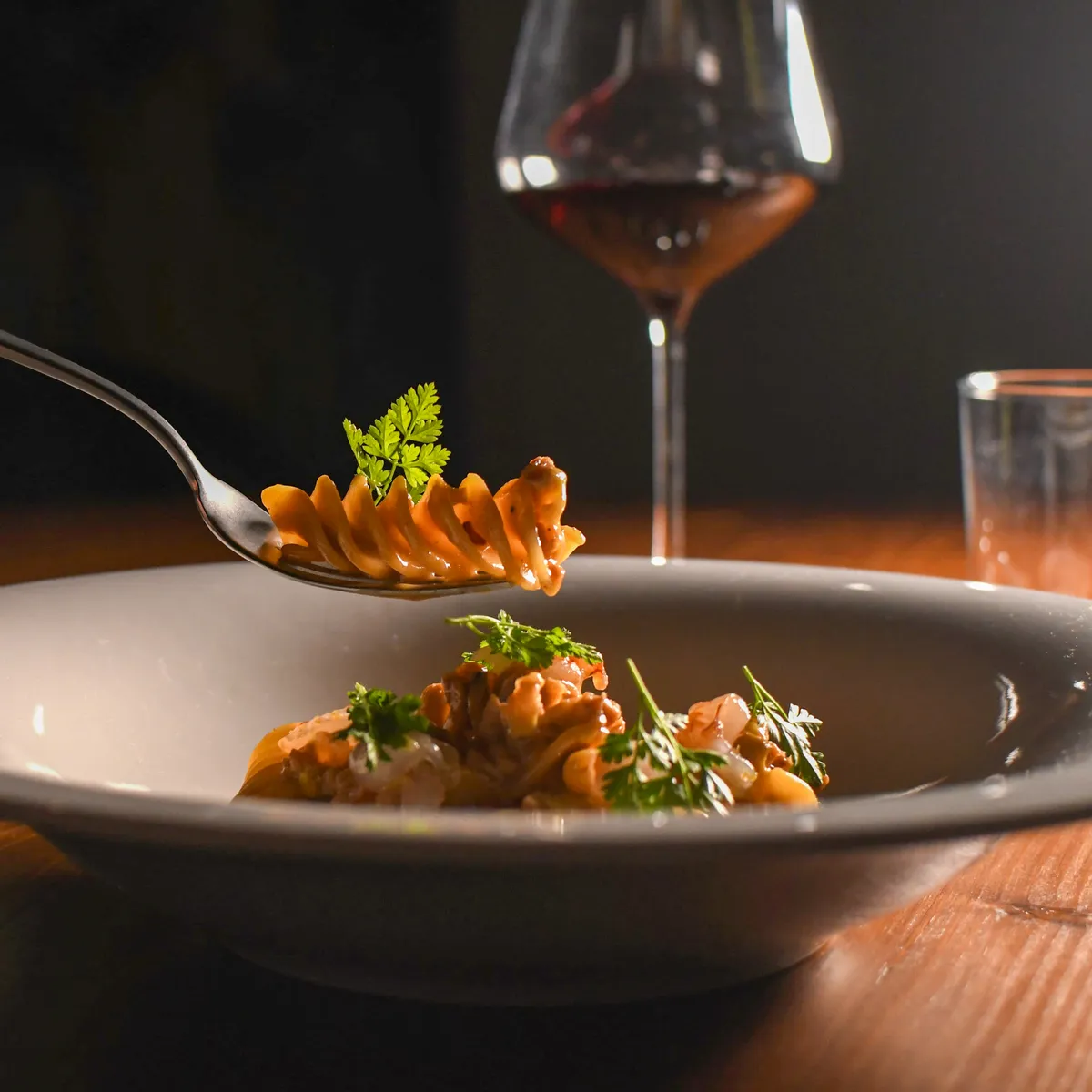
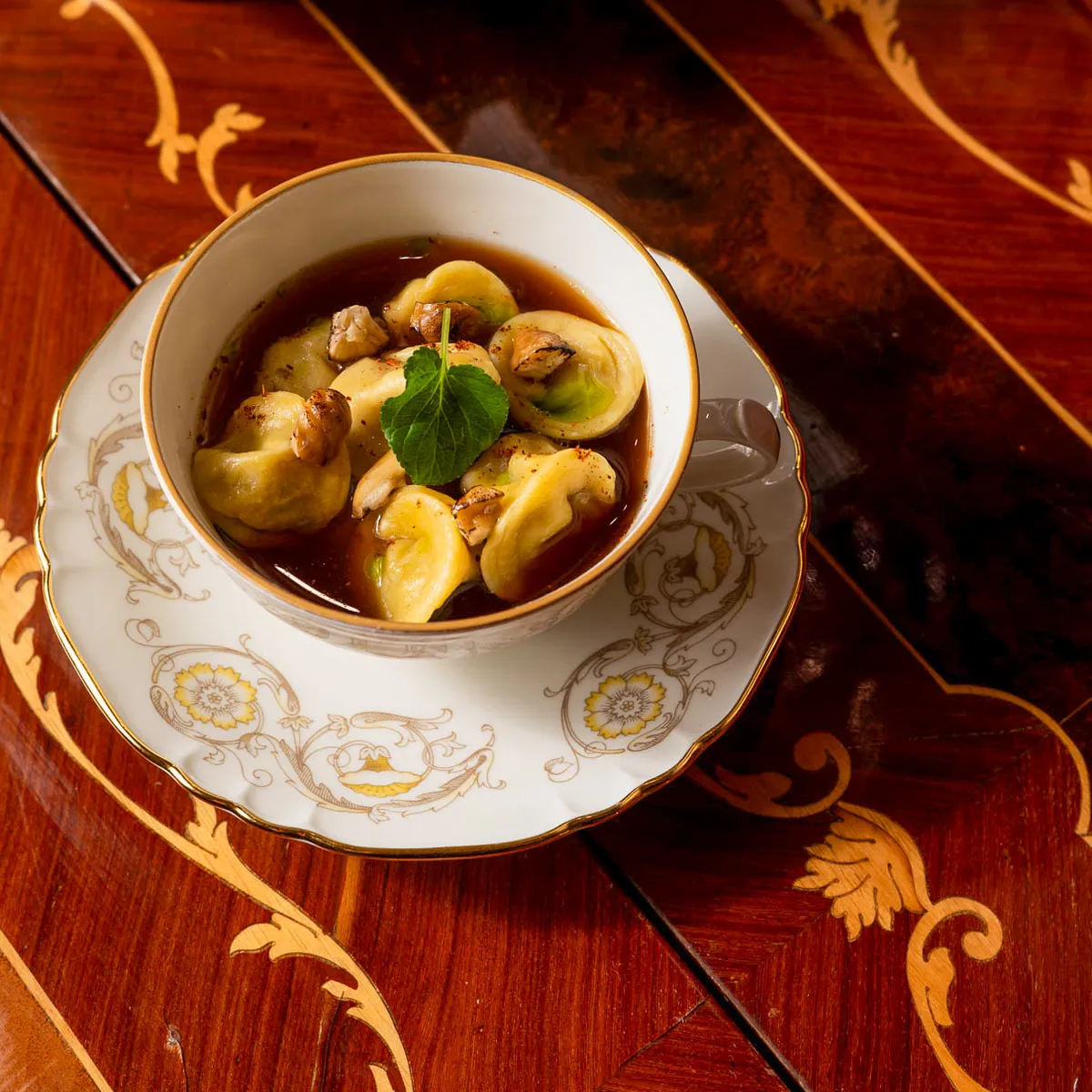
Exquisite; I still recall the clandestine joy of stealing raw dough in my childhood. It is a medium through which I commune with my youth, my mother, and my grandmother, who would craft it for moments of solemn conviviality. Our tradition dictated the savoring of 'sagne' (a shape akin to maltagliati, yet more elongated) with beans, or straw-and-hay tagliolini. Today, that heritage is resurrected upon my menu, manifested as delicate gnocchetti di Fiuggi, sculpted of simple water and flour, or as cappelletti, cradling a rich filling of rabbit alla cacciatora.
Journeying back through time, is there a specific taste, aroma, or singular moment bound to a childhood dish of pasta that you still carry within, perhaps unconsciously finding its way into your contemporary creations?
Indeed, my mother's pasta al gratin. She would break ziti by hand, enveloping them in cooked ham and béchamel before allowing them to achieve a golden crust in the oven. It is a culinary memory I yearn for, as she alone possessed the alchemy to create it. It was a brilliant, thoughtful art of elevating the remnants of preceding days. I have never attempted to recreate it, yet the desire lingers. Perhaps, in a future yet unwritten.
Beyond the precise poetry of "al dente," what significance do you accord to the tactile perception—the "texture"—of pasta and its sauces in composing a comprehensive and memorable gastronomic experience?
To me, the architecture of texture in pasta is paramount. Every variation possesses its own soul: egg pasta boasts an ethereal elasticity, whereas fresh pasta born of water and flour is dense and resolute; semola and dried varieties demand the firm bite of al dente. Precisely because each pasta speaks a different culinary language, each demands a distinct, harmonious accompaniment.
How does a dish of pasta integrate and converse within the overarching sequence of a tasting menu in your establishment? What narrative function does it perform along this epicurean journey?
Within my culinary narrative, pasta is ever-present at the heart of the stage. No menu of mine exists without two or three acts of pasta. Even within the progression of a tasting journey, its position is central, served with classical elegance between the preludes of antipasti and the crescendos of the main courses.
Could you recount an instance of particularly daring experimentation or a technical challenge encountered whilst working with pasta—one that, though it never graced the final menu, bequeathed to you invaluable wisdom?
Quite recently, I was inspired to introduce into a vegetarian menu the Spaghettino Matt from Monograno Felicetti, which I allow to rehydrate in pure water for an hour. Subsequently, I cook it in the manner of a risotto in a pan with tomato essence. The denouement of this technique is a pristine, white spaghetti that floods the palate with an intense and wondrous whisper of tomato.
When presenting your pasta creations to a global clientele, how do you navigate the differing expectations and the sometimes stereotyped global perceptions surrounding Italian pasta?
In my dining room, pasta is a universal longing, sought after equally by compatriots and travelers. When I serve my pasta creations to an international audience, I draw no borders. I refuse to compromise the authenticity of my recipes for a foreign palate, for it is that very audience that arrives with a yearning to taste the true, unadulterated soul of Italian gastronomy.
As an Italian maestro of gastronomy, do you feel a sacred responsibility to represent and elevate the prestige of Italian pasta on the global stage?
Most assuredly. I believe that pasta serves as a profound vessel to narrate the rich heritage and terroir of Italy. The true marvel of our land is that every region—indeed, every hamlet and every hearth—harbors a unique secret for crafting pasta, in both the composition of the dough and the nature of the filling. We possess a culinary biodiversity that is too often taken for granted, yet is infinitely precious. It is our duty to preserve these sacred traditions with utmost devotion.
How crucial is the visual architecture of a pasta dish to your philosophy? How do the choice of the shape, the sauce, and the vessel itself harmonize to create aesthetic beauty and an transcendent overall tasting experience?
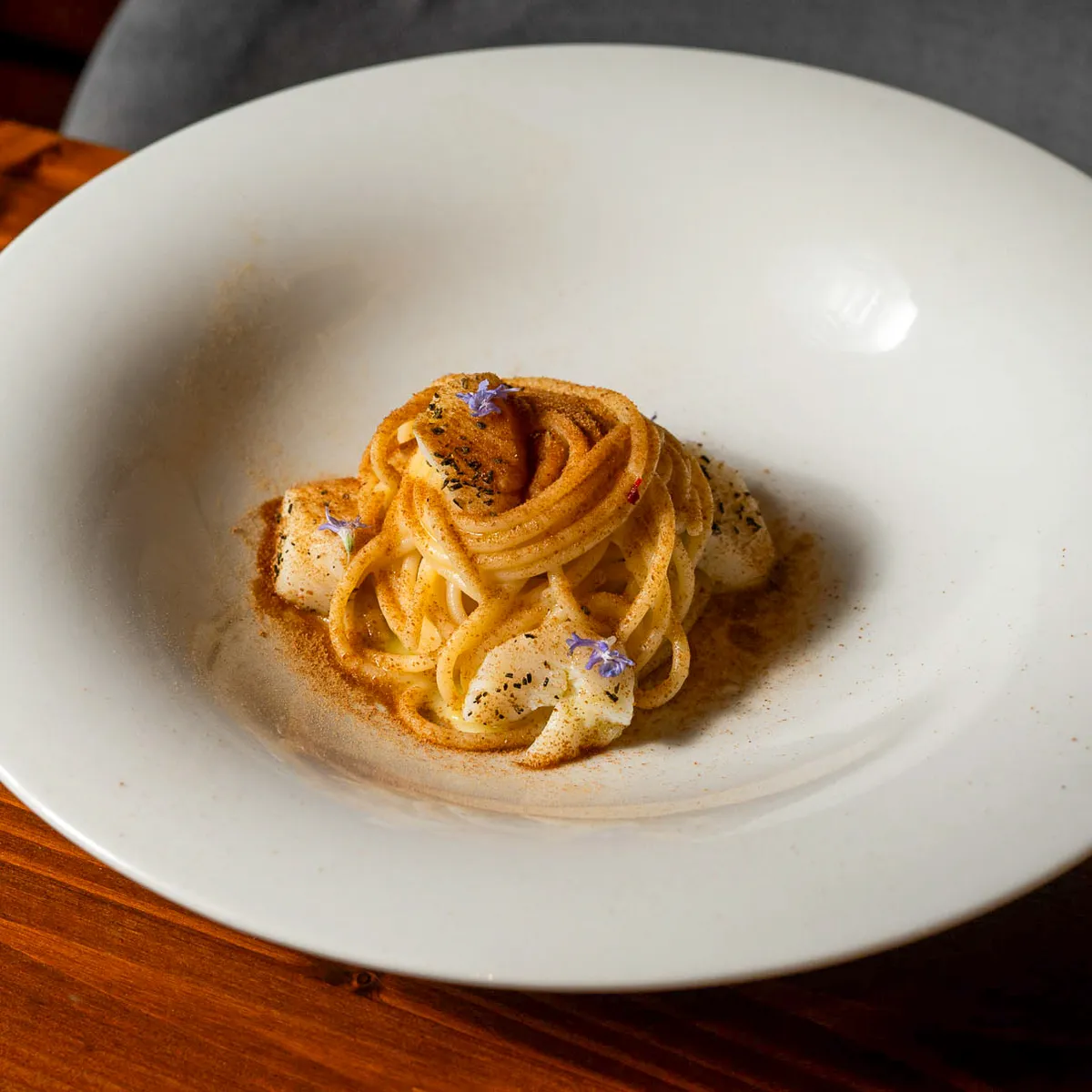
The visual allure is, to my mind, as vital as its gustatory soul. A dish must be an aesthetic triumph as well as a culinary masterwork, for we dine first with our eyes. As I observed, the marriage with sauce is essential, both in proportion and nature. Robust sauces like amatriciana or aglio, olio e peperoncino demand the long, elegant stroke of long pasta; others, like butter and sage, are more suited to filled pasta, where the interior is already rich in narrative. The vessel, too, shapes the experience. I often favor the deep, classic bowl, perfect for cradling savory juices, whilst in other moments, the flat canvas of a plate is more fitting.
In your approach to pasta, what equilibrium do you seek between artisanal, time-honored techniques passed down through generations, and the precision of modern machinery and methodologies?
In my kitchen, modern machinery finds little sanctuary, for I harbor a deep love for working the ingredients with artisanal touch. My pasta, for instance, is caressed by hands and rolled using simple, mechanical tools.
Are there unconventional ingredients or pairings that you have dared to integrate into your pasta dishes, stepping beyond classical boundaries, and what was the revelation of that endeavor?
Indeed; there was a time I featured a sweet Amatriciana upon my menu as a pre-dessert. It was a spaghettino parboiled in water, salt, sugar, and fennel (a sweet court bouillon), accompanied by guanciale, tomato dust, sweet pecorino, and maple syrup—which I selected for its ability, alongside the guanciale, to evoke the memory of American bacon.
CURRICULUM VITAE
Luca Ludovici, a cuisine born within the cavern: the gastronomic renaissance of Frascati
Born in 1986 and native to Fiuggi, Luca Ludovici stands as one of the most compelling visionaries of the contemporary Lazio culinary scene. Formed under the tutelage of the legendary Gualtiero Marchesi, he has made his master's core tenets his own: a reverent respect for the raw ingredient and a rejection of any technical superfluity that might compromise its pure essence.
Following several prominent appointmentsu2014including serving as Executive Chef at L'Osteria di Birra del Borgo and leading the kitchen at Liu00f2n in Romeu2014Ludovici, alongside his partner Lorena Cavana, inaugurated the restaurant ConTatto in Frascati in March 2022. The venture immediately distinguished itself through an extraordinary feature: a subterranean cavern spanning 170 meters, reimagined as a laboratory for the transformation, preservation, and maturation of ingredients.
It is here that the philosophy of the "sub-zero kilometer" takes shape: a radical extension of the locavore ethos that does not merely confine itself to a short supply chain, but literally descends into the depths. Within the cave, Ludovici orchestrates fermentations, maturations, and ancestral preservation techniques in a poised equilibrium between heritage and innovation. This is accompanied by an unwavering dedication to sustainability, driven by a "zero-waste" philosophy applied with both rigor and creative grace.
The result is a culinary art in perpetual evolution, where modern technique is interwoven with primordial gestures and ancient wisdom. This solid, highly original gastronomic identity has already garnered prestigious accolades, including entry into the 2023 Michelin Guide.
Through his endeavor at ConTatto, Ludovici becomes the herald of a new sensibility: a contemplative, sustainable cuisine, intimately bound to the terroir yet projected toward the future. And above all, deeply rooted in the earthu2014in the most literal sense of the word. Thanks to his vision, Frascati and the Castelli Romani once again reclaim their role as protagonists in a gastronomic narrative that looks onward without ever severing its ancestral ties.
dialogues
What is your relationship with fresh pasta?
Exquisite; I still recall the clandestine joy of stealing raw dough in my childhood. It is a medium through which I commune with my youth, my mother, and my grandmother, who would craft it for moments of solemn conviviality. Our tradition dictated the savoring of 'sagne' (a shape akin to maltagliati, yet more elongated) with beans, or straw-and-hay tagliolini. Today, that heritage is resurrected upon my menu, manifested as delicate gnocchetti di Fiuggi, sculpted of simple water and flour, or as cappelletti, cradling a rich filling of rabbit alla cacciatora.
Journeying back through time, is there a specific taste, aroma, or singular moment bound to a childhood dish of pasta that you still carry within, perhaps unconsciously finding its way into your contemporary creations?
Indeed, my mother's pasta al gratin. She would break ziti by hand, enveloping them in cooked ham and béchamel before allowing them to achieve a golden crust in the oven. It is a culinary memory I yearn for, as she alone possessed the alchemy to create it. It was a brilliant, thoughtful art of elevating the remnants of preceding days. I have never attempted to recreate it, yet the desire lingers. Perhaps, in a future yet unwritten.
Beyond the precise poetry of "al dente," what significance do you accord to the tactile perception—the "texture"—of pasta and its sauces in composing a comprehensive and memorable gastronomic experience?
To me, the architecture of texture in pasta is paramount. Every variation possesses its own soul: egg pasta boasts an ethereal elasticity, whereas fresh pasta born of water and flour is dense and resolute; semola and dried varieties demand the firm bite of al dente. Precisely because each pasta speaks a different culinary language, each demands a distinct, harmonious accompaniment.
How does a dish of pasta integrate and converse within the overarching sequence of a tasting menu in your establishment? What narrative function does it perform along this epicurean journey?
Within my culinary narrative, pasta is ever-present at the heart of the stage. No menu of mine exists without two or three acts of pasta. Even within the progression of a tasting journey, its position is central, served with classical elegance between the preludes of antipasti and the crescendos of the main courses.
Could you recount an instance of particularly daring experimentation or a technical challenge encountered whilst working with pasta—one that, though it never graced the final menu, bequeathed to you invaluable wisdom?
Quite recently, I was inspired to introduce into a vegetarian menu the Spaghettino Matt from Monograno Felicetti, which I allow to rehydrate in pure water for an hour. Subsequently, I cook it in the manner of a risotto in a pan with tomato essence. The denouement of this technique is a pristine, white spaghetti that floods the palate with an intense and wondrous whisper of tomato.
When presenting your pasta creations to a global clientele, how do you navigate the differing expectations and the sometimes stereotyped global perceptions surrounding Italian pasta?
In my dining room, pasta is a universal longing, sought after equally by compatriots and travelers. When I serve my pasta creations to an international audience, I draw no borders. I refuse to compromise the authenticity of my recipes for a foreign palate, for it is that very audience that arrives with a yearning to taste the true, unadulterated soul of Italian gastronomy.
As an Italian maestro of gastronomy, do you feel a sacred responsibility to represent and elevate the prestige of Italian pasta on the global stage?
Most assuredly. I believe that pasta serves as a profound vessel to narrate the rich heritage and terroir of Italy. The true marvel of our land is that every region—indeed, every hamlet and every hearth—harbors a unique secret for crafting pasta, in both the composition of the dough and the nature of the filling. We possess a culinary biodiversity that is too often taken for granted, yet is infinitely precious. It is our duty to preserve these sacred traditions with utmost devotion.
How crucial is the visual architecture of a pasta dish to your philosophy? How do the choice of the shape, the sauce, and the vessel itself harmonize to create aesthetic beauty and an transcendent overall tasting experience?
The visual allure is, to my mind, as vital as its gustatory soul. A dish must be an aesthetic triumph as well as a culinary masterwork, for we dine first with our eyes. As I observed, the marriage with sauce is essential, both in proportion and nature. Robust sauces like amatriciana or aglio, olio e peperoncino demand the long, elegant stroke of long pasta; others, like butter and sage, are more suited to filled pasta, where the interior is already rich in narrative. The vessel, too, shapes the experience. I often favor the deep, classic bowl, perfect for cradling savory juices, whilst in other moments, the flat canvas of a plate is more fitting.
In your approach to pasta, what equilibrium do you seek between artisanal, time-honored techniques passed down through generations, and the precision of modern machinery and methodologies?
In my kitchen, modern machinery finds little sanctuary, for I harbor a deep love for working the ingredients with artisanal touch. My pasta, for instance, is caressed by hands and rolled using simple, mechanical tools.
Are there unconventional ingredients or pairings that you have dared to integrate into your pasta dishes, stepping beyond classical boundaries, and what was the revelation of that endeavor?
Indeed; there was a time I featured a sweet Amatriciana upon my menu as a pre-dessert. It was a spaghettino parboiled in water, salt, sugar, and fennel (a sweet court bouillon), accompanied by guanciale, tomato dust, sweet pecorino, and maple syrup—which I selected for its ability, alongside the guanciale, to evoke the memory of American bacon.
CURRICULUM VITAE
Luca Ludovici, a cuisine born within the cavern: the gastronomic renaissance of Frascati
Born in 1986 and native to Fiuggi, Luca Ludovici stands as one of the most compelling visionaries of the contemporary Lazio culinary scene. Formed under the tutelage of the legendary Gualtiero Marchesi, he has made his master's core tenets his own: a reverent respect for the raw ingredient and a rejection of any technical superfluity that might compromise its pure essence.
Following several prominent appointmentsu2014including serving as Executive Chef at L'Osteria di Birra del Borgo and leading the kitchen at Liu00f2n in Romeu2014Ludovici, alongside his partner Lorena Cavana, inaugurated the restaurant ConTatto in Frascati in March 2022. The venture immediately distinguished itself through an extraordinary feature: a subterranean cavern spanning 170 meters, reimagined as a laboratory for the transformation, preservation, and maturation of ingredients.
It is here that the philosophy of the "sub-zero kilometer" takes shape: a radical extension of the locavore ethos that does not merely confine itself to a short supply chain, but literally descends into the depths. Within the cave, Ludovici orchestrates fermentations, maturations, and ancestral preservation techniques in a poised equilibrium between heritage and innovation. This is accompanied by an unwavering dedication to sustainability, driven by a "zero-waste" philosophy applied with both rigor and creative grace.
The result is a culinary art in perpetual evolution, where modern technique is interwoven with primordial gestures and ancient wisdom. This solid, highly original gastronomic identity has already garnered prestigious accolades, including entry into the 2023 Michelin Guide.
Through his endeavor at ConTatto, Ludovici becomes the herald of a new sensibility: a contemplative, sustainable cuisine, intimately bound to the terroir yet projected toward the future. And above all, deeply rooted in the earthu2014in the most literal sense of the word. Thanks to his vision, Frascati and the Castelli Romani once again reclaim their role as protagonists in a gastronomic narrative that looks onward without ever severing its ancestral ties.
dialogues
What is your relationship with fresh pasta?
Exquisite; I still recall the clandestine joy of stealing raw dough in my childhood. It is a medium through which I commune with my youth, my mother, and my grandmother, who would craft it for moments of solemn conviviality. Our tradition dictated the savoring of 'sagne' (a shape akin to maltagliati, yet more elongated) with beans, or straw-and-hay tagliolini. Today, that heritage is resurrected upon my menu, manifested as delicate gnocchetti di Fiuggi, sculpted of simple water and flour, or as cappelletti, cradling a rich filling of rabbit alla cacciatora.
Journeying back through time, is there a specific taste, aroma, or singular moment bound to a childhood dish of pasta that you still carry within, perhaps unconsciously finding its way into your contemporary creations?
Indeed, my mother's pasta al gratin. She would break ziti by hand, enveloping them in cooked ham and béchamel before allowing them to achieve a golden crust in the oven. It is a culinary memory I yearn for, as she alone possessed the alchemy to create it. It was a brilliant, thoughtful art of elevating the remnants of preceding days. I have never attempted to recreate it, yet the desire lingers. Perhaps, in a future yet unwritten.
Beyond the precise poetry of "al dente," what significance do you accord to the tactile perception—the "texture"—of pasta and its sauces in composing a comprehensive and memorable gastronomic experience?
To me, the architecture of texture in pasta is paramount. Every variation possesses its own soul: egg pasta boasts an ethereal elasticity, whereas fresh pasta born of water and flour is dense and resolute; semola and dried varieties demand the firm bite of al dente. Precisely because each pasta speaks a different culinary language, each demands a distinct, harmonious accompaniment.
How does a dish of pasta integrate and converse within the overarching sequence of a tasting menu in your establishment? What narrative function does it perform along this epicurean journey?
Within my culinary narrative, pasta is ever-present at the heart of the stage. No menu of mine exists without two or three acts of pasta. Even within the progression of a tasting journey, its position is central, served with classical elegance between the preludes of antipasti and the crescendos of the main courses.
Could you recount an instance of particularly daring experimentation or a technical challenge encountered whilst working with pasta—one that, though it never graced the final menu, bequeathed to you invaluable wisdom?
Quite recently, I was inspired to introduce into a vegetarian menu the Spaghettino Matt from Monograno Felicetti, which I allow to rehydrate in pure water for an hour. Subsequently, I cook it in the manner of a risotto in a pan with tomato essence. The denouement of this technique is a pristine, white spaghetti that floods the palate with an intense and wondrous whisper of tomato.
When presenting your pasta creations to a global clientele, how do you navigate the differing expectations and the sometimes stereotyped global perceptions surrounding Italian pasta?
In my dining room, pasta is a universal longing, sought after equally by compatriots and travelers. When I serve my pasta creations to an international audience, I draw no borders. I refuse to compromise the authenticity of my recipes for a foreign palate, for it is that very audience that arrives with a yearning to taste the true, unadulterated soul of Italian gastronomy.
As an Italian maestro of gastronomy, do you feel a sacred responsibility to represent and elevate the prestige of Italian pasta on the global stage?
Most assuredly. I believe that pasta serves as a profound vessel to narrate the rich heritage and terroir of Italy. The true marvel of our land is that every region—indeed, every hamlet and every hearth—harbors a unique secret for crafting pasta, in both the composition of the dough and the nature of the filling. We possess a culinary biodiversity that is too often taken for granted, yet is infinitely precious. It is our duty to preserve these sacred traditions with utmost devotion.
How crucial is the visual architecture of a pasta dish to your philosophy? How do the choice of the shape, the sauce, and the vessel itself harmonize to create aesthetic beauty and an transcendent overall tasting experience?
The visual allure is, to my mind, as vital as its gustatory soul. A dish must be an aesthetic triumph as well as a culinary masterwork, for we dine first with our eyes. As I observed, the marriage with sauce is essential, both in proportion and nature. Robust sauces like amatriciana or aglio, olio e peperoncino demand the long, elegant stroke of long pasta; others, like butter and sage, are more suited to filled pasta, where the interior is already rich in narrative. The vessel, too, shapes the experience. I often favor the deep, classic bowl, perfect for cradling savory juices, whilst in other moments, the flat canvas of a plate is more fitting.
In your approach to pasta, what equilibrium do you seek between artisanal, time-honored techniques passed down through generations, and the precision of modern machinery and methodologies?
In my kitchen, modern machinery finds little sanctuary, for I harbor a deep love for working the ingredients with artisanal touch. My pasta, for instance, is caressed by hands and rolled using simple, mechanical tools.
Are there unconventional ingredients or pairings that you have dared to integrate into your pasta dishes, stepping beyond classical boundaries, and what was the revelation of that endeavor?
Indeed; there was a time I featured a sweet Amatriciana upon my menu as a pre-dessert. It was a spaghettino parboiled in water, salt, sugar, and fennel (a sweet court bouillon), accompanied by guanciale, tomato dust, sweet pecorino, and maple syrup—which I selected for its ability, alongside the guanciale, to evoke the memory of American bacon.