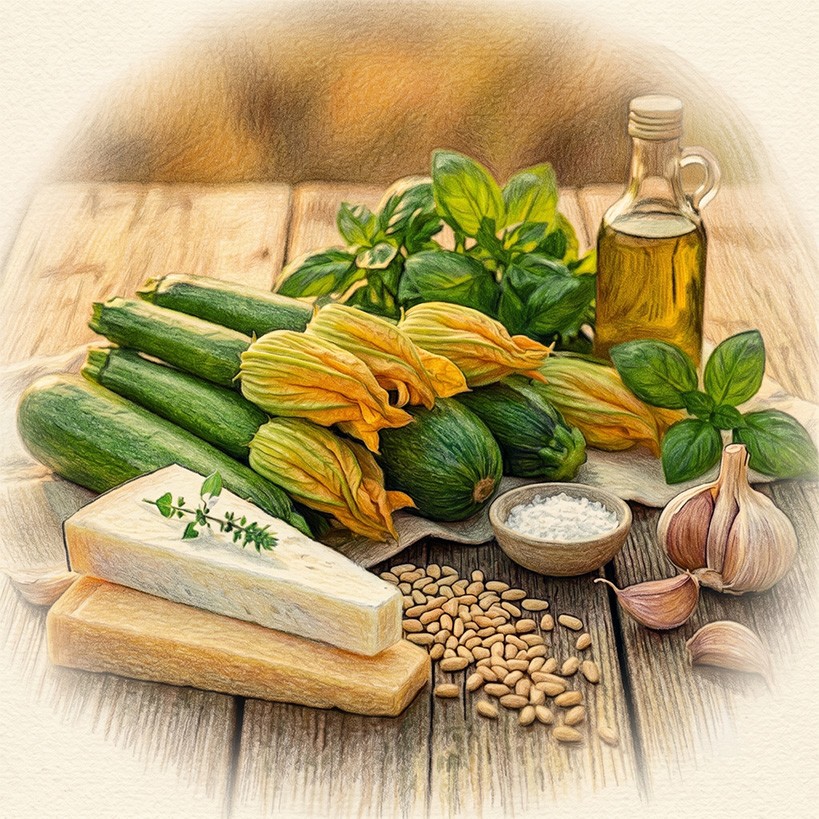
ZUCCHINI PESTO
An infusion of Zucchini, Pine Nuts, Parmigiano Reggiano, Pecorino Romano, and Basil
Effortless Grace
Italy
20 minutes
150 Kcal
ZUCCHINI PESTO
An infusion of Zucchini, Pine Nuts, Parmigiano Reggiano, Pecorino Romano, and Basil
Effortless Grace
Italy
20 minutes
150 Kcal
ZUCCHINI PESTO
An infusion of Zucchini, Pine Nuts, Parmigiano Reggiano, Pecorino Romano, and Basil
Effortless Grace
Italy
20 minutes
150 Kcal
GENESIS
The history of pesto traces its roots back to ancient Rome with the moretum, a paste composed of herbs, cheese, and garlic crushed within a mortar; yet, the modern rendition we cherish today is indissolubly bound to Liguria. The zucchini Pesto represents one of the most esteemed contemporary variations of the Italian culinary tradition, born from the necessity to adapt the ancient technique of the pestato to the seasonal offerings bestowed by the garden during the summer months. While Genovese Pesto boasts a rigorous codification dating back to the mid-19th century, vegetable adaptations such as the zucchini-based version emerged as Mediterranean cuisine evolved toward lighter, more versatile preparations.
Zucchini, belonging to the species Cucurbita pepo, were introduced to Europe following the discovery of the Americas, yet it was in Italy, between the 18th and 19th centuries, that the varieties we consume today were cultivated and selected. The concept of utilizing raw or lightly blanched zucchini flesh to create an emulsified cream answers the quest for a velvety texture capable of enveloping ingredients without the absolute dominance of basil. In this preparation, the delicate sweetness of the zucchini harmonizes with the savory depth of Parmigiano Reggiano and Pecorino Romano, while pine nuts bestow that toasted note typical of classical pestos. This recipe is not merely a condiment for pasta, but bears witness to the capacity of Italian gastronomy to reinterpret its culinary pillars through the use of pristine raw materials. Furthermore, the decision to use raw ingredients preserves the organoleptic virtues and nutrients of the vegetable, such as potassium and vitamins, rendering the sauce an exemplar of harmony between palate and nutritional well-being in the modern Mediterranean diet.
PORTIONS (FOR 4 PERSONS)
THE RECIPE
Garden-fresh summer squash
Pristine pine nuts
Parmigiano Reggiano PDO
Pecorino Romano PDO
Fragrant sweet basil
Aromatic garlic cloves
Extra virgin olive oil
Sea salt
500 g
30 g
50 g
30 g
20 leaves
1 clove
80 ml
To taste
CURATION
For the condiment:
Tenderly bathe the fresh zucchini under cool running water, patting them dry with a pristine cloth before trimming their tips. With a coarse grater, gently shred their vibrant green outer skin, avoiding the seed-heavy, watery core; alternatively, carve them into rustic, delicate morsels should you prefer a more hand-hewn texturing. Place the grated summer squash in a colander, dusted with a whisper of salt, and allow them to rest for some ten minutes, releasing their superfluous, watery essence.
In a mortar or an electric mixer, unite the pine nuts with the garlic clove, stripped of its inner germ to render its breath more delicate. Introduce the fresh basil leaves, previously cleansed with a damp cloth to preserve their fragile integrity, and pulse intermittently so as not to warm the blades and, therewith, dull the flavors. Blend the thoroughly squeezed zucchini into the mixture. Incorporate the finely grated Parmigiano Reggiano and Pecorino Romano. Drizzle the extra virgin olive oil in a slow, elegant stream while continuing to blend, until a lush, velvety, and harmonious cream is achieved. Taste, and adjust with a breath of salt if desired. Should the consistency prove too dense, you may grace it with a tablespoon of cold water, maintaining the brilliant emerald hue of the zucchini and the vivid perfume of the herbs.
aspiration
To preserve their vibrant, verdant hue, you may blanch the zucchini for a mere two minutes, plunging them immediately into an icy bath before they are pureed.
Substitute the pine nuts with blanched almonds or walnuts for a rendition of a more rustic, earthy character.
You may preserve this pesto in the refrigerator for two days, crowning its surface with a delicate veil of extra virgin olive oil to prevent oxidation.



GENESIS
The history of pesto traces its roots back to ancient Rome with the moretum, a paste composed of herbs, cheese, and garlic crushed within a mortar; yet, the modern rendition we cherish today is indissolubly bound to Liguria. The zucchini Pesto represents one of the most esteemed contemporary variations of the Italian culinary tradition, born from the necessity to adapt the ancient technique of the pestato to the seasonal offerings bestowed by the garden during the summer months. While Genovese Pesto boasts a rigorous codification dating back to the mid-19th century, vegetable adaptations such as the zucchini-based version emerged as Mediterranean cuisine evolved toward lighter, more versatile preparations.
Zucchini, belonging to the species Cucurbita pepo, were introduced to Europe following the discovery of the Americas, yet it was in Italy, between the 18th and 19th centuries, that the varieties we consume today were cultivated and selected. The concept of utilizing raw or lightly blanched zucchini flesh to create an emulsified cream answers the quest for a velvety texture capable of enveloping ingredients without the absolute dominance of basil. In this preparation, the delicate sweetness of the zucchini harmonizes with the savory depth of Parmigiano Reggiano and Pecorino Romano, while pine nuts bestow that toasted note typical of classical pestos. This recipe is not merely a condiment for pasta, but bears witness to the capacity of Italian gastronomy to reinterpret its culinary pillars through the use of pristine raw materials. Furthermore, the decision to use raw ingredients preserves the organoleptic virtues and nutrients of the vegetable, such as potassium and vitamins, rendering the sauce an exemplar of harmony between palate and nutritional well-being in the modern Mediterranean diet.
PORTIONS (FOR 4 PERSONS)
THE RECIPE
Garden-fresh summer squash
Pristine pine nuts
Parmigiano Reggiano PDO
Pecorino Romano PDO
Fragrant sweet basil
Aromatic garlic cloves
Extra virgin olive oil
Sea salt
500 g
30 g
50 g
30 g
20 leaves
1 clove
80 ml
To taste
CURATION
For the condiment:
Tenderly bathe the fresh zucchini under cool running water, patting them dry with a pristine cloth before trimming their tips. With a coarse grater, gently shred their vibrant green outer skin, avoiding the seed-heavy, watery core; alternatively, carve them into rustic, delicate morsels should you prefer a more hand-hewn texturing. Place the grated summer squash in a colander, dusted with a whisper of salt, and allow them to rest for some ten minutes, releasing their superfluous, watery essence.
In a mortar or an electric mixer, unite the pine nuts with the garlic clove, stripped of its inner germ to render its breath more delicate. Introduce the fresh basil leaves, previously cleansed with a damp cloth to preserve their fragile integrity, and pulse intermittently so as not to warm the blades and, therewith, dull the flavors. Blend the thoroughly squeezed zucchini into the mixture. Incorporate the finely grated Parmigiano Reggiano and Pecorino Romano. Drizzle the extra virgin olive oil in a slow, elegant stream while continuing to blend, until a lush, velvety, and harmonious cream is achieved. Taste, and adjust with a breath of salt if desired. Should the consistency prove too dense, you may grace it with a tablespoon of cold water, maintaining the brilliant emerald hue of the zucchini and the vivid perfume of the herbs.
aspiration
To preserve their vibrant, verdant hue, you may blanch the zucchini for a mere two minutes, plunging them immediately into an icy bath before they are pureed.
Substitute the pine nuts with blanched almonds or walnuts for a rendition of a more rustic, earthy character.
You may preserve this pesto in the refrigerator for two days, crowning its surface with a delicate veil of extra virgin olive oil to prevent oxidation.
ultimate alchemies
GENESIS
The history of pesto traces its roots back to ancient Rome with the moretum, a paste composed of herbs, cheese, and garlic crushed within a mortar; yet, the modern rendition we cherish today is indissolubly bound to Liguria. The zucchini Pesto represents one of the most esteemed contemporary variations of the Italian culinary tradition, born from the necessity to adapt the ancient technique of the pestato to the seasonal offerings bestowed by the garden during the summer months. While Genovese Pesto boasts a rigorous codification dating back to the mid-19th century, vegetable adaptations such as the zucchini-based version emerged as Mediterranean cuisine evolved toward lighter, more versatile preparations.
Zucchini, belonging to the species Cucurbita pepo, were introduced to Europe following the discovery of the Americas, yet it was in Italy, between the 18th and 19th centuries, that the varieties we consume today were cultivated and selected. The concept of utilizing raw or lightly blanched zucchini flesh to create an emulsified cream answers the quest for a velvety texture capable of enveloping ingredients without the absolute dominance of basil. In this preparation, the delicate sweetness of the zucchini harmonizes with the savory depth of Parmigiano Reggiano and Pecorino Romano, while pine nuts bestow that toasted note typical of classical pestos. This recipe is not merely a condiment for pasta, but bears witness to the capacity of Italian gastronomy to reinterpret its culinary pillars through the use of pristine raw materials. Furthermore, the decision to use raw ingredients preserves the organoleptic virtues and nutrients of the vegetable, such as potassium and vitamins, rendering the sauce an exemplar of harmony between palate and nutritional well-being in the modern Mediterranean diet.
PORTIONS (FOR 4 PERSONS)
THE RECIPE
Garden-fresh summer squash
Pristine pine nuts
Parmigiano Reggiano PDO
Pecorino Romano PDO
Fragrant sweet basil
Aromatic garlic cloves
Extra virgin olive oil
Sea salt
500 g
30 g
50 g
30 g
20 leaves
1 clove
80 ml
To taste
CURATION
For the condiment:
Tenderly bathe the fresh zucchini under cool running water, patting them dry with a pristine cloth before trimming their tips. With a coarse grater, gently shred their vibrant green outer skin, avoiding the seed-heavy, watery core; alternatively, carve them into rustic, delicate morsels should you prefer a more hand-hewn texturing. Place the grated summer squash in a colander, dusted with a whisper of salt, and allow them to rest for some ten minutes, releasing their superfluous, watery essence.
In a mortar or an electric mixer, unite the pine nuts with the garlic clove, stripped of its inner germ to render its breath more delicate. Introduce the fresh basil leaves, previously cleansed with a damp cloth to preserve their fragile integrity, and pulse intermittently so as not to warm the blades and, therewith, dull the flavors. Blend the thoroughly squeezed zucchini into the mixture. Incorporate the finely grated Parmigiano Reggiano and Pecorino Romano. Drizzle the extra virgin olive oil in a slow, elegant stream while continuing to blend, until a lush, velvety, and harmonious cream is achieved. Taste, and adjust with a breath of salt if desired. Should the consistency prove too dense, you may grace it with a tablespoon of cold water, maintaining the brilliant emerald hue of the zucchini and the vivid perfume of the herbs.
aspiration
To preserve their vibrant, verdant hue, you may blanch the zucchini for a mere two minutes, plunging them immediately into an icy bath before they are pureed.
Substitute the pine nuts with blanched almonds or walnuts for a rendition of a more rustic, earthy character.
You may preserve this pesto in the refrigerator for two days, crowning its surface with a delicate veil of extra virgin olive oil to prevent oxidation.