RATATOUILLE
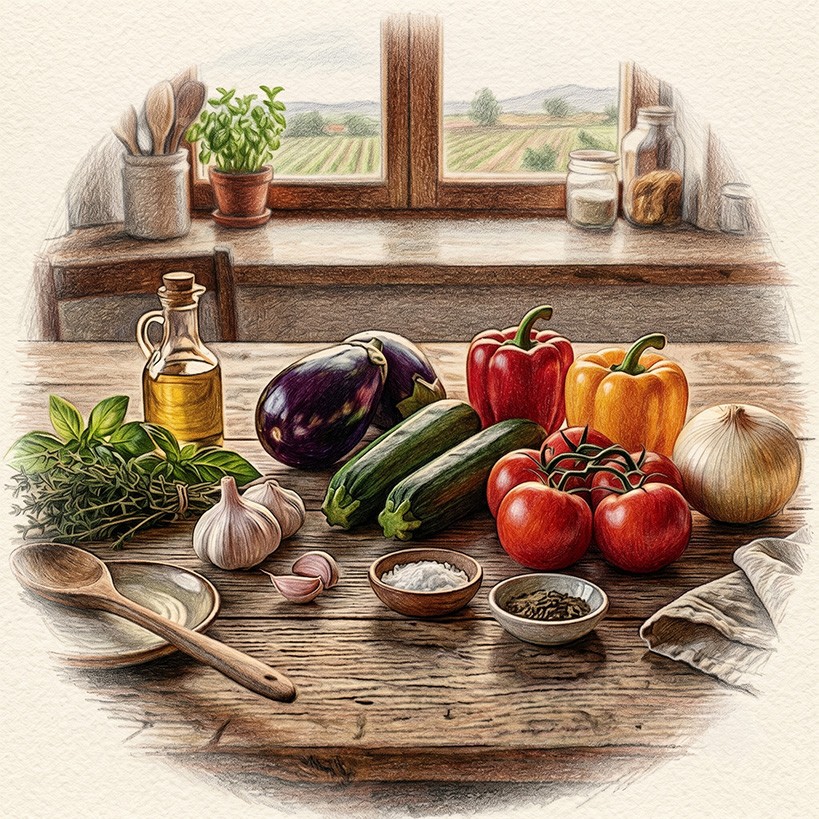
Aubergines, Courgettes, Sweet Peppers, Tomatoes, and Onions
Effortless
France
A forty-five minute journey
150 Kcal
RATATOUILLE
Aubergines, Courgettes, Sweet Peppers, Tomatoes, and Onions
Effortless
France
A forty-five minute journey
150 Kcal
RATATOUILLE
Aubergines, Courgettes, Sweet Peppers, Tomatoes, and Onions
Effortless
France
A forty-five minute journey
150 Kcal
GENESIS
Ratatouille is a traditional culinary specialty of Provençal cuisine, conceived within the historic city of Nice, where it is of old called ratatolha. The term itself is born from the Occitan word ratatouia, signifying a method of cooking founded upon the harmonious stirring of sundry components, and from the French verb touiller, which literally whispers of tossing or agitating elements during their preparation. In its origins, this dish was born as a humble peasant fare, crafted by the tillers of Provence to bestow purpose upon the bountiful summer harvest of garden vegetables and to rescue the fragments of other provisions. The classical prescription dictates a rigorous gathering of fresh garden treasures such as aubergines, courgettes, bell peppers, tomatoes, and onions, all perfumed with local herbs. Two principal schools of thought govern the proper technique of this culinary art: the first espouses the cooking of all vegetables together within a single, grand pan; whereas the second, deemed more traditional by purists of French gastronomy, demands that each variety of vegetable be sautéed and gilded separately before marrying them in a final, collective simmer. This latter method ensures that each individual ingredient preserves its sublime texture and its specific organoleptic virtues. Over the cycle of centuries, ratatouille has transcended the borders of southern France to become an emblem of Mediterranean cuisine, celebrated internationally for its versatility and the tapestry of its aromatic perfumes. Though historically conceived as a companion dish to be served either warm or cold, or as a solitary culinary poem accompanied by rustic bread, the evolution of contemporary gastronomy has elevated this preparation into an exquisite embellishment to grace first courses of pasta, beautifully wedding the rural heritage from beyond the Alps with the rich culinary culture of Italy.
PORTIONS (FOR 4 PERSONS)
THE RECIPE
Medium aubergines
Green courgettes
Red bell pepper
Yellow bell pepper
Ripe vine tomatoes
Large white onion
Garlic cloves
Extra virgin olive oil
Fresh thyme
Fresh basil
Salt
Freshly cracked black pepper
2
2
1
1
4
1
2
6
1 sprig
5 leaves
To taste
To taste
CURATION
Gently wash all the garden's bounty under a stream of cool water, then dry them with a pristine cloth. Take the vine-ripened tomatoes, score their skin with a delicate cross, and blanch them in boiling water for but a minute; drain, shed them of their skins and seeds, and dice the tender flesh. Take the aubergines, trim their ends, and cut them into two-centimetre cubes. Perform the same ritual with the courgettes, shaping them to match the aubergines. Cleanse the red and yellow bell peppers, removing the stem, the pale inner ribs, and seeds, then slice them into small, vibrant pieces. Peel the white onion, slicing it into fine whispers, then peel the two garlic cloves, giving them a gentle crush. In a grand non-stick skillet, pour two spoonfuls of extra virgin olive oil, add the aubergines and sauté them over a lively flame for seven minutes until they attain a golden hue; remove them from the pan and let them rest in a bowl. In the same skillet, introduce another spoonful of oil and cook the courgettes for five minutes, preserving their crisp vitality, then join them with the aubergines. Pour another pour of oil and cook the peppers for ten minutes until they soften, then transfer them also to the bowl. Entrust the final drop of olive oil to the pan, letting the sliced onion and garlic cloves soften over a gentle, whispering flame for five minutes. Once the onion is translucent, introduce the diced tomatoes and the sprig of fresh thyme, letting them simmer for five minutes. At this moment, reunite all the previously coaxed vegetables in the pan with the tomato, stir gently with a wooden spoon to marry the flavors, and season with salt and freshly ground black pepper to taste. Cover the skillet and let it simmer low for fifteen minutes, stirring occasionally. Once the cooking is complete, extinguish the flame, discard the garlic cloves, tear the fresh basil leaves by hand, and fold them into the mixture. Your vibrant creation is now ready to grace your table.
aspiration
To achieve a perfect consistency, strive to carve all the vegetables into the self-same dimensions, so that they may harmonize exquisitely during their final pass in the pan.
You may prepare this seasoning a day in advance: a nocturnal repose will allow the vegetables to release the full grandeur of their aromatic intensity.
Should you prefer a fragrant cadence more typically Provenu00e7al, you may substitute the thyme with a whisper of marjoram or dried oregano.
ultimate alchemies


GENESIS
Ratatouille is a traditional culinary specialty of Provençal cuisine, conceived within the historic city of Nice, where it is of old called ratatolha. The term itself is born from the Occitan word ratatouia, signifying a method of cooking founded upon the harmonious stirring of sundry components, and from the French verb touiller, which literally whispers of tossing or agitating elements during their preparation. In its origins, this dish was born as a humble peasant fare, crafted by the tillers of Provence to bestow purpose upon the bountiful summer harvest of garden vegetables and to rescue the fragments of other provisions. The classical prescription dictates a rigorous gathering of fresh garden treasures such as aubergines, courgettes, bell peppers, tomatoes, and onions, all perfumed with local herbs. Two principal schools of thought govern the proper technique of this culinary art: the first espouses the cooking of all vegetables together within a single, grand pan; whereas the second, deemed more traditional by purists of French gastronomy, demands that each variety of vegetable be sautéed and gilded separately before marrying them in a final, collective simmer. This latter method ensures that each individual ingredient preserves its sublime texture and its specific organoleptic virtues. Over the cycle of centuries, ratatouille has transcended the borders of southern France to become an emblem of Mediterranean cuisine, celebrated internationally for its versatility and the tapestry of its aromatic perfumes. Though historically conceived as a companion dish to be served either warm or cold, or as a solitary culinary poem accompanied by rustic bread, the evolution of contemporary gastronomy has elevated this preparation into an exquisite embellishment to grace first courses of pasta, beautifully wedding the rural heritage from beyond the Alps with the rich culinary culture of Italy.
PORTIONS (FOR 4 PERSONS)
THE RECIPE
Medium aubergines
Green courgettes
Red bell pepper
Yellow bell pepper
Ripe vine tomatoes
Large white onion
Garlic cloves
Extra virgin olive oil
Fresh thyme
Fresh basil
Salt
Freshly cracked black pepper
2
2
1
1
4
1
2
6
1 sprig
5 leaves
To taste
To taste
CURATION
Gently wash all the garden's bounty under a stream of cool water, then dry them with a pristine cloth. Take the vine-ripened tomatoes, score their skin with a delicate cross, and blanch them in boiling water for but a minute; drain, shed them of their skins and seeds, and dice the tender flesh. Take the aubergines, trim their ends, and cut them into two-centimetre cubes. Perform the same ritual with the courgettes, shaping them to match the aubergines. Cleanse the red and yellow bell peppers, removing the stem, the pale inner ribs, and seeds, then slice them into small, vibrant pieces. Peel the white onion, slicing it into fine whispers, then peel the two garlic cloves, giving them a gentle crush. In a grand non-stick skillet, pour two spoonfuls of extra virgin olive oil, add the aubergines and sauté them over a lively flame for seven minutes until they attain a golden hue; remove them from the pan and let them rest in a bowl. In the same skillet, introduce another spoonful of oil and cook the courgettes for five minutes, preserving their crisp vitality, then join them with the aubergines. Pour another pour of oil and cook the peppers for ten minutes until they soften, then transfer them also to the bowl. Entrust the final drop of olive oil to the pan, letting the sliced onion and garlic cloves soften over a gentle, whispering flame for five minutes. Once the onion is translucent, introduce the diced tomatoes and the sprig of fresh thyme, letting them simmer for five minutes. At this moment, reunite all the previously coaxed vegetables in the pan with the tomato, stir gently with a wooden spoon to marry the flavors, and season with salt and freshly ground black pepper to taste. Cover the skillet and let it simmer low for fifteen minutes, stirring occasionally. Once the cooking is complete, extinguish the flame, discard the garlic cloves, tear the fresh basil leaves by hand, and fold them into the mixture. Your vibrant creation is now ready to grace your table.
aspiration
To achieve a perfect consistency, strive to carve all the vegetables into the self-same dimensions, so that they may harmonize exquisitely during their final pass in the pan.
You may prepare this seasoning a day in advance: a nocturnal repose will allow the vegetables to release the full grandeur of their aromatic intensity.
Should you prefer a fragrant cadence more typically Provenu00e7al, you may substitute the thyme with a whisper of marjoram or dried oregano.
ultimate alchemies
GENESIS
Ratatouille is a traditional culinary specialty of Provençal cuisine, conceived within the historic city of Nice, where it is of old called ratatolha. The term itself is born from the Occitan word ratatouia, signifying a method of cooking founded upon the harmonious stirring of sundry components, and from the French verb touiller, which literally whispers of tossing or agitating elements during their preparation. In its origins, this dish was born as a humble peasant fare, crafted by the tillers of Provence to bestow purpose upon the bountiful summer harvest of garden vegetables and to rescue the fragments of other provisions. The classical prescription dictates a rigorous gathering of fresh garden treasures such as aubergines, courgettes, bell peppers, tomatoes, and onions, all perfumed with local herbs. Two principal schools of thought govern the proper technique of this culinary art: the first espouses the cooking of all vegetables together within a single, grand pan; whereas the second, deemed more traditional by purists of French gastronomy, demands that each variety of vegetable be sautéed and gilded separately before marrying them in a final, collective simmer. This latter method ensures that each individual ingredient preserves its sublime texture and its specific organoleptic virtues. Over the cycle of centuries, ratatouille has transcended the borders of southern France to become an emblem of Mediterranean cuisine, celebrated internationally for its versatility and the tapestry of its aromatic perfumes. Though historically conceived as a companion dish to be served either warm or cold, or as a solitary culinary poem accompanied by rustic bread, the evolution of contemporary gastronomy has elevated this preparation into an exquisite embellishment to grace first courses of pasta, beautifully wedding the rural heritage from beyond the Alps with the rich culinary culture of Italy.
PORTIONS (FOR 4 PERSONS)
THE RECIPE
Medium aubergines
Green courgettes
Red bell pepper
Yellow bell pepper
Ripe vine tomatoes
Large white onion
Garlic cloves
Extra virgin olive oil
Fresh thyme
Fresh basil
Salt
Freshly cracked black pepper
2
2
1
1
4
1
2
6
1 sprig
5 leaves
To taste
To taste
CURATION
Gently wash all the garden's bounty under a stream of cool water, then dry them with a pristine cloth. Take the vine-ripened tomatoes, score their skin with a delicate cross, and blanch them in boiling water for but a minute; drain, shed them of their skins and seeds, and dice the tender flesh. Take the aubergines, trim their ends, and cut them into two-centimetre cubes. Perform the same ritual with the courgettes, shaping them to match the aubergines. Cleanse the red and yellow bell peppers, removing the stem, the pale inner ribs, and seeds, then slice them into small, vibrant pieces. Peel the white onion, slicing it into fine whispers, then peel the two garlic cloves, giving them a gentle crush. In a grand non-stick skillet, pour two spoonfuls of extra virgin olive oil, add the aubergines and sauté them over a lively flame for seven minutes until they attain a golden hue; remove them from the pan and let them rest in a bowl. In the same skillet, introduce another spoonful of oil and cook the courgettes for five minutes, preserving their crisp vitality, then join them with the aubergines. Pour another pour of oil and cook the peppers for ten minutes until they soften, then transfer them also to the bowl. Entrust the final drop of olive oil to the pan, letting the sliced onion and garlic cloves soften over a gentle, whispering flame for five minutes. Once the onion is translucent, introduce the diced tomatoes and the sprig of fresh thyme, letting them simmer for five minutes. At this moment, reunite all the previously coaxed vegetables in the pan with the tomato, stir gently with a wooden spoon to marry the flavors, and season with salt and freshly ground black pepper to taste. Cover the skillet and let it simmer low for fifteen minutes, stirring occasionally. Once the cooking is complete, extinguish the flame, discard the garlic cloves, tear the fresh basil leaves by hand, and fold them into the mixture. Your vibrant creation is now ready to grace your table.
aspiration
To achieve a perfect consistency, strive to carve all the vegetables into the self-same dimensions, so that they may harmonize exquisitely during their final pass in the pan.
You may prepare this seasoning a day in advance: a nocturnal repose will allow the vegetables to release the full grandeur of their aromatic intensity.
Should you prefer a fragrant cadence more typically Provenu00e7al, you may substitute the thyme with a whisper of marjoram or dried oregano.